
Font size
 Worksheets
Circulatory, Respiratory, Digestive & Excretory
Total questions: 70
Worksheet time: 35mins
A student lifted weights after school and found that his muscles started to burn. He couldn’t continue to lift the weights after prolonged exercising. This muscle fatigue is most likely due to
the heart beating too fast and tiring out
the lungs accumulating oxygen
lack of oxygen and build up of waste in the muscles
lack of carbon dioxide in the muscles
If a control group is not included in an experiment, it would be difficult to
formulate a hypothesis for the experiment
make observations about the experimental group
record data in a data table
draw a valid conclusion
A student hypothesized that watching sports on television would cause viewers’ pulse rates to increase. She designed an experiment to determine the effect of watching sports on pulse rate. A group of 200 volunteers took their pulse rates and then watched their favorite sports on television. After the games, they immediately took their pulse rates again. The data collected showed that the pulse rates of some people increased, but the pulse rates of an equal number of people did not change. Although the hypothesis was not supported by the data, the hypothesis is still valuable because it
may lead to further investigation
can be changed to fit the data
is the opinion of the experimenter
is based on beliefs of the volunteers

Students were asked to design a lab that investigated the relationship between exercise and heart rate. Heart rate was determined by recording the pulse rate in beats per minute. The students hypothesized that increased exercise results in an increased heart rate. The class results for the experiment are shown in the graph.
Students in a different science class carried out the same experiment. The data they obtained did not support the hypothesis that increased exercise results in increased heart rate. The most scientifically sound way to deal with this situation is to
write a new hypothesis
read about pulse rate in a biology textbook
have the students in both classes vote to decide which hypothesis is correct
ask students in a third class to do the experiment and see if their results support the hypothesis
Students were asked to design a lab that investigated the relationship between exercise and heart rate. Heart rate was determined by recording the pulse rate in beats per minute. The students hypothesized that increased exercise results in an increased heart rate. The class results for the experiment are shown in the graph.
Which statement is best supported by the graph?
Before exercising, the average pulse rate was 65; four minutes after exercising, the average pulse rate was 65.
After four minutes of exercising, the average pulse rate was 120; two minutes after exercising, the average pulse rate was 120.
While exercising, the highest average pulse rate was 150; before exercising, the average pulse rate was 65.
Two minutes before exercising, the average pulse rate was 80; after two minutes of exercise, the average pulse rate was 140
This system breaks down food so the nutrients are small enough to enter cells through the cell membrane.
digestive
respiratory
circulatory
immune
This system exchanges oxygen and carbon dioxide gases between the lungs/blood and the environment - it is made up of the nose and lungs
digestive
respiratory
circulatory
immune
This system TRANSPORTS materials (glucose, oxygen, carbon dioxide, wastes) throughout the body - it is made up of the heart and blood vessels
digestive
respiratory
circulatory
immune
This body system helps with movement - it consists of the muscles, which need lots of oxygen and glucose in order to release and use ATP energy
circulatory
muscular
respiratory
immune

What is the purpose of finding the respiratory rate of students AT REST?
there is no reason
to see if they are healthy
to practice using the timer
to use as a comparison (control group)

Why do the gases move in this direction?
the blood coming to the lungs has a high concentration of O2 and a low concentration of CO2, so the gases diffuse high to low
the blood coming to the lungs has a high concentration of CO2 and a low concentration of O2, so the gases diffuse high to low
the CO2 moves out of the blood to make room for O2
the cells need O2 so the blood takes it to the cells
What was most likely the hypothesis for this experiment?
IF students exercise, THEN their respiratory rates will increase.
IF students eat dinner, THEN they will be able to exercise longer.
IF students increase their respiratory rates, THEN they will be able to run a longer distance in an hour.
IF students like dinosaurs, THEN they will do better in Ms. Bellucci's class
The students' respiratory rates increased after exercise BECAUSE
they needed to get more oxygen and glucose to their muscles for cellular respiration to release ATP ENERGY
they chose to breath harder
no Ms. Bellucci, the respiratory rates decreased
they needed to get more CO2 to their muscles to do photosynthesis in their chloroplasts
Why would different students have different respiratory rates after exercising at the same level for the same amount of time?
different staminas, body types, genetics, sexes, etc.
some worked harder than others
no Ms. Bellucci, they would all be exactly the same
some exercised longer than others

What is one benefit of increased heart rate during exercise?
more O2 and glucose can get TRANSPORTED to your muscles where your mitochondria can use them to release ATP ENERGY
more CO2 and water can get TRANSPORTED to your muscles where your chloroplasts can do photosynthesis
more blood gets to your muscles (hint: this answer is NOT specific enough)
dinosaurs

What is the student's pulse rate during exercise?
160 beats/min
100 beats/min
70 beats/min
0 beats/min
This variable is the one I CONTROL as the scientist
independent
dependent
This variable is the one that is MEASURED as a result of changing the independent variable
independent
dependent
What causes muscle fatigue and cramping after exercise?
wastes (like lactic acid) build up in the muscles because not enough oxygen can get to the muscles
photosynthesis
eating too much pasta before exercising
it just happens
A student squeezed a clothespin 80 times in a minute, then repeated the experiment with the same hand and could only do 40 squeezes. Why did the student use the SAME HAND and CLOTHESPIN both trials?
to keep the experiment controlled
that's their dominant hand
it doesn't matter if you change the hand or clothespin
dinosaur
The human body has many cells that are deep inside the body. For this reason, the human body requires
a TRANSPORT system and other organs
CO2 from the air
the synthesis of many inorganic compounds
the breakdown of glucose by the digestive system
Which one accurately describes the difference between respiration and cell respiration?
respiration produces glucose while cell respiration does not
cell respiration is a process in cells where energy is made, while respiration is breathing
respiration occurs in cells while cell respiration produces glucose
none of the above
What body system breaks down food into smaller molecules?
Digestive System
Circulatory System
Respiratory System
Endocrine System
Which organ system takes in oxygen?
Respiratory System
Circulatory System
Digestive System
Nervous System
Which organ system is responsible for transporting oxygen, nutrients and other molecules around the body?
Circulatory System
Respiratory System
Nervous System
Endocrine System
Which body systems working together to bring in oxygen and transport it throughout the body?
Circulatory and respiratory systems
Digestive and circulatory systems
Respiratory and digestive systems
Nervous and Endocrine Systems
Which process has oxygen and glucose as reactants?
Cellular Respiration
Photosynthesis
Protein Sythesis
Which process would be stop working if the respiratory system is nonfunctional?
Cellular Respiration
Photosynthesis
Protein Synthesis
Digestion
Which term means to build a larger molecule?
Synthesis
Digestion
Process
Distribution
Which term means to break down into smaller molecules?
Digestion
Synthesis
Manufacturing
Distribute
Process
Why must starch be digested before it is used inside cells?
It is too large to diffuse to the membrane
Enzymes are specific
The shape of the enzyme has to fit subtrate
What does absorb mean?
Take in
Let out
Synthesize
Break down
Define expel.
Let out
Absorb
Synthesize
Manufacture
What is the main organ of the circulatory system?
Heart
Lung
Stomach
Brain
What is the relationship between heart rate and exercise?
As the amount of exercise increases the heart rate increases
As the amount of exercise increases the heart rate decreases
As the amount of exercise decreases the heart rate increases
Why does your heart rate and breathing rate increase when you exercise?
When exercising you need to intake more oxygen and expel more carbon dioxide
When exercising it doesn't matter how much oxygen and carbon dioxide you need
When exercising your brain is out of control and can't tell what is happening to you
When exercising your digestive system needs more nutrients
What is the function of the circulatory system?
intake oxygen
transport oxygen and other nutrients throughout the body
communicate with other body system to maintain blood glucose levels
regulate hormone production
Which molecule will can diffuse from the digestive into the human blood stream without first being digested?
protein
starch
fat
glucose

Which of the following is NOT a function of the digestive system?
transports blood throughout the body
Absorption of nutrients
Waste elimination
breaks down food
What is the purpose of the villi that is found on the lining of the small intestines?
physically break down food
store gastric juices
absorb nutrients into the bloodstream
absorb water from food not digested
Water absorption takes place in what part of the digestive tract?
rectum
large intestine
small intestine
stomach
What mixes with food in the mouth to start chemical digestion?
saliva
water
gastric juice
pepsin
Which type of waste is removed by the respiratory system?
carbon dioxide
bile
urine
amino acids
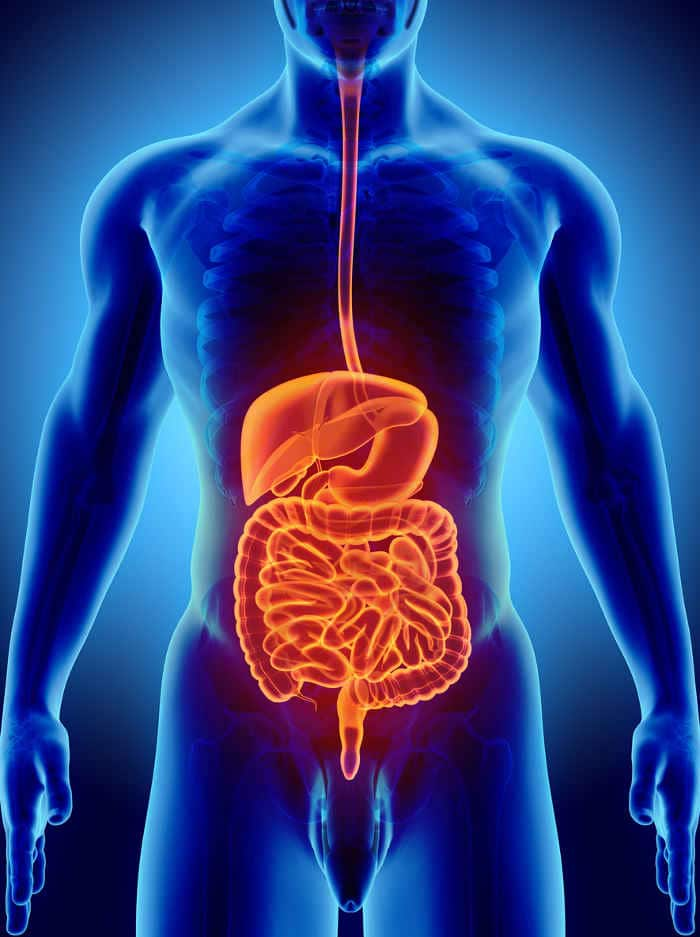
Which human system do you see in the image?
digestive system
respiratory system
circulatory system
nervous system
"The small intestine absorbs nutrients from our food and they are carried through the blood to the cells."
What two substances do your cells need for aerobic respiration?
oxygen and carbon dioxide
oxygen and glucose(sugar)
carbon dioxide and glucose(sugar)
carbon dioxide and lactic acid
When your body exercises what waste product does it make more of?
oxygen
sugar
glucose
carbon dioxide
Oxygen moves from your lungs to your blood without needing to use energy. This means it moves by
active transport
excretion
diffusion
photosynthesis
You feel your pulse ever time your
you inhale
heart beats
cells make energy
you exhale
When you exercise your cells need more ______ and produce more ____.
carbon dioxide, oxygen
carbon dioxide, ATP
oxygen, carbon dixoide
glucose, oxygen
When your exercise your heart beats faster to
bring oxygen to your cells faster
bring carbon dioxide to your cells faster
bring lactic acid to your cells faster
all of the above
If your cells run low on oxygen, they can still make smaller amounts of energy with
aerobic respiration
anaerobic respiration (fermentation)
photosynthesis
excretion
After you exercise the carbon dioxide will move from your blood into your lungs not using energy. This is _____ transport, and moves the carbon dioxide from _______ to _____ concentrations.
active, high to low
active, low to high
passive, low to high
passive, high to low
When you are measuring your pulse rate, the body system you are measuring is the
circulatory
respiratory
excretory
digestive
What body system is responsible for bringing in oxygen and removing carbon dioxide?
circulatory system
respiratory system
excretory system
muscular system
The glucose (sugar) used in respiration in your cells comes from what body system
respiratory
excretory
digestive
reproductive
The buildup of waste products in muscle cells that are active might cause
Digestion
Increased fatigue
Decreased heart rate
Which two body systems work together to remove wastes produced by exercising from cells?
Immune and Endocrine
Digestive and Skeletal
Respiratory and Circulatory
Circulatory and Digestive
What happens when your pulse rate increases?
more oxygen is supplied to muscles
increased blood flow
both
In order for muscle fatigue to end, the muscle cells must be provided with
Oxygen
Carbon Dioxide
Nitrogen
Amino Acids
A marathon runner frequently experiences muscle cramps while running. This is because
The runner is running too slowly
The runner warmed up before running
There was increased glucose production in the muscle
There was a lack of adequate oxygen supply to the muscles
Which systems provide cells with glucose and oxygen respectively?
circulatory and nervous
digestive and respiratory
nervous and skeletal
endocrine and circulatory

