wayground logo

Free Printable Worksheets

NEW

Font size

S
M
L
XL
Worksheets

Cells Team Review

Total questions: 47

Worksheet time: 36mins

Name
Class
Date
1.
Plants and animals are made up of millions of tiny what?
a)
atoms
b)
cells
c)
particles
d)
dots
2.
Animal cells have_______________.
a)
cell walls
b)
chloroplasts
c)
cytoplasm
d)
large vacuoles
3.
Michael looked at a cell through a microscope.  He identified a nucleus, chloroplast, and cytoplasm.  What kind of cell did Michael observe?
a)
animal
b)
plant
c)
vertebrate
d)
bacteria
4.
Which piece of equipment is the best to use to observe the structure of a cell?
a)
magnifying glass
b)
binoculars
c)
telescope
d)
microscope
5.
What organelle is NOT found in animal cells?
a)
chloroplast
b)
cell membrane
c)
nucleus
d)
mitochondria
6.
Which of the following is found in plant cells but not in animal cells?
a)
nucleus
b)
cell membrane
c)
vacuoles
d)
chloroplasts
7.
Directs all cell activities and the DNA is located there. "The brain"
a)
Lysosomes
b)
Nucleus
c)
Cell Wall
d)
Cytoplasm
8.
A rigid layer that lies outside the cell's  membrane is...
a)
Cytoplasm
b)
Cell membrane
c)
Cell Wall
d)
Flagella
9.
What is the jelly-like substance inside of cells called?

a)
chloroplast
b)
photosynthesis
c)
cell membrane
d)
cytoplasm
10.
a)
found only in plants
b)
contains chlorophyll
c)
produces energy
11.
surrounds the cell; regulates what enters/leaves cell: holds the cell together
a)
vacuole
b)
cell wall
c)
cell membrane
d)
lysosome
12.
Which of these are characteristics of most cells?
a)
make their own food
b)
can only be seen using a microscope
c)
they all have a cell wall
d)
they are found only in humans
13.
What does the plant cell structure chloroplast do?
a)
directs the cell's activities
b)
stores nutrients, water, or waste
c)
makes food
d)
supports the plant cell
14.
The main function of chloroplasts is:
a)
To control what enters and leaves the cell.
b)
To break down food to release energy for the cell.
c)
To control all activities of the cell.
d)
To produce food for the cell using the sun's energy.
15.
Which of the following is the smallest unit of life that can carry out all life functions?
a)
the mitochondria
b)
the vacuoles
c)
the nucleus
d)
the cell
16.
Which structures are found in every living cell?
a)
cell membrane and cytoplasm
b)
chloroplasts and mitochondria
c)
a cell wall and nucleus
d)
chloroplasts and cell wall
17.
Which cell structure is found in plant and animals cells and controls what can come into or leave a cell?
a)
cell membrane
b)
cytoplasm
c)
nucleus
d)
vacuole
18.
What is the function of the cell nucleus found in both plant and animal cells?
a)
to produce energy
b)
to control cell activity
c)
to remove waste products
d)
to allow molecules to enter the cell
19.
Chloroplasts in plant cells allow the plant to perform a function that animal cells cannot do.  What is the main function of the chloroplasts found in plant cells?
a)
to absorb light energy and manufacture food
b)
to remove waste materials by active transport
c)
to manufacture chemical energy from food
d)
to control the shape of the cell
20.
What is the function of a cell wall?
a)
to protect and support the cell
b)
to perform different functions in each cell
c)
to prevent water from passing through it
d)
to prevent oxygen from entering the cell
21.
In what part of the plant cell does the process of photosynthesis take place?
a)
nucleus
b)
mitochondria
c)
chloroplasts
d)
vacuoles
22.
The basic unit of structure and function in a living things.
a)
chloroplast
b)
nucleus
c)
cell
d)
cell membrane
23.
Which organism performs all life processes in one cell?
a)
grass
b)
bacteria
c)
mushroom
d)
butterfly
24.
Which organisms are capable of surviving as a single cell?
a)
bacteria
b)
humans
c)
plants
d)
fish
25.
Which best explains why humans are multicellular organisms?
a)
Human cells are too small to function alone.
b)
Human cells join together to form one large cell.
c)
Humans need many cells to carry out life processes.
d)
Humans have many systems that perform the same function.
26.
Molly is reading a book in science class. She reads one sentence that says, “This organism is capable of surviving as a single cell.” Which organism is she most likely reading about?
a)
amoeba
b)
flower
c)
mushroom
d)
insect
27.
Why do humans require many different types of cells to survive?
a)
Human cells are identical and work together to perform the same function.
b)
Human cells are specialized and work together to perform the same function.
c)
Human cells are identical and work independently to perform different functions.
d)
Human cells are specialized and work independently to perform different functions.
28.
Which is the best way to classify grasshoppers?
a)
Grasshoppers are multi-celled organisms because they are made up of one cell that carries out all of their life processes.
b)
Grasshoppers are single-celled organisms because they are made up of one cell that carries out all of their life processes.
c)
Grasshoppers are single-celled organisms because they are made up of many cells that carry out all of their life processes.
d)
Grasshoppers are multi-celled organisms because they are made up of many cells that carry out all of their life processes.
29.
Which statement best describes a bacterial cell?
a)
It contains more than one cell.
b)
It is a complete organism.
c)
It is part of a larger organism.
d)
It contains different kinds of cells.
30.
How are single-celled organisms and multi-celled organisms similar?
a)
Both need food for energy and growth.
b)
Both have a skeletal system for support.
c)
Both require the interaction of many cells to survive.
d)
Both are able to carry out all life functions in only one cell.
31.
Which is a difference between frogs and bacteria?
a)
Frogs are able to control all life processes in one cell, while bacteria cannot.
b)
Frogs are single-celled organisms, while bacteria are multi-celled organisms.
c)
Frogs are multi-celled organisms, while bacteria are single-celled organisms.
d)
Frogs must rely on other single-celled organisms for survival, while bacteria are dependent only on themselves.
32.
A scientist is trying to decide whether an organism is unicellular or multicellular.  Which information would help the scientist most to make her decision?
a)
size of the cells of the organism
b)
what the organism eats
c)
how many types of cells are in the organism
d)
how fast the organism grows
33.
Which best describes the main job of most cells in multicellular organisms?
a)
Cells work to keep themselves alive.
b)
Cells work to keep the organism alive.
c)
Cells work to release needed materials.
d)
Cells work to store unneeded materials.
34.

Which is an example of an organism?

a)

a beetle

b)

an eye

c)

a heart

d)

a shell

35.

The ___________ is the basic unit of life.

a)

organ

b)

cell

c)

atom

d)

tissue

36.

Organs that perform the same function in a multicellular organism is/are called a(n) _____________.

a)

cells

b)

tissues

c)

organ system

d)

organs

37.

A group of tissues that perform a similar function is called a(n) ____________ . Examples include the heart, lungs, or stomach.

a)

cell

b)

tissue

c)

organ

d)

organ system

38.

What is a group of cells that have similar functions? Examples include nervous, epithelial, muscle, and connective _________ .

a)

cells

b)

tissues

c)

organs

d)

atoms

39.

When many organ systems work together it can form a multicellular ________________ .

a)

organ

b)

cell

c)

organ system

d)

organism

40.

Which includes an order of organization of multicellular organisms from smallest to largest?

a)

tissues, cells, organs, organ systems, organism

b)

cell, tissue, organs, organ systems, organism

c)

organism, cells, tissues, organ systems, organism

d)

tissues, cells, organs, organ sytems, organism
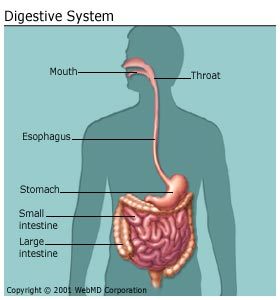
41.

These organs working together are an example of a(n) ________________ .

a)

organ system

b)

cell

c)

atom

d)

tissue

42.

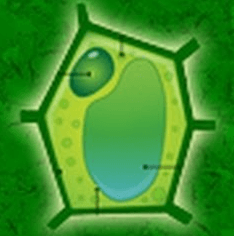
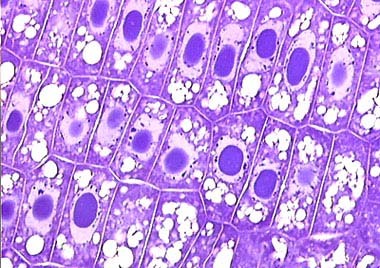
This group of cells performing similar functions is an example of a(n) ___________ .

a)

cell

b)

tissue

c)

organ

d)

organ system

43.

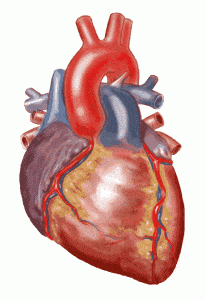
This group of tissues performing similar functions is an example of a(n) _____________ .

a)

cell

b)

organ system

c)

organ

d)

tissue

44.

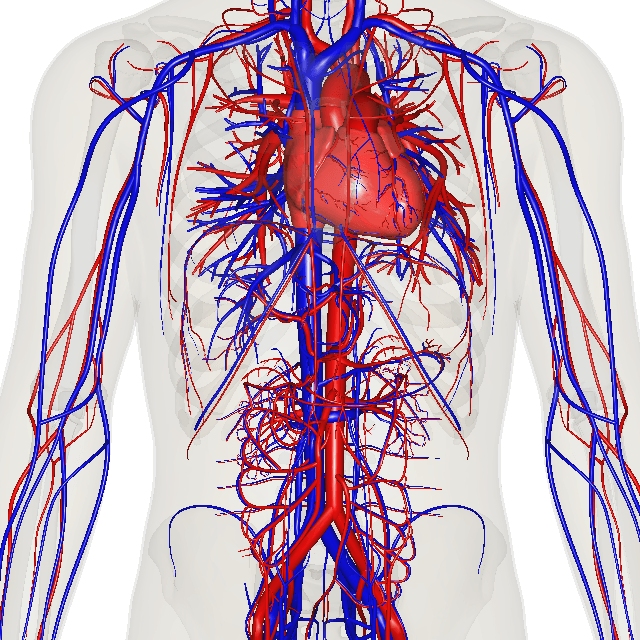
These organs circulate the organism's blood throughout it's body, transporting cellular waste, materials, and nutrients. What is this an example of?

a)

an organ

b)

an organ system

c)

a tissue

d)

a cell

45.

Anything that can perform life processes by itself is a(n) ________________ .

a)

atom

b)

organ

c)

organism

d)

organelle

46.

Molecules are made up of ___________ .

a)

atoms

b)

cells

c)

organelles

d)

nothing

47.

What are the building blocks of everything that exists?

a)

atoms

b)

cells

c)

organelles

d)

organs