wayground logo

Free Printable Worksheets

Font size

S
M
L
XL
Worksheets

Chemistry Final Review

Total questions: 142

Worksheet time: 3hrs 58mins

Name
Class
Date
1.
How many significant figures does the following number have: 100.3
a)
4
b)
3
c)
5
d)
2
2.
How many significant figures does the following number have: 1740200
a)
2
b)
1
c)
3
d)
5
3.
How many sig figs are in 0.0045670?
a)
8
b)
4
c)
5
d)
7
4.
How many sig figs are in 730?
a)
1
b)
2
c)
3
d)
4
5.
How many sig figs are in 927.0020?
a)
4
b)
3
c)
6
d)
7
6.
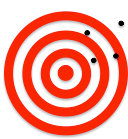
Describe the accuracy and precision of the image
a)
Accurate and Precise
b)
Accurate and not precise
c)
Not Accurate and Precise
d)
not accurate and not precise
7.
Describe the accuracy and precision of the image
a)
Accurate and Precise
b)
Accurate and not precise
c)
Not Accurate and Precise
d)
not accurate and not precise
8.
Describe the accuracy and precision of the image
a)
Accurate and Precise
b)
Accurate and not precise
c)
Not Accurate and Precise
d)
not accurate and not precise
9.

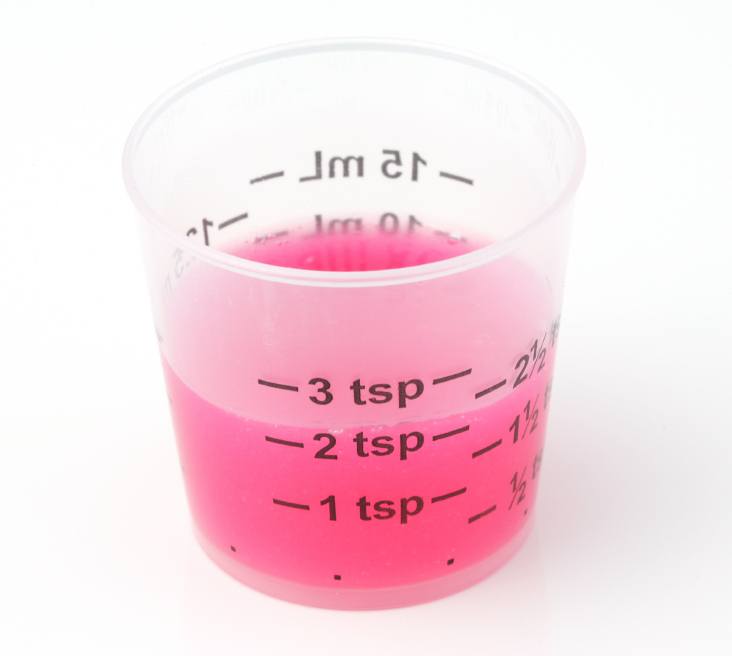
Which is the more precise measurement?

a)

4 mL

b)

4.3 mL

c)

4.30 mL

d)

4.300 mL

10.

The students measured length during a science experiement, they got 12.00 cm. But the actual measurement was 14.25 cm. What was the percent error?

a)

15.79%

b)

18.75%

c)

2.25%

d)

18%

11.
7.82 x 10⁻⁶ is an example of scientific notation. The exponent of -6 tells you your number will be very ________.
a)
Large
b)
Small
c)
Basic
12.
Change from standard form to scientific notation: 0.004078
a)
4.078  x  10-3
b)
4.078  x  103
c)
40.78  x  10-4
d)
.4078  x  10-2
13.
Try to change the number back to standard form:  6.79  x  104
a)
679,000
b)
6,790
c)
67,900
d)
6,790,000
14.
Try to change the number back to standard form: 3.97  x  10-2
a)
0.000397
b)
0.0397
c)
0.0000397
d)
0.397
15.
If the exponent on your power of 10 is positive, is your number larger or smaller than 10?
a)
Larger
b)
Smaller
16.
125,678,000: Change to scientific notation
a)
1.25678  x  1012
b)
.125678  x  10-9
c)
12.5678  x  108
d)
1.25678  x  108
17.
40 cm = ______ mm
( 1 cm = 10 mm)
a)
4000
b)
40
c)
400
d)
None of the Above
18.
200 mm = ____ cm
(1 cm = 10 mm)
a)
20 mm
b)
20 km
c)
20 cm
d)
20 dm
19.
Ed fills his sports bottle with 1 liter of water. After his bike ride, he drinks 200 milliliters of the water. How much water is left in Ed's sports bottle?
(1 liter = 1000 ml)
a)
800 mm
b)
8000 ml
c)
80 ml
d)
800 ml
20.
What type of graph is this?
a)
Bar Graph
b)
Line Plot
c)
Pictograph
d)
Tally Chart
21.
Which axis runs horizontally?
a)
x
b)
y
22.
On which axis is the independent variable found?
a)
z-axis
b)
w-axis
c)
y-axis
d)
x-axis
23.

Find the slope of the line.

Hint: rise/run

a)

1/2

b)

-1/2

c)

2

d)

0

24.
Which of the following is matter?
a)
dust
b)
the moon
c)
strand of hair
d)
all of the above
25.
Contains two or more atoms combined
a)
Elements
b)
Compounds
c)
Mixtures
26.
Is sugar (C12H22O11) an element or a compound?
a)
Element
b)
Compound
27.
The air is a _________. 
a)
element 
b)
mixture 
c)
compound 
d)
energy 
28.

made of 2 or more substances that can be physically separated

a)

element

b)

compound

c)

mixture

29.

type of mixture in which the individual substances are not evenly mixed

a)

homogeneous mixture

b)

heterogeneous mixture

c)

compound

d)

substance

30.

a substance that consists of just one type of atom

a)

atom

b)

molecule

c)

compound

d)

element

31.
Something that takes up space and has mass.
a)
volume
b)
matter
c)
mass
d)
density
32.
An element is made up of only one kind of _____.
a)
isotope
b)
plastic
c)
atom
d)
metal
33.
Which object is a solid that keeps it's shape when it changes containers? 
a)
Chocolate milk
b)
Gravel
c)
Oxygen
34.
Which is a property of matter that you CANNOT observe just by looking at an object?
a)
temperature
b)
shape
c)
color
35.
A student observes a clear substance in a container that has a flat, level surface.  The substance flows when poured, and is not magnetic.  The substance is most likely...
a)
sand
b)
water
c)
paper clips
36.
Which thing in this picture represents a gas? 
a)
ice cubes
b)
bubbles 
c)
soda
37.
What does this tool measure?
a)
time
b)
distance
c)
mass
38.
Which of the following changes liquid water into gas?
a)
boiling
b)
freezing 
c)
melting
39.
Which of the following things will take the shape of the container it is in?
a)
ice cube
b)
melted chocolate
c)
baseball
40.
When a stick of butter melts it changes from a...
a)
solid to gas
b)
gas to solid
c)
solid to liquid
41.
Which of the following will most likely be attracted by a magnet?
a)
rubber band
b)
glass marble
c)
paper clip
42.
Which object is a solid that keeps it's shape when it changes containers? 
a)
Chocolate milk
b)
Gravel
c)
Oxygen
43.
What will happen when the thermometer is placed in hot water?
a)
The temperature will go higher
b)
The temperature will go lower
c)
The temperature will stay the same
44.

A student sees this symbol on a box. What must the student do?

a)

Smell the material in the box

b)

Taste the material

c)

Wear safety goggles and gloves

d)

Rinse the material down the drain

45.

The directions for a lab show the goggle symbol. What should you do?

a)

Wear your goggles the entire time

b)

Wear your goggle part of the time

c)

Use the goggles to pull back your hair

46.

What is the symbol showing?

a)

Hand washing

b)

Corrosive material use gloves

c)

Liquid is safe for

47.

A student places his backpack behind his chair in between the lab tables during a lab. This is a lab safety violation.

a)

True

b)

False

48.

Which item does not belong?

a)

Beaker

b)

Testtube

c)

Hand lens

d)

Test tube

49.

When you spill a liquid you should first cover it with a chair so no slips and then tell your teacher.

a)

True

b)

False

50.

Which of the following is NOT something you do after a lab is completed?

a)

Wash your hands

b)

Dispose of trash

c)

Read the directions

d)

Clean your materials off the lab table

51.

A student is talking during the lab instructions and then complete the lab incoreectly. What major safety rule has he broken?

a)

Listen carefully

b)

Clean supplies

c)

Read directions

52.

If glass equipment is broken you should do what first?

a)

Pick up the glass so no one gets hurt

b)

Tell the custodian

c)

Tell your teacher

53.

If you want to measure volume of a liquid, which tool would be best to use

a)

A flask

b)

A test tube

c)

A graduated cylinder

54.

What can you do with this tool?

a)

Force in Newtons

b)

Mass in grams

c)

Liquid in meters

55.

If you want to transfer a small amount of liquid into a petri dish, what tool is the best option to use?

a)

A graduated cylinder

b)

A test tube

c)

A pipette

d)

your hands

56.
Gas costs $3.05 a gallon, and your car travels at 27 miles for each gallon of gas. How far can you travel in your car with $95 in your pocket?
a)
11 miles
b)
840 miles
c)
7800 miles
d)
870 miles
57.

How many minutes are in a school year, 187 days?

a)

269,280 min.

b)

16, 200 min.

c)

16, 156 min.

d)

269,000 min.

58.

The Olympic record for the high jump is just over 2.6 yards. What is that distance in feet? (3 ft = 1 yd)

a)

0.867 ft

b)

7.8 ft

c)

8.07 ft

d)

8.27 ft

59.

The waiting time to ride a roller coaster is 20 minutes when 150 people are in line. How long is the waiting time when 240 people are in line?

a)

32 people

b)

32 minutes

c)

12.5 minutes

d)

12.5 people

60.

You know 1000 mg = 1 g. Convert 2.5 grams into milligrams. (Hint: You can Bunny Hop this one!)

a)

25 mg

b)

25,000 mg

c)

250 mg

d)

2500 mg

61.

Americans drink 5,604,000 gallons of sweet tea each day. How many liters is that? (1 gal = 3.79 L)

a)

21,200,000 L

b)

21,240,000 L

c)

21,207,190.2 L

d)

21,000,000 L

62.

How many kilograms of calcium are there in 173 pounds of calcium? (1 lb = 454 g; 1 kg = 1000 g)

a)

1.10 kg

b)

78.5 kg

c)

110 kg

d)

78500 kg

63.

You never learned dimensional analysis so you have been working at a fast food restaurant for 35.0000 years wrapping burgers. Each hour you wrap 184 burgers. You work 8 hours per day, 5 days a week. How many burgers have you wrapped? (1 yr = 52 wks)

a)

13,395,200 burgers

b)

18,753,300 burgers

c)

40,185,600 burgers

d)

56,259,800 burgers

64.

Convert 62 miles/hour to feet/second. (5,280 ft = 1 mi)

a)

5,456 ft/s

b)

.003 ft/s

c)

91 ft/s

d)

909 ft/s

65.

A child weighs 40.0 lb and is to receive 0.10 mg of an antibiotic for each kg of body weight. How many milligrams of the antibiotic shall the child receive? (1 kg = 2.2 lbs)

a)

18.2 mg

b)

182 mg

c)

0.182 mg

d)

1.82 mg

66.
A change where one or more new substances are created.
a)
Physical Change 
b)
Chemical Change 
67.
Is melting butter for popcorn a chemical or physical change?
a)
chemical
b)
physical
68.
The positive particles of an atom are 
a)
electrons 
b)
positrons 
c)
neutrons 
d)
protons 
69.
Particles in an atom that are neutral and have no charge are 
a)
negatrons 
b)
electrons 
c)
neutrons 
d)
protons 
70.
True or False? Neutrons have a negative charge
a)
True
b)
False
71.
What is the atomic number for an element with three protons?
a)
2
b)
1
c)
3
d)
6
72.
A particle that moves around the nucleus is a(n)...
a)
Proton
b)
Neutron
c)
Electron
d)
Quark
73.
In the modern periodic table elements are arranged by:
a)
atomic mass
b)
atomic number
c)
valence electrons
d)
number of isotopes
74.
The symbol for Carbon is
a)
6
b)
12.011
c)
C
d)
Ca
75.
Beryllium has how many protons?
a)
4
b)
9.0122
c)
2
d)
13.0122
76.
All matter is made of 
a)
energy 
b)
atoms 
c)
air
d)
chemistry
77.
What is the smallest?
a)
worm
b)
molecule
c)
galaxy
d)
atom
78.
What does the nucleus consist of?
a)
Protons + Electrons
b)
Neutrons + Electrons
c)
Atoms
d)
Protons + Neutrons
79.
Where are protons located in the atom?
a)
orbitals
b)
nucleus
c)
rings
d)
positive
80.
Where are neutrons located in the atom?
a)
shells/orbitals
b)
rings
c)
center
d)
nucleus
81.
What is the atomic number?
a)
the number of protons
b)
the number of protons and neutrons
c)
the number of neutrons
d)
the number of protons and electrons
82.
What is the atomic number for an element with twelve protons?
a)
2
b)
12
c)
24
d)
6
83.
What are the 3 subatomic particles that make-up the atom?
a)
protons, neutrons, and isotopes
b)
neutrons, isotopes, and electrons
c)
positives, negatives, and electrons
d)
protons, neutrons, and electrons
84.
If X is the symbol for an element, which of the following two symbols represent    isotopes of the same element?     I. 7735X  II. 7733X  III. 8137X  IV. 8135 X
a)
I and II
b)
III and IV
c)
I and IV
d)
I and III
85.
Four isotopes of lead include lead-204, lead-206, lead-207, and lead-208.  The average atomic mass of lead is 207.2.  Which isotope of lead is likely to be the most abundant.
a)
204
b)
206
c)
207
d)
208
86.
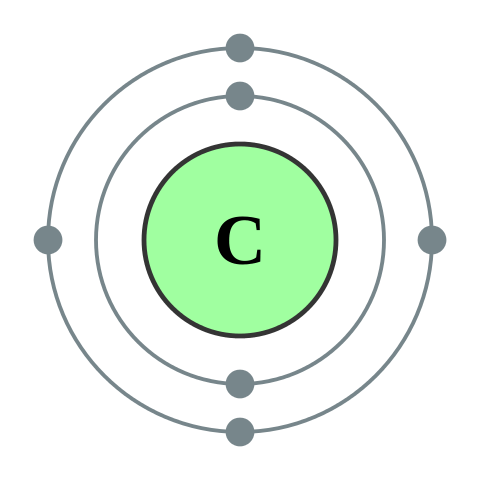
What is the name of the pictured isotope?
a)
Carbon-12
b)
Carbon-13
c)
Carbon-14
d)
Carbon-15
87.

An element has three isotopes. Given the abundances and relative masses, calculate the average atomic mass and determine (from the periodic table) which element it is.


Abundances | Relative masses

0.005% | 234.04 amu

0.720% | 235.04 amu

99.275% | 238.05 amu

a)

Uranium (#92, Atomic Mass: 238.03 amu)

b)

Fluorine (#9, Atomic Mass: 19.00 amu)

c)

Mercury (#89, Atomic Mass: 200.59 amu)

d)

Polonium (#84 209 amu)

88.

How many neutrons are in an atom of carbon-14?

a)

6

b)

8

c)

10

d)

14

89.

How many protons does this isotope of titanium have?

a)

22

b)

26

c)

48

d)

70

90.

How many electrons are in an atom that has an atomic number of 34, an atomic mass of 74 and a charge of -2?

a)

2

b)

34

c)

36

d)

40

91.

Write the hyphen notation for the isotope that has 39 protons and 50 neutrons.

a)

Yttrium-11

b)

Tin-39

c)

Tin-89

d)

Yttrium-89

92.

Chromium has four naturally occurring isotopes (chromium-50, chromium-52, chromium-53, and chromium-54). What is the average atomic mass of Chromium?

a)

4

b)

51.996

c)

52.25

d)

Not enough information was given.

93.
a)
2
b)
8
c)
3
d)
13
94.
a)
2
b)
3
c)
5
95.
a)
12
b)
7
c)
8
d)
14
96.
a)
7
b)
8
c)
9
d)
10
97.
How many valence electrons are found in atoms of group 14?
a)
4
b)
3
c)
14
d)
16
98.
Which group has the greatest number of valence electrons?
a)
1
b)
14
c)
18
d)
16
99.
How many valence electrons are in an atom of Ba?
a)
2
b)
8
c)
4
d)
1
100.
Valence electrons are the...
a)
Innermost electrons
b)
Middle electrons
c)
Outermost electrons
d)
Any electrons
101.

How many valence electrons does carbon have?

a)

4

b)

5

c)

6

d)

7

102.
Valence electrons are: 
a)
Electrons farthest away from the nucleus
b)
Electrons closest to the nucleus
c)
Electrons that just come and go - they don't stay with the atom
d)
Electrons in the second shell
103.

USE THE PERIODIC TABLE

How many valence electrons does sodium have?

a)

1

b)

2

c)

3

d)

4

104.

USE THE PERIODIC TABLE

How many valence electrons does Phosphorus have?

a)

31

b)

5

c)

15

d)

4

105.
Elements in the same column of the periodic table always have the same # of _______ as one another.
a)
Protons
b)
Neutrons
c)
Electrons
d)
Valence Electrons
106.

Which elements have the most similar chemical properties?

a)

boron and carbon

b)

oxygen and sulfur

c)

aluminum and bromine

d)

argon and silicon

107.

USE THE PERIODIC TABLE

How many valence electrons does Phosphorus have?

a)

31

b)

5

c)

15

d)

4

108.
How are covalent bonds explained?
a)
When one atom takes the other atom's electron
b)
When the atom shares an electron with an another atom
c)
When the two nucleus merge
d)
When the neutrons leave the nucleus
109.
When an atom loses an electron, it becomes a:
a)
positive ion
b)
negative ion
c)
neutral ion
d)
neutral atom
110.
Which of the following is NOT a property of ionic compounds?
a)
They have very high melting points
b)
They conduct electricity when in solution
c)
They have high boiling points
d)
They are insoluble in water
111.
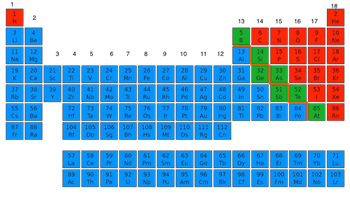
Where are the nonmetals located on the periodic table? 
a)
Blue
b)
Red
c)
Green
112.
What is the correct formula for this molecule?
a)
NH
b)
N3H
c)
NH3
d)
NH4
113.
Ionic bonds exist between a metal with a non-metal.
a)
True
b)
False
114.
Magnesium (Mg) and Oxygen (O) form an ________ bond.
a)
Ionic
b)
Covalent
c)
Metallic
d)
Nothing
115.
Calcium (Ca) and 2 chlorine (Cl) atoms make a covalent compound.
a)
True
b)
False
116.
Which of the following is NOT formed by a covalent bond?
a)
K2S
b)
H2O
c)
I2
d)
CO2
117.

What usually forms the negative ion?

a)

nonmetals

b)

metal

c)

none

118.

Identify the type of chemical reaction

a)

Synthesis

b)

Decomposition

c)

Single replacement

d)

Double replacement

e)

Combustion

119.

Identify the type of chemical reaction

a)

Synthesis

b)

Decomposition

c)

Single replacement

d)

Double replacement

e)

Combustion

120.

Identify the type of chemical reaction

a)

Synthesis

b)

Decomposition

c)

Single replacement

d)

Double replacement

e)

Combustion

121.

Identify the type of chemical reaction

a)

Synthesis

b)

Decomposition

c)

Single replacement

d)

Double replacement

e)

Combustion

122.

Identify the type of chemical reaction

a)

Synthesis

b)

Decomposition

c)

Single replacement

d)

Double replacement

e)

Combustion

123.

Identify the type of chemical reaction

a)

Synthesis

b)

Decomposition

c)

Single replacement

d)

Double replacement

e)

Combustion

124.

Identify the type of chemical reaction

a)

Synthesis

b)

Decomposition

c)

Single replacement

d)

Double replacement

e)

Combustion

125.

Identify the type of chemical reaction

a)

Synthesis

b)

Decomposition

c)

Single replacement

d)

Double replacement

e)

Combustion

126.

Identify the type of chemical reaction

a)

Synthesis

b)

Decomposition

c)

Single replacement

d)

Double replacement

e)

Combustion

127.

Identify the type of chemical reaction

a)

Synthesis

b)

Decomposition

c)

Single replacement

d)

Double replacement

e)

Combustion

128.
What does the Law of Conservation of Mass state?
a)
Matter cannot be gained or lost in a chemical reaction.
b)
Matter can only be lost in a chemical reaction.
c)
Matter can only be gained in a chemical reaction.
d)
Matter can be gained and lost in a chemical reaction. 
129.
Is this balanced?...
Fe + S --> FeS
a)
YES!
b)
NO!
130.
What is a coefficient?
a)
The small number on the right of the chemical symbol.
b)
The large number to the left of a formula.
131.
Is the equation balanced?: 2H2O + O2 --> 4MgO + 3Fe
a)
Yes
b)
No
132.
Balance this equation-
__P+ __O--> __P2O3
a)
it is already balanced
b)
2, 1, 3
c)
1, 2, 3
d)
1, 3, 2
133.
Balance this equation.
_CH4 + _O--> _CO+ _H2O
a)
1,2,1,1
b)
2,1,2,1
c)
1,2,1,2
d)
0,2,0,2
134.
Balance this equation.
_Mg + _Cl--> _MgCl2
a)
1, 2,1
b)
already balanced
c)
2,1,1
d)
1,1,2
135.
What is the little number after an element in a chemical equation called.
Example: H2
a)
Coefficient 
b)
Subscript
c)
Atom
d)
Equation
136.
KNO3 --> KNO2 + O2
What coefficients are needed to balance the reaction?
a)
2, 2, 1
b)
2, 3, 2
c)
1, 2, 2
d)
1, 3, 1
137.
Which side of a chemical equation is the product side?
a)
Left (before the arrow)
b)
Right (after the arrow)
138.
Which side of a chemical equation is the reactant side?
a)
Left (before the arrow)
b)
Right (after the arrow)
139.
Which problem is balanced?
a)
PbO2 + 2H2
b)
SO2 + H20 --> H2SO4
c)
2Na + 2H2O --> 2NaOH + H2
140.
What is the arrow in a chemical equation...
H2 + O --> H2O
a)
Reactants
b)
Products 
c)
Produces
d)
Chemical Equation 
141.
Balance this equation
_Zn+_HCl-->_ZnCl+_H2
a)
1,1,2,1
b)
1,1,1,2
c)
1,2,1,1
d)
2,1,1,1
142.
Balance this equation.
_Mg + _Cl--> _MgCl2
a)
1, 2,1
b)
already balanced
c)
2,1,1
d)
1,1,2