wayground logo

Free Printable Worksheets

Font size

S
M
L
XL
Worksheets

9B 5ABC 6ACDG Review

Total questions: 225

Worksheet time: 4hrs 45mins

Name
Class
Date
1.

Cell differentiation is critical during embryonic development. The process of cell differentiation results in the production of many different kinds of specialized cells. This process is most directly influenced by

a)

DNA

b)

Lipids

c)

Carbohydrates

d)

ATP

2.

As a fertilized egg divides, the cells differentiate because they

a)

have different sets of DNA passed on to the daughter cells

b)

have different sets of genes activated in the daughter cells

c)

have mutations that cause different genes to appear in the daughter cells

d)

randomly assort the chromosomes into different daughter cells

3.

What is the role of mRNA in expressing specialized structures?

a)

Making energy available for building specialized structures

b)

Serving as a template for build specialized proteins

c)

Bonding Amino Acids to form polypeptide chains

d)

Serving as a stored blueprint in the nucleus for building specialized proteins

4.

What is the role of stem cells in cell differentiation?

a)

They serve as a precursor for generalized cells

b)

These cells can turn into specialized cells and back into generalized cells when needed

c)

They are generalized cells that can lead to specialized cells

d)

They are specialized cells that can lead to generalized cells

5.

Which are external factors that can regulate gene expression?

a)

Operons

b)

Homeobox Genes

c)

Transcription Factors

d)

Temperature

6.

When gene expression occurs

a)

A gene is mutated with either an insertion or deletion

b)

The gene is removed from the genotype in that cell

c)

The gene is passed on to the daughter cells during mitosis

d)

The gene is activated and used in protein synthesis

7.

Cell specialization is important to all of the following except:

a)

Multicellular organisms

b)

Eukaryotic organisms

c)

Red blood cells

d)

Bacteria

8.

Which reason explains why nerve cells function differently than muscle cells?

a)

In nerve cells all the genes are expressed.

b)

In muscle cells all the genes are expressed.

c)

In both kinds of cells the same genes are expressed.

d)

In both kinds of cells different genes are expressed.

9.
Which best explains why muscle cells are different from blood cells?
a)
Muscle cells are produced by the brain, but blood cells are produced by the heart. 
b)
Different genes are activated in muscle cells than in blood cells. 
c)
Muscles cells experience different environmental influences than blood cells. 
d)
A mutation occurs during the development of muscle cells but not in blood cells. 
10.
What is a gene?
a)
A segment of RNA that encodes for a protein
b)
A chromosome
c)
A segment of DNA that encodes for a protein
d)
Your genome
11.
The process by which a cell becomes specialized for a specific structure or function.
a)
cell multiplication
b)
cell division
c)
mitosis
d)
cell differentiation
12.

1. Each of our _______ consists of tightly coiled DNA.

a)

nucleotides

b)

amino acids

c)

proteins

d)

chromosomes

13.

Every cell has the same genome and gene expression

a)

True

b)

False

14.
Which of these molecules gets translated?
a)
DNA
b)
mRNA
c)
tRNA
d)
amino acids
15.
_______ is to transcription as ________ is to translation.
a)
mRNA / Amino Acid Chain
b)
Amino Acid Chain / mRNA
c)
Ribosome / Nucleus
d)
mRNA / tRNA
16.
____ is the activation of a gene that results in transcription.
a)
Gene expression
b)
Gene technology
c)
Eukaryotic expression
d)
Prokaryotic expression
17.

Gene expression is the ability for a gene to be:

a)

in the genome.

b)

transcribed.

c)

non-coding.

d)

a dominant allele.

18.

Which RNA type is the result of transcription?

a)

tRNA

b)

Non-coding RNA

c)

rRNA

d)

mRNA

19.

Which of the following is correct?

a)

Nucleotide triplets code a single amino acid.

b)

Each amino acid codes a nucleotide.

c)

Each nucleotide codes an amino acid.

d)

Amino acid triplets code a single nucleotide.

20.

Translation is a process where:

a)

a polypeptide sequence is produced from a sequence of rRNA codons.

b)

a polypeptide sequence is produced from a sequence of tRNA codons.

c)

a polypeptide sequence is produced from a sequence of mRNA codons.

d)

a DNA nucleotide sequence is used to produce mRNA codon sequence.

21.

How many chromosomes does a human have?

a)

10

b)

23

c)

46

d)

92

22.

the results of mitosis is

a)

2 identical daughter cells

b)

2 different daughter cells

c)

4 identical daughter cells

d)

4 different daughter cells

23.

The result of meiosis is

a)

2 identical daughter cells

b)

2 different daughter cells

c)

4 identical daughter cells

d)

4 different daughter cells

24.

the 4 phases of mitosis in order are

a)

prophase, anaphase, metaphase, telophase

b)

telophase, metphase, metaphase, anaphase

c)

prophase, metaphase, anaphase, telophase

d)

telophase, metaphase, anaphase, prophase

25.

The process that produces sex cells is called

a)

photosynthesis

b)

meiosis

c)

mitosis

d)

respiration

26.

What is the life cycle of the cell called

a)

the cell cycle

b)

photosynthesis

c)

mitosis

d)

chromatid

27.

The process by which the number of chromosomes is reduced by half to form sperm and eggs is called

a)

mitosis

b)

cells

c)

meiosis

d)

photosynthesis

28.

The male and female sex cells are also called

a)

body cells

b)

skin cells

c)

somatic cells

d)

gametes

29.

The 3 stages of the cell cycle are

a)

mitosis, meiosis, cytokinesis

b)

interphase, mitosis, cytokinesis

c)

interphase, meiosis, cytokinesis

d)

prophase, mitosis, cytokinesis

30.

Chromosomes move to the middle of the spindle during what phase?

a)

anaphase

b)

telophase

c)

metaphase

d)

prophase

31.

Most of the life of any cell is spent is this phase

a)

interphase

b)

prophae

c)

metaphase

d)

anaphase

e)

telophase

32.

Human sex cells have __________ chromosomes

a)

23

b)

46

33.

how are body cells made

a)

mitosis

b)

meiosis

34.

makes sex cells

a)

mitosis

b)

meiosis

35.

the nucleus divides ONCE

a)

mitosis

b)

meiosis

36.

the nucleus divides TWICE

a)

mitosis

b)

meiosis

37.

if a fruit fly has 8 chromosomes in the body cells, how many are in the sex cells?

a)

16

b)

8

c)

4

38.

if a turkey has 40 chromosomes in its sex cells, how many chromosomes are in its body cells?

a)

80

b)

40

c)

20

39.
In mitosis, the two resulting cells are
a)
different from the starting cell and identical to each other.
b)
different from the starting cell and different from each other.
c)
identical to the starting cell and different from each other.
d)
identical to the starting cell and identical to each other.
40.
Meiosis results in the production of
a)
2 diploid cells
b)
2 haploid cells
c)
4 haploid cells
d)
4 diploid cells
41.
The end of meiosis results in  ____ to each other.
a)
2 cells that are identical
b)
4 cells that are identical
c)
2 cells that are not identical
d)
4 cells that are not identical
42.
If a parent cell has 26 chromosomes, how many chromosomes would each daughter cell contain in mitosis?
a)
42
b)
13
c)
26
d)
1738
43.
Fruit fly body cells have 8 chromosomes. After mitosis, you would expect a resulting fruit fly daughter cell to have -
a)
16 chromosomes.
b)
46 chromosomes.
c)
8 chromosomes.
d)
4 chromosomes.
44.
In which type of cells will mitosis occur?
a)
egg cells
b)
sperm cells
c)
jail cells
d)
Body cells except the sperm and egg cells
45.
In meiosis, the haploid number of chromosomes in a human sex cell is:
a)
46
b)
92
c)
22
d)
23
46.

Crossing over occurs in what phase of Meiosis?

a)

Prophase I

b)

Prophase II

c)

Metaphase I

d)

Interphase

47.

Genetic information is transferred to homologous pairs during what?

a)

Cytokinesis

b)

Crossing over

c)

Interphase

48.
Why do we need meiosis?
a)
To double the number of chromosomes going into sex cells
b)
To halve the number of chromosomes going into sex cells
c)
To triple the number of chromosomes going into sex cells
d)
To not change the number of chromosomes going into sex cells
49.

The chromosomes that pair up during meiosis, are called __________ chromosomes.

a)

heterozygous

b)

haploid

c)

homologous

d)

diploid

50.
What process, and which type of resulting cells are represented?
a)
mitosis, gametes
b)
mitosis, body cells
c)
meiosis, gametes
d)
meiosis, body cells
51.
Meiosis makes sperm and egg cells. In humans, sperm and egg cells each have _____ chromosomes. Therefore a fertilized human egg cell (sperm and egg cell combined) would create a cell with _____ chromosomes.
a)
23, 46
b)
46, 23
c)
2, 4
d)
50, 100
52.
How many daughter cells are produced from meiosis ?
a)
10
b)
6
c)
4
d)
2
53.

The products of meiosis are genetically...

a)

different.

b)

identical.

54.
Human eggs and sperm are _____, and each has ____ chromosomes.
a)
diploid, 23
b)
diploid, 46
c)
haploid, 23
d)
haploid, 46
55.

Identify a purpose of mitosis. Select all that apply.

a)

Produce gametes for reproduction.

b)

Repair damaged or dead cells.

c)

Reduce the chromosome number.

d)

Growth of organisms from birth to adulthood.

56.

Identify a purpose of meiosis. Select all that apply.

a)

Produce gametes for reproduction.

b)

Repair damaged or dead cells.

c)

Reduce the chromosome number.

d)

Growth of organisms from birth to adulthood.

57.

What are homologous chromosomes?

a)

Pairs of chromosomes with different genes on each.

b)

Pairs of chromosomes with the same genes on each.

c)

Pairs of chromosomes with no genes.

d)

Pairs of chromosomes with the wrong genes on each.
58.
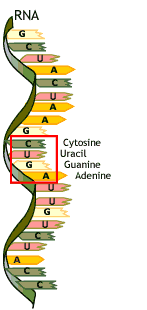
In RNA, Uracil pairs with ______. 
a)
cytosine
b)
adenine
c)
guanine
d)
thymine
59.
The mRNA leaves the ________ to find the ribosome to make proteins.
a)
cell
b)
nucleotide
c)
nucleus
60.

DNA holds the code for making

a)

lipids

b)

carbohydrates

c)

proteins

d)

sugars

61.

Choose the sequence of the mRNA strand that would be match up with to the following strand:

GTAGTCA

a)

UATUAGA

b)

ACGACTG

c)

CAUCAGU

d)

CATCAGT

62.
The main function of tRNA is to...
a)
carry a message that, when translated, forms proteins
b)
form a portion of ribosomes
c)
string together complementary RNA and DNA strands
d)
bring amino acids from the cytoplasm to the ribosomes
63.
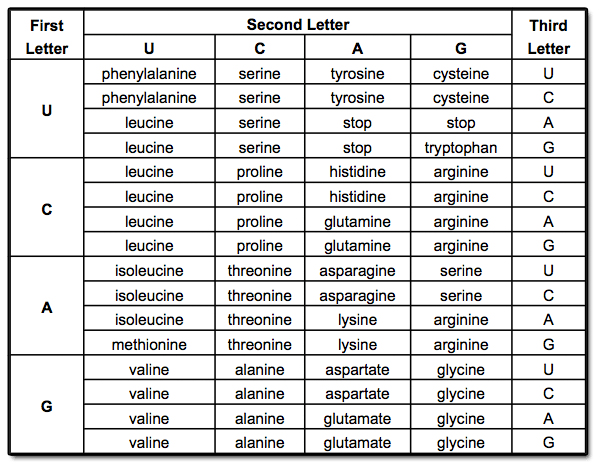
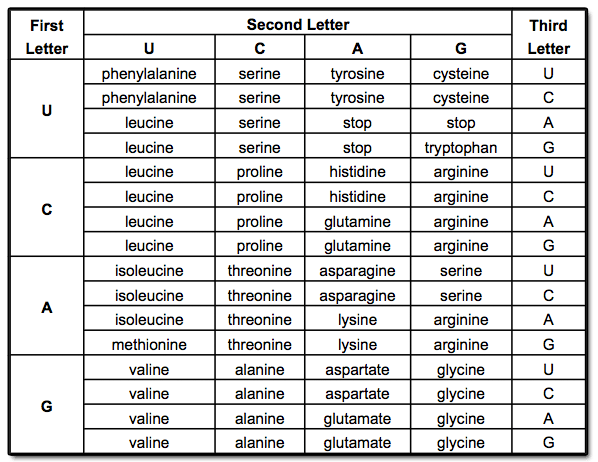
What amino acid is represented by the codon UUA?
a)
Phenylalanine
b)
Tyrosine
c)
Leucine
d)
Stop codon
64.

What is the correct amino acid sequence for the mRNA code AUGCCAGUAUGA

a)

Met-Pro-Ala-Val

b)

Met-Pro-Val

c)

Tyr-Gly-His

d)

Tyr-Gly-Arg-His

65.

Which is the mRNA molecule that would be created from this DNA template:

TGGCAAGTACGT

a)

ACCGTTCATGCA

b)

UGGCAAGUACGU

c)

UCCGUUCUUGCU

d)

ACCGUUCAUGCA

66.
Contains the bases adenine, uracil, cytosine and guanine
a)
DNA
b)
RNA
c)
Both
67.
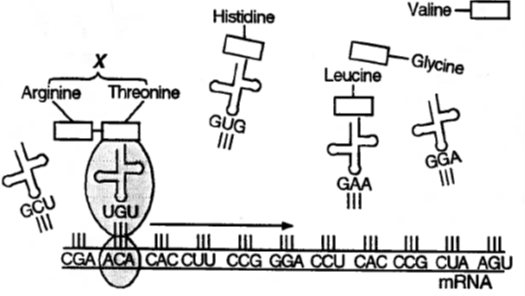
What part of protein synthesis does this diagram represent?
a)
mRNA
b)
tRNA
c)
rRNA
d)
RNA
68.
Where do cells get the information to make proteins?
a)
RNA
b)
DNA
c)
phosphate group
69.
The central dogma of biology states that information flows in one direction from 
a)
nuclei to RNA to cytoplasm
b)
ribosomes to proteins to DNA
c)
genes to nuclei to ribosomes
d)
DNA to RNA to proteins
70.
Choose the nucleotide sequence of the RNA strand that would be complementary to the following strand: 
GTAGTCA
a)
UATUAGA
b)
ACGACTG
c)
CAUCAGU
d)
CATCAGT
71.
What is the term for a three-nucleotide sequence that codes for an amino acid?
a)
base
b)
codon
c)
amine
d)
serine
72.
Which phrase best describes translation?
a)
converts mRNA into a polypeptide
b)
catalyzes bonds between amino acids
c)
produces RNA from DNA molecules
d)
recycles tRNA molecules for reuse
73.
Which of the following is the site of transcription?
a)
vacuole
b)
lysosome
c)
nucleus
d)
ribosome
74.
Which of the following is the site of translation?
a)
vacuole
b)
lysosome
c)
nucleus
d)
ribosome
75.
Which of the following is created in the nucleus and carries the genetic code to the cytoplasm?
a)
DNA
b)
tRNA
c)
mRNA
d)
rRNA
76.
What would happen if we did not have start codons?
a)
Polypeptide chains would continue to grow
b)
Amino acids would bind to tRNA
c)
Protein synthesis wouldn't occur
d)
mRNA would form a double strand
77.
A sugar, a phosphate group, and a nitrogen base form the building blocks of which organic compound?
a)
carbohydrates
b)
nucleic acids
c)
lipids
d)
proteins
78.
Which of the following is the template for the production of RNA within a cell?
a)
DNA
b)
protein
c)
ATO
d)
carbohydrate
79.
What molecules do both DNA and RNA contain?
a)
uracil
b)
nucleotides
c)
thymine
d)
deoxyribose
80.
Which of the following best describes how DNA and RNA are similar?
a)
they both contain A and T
b)
They both have a double helix
c)
They are both composed of 5 different nucleotides
d)
they both have C and G
81.
The DNA sequence ATCAGCGCTGGC is part of a gene. how many amino acids are coded for by this message?
a)
4
b)
8
c)
12
d)
20
82.
DNA sequence is ACAGTGC. How would this be coded on mRNA?
a)
TGTCACG
b)
UGUCACG
c)
GUGACAU
d)
CACUGUA
83.
What is the relationship between a protein, the cell, and DNA?
a)
DNA is produced by protein which is produced in the cell
b)
Protein is composed of DNA which is produced in the cell
c)
DNA controls the production of protein in the cell
d)
A cell is composed of DNA and protein
84.
Which process?
a)
mutation
b)
transcription
c)
respiration
d)
translation
85.
What process is going on in this photo? 
a)
Transcription 
b)
Translation 
c)
Replication 
d)
All the above 
86.
Which component of DNA determines the traits of an organism? 
a)
Nitrogen Bases
b)
Sugar-Phosphate Backbone
c)
Hydrogen bonds
87.

What process is happening in the diagram?

a)

transcription

b)

translation

c)

dna replication

d)

mitosis

88.
Translation takes place in the 
a)
ribosome
b)
chloroplast
c)
nucleus
d)
mitochondria
89.
Brings the amino acids to the ribosome
a)
mRNA
b)
tRNA
c)
rRNA
d)
DNA
90.
What is the term for a three-nucleotide sequence that codes for an amino acid?
a)
base
b)
codon
c)
amine
d)
serine
91.
Which phrase best describes translation?
a)
converts mRNA into a polypeptide
b)
catalyzes bonds between amino acids
c)
produces RNA from DNA molecules
d)
recycles tRNA molecules for reuse
92.
What type of bonds are forming during translation?
a)
Peptide bonds
b)
Hydrogen bonds
c)
Acid bonds
93.
How many amino acids are coded for by this sequence of nucleotides:
ATG GGA ACT CCA
a)
4
b)
2
c)
6
d)
12
94.
Which phase of which process does this picture show?
a)
Transcription
b)
Translation
c)
Replication
95.
The job of tRNA is to
a)
carry amino acids to the ribisomes
b)
carry ribisomes to the ER
c)
carry glucose to mitochondria
d)
carry mRNA out of the nucleus
96.
What would happen if we did not have start codons?
a)
Polypeptide chains would continue to grow
b)
Amino acids would bind to tRNA
c)
Protein synthesis wouldn't occur
d)
mRNA would form a double strand
97.
What is the correct amino acid sequence for the mRNA code AUGCCAGUAUGA
a)
Met-Pro-Ala-Val
b)
Met-Pro-Val
c)
Tyr-Gly-His
d)
Tyr-Gly-Arg-His
98.

What is the order for Protein Synthesis?

a)

Transcription -> Translation -> Protein

b)

Translation - > Transcription -> Protein

c)

Protein -> Transcription -> Translation

d)

Translation -> Protein -> Transcription

99.
Amino acids are joined together in order to form
a)
DNA
b)
ribosomes
c)
proteins 
d)
RNA
100.

Which sequence could be found in RNA?

a)

ACCTGT

b)

CGCATT

c)

AUGCUU

101.
What is the location in the cell for translation?
a)
nucleus
b)
mitochondria
c)
ribosome
d)
chloroplast
102.

Which type of RNA is the message of the decoded gene from DNA?

a)

mRNA

b)

rRNA

c)

tRNA

d)

rDNA

103.

Which type of RNA is the carrier of amino acids?

a)

mRNA

b)

rRNA

c)

tRNA

d)

DNA

104.

Which type of RNA reads the coded gene and makes a protein?

a)

mRNA

b)

rRNA

c)

tRNA

d)

DNA

105.

What is the name of a chain of amino acids?

a)

hydrogen bonds

b)

polypeptide

c)

amino acid chain

d)

double helix

106.

RNA has ________ sugar.

a)

ribose

b)

deoxyribose

c)

glucose

d)

galactose

107.

DNA has ________ sugar.

a)

ribose

b)

deoxyribose

c)

glucose

d)

galactose

108.

In RNA _______ matches with Adenine

a)

Uracil

b)

Guanine

c)

Cytosine

d)

Thymine

109.

In DNA _______ matches with Adenine

a)

Uracil

b)

Guanine

c)

Cytosine

d)

Thymine

110.

Which amino acid matches with the following codon:

GAU

a)

GLU

b)

SER

c)

ASP

d)

ILE

111.

Which amino acid matches with the following codon:

CAC

a)

STOP

b)

HIS

c)

LYS

d)

ARG

112.

Use the mRNA below to select the correct amino acid sequence:

AUG-UCA-AAA-UAG

a)

MET-SER-LYS-STOP

b)

MET-THR-LYS-TYR

c)

LEU-SER-CYS-STOP

d)

ILE-LYS-SER-STOP

113.
How does RNA differ from DNA?
a)
RNA contains uracil and deoxyribose
b)
RNA contains ribose and thymine
c)
RNA contains uracil and ribose
d)
RNA contains adenine and ribose
114.
How would the DNA sequence GCTATA be transcribed to mRNA?
a)
GCUAUA
b)
CGATAT
c)
CGAUAU
d)
GCUTUT
115.
The process by which the genetic code of DNA is copied into a strand of RNA is called
a)
translation
b)
transcription
c)
transformation
d)
replication
116.

What is the correct order to make a protein?

a)

Protein, DNA, RNA

b)

RNA, DNA, Protein

c)

DNA, RNA, Protein

d)

Protein, RNA, DNA

117.

What enzyme does transcription use?

a)

DNA polymerase

b)

ligase

c)

RNA polymerase

d)

helicase

118.
What part of a nucleotide accounts for the genetic variation between individuals?
a)
phosphate
b)
nitrogenous base
c)
deoxyribose
d)
sugar
119.

If one strand of DNA has the sequence TTACCG, the sequence of the other strand of the same molecule will be

a)

AATGGC

b)

TTACCG

c)

AACGGC

d)

AATGGG

120.
Where does transcription take place?
a)
nucleus
b)
cytoplasm
c)
ribosome
121.
what does mRNA do?
a)
carry info from genes to ribosomes
b)
carry amino acids to ribosomes
c)
help with RNA splicing
d)
make up ribosomes
122.
True or false:  RNA is double-stranded.
a)
true
b)
false
c)
it depends on the type
123.
Which of the following best describes a DNA molecule?
a)
double helix
b)
contains ribose
c)
made of amino acids
d)
contains Uracil
124.

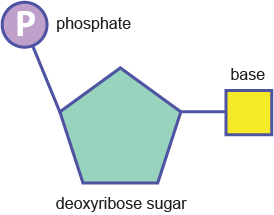
What is the building block of the biomolecule, Nucleic Acid?

a)
b)
c)
d)
125.
Which RNA bases would pair with TACGAA in transcription
a)
AUGCUU
b)
ATGCTT
c)
GCATCC
d)
GCAUCC
126.

DNA codes for...

a)

carbohydrates

b)

proteins

c)

fatty acids

d)

nucleic acids

127.
Which process is used to copy DNA in the nucleus?
a)
replication
b)
transcription
c)
translation
128.

RNA contains which sugar?

a)

deoxyribose

b)

Ribose

c)

glucose

d)

fructose

129.
Which of the following statements is true?
a)
DNA is single-stranded
b)
RNA is single-stranded
c)
DNA contains uracil
d)
RNA contains deoxyribose
130.
What does this picture represent?
a)
amino acid
b)
base pairing
c)
nucleotide
d)
the DNA molecule
131.
I include the bases guanine, cytosine, and adenine.
a)
DNA
b)
RNA
c)
Both DNA and RNA
132.

Transcribe the following DNA strand: CTG AAT

a)

GAC TTA

b)

CTG AAT

c)

GAC UUA

d)

CUG AAU

133.
A monomer of DNA is called a(n)
a)
Monosaccharide
b)
Amino Acid
c)
Triglyceride
d)
Nucleotide
134.
Which of the following best describes a DNA molecule?
a)
double helix
b)
contains ribose
c)
made of amino acids
d)
contains Uracil
135.
In a molecule of double-stranded DNA, the amount of Adenine present is always equal to the amount of
a)
cytosine
b)
guanine
c)
thymine
d)
uracil
136.
Which organelle is DNA usually found in?
a)
cell membrane
b)
vacuole
c)
ribosome
d)
nucleus
137.
Nitrogenous bases are joined by which type of bond?
a)
polar bonds
b)
ionic bonds
c)
covalent bonds
d)
hydrogen bonds
138.
Nucleotides are made up of a sugar, phosphate, and..?
a)
nitrogenous base
b)
nucleic acid
c)
cholesterol
d)
fatty acid
139.
A five-carbon sugar found in DNA.
a)
ribose
b)
guanine
c)
deoxyribose
d)
helicase
140.
DNA is copied during
a)
Translation
b)
Transcription
c)
Reproduction
d)
Replication
141.
DNA polymerase is a(n)
a)
lipid
b)
enzyme
c)
sugar
d)
starch
142.
What are the 4 nitrogenous bases in DNA?
a)
adenine, thymine, cytoplasm, and guanine
b)
adenine, thymine cytosine, and guanine
c)
adenine, thymine, cytosine, and gylcerol
d)
adenine, thymine, cytosine, and glucose
143.
What does DNA stand for?
a)
Deoxyribonucleic acid
b)
Denitrogenous acid
c)
Deribonucleic acid
d)
Diribonucleic acid
144.
Which sequence of DNA bases would pair with this partial strand
ATG TGA CAG
a)
ATG TGA CAG
b)
TAC ACT GTC
c)
GTA AGT GAC
d)
CAT TCA CTG
145.
Guanine bonds with ______________.
a)
Adenine
b)
Guanine
c)
Cytosine
d)
Thymine
146.
Watson and Crick were the first to suggest that DNA is _____
a)
a short molecule
b)
the shape of a double helix
c)
a protein molecule
d)
the genetic material
147.

What is a gene?

a)

A bundle (like a hot dog bun) that the DNA is packed into

b)

something inside the nucleus

c)

a section/piece of DNA

d)

all of your DNA

148.

What is the name of this structure found in our nucleus?

a)

chromosome

b)

gene

c)

ribosome

d)

DNA

149.

What determines the code, or information, of a DNA molecule?

a)

the shape (structure) of the nitrogen bases

b)

the order (sequence) of the nitrogen bases

c)

the sugar-phosphate backbone

d)

the frequency (number) of nitrogen bases

150.
Which 2 molecules forms the sides (backbone) of the DNA ladder?
a)
deoxyribose and adenine
b)
deoxyribose and a hydrogen bond
c)
sugar and the nucleus
d)
deoxyribose (sugar) and phosphate
151.

DNA is the instructions on how to make..

a)

bases

b)

proteins

c)

amino acids

d)

phosphates

152.
the process of making a copy of DNA
a)
transcription
b)
double helix
c)
DNA replication
d)
replication fork
153.
When DNA makes a copy of itself, the new strands are identical or different?
a)
identical
b)
different
154.

What is the function of gene?

a)

provide directions on how to make a protein

b)

provide energy for the cell

c)

provide storage for the cell

155.
The enzyme that unzips the DNA to prepare for replication
a)
helicase
b)
replicase
c)
polymerase
d)
synthase
156.
Which of the following units are repeatedly joined together to form a strand of DNA?
a)
amino acids
b)
nucleotides
c)
fatty acids
d)
polysaccharides
157.
What are the nucleotides made of?
a)
Sugar, Phosphate, nitrogen base
b)
Phosphate, Adenine, nitrogen base
c)
Thymine, Adenine, Cytomine
d)
Phosphate, Nitrogen, Adenine
158.
If a strand reads:
3' A A A T T T C 5'
The matching strand would read...
a)
5' T T T A A A G 3'
b)
3' T T T A A A G 5'
c)
5' A A A T T T C 3'
d)
3' U U U A A A G 5'
159.
This picture is illustrating the ____ nature of DNA.
a)
anti-parallel
b)
deoxyribosic
c)
helical
d)
radioactive
160.
If the percentage of DNA is made of 30% Thymine, what is the correct percentage of Guanine?
a)
30
b)
15
c)
20
d)
60
161.

Which enzyme is responsible for adding nucleotides?

a)

Helicase

b)

DNA Polymerase

c)

Ligase

d)

Primase

162.

If one strand of DNA contains the following bases: 5' ATCGATCG 3', what would the other strand read?

a)

3' CGATCGAT 5'

b)

3' TAGGTAGG 5'

c)

5' TAGCTAGC 3'

d)

3' TAGCTAGC 5'

163.

What component(s) of DNA never change?

a)

phosphate group

b)

nucleotide sequence

c)

deoxribose sugar

d)

all of the above

164.

What component(s) of DNA do change?

a)

phosphate group

b)

nucleotide sequence

c)

deoxribose sugar

d)

all of the above

165.

What is different about the DNA of a starfish compared to a bacteria?

a)

sugar phosphate backbone

b)

nucleotide sequence

c)

starfish don't have bacteria

d)

bacteria don't have DNA

166.
Which part of the Cell Cycle takes the longest?
a)
Interphase
b)
Mitosis
c)
Prophase
d)
Cytokinesis
167.
What happens in the first part of Interphase?
a)
Mitosis
b)
Cell Growth
c)
DNA Replication
d)
Anaphase
168.
What part of the cell cycle results in the splitting of the new cells?
a)
Interphase
b)
Mitosis
c)
Metaphase
d)
Cytokinesis
169.
What does DNA Replication mean?
a)
DNA is made.
b)
DNA makes new cells. 
c)
DNA copies itself.
d)
DNA starts the cell cycle.
170.
What phase is this cell in?
a)
Cytokinesis
b)
Mitosis
c)
Prophase
d)
Metaphase
171.
What phase is this cell in?
a)
Mitosis
b)
Interphase
c)
Anaphase
d)
Telophase
172.
What phase is this cell in?
a)
Mitosis
b)
Cytokinesis
c)
Prophase
d)
Telophase
173.
What phase is this cell in?
a)
Mitosis
b)
Interphase
c)
Prophase
d)
Telophase
174.
In what phase do the chromosomes line up in the middle of the cell?
a)
Cytokinesis
b)
Metaphase
c)
Prophase
d)
Telophase
175.
In what phase does chromatin condense to form chromosomes?
a)
Mitosis
b)
Interphase
c)
Prophase
d)
Anaphase
176.
In what phase do the chromosomes get pulled apart into sister chromatid to opposite sides of the cell?
a)
Prophase
b)
Interphase
c)
Metaphase
d)
Anaphase
177.
In what phase do the organelles disperse out into the daughter cells, and the cell prepares for cytokinesis?
a)
Prophase
b)
Interphase
c)
Mitosis
d)
Telophase
178.
What can the cell cycle also be called?
a)
Cell growth
b)
DNA Replication
c)
Preparation for Mitosis
d)
Cell Divison
179.
During what stage does the G1, S and G2 phases happen?
a)
Interphase
b)
M phase
c)
Mitosis
d)
Cytokinesis
180.
During what phase of the cell cycle is DNA replicated?
a)
G1 phase
b)
S phase
c)
G2 phase
d)
M phase
181.
During what phase of the cell cycle does cell division occur?
a)
Interphase
b)
M phase
c)
S phase
d)
G2 phase
182.
During what phase of the cell cycle does the cell grow?
a)
G1 phase
b)
S phase
c)
M phase
d)
Cytokinesis
183.
During what phase of the cell cycle does the cell prepare for mitosis?
a)
G1 phase
b)
S phase
c)
G2 phase
d)
M phase
184.
How many stages are in mitosis?
a)
1
b)
2
c)
3
d)
4
185.
Put the following stages of mitosis in order: anaphase, prophase, metaphase, and telophase. 
a)
prophase, metaphase, telophase, anaphase
b)
prophase, anaphase, metaphase, telophase
c)
prophase, metaphase, anaphase, telophase
d)
prophase, telophase, metaphase, anaphase
186.
Put the following stages of the cell cycle in order: G2, S, G1, M. 
a)
G1, S, G2, M
b)
S, G1, G2, M
c)
G1, M, G2, S
d)
M, G1, S, G2
187.
Put the following in order: G2, G1, S, mitosis, cytokinesis. 
a)
G1, G2, S, Mitosis, cytokinesis
b)
G1, S, G2, Mitosis, cytokinesis
c)
G1, G2, S, cytokinesis, mitosis
d)
G1, S, G2, cytokinesis, mitosis
188.
Put the following actions in order: DNA replicates, cell grows, cell divides, cell prepares for mitosis. 
a)
DNA replicates, cell grows, cell prepares for mitosis, cell divides
b)
cell grows, cell prepares for mitosis, DNA replicates, cell divides
c)
cell grows, DNA replicates, cell prepares for mitosis, cell divides
d)
DNA replicates, cell prepares for mitosis, cell grows, cell divides
189.

Why do organisms use the cell cycle?

a)

to grow

b)

to create cancer

c)

to get energy

d)

to repair damaged cells

190.
Cancer creates abnormal cells by disrupting
a)
the cell cycle
b)
red blood cell formation
c)
DNA replication
d)
ATP synthesis
191.
An abnormal mass of cancer cells is called a 
a)
tumor
b)
cyst
c)
lesion
d)
polyp
192.

Cancer cells pass cell cycle checkpoints, and so they do not undergo apoptosis.

a)

True

b)

False

193.

________________is a critical point where stop and go signals can regulate the cycle

a)

Cancer

b)

Checkpoint

c)

Malignant

d)

Cytoknesis

194.

What is a term for programmed cell death?

a)

apoptosis

b)

necrosis

c)

cancer

d)

G0

195.

Why would it be important to replicate DNA before a cell divides in mitosis?

a)

In order for genetic information to be transferred into daughter cells.

b)

In order for the cell to be able to increase in size.

c)

In order for the DNA to be contained in the nucleus.

d)

In order for the cell to re-order the DNA sequencing in the new cells.

196.
The energy that starts the process of photosynthesis comes from....
a)
sunlight
b)
transpiration
c)
cellular respiration
d)
germination
197.
During cellular respiration, what do animal cells use to produce energy from food?
a)
sunlight
b)
meat
c)
water
d)
oxygen
198.
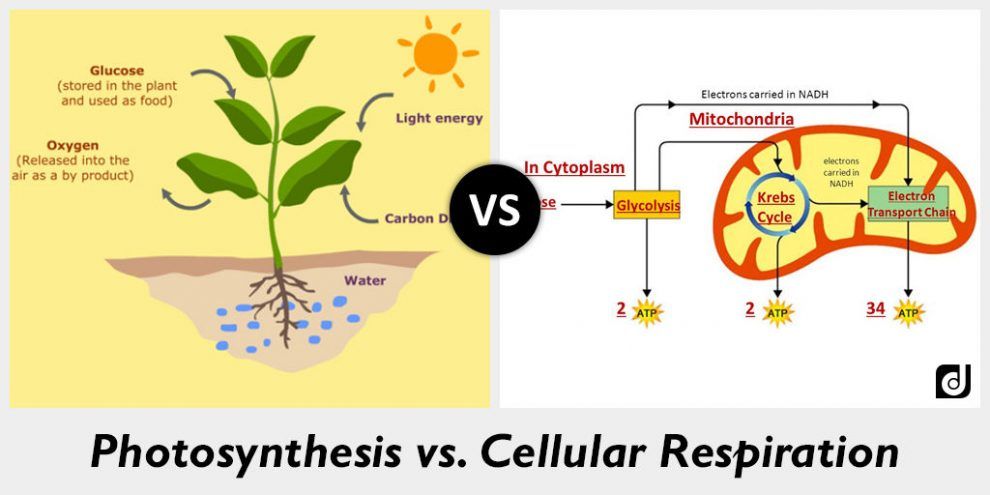
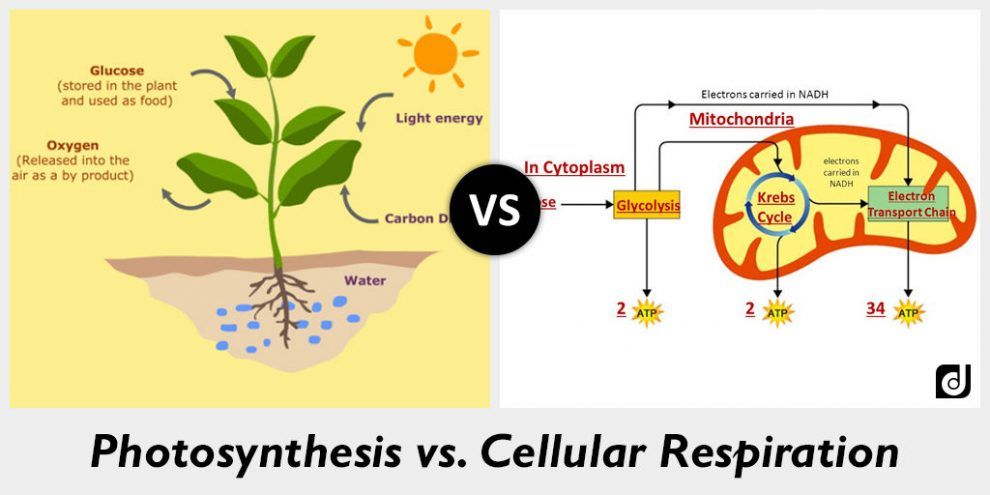
Why is photosynthesis important?
a)
creates oxygen for animals to breath
b)
creates energy for heterotrophs to use
c)
creates food for plants to use
d)
all of these are correct
199.
What is the purpose of cellular respiration?
a)
To turn energy from the sun into glucose
b)
To turn oxygen into glucose
c)
To turn ATP into glucose
d)
To turn glucose into energy in the form of ATP
200.
What is the purpose of photosynthesis?
a)
To use glucose to produce energy in the form of ATP
b)
To use energy from sunlight to produce glucose
c)
To use oxygen to produce glucose
d)
To produce energy for all cells in an animal's body
201.
Plants can...
a)
Only use photosynthesis
b)
Only use cellular respiration
c)
Use photosynthesis and cellular respiration
202.
Reactants are...
a)
Substances present at the beginning of a chemical reaction
b)
substances present at the end of a chemical reaction
203.
Products are...
a)
Substances present at the beginning of a chemical reaction
b)
substances present at the end of a chemical reaction
204.

Which of the following is produced during the process of cellular respiration?

a)

carbon dioxide

b)

sodium chloride

c)

oxygen

d)

sugar

205.

People take in and release gases from the air when they breathe. Which exhaled gas is a waste product of respiration?

a)

helium

b)

oxygen

c)

carbon dioxide

d)

hydrogen

206.

What does the following equation represent?


Sunlight +6H20 + 6CO2--> C6H1206 +6O2

a)

Cellular respiration

b)

Human respiration

c)

Photosynthesis

d)

Solar energy

207.

The products of cellular respiration are:

a)

Carbon Dioxide, Energy (ATP) and Water

b)

Oxygen and Glucose

c)

Water and Glucose

d)

Oxygen and Water

208.

The reactants in photosynthesis are ____________

a)

Sunlight, Water, and Carbon Dioxide

b)

Glucose and Water

c)

Carbon Dioxide and Water

d)

Oxygen and Glucose

209.

The gas given off by plants is ________________.

a)

carbon dioxide

b)

ATP

c)

oxygen

d)

vaporized water

210.

C6H1206 +6O2--> 6H20 + 6CO2 + Energy (ATP)

This equation represents ___________________.

a)

Human Respiration

b)

Cellular Respiration

c)

Solar Radiation

d)

Photosynthesis

211.

Animals can...

a)

Only use photosynthesis

b)

Only use cellular respiration

c)

Use photosynthesis and cellular respiration

212.

What is CO2?

a)

oxygen

b)

water

c)

glucose

d)

carbon dioxide

213.

What is O2?

a)

oxygen

b)

water

c)

glucose

d)

carbon dioxide

214.

What is H2O?

a)

oxygen

b)

water

c)

glucose

d)

carbon dioxide

215.

What is C6H12O6?

a)

oxygen

b)

water

c)

glucose

d)

carbon dioxide

216.

In what organelle does the 2nd stage of cellular respiration take place in?

a)

chlorophyll

b)

chloroplast

c)

cytoplasm

d)

mitochondria

217.

The green pigment in plants is called

a)

melanin

b)

chlorophyll

c)

chloroplast

d)

mitochondria

218.

The green pigment in plants absorbs

a)

oxygen

b)

light

c)

water

d)

glucose

219.
The process by which sugar is converted into energy (ATP) by living organisms is called
a)
photosynthesis
b)
cellular respiration
220.

Which of the following structure is where cellular respiration (Kreb's Cycle and Electron Transport Chain) occurs in the cell?

a)

nucleus

b)

cytoplasm

c)

mitochondria

d)

vacuoles

221.

What are the reactants (taken into) of cellular respiration? (Mark all of them!)

a)

oxygen

b)

glucose

c)

carbon dioxide

d)

water

e)

energy

222.

Cellular Respiration's goal is to

a)

make water

b)

make ATP

c)

make glucose

d)

make oxygen

223.

What type of respiration requires oxygen?

a)

Aerobic

b)

Anaerobic

224.

Where does Glycolysis occur inside the cell? (first step in the overall process)

a)

Cytoplasm

b)

Mitochondria

c)

Chloroplast

d)

Nucleus

225.

What are the products (what is released) of cellular respiration? (Mark all of them!)

a)

oxygen

b)

glucose

c)

carbon dioxide

d)

water

e)

ATP (energy)