
 Worksheets
Unit 4 Lecture 3 Review
Total questions: 23
Worksheet time: 11mins
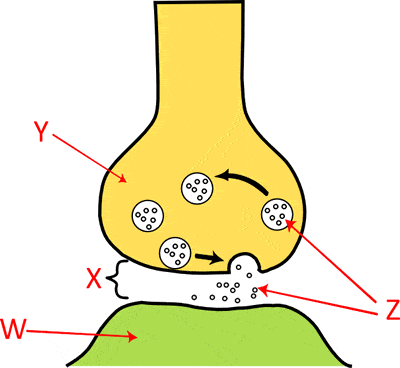

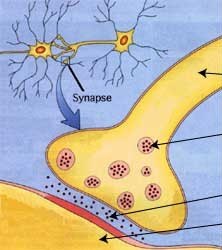
The location of neurotransmitters
axon terminals
dendrites
Schwann cells
cell body
Z
Axon Terminal Button
Neurotransmitters
Dendrite
Synapse
X
Axon Terminal Button
Neurotransmitters
Dendrite
Synapse

What chemical is activated by the action potential in the presynaptic neuron that causes the vesicles containing neurotranmitters to move toward the synaptic cleft?
calcium
potassium
sodium
phosphorus
Neurotransmitters are released from the
Dendrites
Post-synaptic neuron
Presynaptic neuron
Schwann Cells

What's in the picture?
synaptic vesicles
neurotransmitters
presynaptic neuron
postsynaptic neuron
synaptic cleft

What's in the picture?
synaptic vesicles
neurotransmitters
presynaptic neuron
postsynaptic neuron
synaptic cleft

What's in the picture?
synaptic vesicles
neurotransmitters
presynaptic neuron
postsynaptic neuron
synaptic cleft

What's in the picture?
synaptic vesicles
neurotransmitters
presynaptic neuron
postsynaptic neuron
synaptic cleft
Three things that can occur when an action potential reaches a synapse are.....
signal is delayed
signal is stopped
signal is transmitted
signal is reversed
Three things that a neuron can form a synapse with are....
muscles
glands
other neurons
surface of your skin
Which pattern shows how signals are transmitted from the presynaptic neuron to the post synaptic neuron
electrical --> electrical
electrical --> chemical
chemical --> electrical --> chemical
electrical --> chemical --> electrical
Which side of the synapse contains neurotransmitters?
presynaptic
postsynaptic
both
Which side of the synapse contains ligand-gated ion channels?
presynaptic
postsynaptic
both
What causes the release of neurotransmitters into the cleft?
an action potential reaches the terminal
ligand gated ion channels open
excititory neurotransmitters bind to ligand gated ion channels
an action potential on the post synaptic neuron triggers nearby voltage gated ion channels
which of the following explains why the action potential continues along the post synaptic neuron?
an action potential reaches the terminal
ligand gated ion channels open
excititory neurotransmitters bind to ligand gated ion channels
an action potential on the post synaptic neuron triggers nearby voltage gated ion channels
Drugs have their effects because they
mimic some neurotransmitters
cause neurotransmitters to be released without a signaling action potential
block the re-uptake of some neurotransmitters
cause action potentials to move in reverse along the axon

