
 Worksheets
water cycle
Total questions: 55
Worksheet time: 3hrs 45mins
What is the energy source for the water cycle?
sun
wind
rain
oceans
What are clouds made of?
dry air and water vapor
liquid water and dust

A student draws a model to represent the precesses involved in the water cycle, as shown. To which process is the formation of clouds related?
Condensation
Evaporation
Freezing
Melting
On Earth, what process generates most of the water vapor?
Condensation
Evaporation
Precipitation
Transpiration

What is the energy source that drives the water cycle?
The moon T
The heat from our home in the winter all around the world
The sun
he heat generated solely from the core of the earth

What are formed when water vapor condenses?
Clouds
Mountains
Transpiration
Valleys
Water in its gas form is called ____________________,
water vapor
precipitation
ice
air
Which of the following is an example of precipitation?
sleet
hail
snow
all of the above
If groundwater reaches earth's surface, how does it reenter the water cycle?
by transpiration
by evaporation
by accumulation
it can't


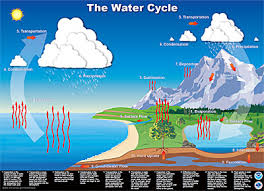
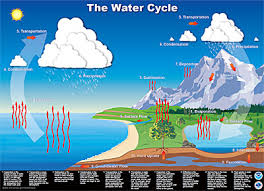
Which stage does water try to return to the ocean or soak into the ground?
condensation
evaporation
transpiration
run off

Warm water evaporates quicker than cold water.
true
false
Which example is a form of precipitation?
Dew
Fog
Frost
Hail
In which area would the rate of evaporation be the lowest?
Over the ocean
Over the mountains
Over the rainforest
Over the desert
As a part of the water cycle, water from Earth's surface enters the clouds and finally falls back to the ground in the form of rain. What is the correct sequence of processes water undergoes?
Evaporation, Condensation, Precipitation
Precipitation, Condensation, Evaporation
Condensation, Evaporation, Precipitation
Evaporation, Precipitation, Condensation
What would happen if the Sun is removed from the water cycle?
The water cycle would not include precipitation but would continue with groundwater flow.
The water cycle would no longer occur because the Sun provides the energy for evaporation and transpiration.
The water cycle would no longer occur because the Sun provides energy for the formation of clouds.
The water cycle would not include evaporation and transpiration but would continue with condensation.

The image shows various stages in the water cycle. During which stage does water flow back towards the sea as runoff?
W
X
Y
Z
Rain and snow are two different forms of precipitation that fall on Earth's surface. Which factor is responsible for there being different forms of precipitation?
Evaporation
Run-off
Temperature
Transpiration
What is precipitation?
Sweat from our bodies on hot days
Warm rain but not cold snow or sleet
Gas that we use in furnaces or ovens
Any form of water that falls from the sky

What is another name or synonym for the water cycle?
Geologic cycle
Hydrologic cycle
Geosphere
Carbon cycle
Condensation means...
water vapor cooling to form clouds
water running downhill
water falling from the sky
water heating up and rising as gas
During condensation water changes from ....
solid ice to liquid water
liquid water to water vapor (gas)
water vapor (gas) to liquid water drops
Which of the following are types of freshwater that can be used by people?
Select all that are true.
groundwater
ice caps and glaciers
oceans
rivers
lakes
What happens once groundwater reaches a layer of rock in the ground that it cannot pass through?
it is soaked up by that layer of rock and dirt
it creates an aquifer
it creates a reservoir
it evaporates
People get fresh water from
reservoirs
lakes and rivers
pumping groundwater up from aquifers using wells
all of the above
Why does groundwater usually require less treatment than surface water?
The layers of Earth protect groundwater from pollutants.
As groundwater sinks into the ground, the layers of rock act like a natural filter and remove pollutants from the water.
Surface water has more exposure to pollutants in runoff and the atmosphere.
all of the above
What are the main components of the water cycle?
Choose all that apply
runoff
transpiration
evaporation
condensation
precipitation
The process by which water moves through the soil
Precipitation
Percolation
Condensation
Evaporation

Which of the processes associated with the water cycle might be responsible for helping to clean or filter the water? (Select TWO answers)
Infiltration (also called percolation)
Transpiration
Precipitation
Runoff

When water or precipitation collects in one spot
Accumulation
Evaporation
Condensation
Transpiration

accumulation; condensation; evaporation; precipitation
condensation; accumulation, evaporation; precipitation
evaporation; condensation; accumulation; precipitation
precipitation; accumulation; evaporation; condensation
An underground bed of saturated soil or rock that yields significant quantities of water that may be pumped to the surface for use by people, livestock or watering crops
aquifer
waterfer
waterford
watershed
A considerable body of standing water.
sea
brook
pond
lake

Look closely at the map of the watershed below. If water enters the watershed at the top of the mountain where the arrow is pointing, at which point will it stop draining?
Point A
Point B
Point C
Point D

Where are you most likely to find a watershed?
In a lake
On a mountain top
At the bottom of a valley
Everywhere
Which watershed is the largest in the United States?
Mississippi River Watershed
Potomac River Watershed
Shenandoah River Watershed
James River Watershed
Choose all of the things that can affect or pollute a watershed.
lawn chemicals
litter
pet waste
factories and power plants
a land area that is covered with water during part or all of the year
water table
wetland
evaporation
a large subtropical swamp in southern Florida that is noted for its wildlife
everglades
watershed
tributary
a wetland typically covered with grasses
condensation
marsh
evaporation

In response to high levels of pollution that was visible by the public in U.S. rivers and lakes the United States Environmental Protection Administration (EPA):
established The Clean Water Act of 1972
banned all point-source pollution
closed factories near any rivers
told people not to swim in polluted water
__________________ is using materials and resources wisely to protect them.
Pollution
Conservation
Recycling
Smog
Which diagram shows the correct water flow patterns of watersheds?
ponds, lakes or oceans -> rivers -> creeks -> mountains and hills
mountains and hills -> creeks ->rivers -> ponds, lakes or oceans
rivers -> ponds, lakes or oceans -> creeks -> mountains and hills
mountains and hills -> ponds, lakes or oceans -> creeks -> rivers

