
 Worksheets
SA-1 Revision quiz (G6)
Total questions: 54
Worksheet time: 28mins
Which of the following changes cannot be reversed?
Milk to paneer
Cold milk to hot milk
water to ice
Wet clothes to dry clothes
Chemical change is reversible.
True
False
All reversible changes are physical. But all physical changes are not reversible.
True
False
Melting of butter is an example of irreversible change.
True
False
Select the example of desired changes
(i) Ripening of fruits. (ii) Rotting of fruits (iii) Rain (iv) Floods
(i) and (ii)
(i)and (iii)
(ii) and (iii)
(iii) and (iv)
While making vegetable salad Meena had cut a variety of raw vegetables. She mistakenly cut apples as well. As the apples cannot be joined together, this change is _____________.
Reversible change
Irreversible change
Natural change
Periodic change

Give a example of physical change
kicking a football
burning a paper
growth of animals and plants
cooking
Burning a log is a chemical change
true
false
Growth of animals and plants
chemcial change
physical change
I don't know
Reversible change
Chemical changes are always irreversible
true
false
The process in which the entire body of an organism moves from one place to another is called
Locomotion
Movement
None of the above
A combination of bones and cartilages forms the ______ of the body.
Muscles
Organs
Skeleton
The contraction of the _________ pulls the bones during movement.
bones
muscles
joints
The joint which allows movement in one direction only is known as a __________
hinge joint
ball and socket joint
pivotal joint
Which of the following is made up of vertebrae ?
Backbone
Cartilage
Skull
Bones of legs
Fixed joints are found in
lower jaw
skull
hands
hip bone
Fish swims by
forming loops alternately on two sides of the body
forming loops on single side
somersaulting
alternate dipping and coming up
Which one of the following is the characteristics of birds?
Strong muscles
Light bones
Hollow bones
All of these
Muscular foot is a locomotary organ in
snakes
earthworm
housefly
snails
…………………….. is the strongest and longest bone in the body
(a)
The place where two or more bones meet together is called a …………….
(a)
The joint between head and upper jaw is an example of
Hinge joint
Pelvic joint
Fixed joint
Ball and socket joint
The animal that does not have any bones is
Earthworm
Bird
Elephant
Fish
Cockroaches have ______pairs of legs and _____ pairs of wings.
2, 3
3, 3
3, 2
2, 2
Ancient Greek Philosopher, ________ in his book "Gait of animals" asked many questions to himself about the body movements in different animals.
Aristotle
Lavoiser
Kennedy
Newton
The body parts used by earthworms to get a good grip on the ground are
Thorns
Slimy secretion
Bristles
Legs
Which joint allows movement in all direction ?
hinge joint
pivotal joint
ball and socket joint
In _______ joint a cylindrical bone rotates in a ring.
pivotal
hinge
ball and socket
None of the above
A muscle can ________ but it cannot ____
push, pull
pull, push
_________ produces blood cells in humans
cartilage
bone marrow
cranium
Major part of the air is constituted by ?
Nitrogen
Oxygen
Carbon dioxide
Inert gases
Envelope of air that surrounds the earth is known as .
Biosphere
Atmosphere
Environment
Ecosystem
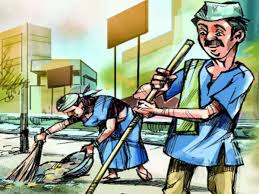
Safai karamcharis collect the garbage in trucks and take it to low lying open area, called a ______________
Landfill
lawnfill
waterfill
airfill
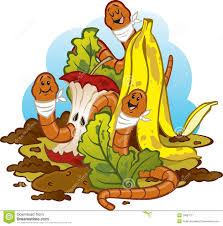
the rotting and conversion of some materials into manure is called _________
composting
decomposing
producing
Circulation of water between ocean and land is known as
Water consumption
Water cycle
Water harvesting
Water management
Which device can be used to see an image of the sun during eclipse?
Glass slab
A straight pipe
Pinhole camera
Plane mirror
Assertion (A): Evaporation is the process of conversion of water into water vapour
Reason (R): Ocean contains salty water
Both A and R are correct and R is the correct explanation for A
Both A and R are correct but R is not the correct explanation for A
A is true but R is false
A is false but R is true
Assertion (A): Air is necessary for burning
Reason (R): The component of air which supports burning is oxygen
Both A and R are correct and R is the correct explanation for A
Both A and R are correct but R is not the correct explanation for A
A is true but R is false
A is false but R is true
Light travels in a?
circular line
Rectangular line
straight line
12.Translucent is?
When light bounces off an object
Material that only allows a little light to pass through
Our main source of light

Where will the tree's shadow be?
A
B
C
When an opaque object comes in the path of light it forms
an image with colours
shadow
black and white image
depends on the colour of the light
Which is a non luminous body?
moon
star
sun
All of these
In a pinhole camera, the image formed is
erect
inverted
smaller
larger
luminous objects
Emit light during night time
Emit light during day time
Emit light of their own during day and night
None of the above

Identify the eclipse by looking at the positions.
Conjunction
Lunar Eclipse
Solar Eclipse
I, O, T, W, U, A, H, X, V, M
will undergo lateral inversion
will not undergo lateral inversion

