
 Worksheets
Restriction Enzymes
Total questions: 20
Worksheet time: 1hrs 2mins
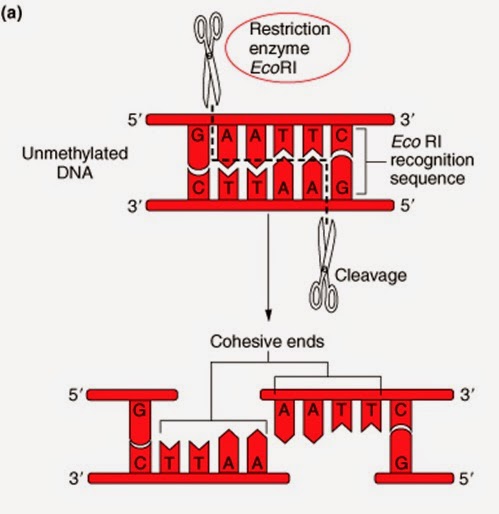
The recognition sites for restriction enzymes are :
a).Tautomer
b). Pallindrome
c).Metamere
d).Acronym
Restriction Enzymes are isolated from :
a).Protozoa
b). Bacteria
c).Virus
d).Fungi
Restriction Enzymes were primarily used as :
a).Defence by Protozoa against antibiotics
b).Tool by Virus to cleave Bacterial genome
c)Defence by Bacteria against bacteriophages viruses
d).All of the above


An enzyme that cut DNA molecules at a specific “recognition site” is called
Restriction enzyme
DNA polymerase
RNA polymerase
Taq polymerase

If the target sequence or restriction site is 5'GCTTCG3', what is the complementary sequence read in the 3'-5' direction?
CGAAGC
GCTTCG
CGUUCG
GCUUCG

What is a restriction enzyme?
An enzyme that cuts DNA
An enzyme that add to the DNA strand
An enzyme that builds proteins
An enzyme that breaks down lipids

The unpaired nucleotides produced by the action of restriction enzymes are referred to as.....
sticky end.
base sequence.
single strands.
restriction fragments.

Restriction Enzymes are isolated from....
proteins
bacteria
viruses
bacteriophages

What is a palindrome?
A sticky end resulting from a restriction enzyme
A blunt end resulting from a restriction enzyme
A sequence that reads the same forwards and backwards
A sequence that is complementary to the other

Which restriction enzymes from above make blunt cuts? (2)
Alul
HaeIII
BamHI
HindIII
EcoRI
Which restriction enzymes from above make sticky cuts? (3)
Il
HaeIII
BamHI
HindIII
EcoRI

How many fragments resulted from the cut above?
1
2
3
4

