wayground logo

Free Printable Worksheets

Font size

S
M
L
XL
Worksheets

Cardiovascular system

Total questions: 42

Worksheet time: 28mins

Name
Class
Date
1.

___ is a group of organs and tissues that act as transfer stations carrying needed materials to cells and removing their waste products.

a)

circulatory system

b)

respiratory system

c)

nervous system

2.

___ takes place when blood travels from the heart, through the lungs, and back to the heart.

a)

pulmonary circulation

b)

systemic circulation

3.

___ takes place when oxygen-rich blood travels to all body tissues except the lungs.

a)

pulmonary circulation

b)

systemic circulation

4.
Which is a function of the cardiovascular system?
a)
to move water throughout the body
b)
to transport gases throughout the body 
c)
to eliminate waste from the body
d)
to provide structural support for the body 
5.
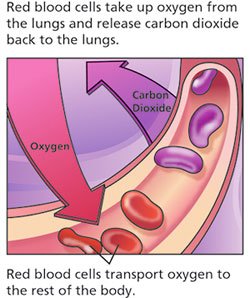
These cells, in the blood, carry oxygen and give the blood its color.
a)
white blood cells
b)
plasma
c)
platelets
d)
red blood cells
6.
This type of vessel carries blood TO the heart:
a)
vein
b)
nerve
c)
muscle
d)
artery
7.
When oxygen-rich blood is carried AWAY from the heart, it travels through an...
a)
artery
b)
neuron
c)
vein
d)
straw
8.
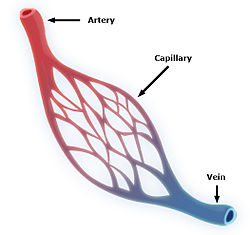
The smallest type of blood vessel is the:
a)
nerve
b)
vein
c)
capillary
d)
artery
9.

The bottom chambers of the heart are called

a)

ventricles

b)

atria

c)

vena cava

d)

valves

10.
What are tube-like structures that include the arteries, arterioles, capillaries, venules, and veins?
a)
Blood Vessels
b)
Lymph
c)
Glands
d)
Strep
11.

The top chambers of the heart are called

a)

ventricles

b)

atria

c)

vena cava

d)

valves

12.
Which part of the heart is this?
a)
Aorta
b)
Pumonary Vein
c)
Pulmonary Artery
d)
Left Atrium
13.
Which part of the heart is this?
a)
Aorta
b)
Right Ventricle
c)
Left Atrium
d)
Left Ventricle
14.
Which part of the heart is this?
a)
Pulmonary Vein
b)
Pulmonary Artery
c)
Right Atrium
d)
Tricuspid Valve
15.
During the Cardiac Cycle the diastole phase is when?
a)
The heart is fully contracted
b)
The heart is fully relaxed
c)
When the atria are relaxed and Ventricles contracted
d)
All of the above
16.

Which of the following is associated with oxygenated blood?

a)

Aorta

b)

Pulmonary Artery

c)

Septum

d)

Right Ventricle

17.

Which of the following is associated with deoxygenated blood?

a)

Aorta

b)

Left Ventricle

c)

Tricuspid valve

d)

Septum

18.

What part of the heart divides the heart into two?

a)

Biscuspid valve

b)

Septum

c)

Pulmonary artery

d)

bicep

19.

The relaxing of the heart is known as

a)

Diastole

b)

Systole

c)

Heart Rate

d)

Cardiac Arrest

20.

The contraction of the heart is known as?

a)

Stroke volume

b)

Diastole

c)

Cardiac cycle

d)

Systole

21.

What is the role of veins in the cardiovascular system?

a)

Carry blood away from the heart

b)

Carry blood back to the heart

c)

Carry blood to the lungs

d)

Allows the exchanges of gases, nutrients and wastes between blood and the tissues

22.
Which of the following delivers oxygen to cells?
a)
Red Blood cells
b)
White blood cells
c)
Platelets
d)
Plasma
23.
Which of the following are the blood vessels that helps blood flow to the heart?
a)
Veins
b)
Arteries
c)
Cappillaries
24.
Which of the following are the blood vessels that have a wall that is 1 cell thick?
a)
Veins
b)
Arteries
c)
Cappillaries
25.
Which of the following are the blood vessels that have the thickest walls?
a)
Veins
b)
Arteries
c)
Cappillaries
26.
What is the name of the circulation between the heart and lungs?
a)
Diastolic
b)
Systemic
c)
Pulmonary
d)
Coronary
27.
What is the name of the circulation between the heart and the body?
a)
Diastolic
b)
Systemic
c)
Pulmonary
d)
Coronary
28.
Blood enters the heart at the ....
a)
Right Atrium
b)
Left Atrium
c)
Right Ventricle
d)
Left Ventricle
29.
What is the function of a valve?
a)
Helps blood to clot
b)
Keeps blood flowing in all directions
c)
Keeps blood flowing in one direction
d)
Stops blood from flowing
30.
Which is the muscular wall that separates the heart into right and left sides?
a)
valves
b)
ventricles
c)
atria
d)
septum
31.
Oxygen-poor blood arrives to the heart from the the body via the _____.
a)
aorta
b)
pulmonary arteries
c)
superior and inferior vena cava
d)
pulmonary veins
32.

The oxygen-carrying protein in blood

a)

Platelets

b)

Blood

c)

Plasma

d)

Hemoglobin

e)

White Blood Cells

33.
Which part of the heart pumps oxygenated blood?
a)
Left side
b)
Right side
c)
Top side
d)
Bottom side
34.
What creates the "lub dub" heart sounds?
a)
Flow of blood
b)
Closing of valves
c)
Opening of valves
d)
Breathing
35.

The force applied to arterial walls as the heart pumps blood is called ______.

a)

blood pressure

b)

blood volume

c)

viscosity

d)

resistance

36.

Which of the following characteristics describe the veins?

a)

move away from the heart

b)

have low blood pressure

c)

distribute blood to body organs

d)

have high blood pressure

37.

What is the direction of blood flow in the circulatory system?

a)

lungs, body, heart, body

b)

body, lungs, heart, body

c)

heart, lungs, heart, body

d)

heart, body, lungs, body

38.

The cusps (leaflets) of atrioventricular valves attach directly to

a)

papillary muscles.

b)

trabeculae carneae

c)

chordae tennidae

d)

interatrial septa

39.

The visceral pericardium is the same as the

a)

epicardium

b)

mediastinum.

c)

parietal pericardium.

40.

The bicuspid or mitral valve is located

a)

in the opening of the aorta.

b)

in the opening of the pulmonary trunk.

c)

where the venae cavae join the right atrium

d)

between the left atrium and the left ventricle

41.

Compared to arteries, veins

a)

are more elastic.

b)

have more smooth muscle in their tunica media

c)

hold their shape better when cut.

d)

have thinner walls

42.

After blood leaves the capillaries, it enters the

a)

arteries.

b)

arterioles.

c)

venules.