
NEW
Font size
S
M
L
XL
 Worksheets
Constitution/Amendment/Government Review
Total questions: 30
Worksheet time: 30mins
Name
Class
Date
1.
Many of our individual liberties are protected by which document?
a)
The Articles of Confederation
b)
The Declaration of Independence
c)
The Bill of Rights
d)
The Fundamental Orders
2.
What is the name for a change or addition to the Constitution?
a)
Amendment
b)
Preamble
c)
Ratification
d)
Compromise
3.
Which Constitutional principle states that the power of government comes from the people?
a)
Federalism
b)
Republicanism
c)
Checks and Balances
d)
Popular Sovereignty
4.
Which branch of government interprets laws?
a)
Judicial (courts)
b)
Executive (president)
c)
Legislative (Congress)
5.
Which group wanted to keep the Articles of Confederation and give more power to the states?
a)
Federalists
b)
Anti-Federalists
c)
Judiciary
d)
Legislature
6.
What was the name for the essays written in support of ratification of the Constitution?
a)
Letters from a Pennsylvania Farmer
b)
The Anti-Federalist Essays
c)
The Federalist Papers
d)
The Fundamental Orders
7.
Which compromise concerned the issue of how to count slaves for representation and taxation?
a)
The Great Compromise
b)
The Commerce Compromise
c)
The 3/5 Compromise
d)
The Connecticut Compromise
8.
Which compromise concerned how many representatives different sized states would have in Congress?
a)
The Great Compromise
b)
The 3/5 Compromise
c)
The Commerce Compromise
d)
The Intolerable Compromise
9.
Who is the head of the executive branch?
a)
The Supreme Court
b)
The Senate
c)
The President
d)
The Cabinet
10.
Which of the following is a system that allows each branch of government to limit the powers of the other branches in order to prevent abuse of power?
a)
Tyranny
b)
Checks and balances
c)
Federalism
d)
Ratification
11.
Which amendment in the Bill of Rights deals with States Rights?
a)
1
b)
5
c)
6
d)
10
12.
Which amendment in the Bill of Rights prohibits cruel and unusual punishment and excessive fines?
a)
3
b)
4
c)
6
d)
8
13.
Which Constitutional principle divides government power between the states and the federal government?
a)
Republicanism
b)
Popular sovereignty
c)
States rights
d)
Federalism
14.
What year was the Constitution written in?
a)
1776
b)
1787
c)
1803
d)
1861
15.
Was Alexander Hamilton a federalist or an anti-federalist?
a)
Federalist
b)
Anti-Federalist
16.
What event proved that the Articles of Confederation were weak?
a)
Boston Massacre
b)
The Revolutionary War
c)
Shay's Rebellion
d)
The Boston Tea Party
17.
Which branch is divided into the House and the Senate?
a)
Legislative
b)
Executive
c)
Judicial
18.
Which is one fact about the President that is NOT true?
a)
The President has a Cabinet that helps him
b)
The President is replaced by the Vice President if he dies
c)
The President must be at least 25 years old.
d)
The President can veto laws
19.
Power of Congress to bring executive or judicial officials to trial.
a)
impeachment
b)
pocket veto
c)
subpoena
d)
oversight
20.
What were the two plans that were put together to create the Great Compromise?
a)
Virginia for small states and New Jersey for large states
b)
New York for large states and New Jersey for small states
c)
Virginia for large states and New Jersey for small states
d)
New York and Virginia
21.
What are the first ten amendments to the Constitution?
a)
the Preamble
b)
the Articles of Confederation
c)
the Declaration of Independence
d)
the Bill of Rights
22.
Freedom of speech, press, religion, assembly, and petition. Which amendment is this?
a)
1st
b)
2nd
c)
3rd
d)
4th
23.
The freedom to bear arms is what amendment?
a)
1st
b)
2nd
c)
3rd
d)
4th
24.
What is the introduction to the Constitution called?
a)
Articles of Confederation
b)
Declaration of Independence
c)
Bill of Rights
d)
Preamble
25.
In the Preamble, what does it mean when it says, "We the people..."?
a)
The constitution was written for all the people of the United States.
b)
The constitution was only written for the delegates at the Constitutional Convention.
c)
Referring to "the people" who authored the constitution.
d)
The people of Massachusetts.
26.
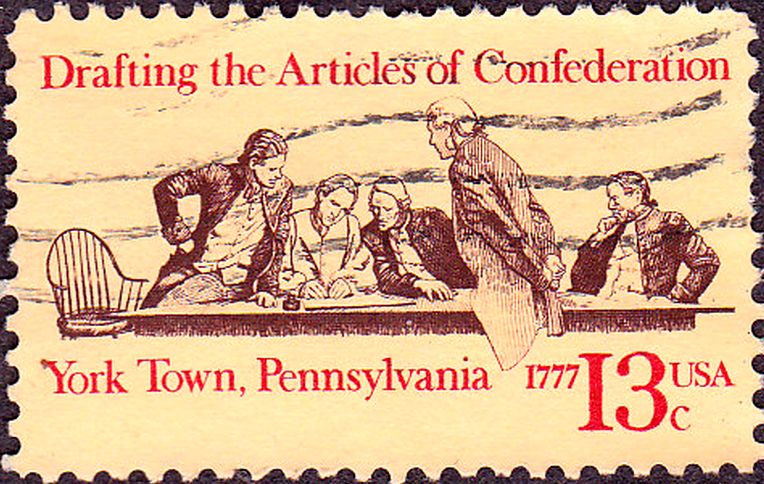
The Articles of Conderation created a ______central government.
a)
Weak
b)
Strong
c)
Stable
d)
Big
27.
Which principle split the power of the government into three branches?
a)
Self-government
b)
Republicanism
c)
Separation of Powers
d)
Limited government
28.
Federalist or Anti-Federalist?
I want the states to be completely sovereign.
I want the states to be completely sovereign.
a)
Federalist
b)
Anti-Federalists
c)
The Northwest Ordinance - Which let new states joined the US.
d)
The Articles of Confederation - They couldn't tax or do anything.
29.
Life, liberty and the pursuit of happpiness
a)
bill of rights
b)
unalienable rights
c)
separation of powers
30.
Citizens elect representatives to make and enforce laws
a)
unalienable rights
b)
republicanism
c)
popular sovereignty
d)
checks and balances
Reset

