wayground logo

Free Printable Worksheets

Font size

S
M
L
XL
Worksheets

Quarter 3 Final Exam Prep

Total questions: 82

Worksheet time: 1hrs 17mins

Name
Class
Date
1.

Which human body systems interact to produce movement of the body?

a)

Nervous and endocrine

b)

Skeletal and muscular

c)

Circulatory and digestive

d)

Excretory and nervous

2.

What 2 systems: Absorb and deliver the digested nutrients to the cells

a)

Digestive and muscular

b)

Muscular and lymphatic

c)

Digestive and circulatory

d)

Nervous and skeletal

3.

What 2 systems: Allow organs to contract and push food through

a)

Muscular and Skeletal

b)

Excretory and Muscular

c)

Endocrine and Muscular

d)

Muscular and Digestive

4.

What 2 systems: Diaphragm controls breathing

a)

Circulatory and Endocrine

b)

Respiratory and Muscular

c)

Muscular and Skeletal

d)

Circulatory and Respiratory

5.

Which two body systems interact to send oxygen throughout the body?

a)

Nervous and Digestive

b)

Respiratory and Circulatory

c)

Excretory and Endocrine

d)

Circulatory and Skeletal

6.
Which two body systems work together to break down food and get rid of wastes?
a)
digestive and excretory
b)
digestive and circulatory
c)
excretory and respiratory
d)
nervous and digestive
7.

When your body comes in contact with a sharp object, an impulse sent you your brain triggers a reflex that causes you to move away from the object. What body systems are interacting to cause this response?

a)

Nervous, Respiratory,

b)

Nervous, Muscular

c)

Nervous, Skeletal

d)

Nervous, Digestive

8.

Olympic sprinters undergo increased heart and breathing rates while competing. Which of the following best describes the interactions among systems of a sprinter?

a)

Respiratory system is working to obtain more oxygen, while the circulatory system works to transport the oxygen to the muscles.

b)

The digestive system takes in more glucose, while the excretory system removes waste.

c)

The endocrine system transports ATP to the nervous system

d)

Excretory system removes waste from the digestive system to reduce weight so the sprinter can run faster

9.

Kidneys are part of the urinary system in a human body. They purify the impure blood and send it back to the rest of the body. Which system is mainly responsible for the transport of blood to the kidneys?

a)

Respiratory system

b)

Circulatory system

c)

Muscular system

d)

Nervous system

10.

Why is the maintenance of homeostasis important to multicellular organisms?

a)

They must keep their internal environment within a narrow range of conditions.

b)

They require the ability to adjust their internal environment to match their external environment

c)

Their cells need to be able to respond rapidly to drastic changes in their external enviornment

d)

Their internal environment must provide their cells with a wide range of conditions

11.
How does the Circulatory System help the Muscular System?
a)
Protects muscles
b)
Sends messages to the muscles to contract
c)
Brings oxygen into the body
d)
Delivers nutrients and oxygen to muscle tissue
12.
The skeletal system interacts with the _____ system when it produces red blood cells.  
a)
circulatory
b)
excretory
c)
digestive
d)
nervous
13.
Our brain is a part of our ____ system and it interacts with our muscular system to coordinate movements throughout our bodies.  
a)
excretory
b)
digestive
c)
eyes
d)
nervous
14.
The muscular system interacts with the ____ system because the heart is a muscle and it pumps blood to every cell in our body.
a)
excretory
b)
endocrine
c)
digestive
d)
circulatory
15.
What is the main function of the excretory system?
a)
to collect and remove wastes from the body
b)
to strengthen skeletal muscles
c)
to protect the nervous system
d)
to bring oxygen to body cells
16.
Which kingdom is prokaryotic?
a)
Animalia
b)
Archaebacteria
c)
Planta
d)
Fungi
17.
 Archaebacteria... 
a)
Are eukaryotic
b)
live in extreme environments 
c)
Are non-living 
d)
Are heterotrophic
18.
In what kingdom would you find trees and flowers?
a)
Plantae
b)
Fungi
c)
Eubacteria
d)
Animalia
19.
What can an autotrophic organism due that a heterotrophic organism can NOT?
a)
Make their own food 
b)
Have a nucleus
c)
Reproduce through binary fission
d)
They're the same
20.
 You would find mushrooms in what kingdom?
a)
Plantae
b)
Protists
c)
Fungi
d)
Animalia
21.
What is the difference between unicellular and multicellular?
a)
They are the same
b)
One has a nucleus and one doesn't
c)
Unicellular has one cell and multicellular has many 
d)
One is bacteria and the is archaebacteria
22.
This kingdom includes complex, multicellular organisms that are usually green, have cell walls, and make sugar by photosynthesis
a)
fungi
b)
bacteria
c)
plantae
d)
archaea
23.
This kingdom includes non-green, non-moving eukaryotic organisms that break down substances outside their bodies and absorb the nutrients.
a)
Archaea
b)
Plantae
c)
Bacteria
d)
Fungi
24.
All of the following have a nucleus except...
a)
Bacteria
b)
Animalia
c)
Plantae
d)
Protista
25.
All organisms that do not fit into plant, fungi, and animal kingdoms but have a nucleus are:
a)
archaebacteria
b)
eubacteria
c)
protists
26.
Is fungi autotrophic or heterotrophic?
a)
Autotrophic, they make their own food
b)
Hetertrophic, they get food from other organisms
27.
Animals need to eat other organisms for food this classifies them as:
a)
Heterotroph
b)
Autotroph
c)
Eukaryotic
d)
Prokaryotic
28.
Organisms that are classified as autotrophic are able to-
a)
be seen with the human eye
b)
move
c)
reproduce
d)
make their own food
29.
A cell that does not contain genetic material in the nucleus is a
a)
Multicelular
b)
Prokaryotic
c)
Eukaryotic
d)
Unicellular
30.
Which kingdom is;
Heterotrophic
Mobile
Eukaryotic
Multicellular 
a)
Plant 
b)
Animal
c)
Fungi
d)
Bacteria 
31.
Which kingdom is;
Heterotrophic
Mostly Multicellular 
Immobile
Eukaryotic 
a)
Plant 
b)
Animal
c)
Fungi
d)
Bacteria 
32.
A hetertrophic, eukaryotic organism associated with the decomposition of dead material is a(n):
a)
bacteria
b)
fungi
c)
plant
d)
archaea
33.
How many kingdoms are there?
a)
2
b)
3
c)
6
d)
8
34.
The scientific name for an organism includes which taxa?
a)
class and family 
b)
genus and species 
c)
domain and kingdom 
d)
kingdom and phylum 
35.
A tool used by a taxonomist to identify an unknown organism is known as a __________.
a)
dichotomous key
b)
binomial nomenclature
c)
scientific name
d)
binomial key
36.
The science of classifying and naming organisms is ______________.
a)
evolution
b)
taxonomy
c)
grouping
d)
scientific names
37.
An illustration and a dichotomous key are given. What is the correct classification for this organism?
a)
Class Insecta
b)
Order Amblygygi
c)
Order Araneae
d)
Order Scorpiones
38.
The 8 levels of classification, from most broad to most specific are ...
a)
Domain, Genus, Family, Order, Class, Phylum, Kingdom, Species
b)
Domain, Species, Kingdom, Genus, Phylum, Family, Class, Order
c)
Domain, Kingdom, Phylum, Class, Order, Family, Genus, Species
d)
Order, Kingdom, Species, Domain, Phylum, Family, Class, Genus
39.
The taxon with the largest amount of organisms grouped together...
a)
Species
b)
Phylum
c)
Kingdom
d)
Domain
40.
Smallest taxonomic group with many similar characteristics...
a)
domain
b)
kingdom
c)
species
d)
class
41.
A student discovers an arachnid with a segmented abdomen, long legs, and a tail with no stinger. The student uses the dichotomous key below to identify it. Which arachnid has the student found?
a)
Whip Scorpion
b)
Wind Scorpion
c)
Daddy long legs
d)
Scorpion
42.
Which of the following organisms are LEAST closely related?
a)
organisms that share a domain
b)
organisms that share a family 
c)
organisms that share a genus 
d)
organisms that share a species 
43.
The scientific name for an organism is made from the:
a)
class and family name
b)
genus and species name
c)
domain and kingdom name
d)
kingdom and phylum name
44.
Term given to describe the 2 name naming system is:
a)
dichotmous key
b)
binomial nomenclature
c)
2 scientific names
d)
binomial key
45.
Which organisms are most closely related?
a)
Equus caballas (Horse) & Equus burchellii (Zebra)
b)
Cyanea artica (Jellyfish) &
Ctenodiscus crispatus (Mud Starfish)
c)
Naja naja (cobra) & Glycine max (soya bean)
d)
Ophiocomina nigra (black brittle star) & Brassica nigra (black mustard)
46.
The scientific name for an organism is made from the:
a)
class and family name
b)
genus and species name
c)
domain and kingdom name
d)
kingdom and phylum name
47.
What is a species?
a)
A group of organisms that can mate with each other and produce fertile offspring. 
b)
A group of organisms that genetically are very different from each other. 
c)
A group of organisms that can mate, but do not produce offspring.
d)
Indivual organisms that live in the same environment. 
48.

What level comes after order?

a)

genus

b)

kingdom

c)

family

d)

species

49.

What level comes before class?

a)

phylum

b)

domain

c)

order

d)

family

50.
What is it called when better adapted organisms survive to pass traits along to their offspring.
a)
Evolution
b)
Natural Selection
c)
Extinction
d)
Artifical Selection
51.
"Survival of the Fittest" describes which theory
a)
a) natural selection
b)
b) gravity
c)
c) heredity
d)
d) string theory
52.
Why did the population of peppered moths in England change from light to dark after the Industrial Revolution?
a)
Light moths were easy to see against sooty trees and were eaten
b)
Light moths were killed by soot
c)
The birds that ate the dark moths were killed by soot
d)
Dark moths were produced by industrial processes
53.
The example of the peppered (brown) moths living near English industrial cities demonstrates that
a)
A change in an environment can result in the evolution of species living there
b)
Evolution occurs so slowly that is it not possible to determine that it has happened in less than a million years
c)
The environment near these cities has always favored dark colored moths
54.
Why are advantageous traits more likely to be passed onto offspring?
a)
Because they are more likely to survive and reproduce.
b)
Because they come from dominant alleles.
c)
Because they come from recessive alleles.
d)
Because the trait is an acquired phenotype.
55.
What word describes the process of having the advantageous traits that helps an organism survive  and reproduce?
a)
natural selection
b)
adaptation
c)
mutation
d)
genetic engineering
56.
Which organisms are most likely to survive?
a)
the best adapted
b)
the fastest
c)
the strongest
d)
the most domesticated (tamed)
57.
Any inherited trait that gives an organism an advantage in its environment is called ___.
a)
a mutation
b)
an adaptation
c)
evolution
d)
natural selection
58.
When every organism of a given species has died
a)
Natural Selection
b)
Homeostasis
c)
Extinction
d)
Selective Breeding
59.
Survival of the Fittest and Evolution were proposed by what scientist?
a)
Charles Darwin
b)
Albert Einstein
c)
Steven Hawking
d)
Isaac Newton
60.
What are the most studied animals in the galapagos?
a)
Finches
b)
Tortoises
c)
Turtles
d)
Lizards
61.
What is the advantage of having different shaped beaks?
a)
To look different from other species.
b)
To be able to eat the food readily available in the environment.
c)
To protect itself against predators.
d)
To protect itself against prey.
62.
Almost all adaptations started off as?
a)
selective breeding
b)
physiological
c)
structural
d)
mutation
63.

A species could go extinct if:

a)

food becomes more plentiful.

b)

members of the species have adaptations to enhance survival.

c)

the environment changes drastically and no one can adapt.

d)

there is less competition for resources.
64.

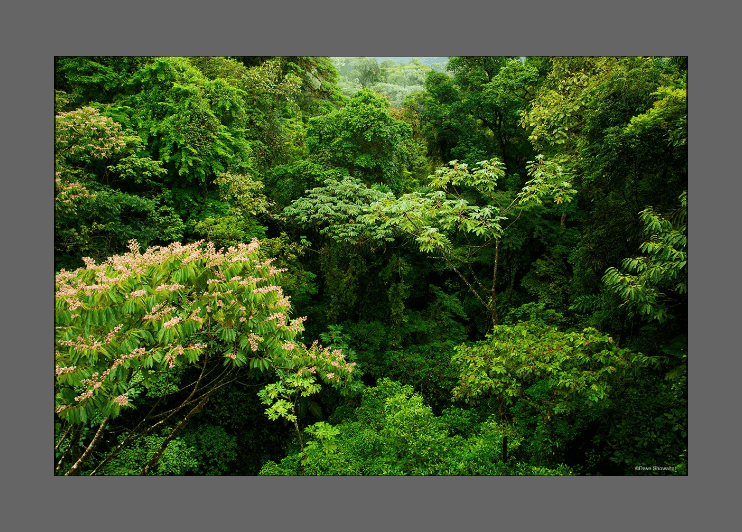
A yellow morph and green morph of an insect lives in the rainforest canopy. You would expect:

a)

the green population to increase and the yellow to decrease

b)

both populations should stay the same

c)

both populations will increase

d)

the green population to decrease and the yellow to increaseThis is a wrong answer

65.

How do you "win" at natural selection?

a)

survive

b)

go extinct

c)

survive & reproduce

66.
What is the advantage of having different shaped beaks?
a)
To look different from other species.
b)
To be able to eat the food readily available in the environment.
c)
To protect itself against predators.
d)
To protect itself against prey.
67.
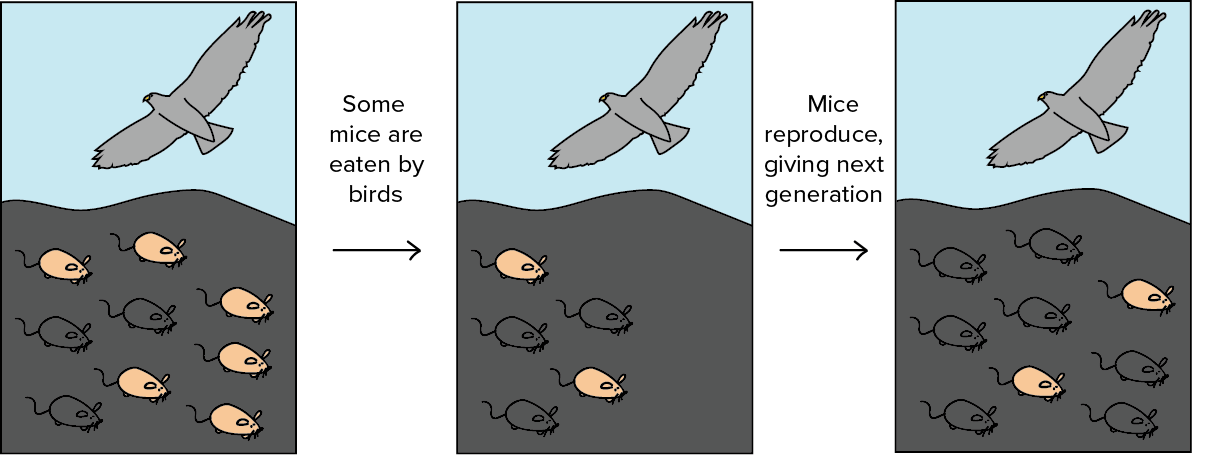
Why is the mouse population changing over time?
a)
The light mice can reproduce more successfully than the dark mice
b)
The hawks eat more dark mice than light mice because the dark mice taste better
c)
The hawks eat more light mice than dark mice because they can see the light mice more easily
d)
The hawks eat more dark mice than light mice because they can see the dark mice more easily
68.
What process is being shown in this image?
a)
Variation
b)
Natural Selection
c)
Selective Breeding
d)
Homeostasis
69.

Which of the following would be an example of absolute age?

a)

Fossil A is older than Fossil B

b)

Fossil A and Fossil B are the same age

c)

Fossil A is 10 million years old

70.
Which layer formed first?
a)
Rock Layer W
b)
Rock Layer X
c)
Rock Layer Y
d)
Rock Layer Z
71.

What are the oldest fossils and why?

a)

B, C- because they are closest to the top

b)

A, B- because they are closest to the bottom

c)

They are all the same age- because they are all found on layer 2

d)

A, B- because they are found closest to the top

72.

Which of the following can be learned by using the fossil record?

a)

When organisms changed or evolved

b)

when organisms appeared on Earth

c)

when organisms became extinct

d)

All the above

73.

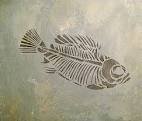
If scientists found this fossil in a desert, what could they infer?

a)

what fish are like today

b)

that this fish lacked oxygen

c)

that water once covered the area where this fossil was found

74.
How do fossils provide evidence that evolution has happened on Earth?
a)
Fossils show how the sizes of certain animals has changed drastically over millions of years
b)
Fossils show that some species have gone extinct
c)
Fossils show how life forms present today are different than those from the past
d)
Different sedimentary rock layers provide evidence for how the environment has changed over time
75.

Fossil A is an ancient mollusk, an organism that needs water to survive. Why do you think that the mollusk went extinct in this particular sample of the fossil record?

a)

When the ocean levels rose in layer 4, the mollusk went extinct because they cannot live in water

b)

For some reason, the ocean disappeared causing the mollusk to thrive

c)

For some reason, the ocean disappeared causing the mollusk to go extinct

d)

When the ocean level rose in layer 4, the mollusk thrived because they need water

76.

When did fossil A become extinct?

a)

Layer 1

b)

Layer 2

c)

Layer 3

d)

Layer 4

77.

Organisms D and C clearly lived in an aquatic (water) environment. Organism A does not look like it lived in the water. What is the most likely explanation for this?

a)

The fossil in layer A died on land and was carried to the water

b)

The fossils in layer C and D did not live in the same location as the fossil in layer A

c)

The environment changed over a long period of time. It used to be under water, but is not anymore

78.

What type of fossil is pictured here?

a)

Mold fossil

b)

Trace fossil

c)

Cast fossil

d)

Body fossil

79.

What type of fossil is pictured here?

a)

Mold fossil

b)

Trace fossil

c)

Cast fossil

d)

Body fossil

80.

What type of fossil is pictured here?

a)

Forest fossil

b)

Trace fossil

c)

Cast fossil

d)

Body fossil

81.

What type of fossil is pictured here?

a)

Mold fossil

b)

Trace fossil

c)

Cast fossil

d)

Body fossil

82.

Which conditions might lead to fossil formation? (Choose 3)

a)

Decomposition

b)

Getting buried quickly by sediment

c)

getting trapped in a tar pit

d)

getting eaten by another animal

e)

making a footprint in mud