
 Worksheets
Chapter 1 Section 4 Molecular Structure
Total questions: 83
Worksheet time: 2hrs 3mins

What does "malleable" mean?
Can be made into a shape.
Brittle
Ductile
Shiny
Good conductor of heat
Metal
Non Metal
Which property of metal makes it a good choice to make a car engine from?
it has luster
it has a high melting point
it conducts electricity
it has magnetism
Generally low melting and boiling points
Ionic compounds
Covalent compounds
Generally high melting & boiling points
Ionic compounds
Covalent compounds
Which of the following represents a diatomic molecule?
4. The ability of metals to be drawn into wires is called:
Ductility
Malleability
Tensile strength
3. The ability of a material to be hammered into shape or thin sheets is called:
Malleability
Hardiness
Ductility
How many atoms of hydrogen are in
C6H12O6
6
12
18
2

How man atoms of carbon are there?
1
2
3
4

How many atoms of hydrogen are in this compound?
1
2
3
4
Easily broken or cracked
crystal
individual
brittle
molecule
A force that holds two or more atoms.
conductor
simplify
chemical bond
brittle
A solid with an orderly, repeating pattern.
crystal
conductor
individual
simplify
A material that allows, heat, light, sound, or electric charge to flow from one thing to another.
brittle
chemical bond
conductor
molecule
Existing separately from others
force
solid
simplify
individual
A group of atoms that are held together by chemical bonds and act as a unit.
conductor
molecule
bond
element

What is the meaning of molecules?
that some elements are molecules
a group of atoms that are held together by chemical bonds and act as a unit
atoms can from complex molecules that range size
one group of compound is ionic compounds
What type molecules liquid to gas?
vaporization
freezing
melting
You can separate the particles that make up sugar from the particles that make up sand because sugar are ____ and sand are not.
malleable
ductile
soluble in water
acidic
Substances are either elements or mixtures.
True
False
Which properties describe elements that are nonmetal gases?
composed of an extended structure
composed of individual atoms or diatomic molecules
high melting point
low melting point
strong attractions between particles
A substance has an extended structure composed of two different elements. The elements are a metal and a nonmetal. Which property would this substance most likely have?
can be hammered into sheets
has a high melting point
does not dissolve in water
is a gas at room temperature
Because they have an extended structure, elements that are ____ tend to be in the ____ state at room temperature.
nonmetals, gas
metals, solid
metals, liquid
nonmetal, solid
Why does oil not dissolve in water?
Oil is an extended structure, and water is made of polar molecules.
Oil is an extended structure, and water is made of nonpolar molecules.
Oil is made of nonpolar molecules, and water is made of polar molecules.
Oil is made of polar molecules, and water is made of nonpolar molecules.
What does "malleable" mean?
Can be made into a shape.
Brittle
Ductile
Shiny
Good conductor of heat
Metal
Non Metal
Which property of metal makes it a good choice to make a car engine from?
it has luster
it has a high melting point
it conducts electricity
it has magnetism
Generally low melting and boiling points
Ionic compounds
Covalent compounds
Generally high melting & boiling points
Ionic compounds
Covalent compounds
Which of the following represents a diatomic molecule?
3. The ability of a material to be hammered into shape or thin sheets is called:
Malleability
Hardiness
Ductility
How many atoms of hydrogen are in
C6H12O6
6
12
18
2
How man atoms of carbon are there?
1
2
3
4
How many atoms of hydrogen are in this compound?
1
2
3
4
Easily broken or cracked
crystal
individual
brittle
molecule
A solid with an orderly, repeating pattern.
crystal
conductor
individual
simplify
A material that allows, heat, light, sound, or electric charge to flow from one thing to another.
brittle
chemical bond
conductor
molecule
Existing separately from others
force
solid
simplify
individual


Ionic bonds typically form between
A metal and a nonmetal
Two nonmetals
Two metals
A metalloid and a metal
Calcium Oxide, CaO
Covalent Bond
Ionic Bond
Calcium Chloride, CaCl2
Covalent Bond
Ionic Bond
Metalloids
Is the following compound ionic or covalent?
LiBr
Ionic
Covalent
Is the following compound ionic or covalent?
PBr5
Ionic
Covalent
Is the following compound ionic or covalent?
A material with a high melting point
Ionic
Covalent
Is the following compound ionic or covalent?
Exists as a solid, liquid or gas
Ionic
Covalent
Is the following compound ionic or covalent?
A material that has a low boiling point
Ionic
Covalent
Is the following compound ionic or covalent?
Cl2
Ionic
Covalent
Is the following compound ionic or covalent?
BaI2
Ionic
Covalent
Is the following compound ionic or covalent?
Ag2O
Ionic
Covalent
Is the following compound ionic or covalent?
A material that is hard and brittle
Ionic
Covalent
Is the following compound ionic or covalent?
A material that contains two nonmetals
Ionic
Covalent
Is the following compound ionic or covalent?
A material that contains a metal and a nonmetal
Ionic
Covalent

Compounds have _________________ properties, compared to the elements that form them.
similar
different
How many atoms of hydrogen are in a sugar molecule with the formula C6H12O6
12
6
24
18
Polar substances like water are good at dissolving ___________.
other polar substances
non polar substances
all substances
no substances
Which of the following is true about Covalent (non-polar) bonds? (select ALL true options)
High melting point
Low melting point
Can dissolve in water
Cannot dissolve in water
Can conduct electricity
Conducts electricity well when melted or dissolved
Ionic compounds
Covalent compounds
Poor electrical conductivity
Ionic compounds
Covalent compounds
Always a solid at room temperature
Ionic compounds
Covalent compounds
Can be a solid, liquid, or gas at room temperature
Ionic compounds
Covalent compounds
Generally high melting & boiling points
Ionic compounds
Covalent compounds
Generally low melting and boiling points
Ionic compounds
Covalent compounds

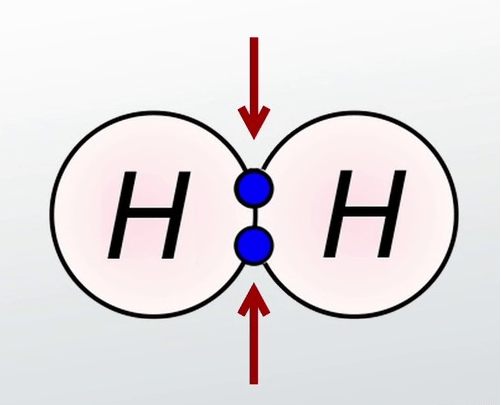
What kind of bond does this show?
Ionic
Covalent
sugar and water are polar molecules
True
False
sugar dissolve in water because of
the sugar molecules are heavy
the sugar molecules are small and light
The polar water molecules attract the negative and positive areas on the polar sucrose molecules
the water a strong liquid
positive particles attracts each other
True
False
water molecule is made of
2 oxygen atoms and 2 hydrogen atom
2 hydrogen atoms and one oxygen atom
2 Nitrogen atoms and one oxygen atom
1 hydrogen atom and 1 oxygen atom
What is an atom?
the outer shell of electrons
the smallest part of an element with that element's properties
a positively charged particle with negative parts
the center of a nucleus

