
 Worksheets
Waves and Review
Total questions: 82
Worksheet time: 2hrs 30mins

What do all waves transfer?
Matter
Heat
Electricity
Energy

What are the two types of waves?
longitudinal and transverse
sound and light

What does #1 represent?
Period
Frequency
Wavelength
Amplitude

What does #2 represent?
Period
Frequency
Wavelength
Amplitude

What kind of wave is pictured below?
compressional wave
transverse wave
sound wave
mechanical wave

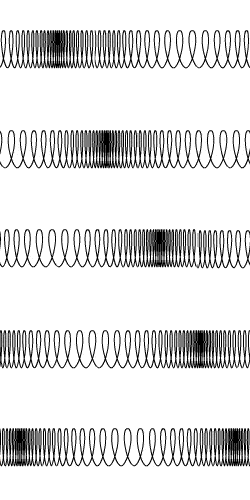
If the amplitude increases, the energy of the wave:
increases
decreases
stays the same
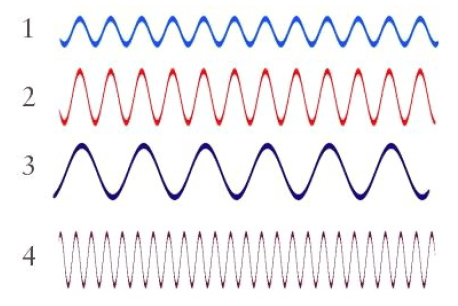
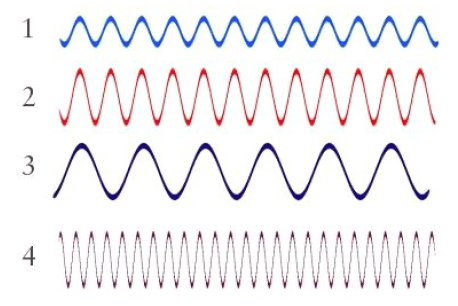
Which wave in the diagram has the greatest frequency?
1
2
3
4
If a wave has a greater frequency, what happens to the wavelength?
increases
decreases
stays the same
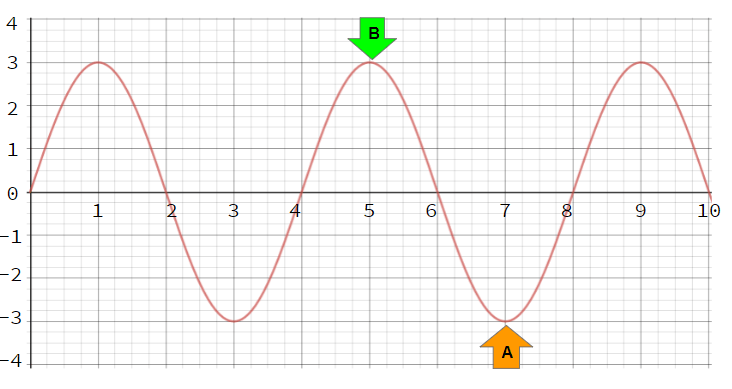
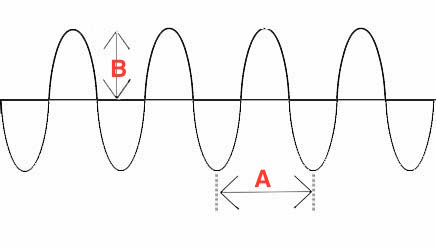
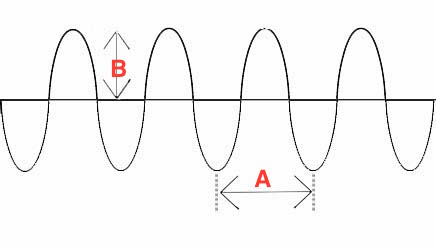
What property does the orange arrow (A) represent?
Crest
Trough
Wavelength
Peak
This sound has high pitch, which means it has a(n):
Higher frequency
Lower frequency
Higher amplitude
Lower amplitude
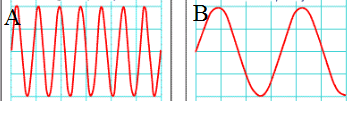
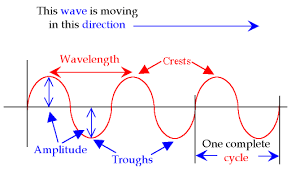
What is another name for wave height?
Frequency
Amplitude
Wavelength
Origin
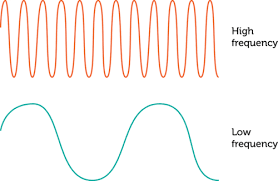
If a wave has a greater frequency, what happens to the wavelength?
increases
decreases
stays the same
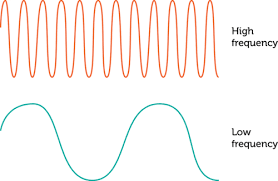
If a wave has a greater frequency, what happens to number of waves per second?
increases
decreases
stays the same
What is the wavelength of this wave?
1
2
3
4
What property does the green arrow (B) represent?
Crest
Trough
Wavelength
When light bounces off something it is known as _____________
reflection
refraction
light energy
mechanical energy
What type of wave is a sound wave?
transverse
mechanical
longitudinal
electrical
The louder the sound, the higher the ____________ of the wave.
amplitude
wavelength
pitch
compression
A repeating sound you hear that is made by sound waves bounding off an object:
echo
absorb
light wave

What does the arrow in the picture represent?
amplitude
wavelength
frequency
trough

What does the arrow in the picture represent?
wavelength
echolocation
amplitude
peak
If the amplitude increases, the energy of the wave:
increases
decreases
stays the same
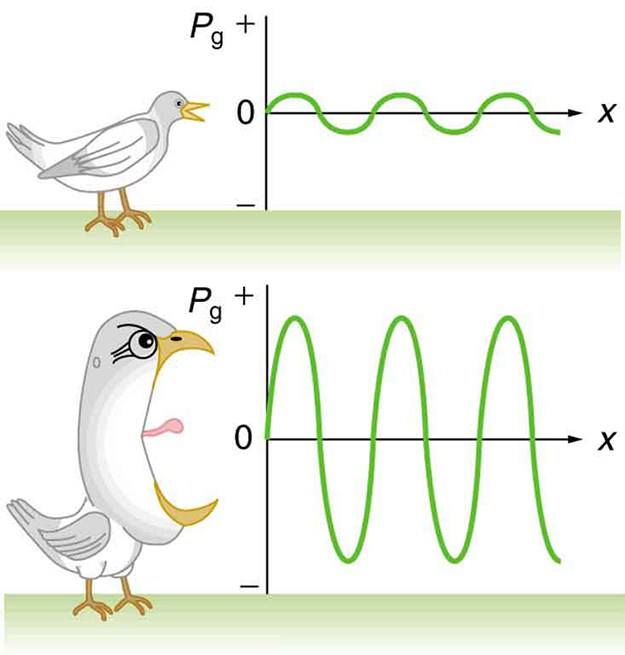
What happens when you increase the amplitude of a sound?
it makes the sound louder
it makes the sound travel faster
it makes the sound softer
it changes the pitch or note of the sound
What kind of wave is pictured below?
compressional wave
transverse wave
longitudinal wave
mechanical wave
What can electromagnetic waves travel through (select all that apply)?
solids
empty space
liquids
gases
Which wave is pictured?
Transverse
Longitudinal
Electromagnetic
Light
Which wave in the diagram has the greatest frequency?
1
2
3
4
Which wave in the diagram has the longest wavelength?
1
2
3
4
If a wave has a greater frequency, what happens to the wavelength?
increases
decreases
stays the same
What property does the orange arrow (A) represent?
Crest
Trough
Wavelength
Peak
This sound has high pitch, which means it has a(n):
Higher frequency
Lower frequency
Higher amplitude
Lower amplitude
Longitudinal waves move __________ to the energy of the wave (select all that apply).
Parallel
Perpendicular
At a 90 degree angle
In the same direction
Transverse waves move __________ to the energy in the wave (select all that apply).
Parallel
Perpendicular
At 90 degree angle
In the same direction
The areas of a longitudinal waves where particles are spread far apart from each other are called:
rarefactions
compressions
amplitude
wavelength
The area of a longitudinal wave where particles are pushed close together are called:
rarefactions
compressions
amplitude
wavelength
ex. police car siren sounding lower pitch after the car passes
Bats use ________ to locate mosquitoes in the air.
solar
ecology
echolocation
refraction
Energy stored by something that can stretch or compress.
elastic potential energy
gravitational potential energy
chemical potential energy
potential energy
Energy stored by objects due to their position above Earth’s surface.
potential energy
kinetic energy
gravitational potential energy
mechanical energy
I have the most potential energy if I am:
5 feet high
10 feet high
15 feet high
20 feet high
Potential energy is...
energy in motion
stored energy
What two factors affect an object's potential energy?
area and volume
area and height
mass and height
mass and velocity

The least amount of potential energy is at
a
b
c
d

The most potential energy is at
a
b
c
d
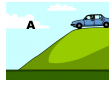
Which object will have the largest value for its potential energy?
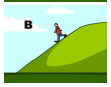
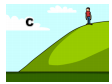
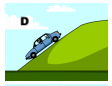
Energy cannot be created or destroyed, it just changes form:
Law of conservation of energy
Kinetic Energy
Potential Energy
Velocity
At the top of the highest point/peak on a roller coaster, how is the energy split between potential and kinetic energy?
100% PE, 0% KE
0% PE, 100% KE
50% PE, 50% KE
25% PE, 75% KE
The amount of matter present in an object:
Weight
Speed
Distance
Mass
Directly proportional means:
As one decreases the other decreases
As one increases the other decreases
As one increases the other increases
No change in either variable
A soccer ball is rolling down a hill. At which point is it experiencing the most kinetic energy?
At the top of the hill
Halfway down the hill
At the bottom of the hill
The kinetic energy level is the same the whole time
energy of motion
kinetic energy
potential energy
movement
work


In the picture, a can of Pepsi sunk and a can of Diet Pepsi are put into water. The Pepsi must be
more dense than water
less dense than water
it has no density
it has a density of 1 g/mL
We can use density to identify substances because it is a
Chemical property
Physical Property
Characteristic Physical Property
Materialistic Property
Why does ice float
Liquid water is less dense than solid water.
Solid water is less dense than liquid water.
Gaseous water is less dense than solid water.
Liquid water is less dense than gaseous water.

Which is the name of the kind of solid substance formed in this figure?
color change
precipitate
acid
chemicals

The reactants in the image above are:
CH4 and 2 O2
2 H2O and CO2
All of these are reactants
All of these are products

