
 Worksheets
Exam Review
Total questions: 80
Worksheet time: 7hrs 37mins
What does the prefix a- mean?
round
together
not
below
What does the prefix co- mean?
round
together
not
below
What does the prefix de- mean?
round
together
not
down
What does the prefix -troph mean?
nourishment
beyond
not
below
What does the root -zyg- mean?
round
join together
not
below
What does the prefix bio- mean?
life
heat
meat; flesh
plants; veggies
What does the prefix pro- mean?
layer
before
meat; flesh
false
What does the prefix omni- mean?
layer
heat
all
plants; veggies
What does the prefix carn- mean?
layer
heat
meat; flesh
plants; veggies
What does the prefix -vor- mean?
life
across
all
to devour
What does the prefix geo- mean?
life
rock, land
all
to turn; change
What does the prefix eco- mean?
life
across
house
to turn; change
What does the prefix homo- mean?
outer
study of
different
same
What does the prefix hetero- mean?
middle
together
different
same
H2O
ozone
oxygen
nitrogen
carbon dioxide
water
What does the prefix auto- mean?
middle
oxygen
self
other
What does the prefix cyan- mean?
self
oxygen
different
blue
what does the prefix herb- mean?
plant
oxygen
meat
life
graphed on the x axis
control
independent
dependent
super variable
dependent variable
x axis
y axis
Y axis
horizontal axis
vertical axis
Which of the fallowing has only abiotic factors?
Sunlight, algae, and temperature
Guppy, crab, oxygen
Sunlight, rocks, and weather
Algae, temperature, and dog
A body part that helps a living thing survive

If the amount of food resources increases, the population of an animal would
increase
decrease
stay the same
go extinct

If a disease destroying oak trees swept through an ecosystem, what would happen to the acorn-eating squirrel population?
Nothing, the squirrel population would stay the same
The squirrel population would increase
The squirrel population would decrease

The largest population an ecosystem can support is the
(a)
A consumer that eats only producers.
Primary Consumer
Secondary Consumer
Carnivore
Omnivore
An organism that makes its own food.
Autotroph
Heterotroph
Herbovore
Carnivore
This organism is always first on a food web.
Plants
The Sun
Apex Predator
Primary Consumer
The energy organisms need to live and grow first enters the ecosystem when-
decomposers break down dead organism
plants take in light energy from the sun
primary consumers eat plants for food
secondary consumers eat primary consumers

What level consumer is the frog
Primary Consumer
Secondary Consumer
Tertiary Consumer
Apex Predator
Consumers that eat only plants.
Producers
Herbivores
Carnivores
Omnivores
Consumers that only eat other animals (meat).
Producers
Herbivores
Carnivores
Omnivores
A consumer that eats both animals and producers.
Carnnivores
Omnivores
Herbivores

Select all the abiotic factors from the list.
Water
Turtles
Log Turtles are Sitting On
Sun
Grasses
How much energy is available to be passed on to the next level in a food web?
100%
10%
50%
75%


In a Punnett square, a lower case letter stands for a ____________ allele.
dominant
recessive
homozygous
heterozygous

In animals, shaggy fur is dominant to short fur. The Punnett Square shows the genotypes of the offspring of a shaggy fur animal and a short fur animal. What were the genotypes of the parents?
FF and FF
Ff and ff
ff and ff
Ff and Ff

In animals, shaggy fur is dominant to short fur. According to the genotypes shown, what percent of offspring will have short fur?
0
25
50
75
100
Heterozygous is when...
the alleles are the same.
the alleles are different.
the alleles are absent.
the alleles are present.

T = tall and t = short
In the punnett square shown, what belongs in the missing square
tt
Tt
Bb
TT
Which of the following genotypes is homozygous dominant?
A
Aa
AA
aa
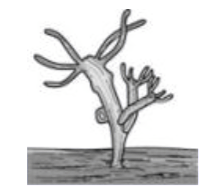

Budding is a process in which a new individual is formed that is a clone of the parent. This type of reproduction is _____.
Sexual
Sporulation
Asexual
Binary Fission
Fragmentation
Which organism reproduces through binary fission?
Startfish
Hydra
Bacteria
Coral

ATG TGA CAG
How do you "win" at natural selection?
survive
go extinct
survive & reproduce
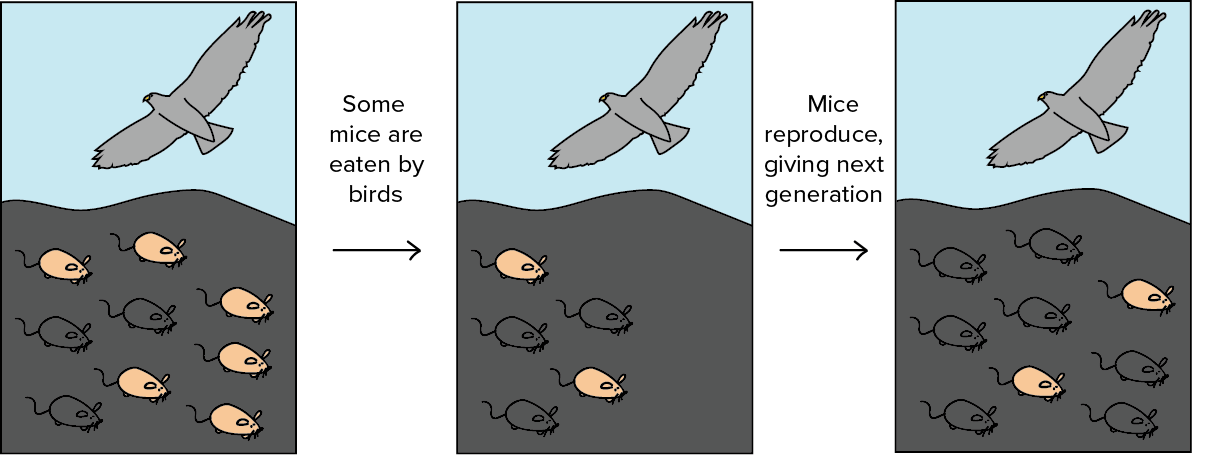
Natural selection results in change in a population's _____________ traits over time.
inherited
acquired
Charles Darwin observed that finches of different species on the Galápagos Islands have many similar physical characteristics, this supports the hypothesis that these finches
are twins
acquired traits through use and disuse.
all eat the same type of food.
descended from a common ancestor.


In a population of ladybugs, black bugs are more successful in escaping predators. Overtime, this gene becomes more popular in the population and the ladybug population loses its red color. This is an example of?
Natural Selection
Mutation
Genetic Drift
Gene Flow


The condition in an experiment that is changed or manipulated.
Dependent Variable
Experimental Group
Independent Variable
Control Group
The condition in an experiment that is observed or measured
Dependent Variable
Experimental Group
Independent Variable
Control Group
In an experiment the group that serves as a standard for comparison and receives no experimental treatment.
Dependent Variable
Experimental Group
Independent Variable
Control Group
The condition that does not change in an experiment.
Data
Inference
Variable
Constant
Data expressed in words.
Qualitative Data
Quantitive Data
Data expressed in numbers.
Qualitative Data
Quantitive Data

Match the following terms with the best description.
Some abiotic factors in an ecosystem
Rock, water, sun, wind
Some biotic factors in an ecosystem
Plants, animals, microbes
Breaks down waste and dead organisms
decomposers
Every food chain begins with this
sun
Makes their own food
producer

