wayground logo

Free Printable Worksheets

Font size

S
M
L
XL
Worksheets

District Assessment # 1 Review

Total questions: 83

Worksheet time: 2hrs 55mins

Name
Class
Date
1.
What is this tool called?
a)
Beaker
b)
Flask
c)
Graduated Cylinder
d)
Measuring Cup
2.
The base unit of metric length.
a)
meter
b)
liter 
c)
kilogram
d)
milligram
3.
The basic unit of metric volume is called a_____.
a)
kilogram
b)
milligram
c)
liter
d)
milliliter
4.
The width of a kernel of corn would be about...
a)
4 cm
b)
4 mm
c)
4 m
5.
The appropriate abbreviation of centimeter is..
a)
cm
b)
Cm
c)
cM
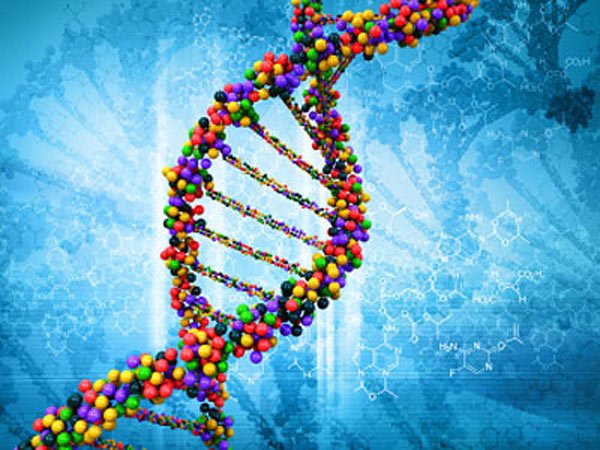
d)
CM
6.
The abbreviation for gram is...
a)
G
b)
gg
c)
g
7.
m stands for....
a)
millimeter
b)
meter
c)
centimeter
d)
Liter
8.
What is the volume?
a)
 50.0 mL
b)
53.0 mL
c)
54.0 mL
9.

Which metric unit would be used to measure the mass of a peanut?

a)

kilogram

b)

gram

c)

ounce

d)

millilter

10.
What is the volume of liquid in this graduated cylinder?
a)
40.0 mL
b)
40.3 mL
c)
43.0 mL
d)
44.0 mL
11.
At which point should your eyes be when you read a graduated cylinder? (Hint: see the letter next to the eye)
a)
A
b)
B
c)
C
12.
Calculate the volume of the rock
a)
10.0 cm3
b)
16.0 cm3
c)
30.0 cm3
d)
40.0 cm3
13.
What is the volume of the fish?
a)
18.0 cm3
b)
6.0 cm
c)
38.0 cm3
14.
How many millimeters (mm) = 1 centimeter (cm)?
a)
1
b)
10
c)
100
d)
1000
15.
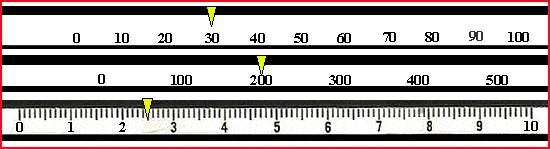
What is the length of the straw?
a)
8 cm 
b)
0 cm 
c)
7 cm 
d)
1 cm 
16.
Where do we read the level of liquid?
a)
The highest point the liquid touches
b)
The bottom of the meniscus
c)
Half way between, we make an educated guess and round it
d)
Somewhere about there
17.
What is the correct value?
a)
5 ml
b)
15 ml
c)
20 ml
d)
25 ml
18.

What is the mass on the triple beam balance?

a)

232.5g

b)

237.0g

c)

750g

19.

What is the mass on the triple beam balance?

a)

375.8g

b)

383.0g

c)

376.0g

20.
What is the volume of the screw?
a)
10 mL
b)
13 mL
c)
16 mL
d)
3 mL
21.
What is the name of this scientific instrument?
a)
graduated balance
b)
triple beam balance
c)
triple beam scale
d)
graduated scale
22.
What type of measurement is used with this instrument?
a)
volume
b)
length
c)
mass
d)
weight
23.
What property is a balance used to measure?
a)
Size of an object
b)
Mass of an object
c)
Flexibility of an object
d)
Weight of an object
24.
It is 95 degrees today
a)
Qualitative Observation
b)
Quantitative Observation
c)
Inference
25.
It is sunny today
a)
Qualitative Observation
b)
Quantitative Observation
c)
Inference
26.
The grass is wet. It must have rained
a)
Qualitative Observation
b)
Quantitative Observation
c)
Inference
27.
A student is planning an experiment to find out how the height from which he drops a ball affects how high the ball bounces. The dependent variable is the _____.
a)
Diameter of the ball
b)
Force acting on the ball
c)
Height that the ball bounces
d)
Height from which the ball is dropped
28.

Mrs. Sanders was trying to figure out if plants grew better with blue light shinning on them. What is the independent variable

a)

the type of light

b)

the plant height

c)

the type of plant

d)

the soil

29.

Mrs. Matthews wanted to see if her running shoes were the fastest. She tried three different brands. What is the dependent variable?

a)

the different brands of shoes

b)

the speed

c)

the amount of time

d)

shoe size

30.
What are the things that stay the same in an experiment?  
a)
independent variables 
b)
dependent variables
c)
constants
d)
control
31.
The control in an experiment is the group that IS NOT experimented on.
a)
true
b)
false
32.

A system of units used by scientists to measure the properties of matter

a)

International System of Units (SI)

b)

weight

c)

Metric system

d)

volume

33.

Does the distance a person kicks a soccer ball affect how well they will do on their math test? What is the dependent variable?

a)

How far they kick the soccer ball

b)

Who the person is

c)

How well they do on the math test

d)

Type of soccer ball.

34.

When experimenting with the growth of a plant, a scientist uses three (of the same type of) plants, two different amounts of fertilizer, equal light and equal water. What type of variable is the fertilizer?

a)

Dependent

b)

Independent

c)

Control

d)

Compound

35.
What would the INDEPENDENT variable be in an experiment testing which types of paper airplane goes furthest?
a)
the paper used
b)
the type of paper airplane
c)
the distance of each plane's flight
d)
how hard the plane is thrown
36.
How many independent variables can be tested in a controlled experiment?
a)
one
b)
two
c)
three
d)
as many as possible
37.
Which one of the following is NOT an example of quantitative data?
a)
number of flowers on a plant
b)
size of a flower
c)
height of a flower
d)
color of a flower
38.
The cake has a sweet smell is a _______ observation. 
a)
qualitative
b)
quantitative
39.
If a lab fire erupts, immediately:
a)
 A. Notify (or tell) your teacher
b)
B. Run and scream
c)
C. Throw water at the fire
d)
 D. Open the windows
40.

Why are approved eye protection devices (such as goggles) worn in the lab?

a)

A. To improve your vision

b)

B. To make you look like a bug

c)

C. To give you headaches

d)

D. To protect eyes around chemicals, heat, or glassware

41.

If you have been injured in the lab, what should you do first?

a)

A. Apply the first aid yourself

b)

B. Go to doctor after school in a few hours

c)

C. Tell your science teacher immediately

d)

D. Not tell anyone

42.
Safety goggles are worn in the laboratory...
a)
to avoid eye strain.
b)
to improve your vision.
c)
only if you don't have corrective glasses.
d)
any time chemicals are used or glassware is heated.
43.
You have been injured in the laboratory (cut, burn, etc.) The FIRST thing you should do is...
a)
visit the school nurse after class.
b)
see a doctor after school.
c)
tell the science teacher straight away.
d)
apply first aid to yourself.
44.
You should always carry the microscope by the
a)
arm and base
b)
arm and body tube
c)
arm only
45.
The diaphragm helps to
a)
focus
b)
allow light to pass through the stage
c)
change the lens size
46.
When looking at a specimen on your slide, you should always start with the
a)
low objective lens
b)
medium objective lens
c)
high objective lens
47.
The _______focuses the image under low power.
a)
revolving nosepiece
b)
fine adjustment knob
c)
coarse adjustment knob
48.
The__________ sharpens the image under high magnification.
a)
revolving nosepiece
b)
fine adjustment knob
c)
coarse adjustment knob
49.
You can find total magnification by which of the following methods?
a)
adding the eyepiece and the objective lens
b)
multiplying the eyepiece and the objective lens
c)
adding the eyepiece and all of the objective lenses
d)
multiplying the eyepiece and all of the objective lenses
50.
Find total magnification for:
Eyepiece = 10X 
Objective lens = 4X
 
a)
4x
b)
6x
c)
14x
d)
40x
51.
Find the total magnification:
Eyepiece = 10X 
Objective lens = 10X
 
a)
0x
b)
10x
c)
20x
d)
100x
52.
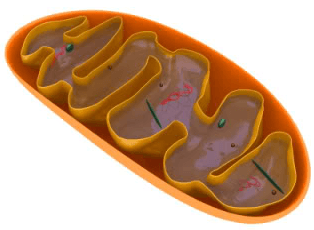
This organelle takes food and turns it into ENERGY for plant and animal cells.
a)
Chloroplast
b)
Mitochondria
c)
Lysosome
d)
Ribosome
53.
The site of photosynthesis
a)
ribosome
b)
mitochondria
c)
chloroplast
d)
nucleus
54.

When many organ systems work together it can form a(an)...

a)

organ

b)

cells

c)

organ system

d)

organism

55.
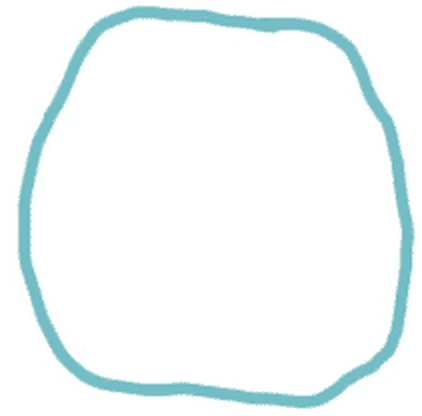
This is a example of........ 
a)
organ system
b)
cells
c)
organ
d)
tissue
56.

This is a example of a(an)........

a)

cell

b)

organ system

c)

organ

d)

tissue

57.
The lungs and the kidneys are examples of
a)
cells
b)
organs
c)
tissues
d)
organ systmes
58.
Which organelle is only found in a plant cell? 
a)
nucleus
b)
chloroplast
c)
mitochondria
d)
cell membrane
59.
Directs all cell activities through the DNA located there.
a)
Lysosomes
b)
Nucleus
c)
ribosomes
d)
Mitochondria
60.
What is the name of the genetic material that is inside the nucleus?
a)
ER
b)
ATP
c)
YOLO
d)
DNA
61.
Which part of the cell is often called "the brain of the cell"?
a)
nuclear membrane
b)
endoplasmic reticulum
c)
nucleus
d)
mitochondria
62.
What is found in both plant and animal cells but is much larger in plant cells?
a)
Nucleus
b)
Mitochondria
c)
Chloroplast
d)
Vacuole
63.
Where are proteins made?
a)
Golgi body
b)
Mitoichondria
c)
Chromosomes
d)
Ribosomes
64.
I am the outer most layer of an animal cell. What am I?
a)
cell wall
b)
nucleus
c)
cell membrane 
d)
cell skin
65.

What are tiny organelles that convert sugar into ATP?

a)

Ribosomes

b)

Vesicles

c)

Cytoskeleton

d)

Mitochondria

66.

A rigid layer that lies outside the cell's membrane is...

a)

Cytoskeleton

b)

Cilia

c)

Cell Wall

d)

Flagella

67.
What organelle is called the "powerhouse" of a cell?

a)
Endoplasmic Reticulum
b)
Nucleus
c)
Mitochondria
d)
Nucleolus
68.
What is the gel-like substance inside of cells called?

a)
photoplasm
b)
photosynthesis
c)
cytoskeleton
d)
cytoplasm
69.
A group of tissues that work together to perform a similar function is called_____. (Examples include the heart, lungs or stomach)
a)
cells
b)
tissues
c)
organs
d)
organ system
70.
 A group of cells that have similar functions? Examples are nervous, epithelial, muscle and connective
a)
cells
b)
tissues
c)
organs
d)
atoms
71.

Organs that work together to perform a related function is called a(an) _____________?

a)

cells

b)

tissues

c)

organ system

d)

organs

72.
The purpose of the cell wall in plants is to -
a)
Store DNA and proteins for the cell.
b)
Control what crosses into and out of the cell.
c)
Provides structure and support for the cell.
d)
Send chemical signals to neighboring cells.
73.
Animal and plant cells have all of the following EXCEPT -
a)
Chloroplasts to carry out photosynthesis.
b)
Vacuoles to store water and nutrients.
c)
Mitochondria to form chemical energy.
d)
A nucleus with DNA to replicate cells.
74.

There are many different types of cells with many different types of cellular structures and functions. Which of these structures is found in plant and animal cells?

a)

Chloroplast

b)

Cell Wall

c)

Nucleus

d)

Chlorophyll

75.

In the 1830's, two German Scientists, Theodor Schwann and Matthias Schleiden, came up with a remarkable new scientific theory called the "Cell Theory". The cell theory had three basic basic parts. In 1855, German scientist, Rudolf Virchow, proposed that the last part of the theory that stated that cells spontaneously generate was incorrect. Virchow issued a bold statement: "Omnis cellula e cellula." As it turns out, Virchow was quite right. What is the best translation of Virchow's statement about the cell theory?

a)

All cells come from other cells.

b)

All cells begin as bacterial cells.

c)

All cells are unrelated to other cells.

d)

All cells can become any cell.

76.
Stores food and water for the cell.
a)
Cytoplasm
b)
Cell Wall
c)
Vacuole
d)
Nucleus
77.
Controls what enters and leaves the cell
a)
Mitochondria
b)
Cell Membrane
c)
Cell Wall
d)
Nucleus
78.
What do all of these organisms have in common?
a)
They all have uniform offspring
b)
They are all made of cells
c)
They possess the same features
d)
They have the same internal and external structures
79.
According to cell theory, where did this cell come from?
a)
another living cell
b)
energy from sun
c)
a multicellular organism
d)
the nonliving environment
80.
Robert Hooke, Anton van Leeuwenhoek, Theodor Schwann, Rudolf Virchow, and Matthias Schliden were all responsible for what theory?
a)
The Theory of Gravity
b)
The Theory of Relativity
c)
The Cell Theory
d)
The Theory of Continental Drift
81.

Which of the following is NOT a part of the cell theory?

a)

All non-living things are made of cells

b)

All cells come from pre-existing cells

c)

Cells are the basic unit of structure and function of all living things
82.
All living things are made up of...
a)
cells
b)
cell tissues
c)
organ
d)
organ systems
83.
All cells are produced ____________.
a)
from nothing
b)
from other cells