
 Worksheets
Matter & Energy Review
Total questions: 78
Worksheet time: 46mins

Is this substance a...
Solid
Liquid
Gas

What is phase change 3
condensation
vaporization
freezing
melting

What is phase change 2
Condensation
Vaporization
Freezing
Melting

Below is a picture of a...
Solid
Liquid
Gas

What phase change is occurring at B
Melting
Freezing
Boiling
Condensation
What phase change is occurring at D
Melting
Freezing
Boiling
Condensation
Is the substance shown water
Yes
No
heat always transfers from...
Objects that are lower in temperature to objects that are higher in temperature
Objects with particles moving slower to objects with particles moving faster
Objects that are higher in temperature to objects that are lower in temperature
Heat cannot be transferred
_______ is a measure of the average kinetic energy of particles in a substance
heat
temperature
mass
volume
Which of the following heat transfers does not require matter to travel through
conduction
convection
radiation

The picture is an example of...
conduction
convection
radiation

The picture is an example of...
conduction
convection
radiation
Energy is...
The ability to do work
What happens after we eat
The ability to sleep
What is done to an item when it is sitting on the floor

In this picture, what type of energy is displayed?
Thermal Energy
Potential Energy
Electrical Energy
Conduction

In this image, there are three types of thermal energy. What are they?
Kinetic, Potential, and Conduction
Conduction, Radiant, and Electromagnetic Energy
Radiant, Conduction, and Convection
Electrical, thermal, and Radiant
The Law of Conservation of Energy states...
Energy is created and then destroyed
Energy only exists when we use force to move something
Energy is gained when we pick something up
Energy can neither be created nor destroyed

This ball is in motion, the type of energy it is using is called...
Kinetic Energy
Potential Energy
Thermal Energy
Electrical Energy
Radiant heat is
The transfer of cold air through space
The transfer of liquid through a straw
The transfer of heat through space
The transfer of electricity through an outlet
Conduction heat is
Transfer through a hot pocket
Transferred through space
Transferred through liquid
Transferred through touch
Convection heat is...
Transferred through liquid
Transferred through space
Transferred through touch
Transferred through poptarts

A cart is released from rest at position a... The picture shows the cart in 4 positions, which position does the cart have the most potential energy?
a
b
c
d
Heat always moves from an object of ___ temperature to an object of ____ temperature.
moderate; high
higher; lower
lower; higher
zero; high
Heat transferred from the sun to the Earth is an example of which process?
conduction
convection
radiation
temperature
Which of the following is an example of heat transfer by conduction?
water moving in a pot of boiling water
the warmth you feel holding a cup of hot cocoa
warm air rises and cool air sinks
a sunburn

Is the following description an example of a physical or chemical property?
Physical Property
Chemical Property

Is the following description an example of a physical or chemical property?
Physical Property
Chemical Property

Is the following description an example of a physical or chemical property?
Physical Property
Chemical Property

Is the following description an example of a physical or chemical property?
Physical Property
Chemical Property
Is flammability an example of a physical or chemical property?
Physical Property
Chemical Property
Vocab: A characteristic that can be observed without changing the matter into another type of matter.
physical property
atom
element
chemical property
Vocab: Characteristics that describe something's ability to become something else.
physical property
atom
element
chemical property
Vocab: The basic unit from which all matter is made.
molecule
atom
element
compound
Which of the following changes demonstrates a chemical property?
wood breaks in half
combustion
hammer hitting a nail
substance floats in water
The abilities to dissolve in water and to conduct electricity are
natural properties
chemical properties
natural laws of matter
physical properties
Energy of matter in motion
electric
thermal
kinetic
potential
energy an object has because of its position
kinetic
potential
internal energy stored in chemical bonds between atoms
thermal energy
chemical energy
electrical energy
electromagnetic energy
form of energy that travels through space as waves, visible light is an example
electromagnetic
thermal
solar
electrical
radio waves, x-rays, ultraviolet rays are all an example of what kind of energy
solar
thermal
electrical
electromagnetic
the energy of electrically charge particles moving from one place to another
electromagnetic
electrical
Which of the following are states of matter?
Gas
Solid
Liquid
Plasma
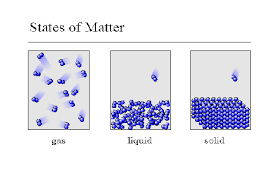
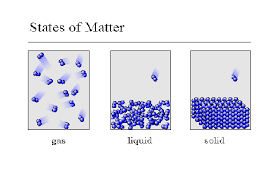
___________ is anything that has mass and takes up space.
Molecules
Matter
Volume
What is the process called when a gas turns into a liquid?
Condensation
Melting
Freezing
Evaporation

What state of matter does the picture below represent?
solid
liquid
gas
plasma
What is a Solid?
Matter that has a fixed shape and size.
Matter that has a fixed size and no fixed shape
Matter that has no fixed shape or size
Matter that has no fixed shape and size
The state of matter that expands to fill its container is called ______.
gas
liquid
solid

The diagram shows arrangement of particles in a
Solid
Liquid
Gas

What state is represented in the gif?
Solid
Liquid
Gas
The Law of Conservation of Mass says that matter can neither be __________ or __________.
created; destroyed
recycled; renewed
subtracted; added
joined; separated
According to the Law of Conservation of Mass, what happens to the wood and oxygen when it is burned?
The wood disappears.
It stays the same chemically.
The atoms in the wood and oxygen rearrange and form smoke and ash.
Nothing.
a different way to say Law of Conservation of Matter
Law of Conservation of Volume
Law of Conservation of Energy
Law of Conservation of Mass
Law of Conservation of Environment
Suppose you have 15g of baking soda and mix it with 15g of vinegar. When they are combined they bubble and fizz a lot. The final solution has a mass of 25g. What happened to the "lost" 5g?
it dissappears
it is still there just not weighted
it is in the gas that is formed
nothing happened

Which of the models of a chemical reaction best represents the Law of Conservation of Mass?
A
B
C
D
The law of Conservation of energy states that energy can be transformed from one form to another, but it cannot be _______ or ________
transformed, or created
divided or multiplied
radiated or conducted
created or destroyed
If you swing a pendulum - where is the potential energy the highest?
at the bottom of the swing
at the top of the swing
1/2 way from the top to the bottom
3/4 of the way from the top
Heat always move from a ______ object to a ______ object. Which word correctly complete this sentence?
cold / warm
big / small
warm / cold
small / big
When does heat stop transferring?
When there is no more thermal energy in the body.
When thermal equilibrium is reached.
When the temperatures of the objects are 100°C apart.
After a few minutes.
What is thermal equilibrium?
When two bodies have the same temperature.
When two bodies have the same heat.
When two bodies have the same thermal energy.
When two bodies have the same specific heat.
Heat produced by a light bulb is transferred by....
Conduction
Convection
Radiation
If you lay down on warm beach sand, you get heat by .....
Conduction
Convection
Radiation
The air regulates the temperature across its layers by heat.......
Conduction
Convection
Radiation

A heat conductor transfers heat easily, a heat insulator does not transfer heat easily. In the image, what materials should structures 1 and 2 be made of?
Both thermal insulators.
1. Thermal conductor
2. Thermal insulator
1. Thermal insulator
2. Thermal conductor
Both thermal conductors.
Houses are usually made out of wood to avoid loosing thermal energy. What conclusion can you get from this information?
Wood is a thermal conductor.
Wood is a thermal insulator.
Wood has a high specific heat.
Wood can't increase its temperature.
A measure of the average kinetic energy of the individual particles in an object is called:
thermal energy
conduction
convection
temperature
the temperature scale on which 0 is the temp at which no more energy can be removed
absolute zero
Fahrenheit scale
Kelvin scale
Celsius scale
What is the total energy of all of the particles in an object?
Thermal Energy
Heat
Temperature
The movement of thermal energy from a warmer object to a cooler object is called:
heat
temperature
motion
momentum

