
 Worksheets
TCAP
Total questions: 109
Worksheet time: 2hrs 43mins
A student wrote a research report on skyscrapers for her social studies class. Choose the sentence from her report that contains one spelling error. 7.L.CSE.2
The tallest skyscrapers in the world is aproximately 830 meters tall.
There is no specific height at which a structure is called a skyscraper.
When building a skyscraper, the plans must be precise and detailed because it might be perfectly built to stay standing.
When a city is planning what skyscrapers it will allow to be built, it must consider the impact of each skyscraper on the city's skyline.
The cat ran outside.
What is the main idea?

A poem about a garbage truck that uses a lot of onomatopoeia
A poem about a garbage truck that uses a lot of onomatopoeia

A five-paragraph essay in which the author attempts to convince readers to recycle more and to be less wasteful

A short story about a boy who never cleans his room and the horrible mess that accumulates

Instructions on how to make a compost pile

A bookmark with facts about garbage, such as the average weight of garbage created each year by each individual and the height and width of the largest pile of garbage

The story of a garbage truck who has a hard time making friends
An article in a magazine comparing and contrasting waste management in New York City and Mexico City

A billboard asking voters to appoint Joe Santiago as Sanitation Commissioner

The script for a television commercial to be read by Miley Cyrus telling viewers to make environmentally friendly decisions because future generations depend on it

A sticker on the trash compactor that shows how to operate it
What do you do when you analyze a text?
To review sometimes
To examine carefully
To read over and over again
To make an educated guess
Something that is accurate is ...
a fact
an exaggeration
a dictionary definition
something you examine carefully
What is an inference?
a fact
an exaggeration
An educated guess
an attitude
When you look for the central idea of a text, what are you looking for?
the theme or moral of a story
what the passage is mostly about
a summary of what the author is talking about
an explanation of figurative language
What is a hyperbole?
A n educated guess
The opposite of something
a comparison of two like things
an extreme exaggeration
A metaphor is a type of figurative language that uses like or as to compare two unlike things.
True
False
Tone is defined as the attitude that a writer is trying to convey with words and actions.
True
False
A simile is a type of figurative language that gives human qualities to non-human objects
True
False
Determine means to come to an agreement or resolution about something.
True
False
A type of figurative language that uses like or as
simile
metaphor
hyperbole
personification
What is an interaction?
action, effect or influence between individuals, locations or ideas
to make an exaggeration
To come to a decision
A fact
A writing that is subjective is based on someone's personal opinion.
True
False
What is the meaning of connotation?
To examine carefully
A main point an author is making
dictionary definition
Something suggested or implied by a word or thing, rather than being explicitly named or described
Something that is explicitly said is often stated in the text.
True
False
If I ask you to write an objective summary, would you include your personal opinion?
Yes
No
What is the definition of personification?
the occurrence of the same letter or sound at the beginning of adjacent or closely connected words.
An exaggerated comparison
To give a non-human thing human characteristics.
What is the meaning of denotation (or the technical meaning of something)?
dictionary definition
an educated guess
to be free from error
something that is an opinion
Illustrate means
To show or explain
to analyze
to guess
to compare
Did you know that not all deserts are
hot? Both hot and cold deserts are very
dry, but unlike hot deserts, cold deserts have long
winters when the temperatures can reach below
freezing. Cold deserts also get a great deal of
snow, which is certainly not true for hot deserts.
compare and contrast
problem and solution
description
sequence/chronological
No one knows exactly what causes tornados, but some scientists believe that when warm air meets cold air, a tornado may form. The reason for this is that the warm air is lighter than the cold air, so it rises up fast and meets different winds moving different directions. Under the right conditions, this can cause a tornado. Though there is still much mystery surrounding tornados, many people believe that when warm moist air meets cool dry air, tornados can result.
problem & solution
cause & effect
compare & contrast
sequence/chronological

The dodo bird used to roam in large flocks across America. Interestingly, the dodo wasn’t startled by gun shot. Because of this, frontiersmen would kill entire flocks in one sitting. Unable to sustain these attacks, the dodo was hunted to extinction.
Problem and Solution
Cause and Effect
Sequence/Chronological
Compare and Contrast

This morning was crazy. My alarm clock was set for PM instead of AM, so I woke up really late. I just threw on some clothes and ran out the door. I rode my bike as fast as I could and thought that I was going to be late for sure, but when I got there everyone was outside and there were firetrucks all lined up in front of school. I guess somebody pulled the fire alarm before class started. It worked out though, because nobody really noticed or minded that I was tardy.
Sequence/Chronological
Cause and Effect
Problem and Solution
Compare and Contrast

Apples and oranges are both fruits, which means that they have seeds inside of them. Each has a skin, but orange skins are thick and easy to peel. Apple skins are thinner and do not peel easily. Oranges also contain more acid than apples, but both fruits are delicious.
Problem and solution
Compare and Contrast
Sequence/Chronological
Cause and Effect

Scenario:
"Ms. Aden really wanted to go to a concert, but the only problem was that her car was in the shop. Ms. Aden lived 10 minutes from the metro. Because of this, she was able to go to the concert!"
What text structure is being used in this scenario?
Compare and Contrast
Sequence/Chronological
Problem and Solution
Cause and Effect

What is the Cause? What is the Effect?
Effect: Ray forgot to charge his iPad.
Effect: Ray's iPad was dead.

How is the text structured?
A hurricane is a large storm with heavy winds and rain that begins in the ocean and builds up strength as it moves across the water. While some of the damage caused by hurricanes is from high winds, most of it is usually from tidal surge, flooding entire cities, and killing large numbers of people. A tornado is a storm that develops on land, with no warning, and moves in a circular motion with heavy winds with a funnel shape, picking up and carrying dirt, dust and even objects. The damage caused by tornadoes is from the high velocity winds, which are extremely destructive and deadly. They can demolish entire neighborhoods in a matter of a few seconds to a few minutes. Tornadoes can form when hurricanes make landfall, as their winds at ground level slow down, while the winds near the top keep their momentum, but a hurricane cannot be created by a tornado.
Sequence/Chronological
Compare and Contrast
Problem/Solution
Cause and Effect
How is the text structured?
Hurricane Katrina began as Tropical Depression Twelve over the southeastern Bahamas on August 23, 2005. The depression later strengthened into a tropical storm on the morning of August 24, where the storm was also named Katrina. Katrina continued to move into Florida and became a Category 1 hurricane only two hours before it made landfall around Hallandale Beach on the morning of August 25. The storm weakened over land, but became a hurricane again while entering the Gulf of Mexico.
Compare and Contrast
Problem Solution
Cause and Effect
Sequence/Chronological
How is the text structured?
Fire needs three things to burn: oxygen, fuel, and heat. Fuels can be wood, tinder, coal, or any other substance that will easily oxidize. Therefore, a fire can be stopped in three different ways, by removing any of the three things it needs to burn.
*The fuels can be removed. If a fire burns through all of its fuel and extra nearby fuel is removed, the fire will stop burning.
*The oxygen can be removed. This is called "smothering" a fire. Fires cannot burn in a vacuum or if they are covered in carbon dioxide.
*The heat can be removed. The most common way to remove heat is to use water to absorb that heat, putting the fire out.
cause and effect
problem solution
sequence/chronological
compare and contrast
What type of text structure?
Avalanches - Avalanches (when a lot of snow falls from a mountain) may bury people under them. If the people are not found rapidly enough by rescue teams they will die of suffocation (not getting enough air) or of hypothermia (freezing cold). The chance of surviving an avalanche is as follows: 92% if found within 15 minutes 30% if found within 35 minutes (victims die of suffocation) nearly zero after two hours (victims die of injuries and hypothermia)
Compare and contrast
Sequence/Chronological
Cause and effect
Problem and solution
What is the organizational text structure Sequence/Chronological Order?
describes a topic, idea, person, place, or thing by listing its features, characteristics, or examples
shows how two or more things are alike and/or different
time order in which events occur
key concept and information that supports the concept
How would you restate the question, "How does the author create a feeling of sympathy?"
Did you ever wonder how an author creates sympathy?
The author of this text creates a feeling of sympathy by...
Sometimes authors create sympathy
Sympathy is a feeling that authors can create
Which sentence starter is appropriate when you're explaining your evidence?
This means...
The author states...
The author points out...
In conclusion...

The part of RACE where you use part of the question to begin your paragraph.
Restate
Answer
Explain
Cite
The part of RACE where you add your own thoughts to add to the quotes you have chosen to include.
Restate
Cite
Answer
Explain
How would you restate the question, "How does the author create a feeling of sympathy?"
Did you ever wonder how an author creates sympathy?
The author of this text creates a feeling of sympathy by...
Sometimes authors create sympathy
Sympathy is a feeling that authors can create
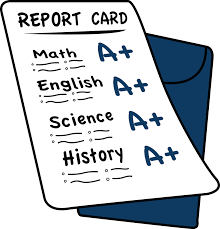
How would you restate the question, "Why was Michael motivated to get a good grade?"
So he would get on the A honor roll.
Michael was motivated to get a good grade because...
He was motivated to get a good grade because...
Michael was motivated...
What is figurative language?
Language that has one literal meaning.
Language that uses extremely advanced vocabulary.
Language with a meaning that is different from the literal interpretation.
Language that communicates complicated concepts and ideas.
What is a simile?
A comparison of two unrelated things that uses like or as.
A comparison of two unrelated things that DOES NOT use like or as.
Giving human/lifelike characteristics to something that is not human and/or alive.
An extreme exaggeration not meant to be taken literally.
What is a metaphor?
A comparison of two unrelated things that uses like or as.
A comparison of two unrelated things that DOES NOT use like or as.
Giving human/lifelike characteristics to something that is not human and/or alive.
An extreme exaggeration not meant to be taken literally.
What is personification?
A comparison of two unrelated things that uses like or as.
A comparison of two unrelated things that DOES NOT use like or as.
Giving human/lifelike characteristics to something that is not human and/or alive.
An extreme exaggeration not meant to be taken literally.
What is hyperbole?
A comparison of two unrelated things that uses like or as.
A comparison of two unrelated things that DOES NOT use like or as.
Giving human/lifelike characteristics to something that is not human and/or alive.
An extreme exaggeration not meant to be taken literally.
What is onomatopoeia?
Words that imitate natural sounds.
A set expression or phrase that holds meaning in particular cultures or countries, but may mean nothing to outsiders.
A figure of speech in which two opposite ideas are joined in order to create an effect.
A situation that is strange or funny because things happen in a way that is opposite of what you expect.
What is an idiom?
Words that imitate natural sounds.
A set expression or phrase that holds meaning in particular cultures or countries, but may mean nothing to outsiders.
A figure of speech in which two opposite ideas are joined in order to create an effect.
A situation that is strange or funny because things happen in a way that is opposite of what you expect.
What is an oxymoron?
Words that imitate natural sounds.
A set expression or phrase that holds meaning in particular cultures or countries, but may mean nothing to outsiders.
A figure of speech in which two opposite ideas are joined in order to create an effect.
A situation that is strange or funny because things happen in a way that is opposite of what you expect.
What is irony?
Words that imitate natural sounds.
A set expression or phrase that holds meaning in particular cultures or countries, but may mean nothing to outsiders.
A figure of speech in which two opposite ideas are joined in order to create an effect.
A situation that is strange or funny because things happen in a way that is opposite of what you expect.
Which of the following is an example of SIMILE?
The soldier was as brave as a lion.
Her voice is music to my ears.
Her stomach complained loudly after she ate the spicy enchiladas.
Your suitcase weighs a ton!
Which of the following is an example of METAPHOR?
The soldier was as brave as a lion.
Her voice is music to my ears.
Her stomach complained loudly after she ate the spicy enchiladas.
Your suitcase weighs a ton!
Which of the following is an example of PERSONIFICATION?
The soldier was as brave as a lion.
Her voice is music to my ears.
Her stomach complained loudly after she ate the spicy enchiladas.
Your suitcase weighs a ton!
Which of the following is an example of HYPERBOLE?
The soldier was as brave as a lion.
Her voice is music to my ears.
Her stomach complained loudly after she ate the spicy enchiladas.
Your suitcase weighs a ton!
Which of the following is an example of ONOMATOPOEIA?
The bacon sizzled in the hot skillet.
Every cloud has a silver lining.
Shaina ordered jumbo shrimp at the seafood restaurant.
The school dietitian eats a double bacon cheeseburger three times a week.
Which of the following is an example of an IDIOM?
The bacon sizzled in the hot skillet.
Every cloud has a silver lining.
Shaina ordered jumbo shrimp at the seafood restaurant.
The school dietitian eats a double bacon cheeseburger three times a week.
Which of the following is an example of an OXYMORON?
The bacon sizzled in the hot skillet.
Every cloud has a silver lining.
Shaina ordered jumbo shrimp at the seafood restaurant.
The school dietitian eats a double bacon cheeseburger three times a week.
Which of the following is an example of an IRONY?
The bacon sizzled in the hot skillet.
Every cloud has a silver lining.
Shaina ordered jumbo shrimp at the seafood restaurant.
The school dietitian eats a double bacon cheeseburger three times a week.
What are the plots of a story?
The exposition
The rising action
Climax
Main Idea
What are characters?
The main things in a story
The people who tell the story
People in a story
What is the climax in plot
An edge of your seat moment/the main problem.
The end of a story.
The falling action in a story
What is the setting in a story
The plot
Stuff that describes a character
The main idea
The place where the story is taken at.
"My hamster ran away last night in my bedroom and I can't find it anywhere in my house. I wonder if I'll ever see her again..."said Lilly. What is the setting in this passage?
Lilly's room
Lilly's House
Long speech by an actor speaking to himself
Dialogue
Scene
Soliloquy
Monologue
Conversation in a play
Dialogue
Monologue
Narrator
Soliloquy
Actor who speaks only to the audience about the story
Chorus
Aside
Prologue
Narrator
What is dialogue in a play?
words characters say out loud
what characters think
how characters act
all of the above
Stage directions tell us:
When and where action takes place
What the setting looks like
How characters are supposed to say their lines/how they behave
All of the above
How are stage directions written in the script?
italics
parenthesis ( )
italics and parenthesis ( )
plain text
Dialogue is written in:
bold text
italics
plain text
all of the above
A narrator is always the main character of the play?
True
False

What kind of text is this?
review
newspaper
magazine
article

What kind of text is this?
review
short stories
recipe
article

What kind of text is this?
autobiography
biography
magazine
novel

What kind of text is this?
cookbook
short story
review
newspaper

What kind of text is this?
poetry
poem
novel
romance

What kind of text is this? Tick all correct ones.
recipe
cookbook
cookery book
diary

What kind of text is this?
romance
novel
play
short story

What kind of text is this?
romance
novel
graphic novel
short story

What kind of text is this?
short story
romance
romantic story
novel

What kind of text is this?
diary
letter
journal
note

What kind of text is this?
journal
newspaper
magazine
the news

What kind of text is this?
newsletter
letter
newspaper
magazine

