
 Worksheets
Grade 6 Science Term 2 Revision
Total questions: 70
Worksheet time: 52mins
What does a habitat provide an organism that allows it to thrive?
water
shelter
food
predators
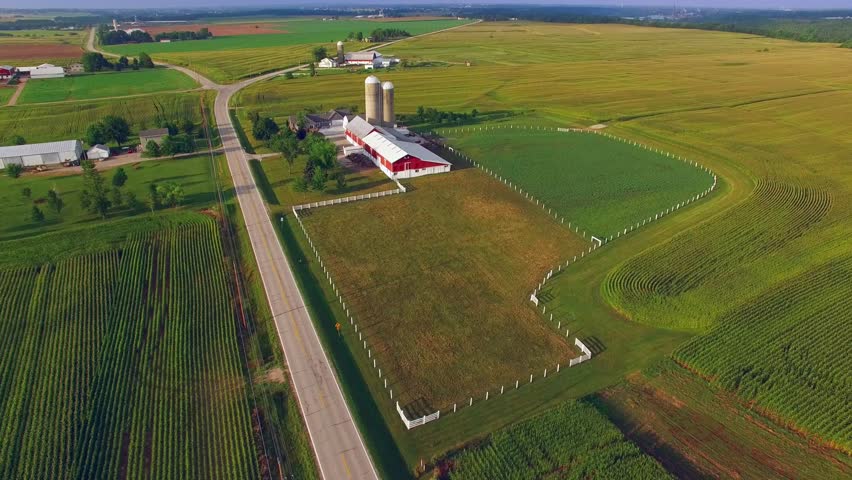
What happens to any forest ecosystem when the land is cleared for farming?
The forest ecosystem will be destroyed.
The forest ecosystem will be healthy.
The forest ecosystem will be relocated.
The forest ecosystem will be unaffected.
What is TRUE about renewable sources of energy?
Fossil fuels are an example
They are better for the environment than nonrenewables
Solar, wind, and hydroelectric are examples
They can be replaced as quickly as they are used
They will run out
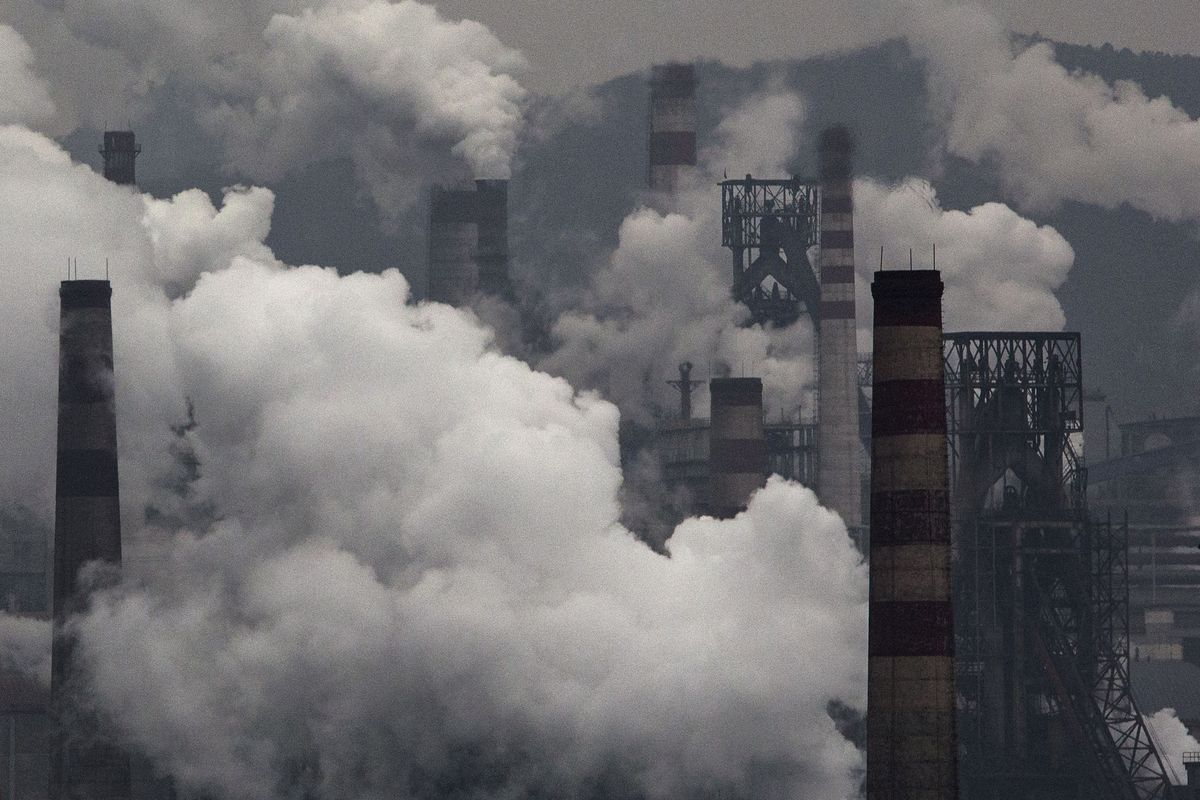
Pollution caused by a coal factory most directly affects the...
ocean
soil
atmosphere
groundwater
Moist skin covered in scales
Vertebrate
Birds
Fish
Reptiles
Dry skin with scales
mammals
Fish
Birds
Reptiles
P = Genus
Q = Phylum
R = Class
S = Kingdom
T = Family
U = Species
V = Order
which of the following sequence shows the hierarchy of classification
Q, S, U, V, T, P, R
S, Q, R, V, T, P, U
V, T, P, S, U, Q, R
U, T, Q, P, V, S, R
which of the following statements about classification of organisms is incorrect
it makes the study of organism easier
it enables predictions of the organism
it names the organisms using a standardize system
it sorts organism into one group only
Invertebrates do NOT have
exoskeleton
soft body
internal skeleton
eyes
2. Worms and slugs have...
an exoskeleton
a soft body
an internal skeleton
a spine
Even as the temperature changes, the body temp of the cheetah remains fairly constant. This is because the
cheetah is what kind of animal?
Cold-Blooded
Warm -Blooded
Invertebrate
Ectothermic
Charles Darwin is best known for –
His theory of natural selection
His theory of selective breeding
His work with the animals on the Galapagos Islands
His theory of natural selection and his work on the Galapagos Islands
Which of the following represents a variation?
One rabbit being slightly larger than another
A bear hibernating
Gills in a fish
A snake’s venom

Which of the following statements is true about the above picture?
The horses are all different species and that’s why they look different
The horses are all the same species, but variation makes them look different
The horses are all the same
The horses are all the same species, but behavioral adaptations make them look different
What is the difference between natural selection and selective breeding?
In natural selection, nature decides which organisms live or die by a process known as survival of the fittest and in selective breeding, humans decide which traits are desired and breed animals for those desired traits.
In selective breeding, nature decides which organisms live or die by a process known as survival of the fittest and in natural selection, humans decide which traits are desired and breed animals for those desired traits.
Natural selection and selective breeding are the same thing
Natural selection occurs quickly over 1-2 generations and selective breeding can take thousands of years.
Which list of characteristics describes organisms classified as animals?
Unicellular, prokaryotic, autotrophic
Multicellular, eukaryotic, heterotrophic
Unicellular, eukaryotic, heterotrophic
Multicellular, eukaryotic, autotrophic
organism that makes its own food
autotroph
heterotroph
organism
prokaryotes
system for naming organisms in which each organism is given a unique, two-part scientific name consisting of genus and species
binomial nomenclature
genus
species
taxonomy
process of grouping things based on their similarities
classification
binomial nomenclature
taxnomy
biodiversity
organism whose cells contain nuclei
eukaryotes
prokaryotes
autotroph
heterotroph
classification grouping that consists of a number of similar, closely related species
genus
species
organism
taxonomy
any living thing
organism
species
genus
autotroph
Complete the word equation below:
Acid + alkali --> ............... + water
water
salt
gold
metal
.............................. + sodium hydroxide --> sodium chloride + water
Nitric acid
Sulphuric acid
Hydrochloric acid
Ethanoic acid

Why is toothpaste alkaline?
It can neutralise strong alkaline in
your mouth
It can neutralise acid in
your mouth
It can refresh your teeth
Toothpaste is not alkaline.
What colour is Universal indicator when the solution is neutral?
Red
Green
Blue
Purple
Sulphuric acid + potassium hydroxide --> ........................ + water
potassium sulphate
potassium sulphurate
potassium nitrate
magnesium hydroxide
ph range of acids are .....
0-6
7
8-14
4-10
ph range of alkalis are .....
0-6
7
8-14
4-10
What colour change would you see if you added nitric acid to sodium hydroxide and universal indicator?
red -> blue
purple -> green
red -> yellow
pink -> colourless

Conditioners contain ........................ that neutralize shampoo on hairs.
acid
alkali
vinegar
natrium hydroxide

Excess acids in stomach can be neutralized using ............
antacid
vinegar
slaked lime
hydrochloric acid
Which of the following alkaline is used to neutralise acidic soil?
Soap solution
Potassium hydroxide
Sodium hydroxide
Calcium hydroxide
Which solution would turn litmus red?
Potassium hydroxide
Sodium chloride
HNO3
Ammonia
Which solution would turn litmus blue?
HCl
Citric fruits
H2SO3
NH3

Which of the set of pH paper depicts that the dipped solution is highly acidic?
(compare with the pH scale and find out)


Adding harmful things to the environment is called
Pollution
Waste
Acid rain
Sulfur dioxide
Which of these problems can be caused by air pollution?
Respiratory problems
Increased disease for humans
Reduced food sources for humans
Decrease in global temperatures
The ____________________ protects people from the effects of too much ultraviolet radiation.
smog layer
cloud cover
temperature inversion
ozone layer
The ozone layer is damaged by
Increased global temperatures
CFCs
Increase in greenhouse gases
Sulfuric and nitric acids
Ozone absorbs UV _________
Heat
Radiation
Which of the symbols represents ozone?
O2
O3
Cl2
Cl3
In which of the atmospheric layers is the ozone layer found?
Troposphere
Stratosphere
Mesosphere
Thermosphere
What are "holes" in the ozone layer?
places where the ozone concentrations are higher than under normal conditions, allowing more UV radiation to reach the Earth's surface.
places where the ozone concentrations are higher than under normal conditions, allowing less UV radiation to reach the Earth's surface.
places where the ozone concentrations are lower than under normal conditions, allowing more UV radiation to reach the Earth's surface.
How do CFCs affect the ozone layer?
By increasing the amount of ozone
By reacting with ozone and breaking it down
By releasing carbon dioxide
Although the use of CFCs has been banned, the threat to the upper atmospheric ozone continues because CFCs
become harmless quickly.
persist and continue to destroy ozone for decades.
destroy ozone for only a short time.
persist but stop destroying ozone.
Ancient land mass where all continents were together
Pangea
North America
continental plate
continental drift
Earth's crust is made of large, solid pieces that move around on convection currents.
Plate Tectonic Theory
Continental Drift Theory
Survival of the Fittest Theory
Gene Theory
The continents were once all together but have slowly moved apart over time.
Continental Drift Theory
Plate Tectonic Theory
Seafloor Spreading
Convection Current
Which person was the first to publish and publicise his view that a single continent existed about 300 million years ago?
Albert Einstein
Sir Francis Bacon
Alfred Wegener
Alexander Du Toit
Going from earth's surface to the interior, what trends are found?
Density and temperature increase
Density and temperature decrease
Density increases and temperature decreases
Density decreases and temperature increases
Approximately how many tectonic plates are there?
3
6
12
24
Which of the following was the main reason why scientists did not accept Wegener's hypothesis?
Wegener was smarter than all other scientists
Animals could swim
Wegener could not explain the mechanism for movement of the continents
Continental landmasses were too big to move slowly over Earth’s surface

The arrangement of things in the order that they occurred
Diversity
Fossils
Chronological Order
Extinction

Why would a FISH fossil be in the DESERT?
A desert formed in an area that was once covered by an ocean.
A bird must have dropped the fish as it flew over the desert.
Water, wind, and ice must have brought the fish to the desert.
The fossil came from a volcano that started on the ocean floor.

Fossils can provide evidence that some environments on Earth have changed greatly over time.
true
false

Fossils are often found in sedimentary rock. In undisturbed sedimentary rock, where would the oldest fossils be found?
the bottom layer
the middle layer
the top layer

Scientists who study fossils are known as....
archeologists
geologists
biologists
paleontologists

This type of fossil (like a footprint) shows evidence of past behaviors.
cast fossil
mold fossil
inclusion fossil
trace fossil
In what time period did Pangaea, the super-continent, appear?
Precambrian
Paleozoic
Mesozoic
Cenozoic

