wayground logo

Free Printable Worksheets

Font size

S
M
L
XL
Worksheets

Chemistry Review Semester 1

Total questions: 40

Worksheet time: 45mins
Name
Class
Date
1.
What subatomic particles would you find in the nucleus of an atom?
a)
Protons only
b)
Protons and Neutrons
c)
Neutrons and Electrons
d)
Protons and Electrons 
2.
What subatomic particle is electrically neutral (no charge)?
a)
Proton
b)
Ion
c)
Neutron
d)
Electron
3.
What is the mass of an atom if it has 11 protons, 12 neutrons, and 11 electrons?
a)
22
b)
11
c)
34
d)
23
4.
How many neutron are in the atom "K"?
a)
7
b)
2
c)
39
d)
20
5.
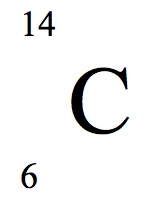
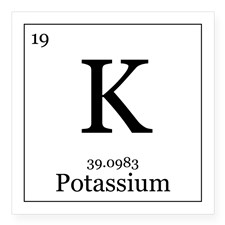
What is the number of protons that the element in this image contain?
a)
14
b)
7
c)
15
d)
18
6.
An atom's mass number equals the number of...
a)
protons plus the number of electrons
b)
protons plus the number of neutrons
c)
protons
d)
neutrons
7.
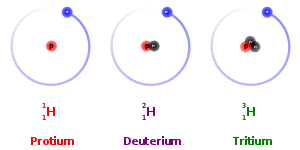
What is an isotope? 
a)
A charged atom
b)
An atom with different amounts of neutrons
c)
An atom with different amounts of protons
d)
A neutral atom
8.
The photo above shows the isotopic notation for which isotope?
a)
Carbon 12
b)
Carbon 13
c)
Carbon 14
d)
Carbon 15
9.
Different isotopes have...
a)
different masses
b)
different atomic numbers
c)
different electrons
d)
different protons
10.
What is the atomic mass of the pictured isotope?
a)
17
b)
35
c)
18
d)
What a "clorious" isotope!
11.

How many grams of Carbon-14 (half-life = 5700 years) will remain after 17,100 years?

a)

32 g

b)

16 g

c)

8 g

d)

4 g

12.
A helium nucleus with two protons and two neutrons is called a(n) ____.  
a)
alpha particle
b)
electroscope
c)
beta particle
d)
gamma ray
13.
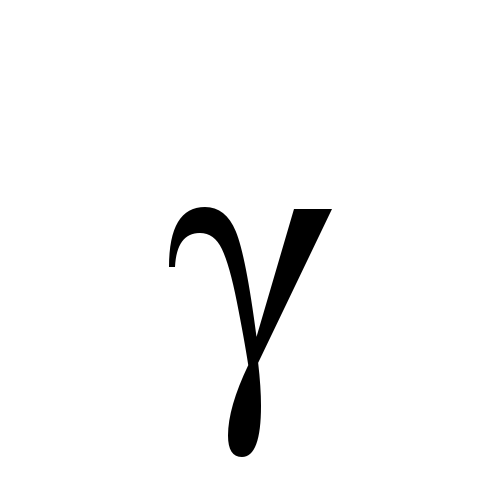
Has the symbol
a)
Alpha
b)
Beta 
c)
Gamma
14.

During beta-particle emission, a neutron splits into a____________________.

a)

proton and electron

b)

neutron and electron

c)

neutron and proton

15.
Has the highest penetrating power.  Can penetrate our body.  Even several cm thick of lead or several meters thick of concrete cannot stop all of it.
a)
Alpha
b)
Beta
c)
Gamma
16.
Has the lowest penetrating power.  Can only penetrate 0.05 mm into the body and can be stopped by a piece of paper or clothing.
a)
Alpha
b)
Beta
c)
Gamma
17.

A collection of atoms of one type that cannot be broken down into simpler substances by ordinary chemical or physical means

a)

element

b)

subatomic particle

c)

electron

d)

matter

18.

A grouping of elements based on similar properties, arranged by columns in the periodic table; also known as a group

a)

family

b)

period

c)

row

d)

isotope

19.

An element has the mass number 12 and atomic number 6. The number of neutrons in it is:

a)

6

b)

10

c)

4

d)

8

20.

If an atom has 10 electrons, how many protons does it have?

a)

0

b)

1

c)

10

d)

5

21.
What gas is produced when a metal reacts with an acid?
a)
Water vapour
b)
Acidic gas
c)
Hydrogen
d)
Nitrogen
22.
Another term for burning is
a)
Fire triangle
b)
Magnesium oxide
c)
Combustion
d)
Bustion
23.
Subatomic particle without a charge.
a)
Proton
b)
Electron
c)
Neutron
24.
Vertical columns on the Periodic Table of Elements; they have similar properties and the same number of valence electrons.
a)
Periods/Rows
b)
Metals/Nonmetals
c)
Groups/Families
d)
Halogens/Noble Gases
25.
The elements on the "staircase" on the periodic table of elements.
a)
Metals
b)
Nonmetals
c)
Metalloids
d)
Halogens
26.

Earth elements decay and change into another element in a process called_____________.

a)

radiation

b)

isotope

c)

radioactive decay

d)

half-life

27.
An element has three energy levels (orbitals).  What period is this element in?
a)
1
b)
2
c)
3
d)
4
28.
What is the term for the particles in red?
a)
Protons
b)
Electrons
c)
Valence electrons
d)
Positive protons
29.

Identify a nonmetal with 1 valence electron

a)

Hydrogen

b)

Helium

c)

Lithium

d)

Potassium

30.

Physical or Chemical: Candle wax melting?

a)

Chemical Change

b)

Physical Change

c)

Both

31.

Physical or Chemical: Baking a cake?

a)

Physical

b)

Chemical

c)

Both

32.

Name the first person to propose the idea of atoms.

a)

Socrates

b)

Plato

c)

Democritus

d)

Aristotle

33.

The non-metals are located

a)

to the LEFT of the stair step.

b)

to the RIGHT of the stair step.

c)

on and around the stair step.

34.

Who carried out a cathode ray experimentand discovered Electrons in 1897?

a)

J. J. Thomson

b)

Ernest Rutherford

c)

John Dalton

d)

Chadwick

35.

Name the person who discovered neutrons.

a)

Ernest Rutherford

b)

Antoine Lavoisier

c)

John Dalton

d)

James Chadwick

36.

Which of these is a use of alpha radiation?

a)

Sterilising food

b)

Smoke detectors

c)

Monitoring paper thickness

d)

Industrial tracers

37.
Radioactive tracers are useful in ____.
a)
calculating the ages of fossils 
b)
fueling nuclear reactions 
c)
determining medical problems 
d)
treating brain tumors 
38.

Radioactivity can be harmful and cause disease because it affects _________.

a)

air

b)

water

c)

cells

d)

blood

39.
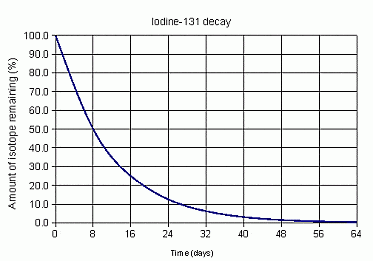
What is the half-life of iodine-131?
a)
32 days
b)
8 days
c)
16 days
d)
24 days
40.
After the third half-life, how much of the sample is left?
a)
1/2
b)
1/3
c)
1/16
d)
1/8