
 Worksheets
Savvas 6th gr Unit 3 Rocks, Minerals, and the Rock Cycle
Total questions: 80
Worksheet time: 42mins
What is the correct order of Earth's Layers, starting from the surface, going toward the center?
crust, outer core, inner core, mantle
mantle, outer core, inner core, crust
crust, mantle, outer core, inner core
outer core, inner core, crust, mantle
We live on the solid outer layer of Earth called the
magma
mantle
landform
lithosphere/crust
Which layer of the earth is made of LIQUID iron and nickel?
Inner core
Outer core
Mantle
Crust

The ____________ is at the center of Earth.
crust
mantle
core
volcano

A layer of rock that covers the Earth's surface is known as ...
the outer mantle.
Jolly Ranchers.
the inner crust.
crust.
A layer of molten iron and nickle that surrounds the inner core of the Earth is known as ...
the outer crust.
the inner crust.
the top crust.
pizza crust.
True or false. The Earth is made up of multiple layers.
True
False
A substance that contains one kind of atom and cannot be broken down into a simpler form is known as ...
an element.
proof.
a cell.
crust.

Information or data that is used to support a conclusion is known as ...
a conclusion.
a detail.
peanut butter in a cup.
evidence.

The inner core of the Earth is ...
full of Oreos.
a dense sphere of solid iron and nickle at the center of the Earth.
a layer of molten lava
the layer of hot, solid material between Earth's crust and core.

The definition of a "mantle" is ...
A layer molten lava
The layer of rock that forms Earth's outer surface.
The layer of hot, solid material between the Earth's crust and core.
The outermost layer of the Earth's crust.

What is the definition of "seismic wave"?
Vibrations that can travel through Earth carrying the energy released during an earthquake.
Information or data used to support a conclusion.
A layer of molten lava
A layer of molten iron and nickle that surrounds the inner core of the Earth.
The way in which a mineral reflects light
streak
luster
hardness
A naturally formed, inorganic solid that has a definite crystal structure
Rock
streak
mineral
The manner in which a mineral breaks along curved or irregular surfaces
streak
cleavage
fracture
A measure of the ability of a mineral to resist scratching
hardness
luster
streak
The splitting of a mineral along smooth, flat surfaces
fracture
cleavage
hardness
The color of the powder of a mineral
hardness
streak
luster
Mass divided by volume
streak
density
hardness
When we tested minerals in class, we used a nail, a penny, and our fingernail to test the ___________________ of the mineral
streak
hardness
The _______________________ of a mineral can be metallic or nonmetallic.
luster
color
When testing the ________________________of a mineral, we can use the white or black plate and look at the color of the powder the mineral left behind.
hardness
streak
The scale that measures the hardness of a mineral
Linear scale
bathroom scale
Moh's scale

Scientists use mineral ________________ to identify and classify minerals.
pieces
names
properties
structures

Which one is not a property used to identify minerals?
streak
luster
hardness
size

Gold, silver and copper are examples of minerals that have ______________________ luster.
metallic
nonmetallic

Which of the following minerals is one of the hardest minerals?
pearl
diamond
talc
quartz
In order for sedimentary rock to form, which of the following must occur?
compaction
intrusion
oxidation
metamorphism

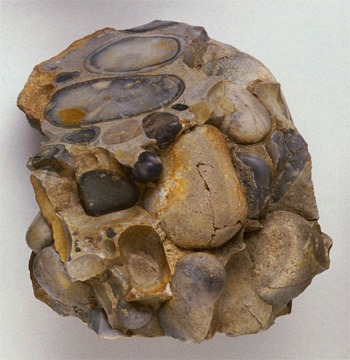
What causes igneous rocks to form
pressure
cooling magma and lava
compaction
cementation
Metamorphic rocks were once...
igneous rocks that cooled too quickly.
sedimentary rocks that were changed by time, heat, and pressure.
seashells that are pressed together.
layers of mud and sand that built up over time.
Rocks formed by heat and pressure beneath the Earth's surface are...
igneous
metamorphic
sedimentary
magma
A rock made of magma that cools inside the Earth and contains large crystals?
Igneous
Sedimentary
Metamorphic
Magma
A rock that contains pieces of shells and fossils compacted and cemented together over time is...
Sedimentary
Igneous
Metamorphic
Sediments
When heat and water and ice break down rock into sediments this is called?
Erosion
Compaction
Weathering
Deposition
The rock that forms by heat and pressure deep under ground?
Igneous
Sedimentary
Metamorphic
Lava
Which of the following describes the process of sediments being picked up and carried away . by wind, moving water or ice?
Erosion
Weathering
Deposition
Compaction
How does a Metamorphic rock become a Sedimentary rock?
Heat, pressure and radiation
Melting, cooling and evaporation
Weathering, Erosion, Compaction and Cementation
Cooling of Magma over time
How can a Metamorphic rock become an Igneous rock?
Weathering and Erosion
Compaction and Cementation
Heat and Pressurew
Melting and cooling


This type of rock is ___________ because ____________________.
Metamorphic...this rock has been changed by heat and pressure,
sedimentary...this rock contains small particles of rocks or the remains of plants and animals pressed and cemented together
igneous...this rock is formed from cooled magma or lava
magma...this rock is still molten (melted) and flowing.

This type of rock is ___________ because ____________________.
Metamorphic...this rock has been changed by heat and pressure,
sedimentary...this rock contains small particles of rocks or the remains of plants and animals pressed and cemented together
igneous...this rock is formed from cooled magma or lava
magma...this rock is still molten (melted) and flowing.

This type of rock is ___________ because ____________________.
Metamorphic...this rock has been changed by heat and pressure,
sedimentary...this rock contains small particles of rocks or the remains of plants and animals pressed and cemented together
igneous...this rock is formed from cooled magma or lava
magma...this rock is still molten (melted) and flowing.

This type of rock is ___________ because ____________________.
Metamorphic...this rock has been changed by heat and pressure,
sedimentary...this rock contains small particles of rocks or the remains of plants and animals pressed and cemented together
igneous...this rock is formed from cooled magma or lava
magma...this rock is still molten (melted) and flowing.

