wayground logo

Free Printable Worksheets

Font size

S
M
L
XL
Worksheets

CA3 Review 2022

Total questions: 65

Worksheet time: 3hrs 53mins

Name
Class
Date
1.
How is Nitrogen removed from the air and put into compound that living things can use?
a)
plants
b)
photosynthesis
c)
chemosynthesis
d)
nitrogen fixing bacteria
2.
What happens to carbon dioxide levels in the atmosphere when we burn fossil fuels?
a)
carbon dioxide levels in the atmosphere rise
b)
carbon dioxide levels in the atmosphere fall
c)
carbon dioxide levels in the atmosphere stay the same
3.
Which of the following take carbon dioxide out of the atmosphere?
a)
plant and animal respiration
b)
volcanoes
c)
combustion of fossil fuels
d)
photosynthesis
4.
Which of the following is not needed for photosynthesis?
a)
water
b)
carbon dioxide
c)
sunlight
d)
nitrogen
5.
What is the process called that changes atmospheric nitrogen into compounds that are usable by living things?
a)
nitrogen fixation
b)
nitrogen breaking
c)
photosynthesis
d)
respiration
6.
What is the energy source for the water cycle?
a)
the sun
b)
the earth
c)
water
d)
the moon
7.
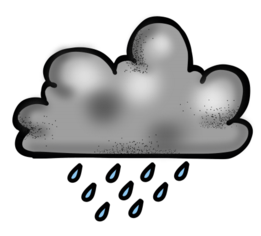
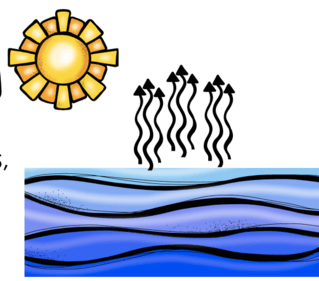
What part of the water cycle does this picture show?
a)
condensation
b)
precipitation
c)
evaporation
8.
What part of the water cycle does this picture show?
a)
condensation
b)
precipitation
c)
evaporation
9.
Which is the opposite of condensation?
a)
runoff
b)
evaporation
c)
precipitation
d)
transpiration
10.
What is a layer of rock or sediment that holds water?
a)
glacier
b)
well
c)
aquifer
d)
natural spring
11.

1. The process of plants losing water through their leaves is called ____.

a)

condensation

b)

transpiration

c)

evaporation

d)

exhaling

12.

2. What is the only process that removes carbon from the atmosphere?

a)

combustion

b)

photosynthesis

c)

respiration

d)

decomposition

13.

What % of the air is made of nitrogen?

a)

21%

b)

52%

c)

61%

d)

78%

14.

This can transform nitrogen in the atmosphere into a usable form of nitrogen

a)

rain

b)

ice

c)

lightning

d)

sun

15.

Round structures on the roots of certain plants

a)

lichens

b)

commensals

c)

cataracts

d)

nodules

16.

The Earth is rotating on its axis, creating _____

a)

day and night

b)

a year

c)

the seasons

d)

a month

17.

What is the name of the imaginary line running through the North Pole to the South Pole?

a)

orbit

b)

equator

c)

axis

d)

latitude

18.
Which of the following best describes the tilt of the earth when it is summer in the southern hemisphere?
a)
The northern hemisphere is tilted toward the sun
b)
The northern hemisphere is tilted away from the sun
c)
The norther hemisphere is tilted neither toward or away from the sun
d)
Why are you talking about the northern hemisphere when you asked about the southern hemisphere?
19.
What does the earth's tilt cause?
a)
The seasons
b)
Day and Night
c)
Tsunamis
d)
Earthquakes
20.
What effect does the tilt of the earth have?
a)
It changes the angle that the sun strikes the earth in different land areas
b)
It causes the earth to be farther away from the sun at different times of the year
c)
When the earth is tilted away from the sun we have night
d)
When the earth is tilted away from the sun we have day
21.
Why does the area around the equator stay the same temperature all year?
a)
The equator rotates slower than the poles.
b)
The equator remains the same distance from the sun.
c)
The equator always receives direct sunlight.
d)
The equator has 18 hour days.
22.

What are the characteristics of a high-pressure system?

a)

Wind and rain

b)

Humidity and thunder

c)

Extremely hot temperatures

d)

Clear skies and sun

23.

What causes global convection currents

a)

Forests

b)

greenhouse gases

c)

more land forms

d)

uneven heating of the Earth's surface

24.

What city will experience decreasing temperatures in the next day?

a)

Denver

b)

El Paso

c)

Memphis

d)

Los Angeles

25.

What city is most likely going to see temperatures rise?

a)

San Jose

b)

El Paso

c)

Jacksonville

d)

Chicago

26.

Where do warm ocean currents come from?

a)

warm ocean currents come from the southern hemisphere

b)

warm ocean currents come from the equator

c)

Warm ocean currents come from the poles

d)

Warm ocean currents come from the beach

27.

Where do cold ocean currents come from?

a)

cold ocean currents come from the southern hemisphere

b)

cold ocean currents come from the equator

c)

cold ocean currents come from the poles

d)

cold ocean currents come from the beach

28.

What does this symbol represent?

a)

Cold Front

b)

Warm Front

c)

Stationary Front

d)

Occluded Front

29.

What does this symbol represent?

a)

Cold Front

b)

Warm Front

c)

Stationary Front

d)

Occluded Front

30.

What does this symbol represent?

a)

Cold Front

b)

Warm Front

c)

Stationary Front

d)

Occluded Front

31.

What does this symbol represent?

a)

Cold Front

b)

Warm Front

c)

Stationary Front

d)

Occluded Front

32.

Low Pressures are associated with what type of weather

a)

fair weather

b)

cold weather

c)

warm weather

d)

rainy weather

33.
When I cold front is approaching, what happens?
a)
warm air is pushing under cold air causing humid weather and lower temperatures
b)
warm air is pushing under cold air causing humid weather and higher temperatures
c)
warm air rises, cools, and causes rain and thunderstorms
d)
cold air is pushed over warm air causing rain and thunderstorms
34.
If an air mass is rising, it must be
a)
cold and less dense
b)
cold and more dense
c)
warm and more dense
d)
warm and less dense
35.
If an air mass is sinking, it must be
a)
cold and less dense
b)
cold and more dense
c)
warm and more dense
d)
warm and less dense
36.
When two air masses meet, what happens?
a)
The weather changes and precipitation usually occurs.
b)
wind
c)
water
d)
volcano
37.

Winds occur because hot air rises and cool air sinks in a process called...

a)

conduction

b)

convection

c)

radiation

d)

magnetism

38.

The rotation of the Earth causes winds to bend due to the...

a)

coriolis effect

b)

doldrums

c)

trade winds

d)

westerlies

39.

Warm rising air causes___________ pressure, resulting in ___________.

a)

high, rain

b)

low, rain

c)

high, clear skies

d)

low, clear skies

40.

Cool sinking air causes___________ pressure, resulting in ___________.

a)

high, rain

b)

low, rain

c)

high, clear skies

d)

low, clear skies

41.

Winds always blow from areas of _________ pressure to areas of _________ pressure.

a)

high, high

b)

low, low

c)

low, high

d)

high, low

42.
Why do land breezes occur at night?
a)
Land cools off slower than water, so the air above water is cooler.
b)
Water cools off faster than land, so the air above land is warmer.
c)
Land heats up slower than water, so the air stays cooler during the day.
d)
Water cools off slower than land, so the air above water is warmer.
43.

In the northern hemisphere of the earth hurricanes circle __________.

a)

clockwise

b)

counter-clockwise

c)

up and down

d)

front to back

44.
What number indicates the nucleus?
a)
1
b)
2
c)
3
d)
4
45.
What number indicates an electron?
a)
1
b)
2
c)
3
d)
4
46.
Which two particles make up the nucleus of an atom?
a)
Protons and Electrons
b)
Protons and Neutrons
c)
Molecules and Compounds
d)
Neutrons and Electrons
47.
The positively charged particles of an atom are the ________.
a)
electrons
b)
protons
c)
neutrons
d)
protons & neutrons
48.
The particles with no charge in an atom are the _______.
a)
electrons
b)
neutrons
c)
protons
d)
protons and neutrons
49.
An atom with atomic number 6 would have how many protons?
a)
6
b)
12
c)
3
d)
cannot be determined 
50.

Who discovered that the atom had an small, dense, positively charged center?

a)

Ernest Rutherford

b)

J.J Thomson

c)

Robert Millikan

d)

John Dalton

51.

Which scientist discovered the electrons?

a)

Dalton

b)

Thomson

c)

Atristotle

d)

Bohr

52.

Bohr discovered that electrons are located in

a)

the nucleus

b)

inside protons

c)

electron cloud

d)

circular orbits around the nucleus

53.

Which scientist discovered that the nucleus contained neutrons?

a)

bohr

b)

Rutherford

c)

Dalton

d)

Chadwick

54.
Where is most of the mass in an atom located?
a)
in the nucleus
b)
in the protons
c)
in the neutrons
d)
in the electrons
55.
An atom has an atomic number of 15 and a mass number of 31. How many protons are there in the atom?
a)
15
b)
31
c)
16
d)
47
56.
An atom has 5 protons and 7 neutrons. What is the mass number of the atom?
a)
5
b)
7
c)
2
d)
12
57.

Ionic bonds are formed between...

a)

Non - metals

b)

A metal and a non-metal

c)

Metals

58.

How is an ionic bond formed?

a)

Sharing of electrons

b)

Delocalised electrons

c)

Transfer of electrons

59.

Lithium is in group 1 of the periodic table, which ion would it form?

a)

Li-

b)

Li2-

c)

Li+

d)

Li2+

60.
What two types of atoms make a covalent bond?
a)
2 Nonmetals
b)
1 Nonmetal and 1 Metal
c)
2 Metals
d)
2 Noble Gases
61.
According to the octet rule most elements need _______ valence electrons.
a)
2
b)
8
c)
6
d)
18
62.
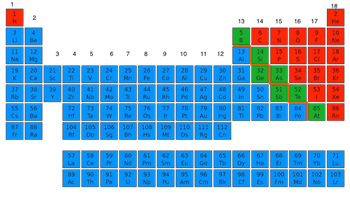
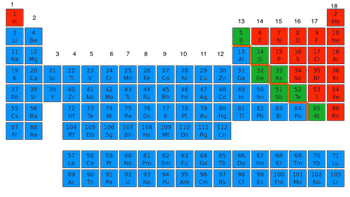
Where are the nonmetals located on the periodic table? 
a)
Blue
b)
Red
c)
Green
63.
Where are metals located on the periodic table?
a)
Blue
b)
Green
c)
Red
64.

Cations

a)

Gain electrons, has an overall positive charge

b)

Lose electrons, has an overall positive charge

c)

Lose electrons, has an overall negative charge

d)

Gain electrons, has an overall negative charge

65.

How many Aluminum atoms are in Al2O3?

a)

3

b)

5

c)

2

d)

1