
 Worksheets
WWII Review
Total questions: 91
Worksheet time: 2hrs 31mins
(a) was a war fought between 1939 and 1945 between the Axis and Allied powers.
An authoritarian and nationalistic right-wing system of government and social organization is (a)
The fascist Nazi dictator of Germany during WWII
Adolf Hitler
Benito Mussolini
Winston Churchill
Josef Stalin
Fascist dictator of Italy during WWII?
Adolf Hitler
Benito Mussolini
Winston Churchill
Josef Stalin
Chancellor of Great Britain during WWII?
Adolf Hitler
Benito Mussolini
Winston Churchill
Josef Stalin
Dictator of Russia during WWII
Adolf Hitler
Benito Mussolini
Winston Churchill
Josef Stalin
President of the United States from 1933 - 1945
Franklin Delano Roosevelt
Winston Churchill
Harry S. Truman
Herbert Hoover
One of a series of radio broadcasts made by President Franklin D. Roosevelt to the nation, beginning in 1933
fireside chats
State of the Union addresses
podcasts
radio dramas
Neutrality
the state of not supporting or helping either side in a conflict
interference by a country into another's affairs
the action of buying and selling goods
collection of military weapons
Intervention
The state of not supporting or helping either side in a conflict
Interference by a country into another's affairs
A system of currency
Destruction or slaughter on a mass scale
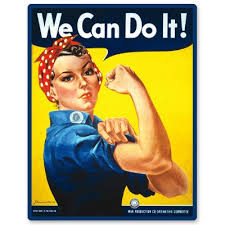
Who is this a image of and what did she a symbol of .....
June the Fighter symbol of women's suffrage
Susan the solider symbol of women working on airplanes
Rosie the Riveter symbol of women working in factories during the war.

What was the purpose of the Double V campaign?
to motivate people to buy war bonds
to allow more women to join the armed forces
to gain to victories one at home by ending segregation in armed forces and two victory over Hitler.
The Lend-lease Act allowed the U.S to give arms to without have Britain ...
pick them up
use the arms
pay cash
return them
When Roosevelt signed the Lend-lease Act, he said that the U.S must become the "arsenal of democracy in order to ?
end the Great Depression
help the Axis powers
help Britain
stay out of the war
The American program to build an atomic bomb was known as the
Manhattan Project
Operation overlord
New York Project
Operation A-bomb

The strategy of capturing some islands and going around others. That United States used in order to invade Japan.
Double V
Naplam
Lend-Lease
Island hopping

What is the intent of this propaganda poster
Hitler is extremely powerful right now and if Americans do not help Britain, Hitler will destroy America.
America would rather stay neutral than make money by selling weapons.
Americans will not go into war unless someone attacks them.
What is another name for the Invasion of Normandy?
Battle of France
Battle of the Bulge
D-Day
V-E Day

What was President Roosevelt referring to in this speech?
The victory at Normandy and liberation of France.
the Japanese bombing of Pearl Harbor.
The Battle of Britain.
What event changed the role of the US and led to us declaring war and sending troops into battle?
attack on Pearl Harbor
Lend-Lease Act
Operation Torch
What is Genocide?
prejudice, racism, hatred against Jews
systematic attempt to eliminate an entire race
organized attack on Jewish homes and businesses
What do Adolf Hitler, Benito Mussolini, and Joseph Stalin all have in common?
they are Communist dictators
they are Fascist rulers
they are Totalitarian dictators
Britain and France had this policy toward Nazi Germany
neutrality
appeasement
isolationism
What stated that the US would not sell war materials or give loans to nations at war?
Neutrality Acts
Lend-Lease Act
Atlantic Charter
What was the purpose of rationing?
increase supply of natural resources
cause a shortage of crops
provide supplies to the troops
Germany, Japan, and Italy were all members of what side during World War II?
Allied Powers
Axis Powers
Central Powers
Germany's approach to defeat enemies early in World War II was called _________, which means "lightening war".
Lebensraum
Anschluss
Kristallnacht
Blitzkrieg
What event caused Great Britain and France to declare war on Germany (sparking World War II)?
The invasion of the Rhineland
The invasion of Poland
The invasion of Russia
Signing a non-aggression pact with Russia
Following the Japanese attack on Pearl Harbor, the US declared war on Japan, which then caused which two countries to declare war on the US? (Select all that apply)
Italy
France
China
Germany
The largest military invasion took place on June 6, 1944, when Allied forces stormed the beaches of Normandy, France, in what is known as:
V-J Day.
V-E Day.
the liberation of Paris.
D-Day

What was the major reason for U.S. neutrality in the 1930's?
The U.S. didn't care.
The U.S. had committed itself to a policy of total nonviolence.
The economic and emotional effects of WWI made Americans reluctant to get involved in another war
The U.S. was confident that Britain and France could handle the situation.
What shocked Americans out of strict neutrality?
The war's toll on the U.S. economy could not be ignored.
Live radio news reports from London alerted American audiences that Germans were bombing civilians.
The U.S. was invaded.
The President very abruptly declared war.
The attack on Pearl Harbor...
directly led to the U.S. declaring war on Japan.
healed the political divisions between isolationists and interventionists.
Germany and Italy declared war on the U.S.
All of the above.
What was a lasting impact of WWII on the view of the role that the U.S. should play in the world?
Americans desired a return to isolationism.
Americans wished for a total denial of their global responsibilities.
Americans saw Britain as the de facto leader of the democratic Western world.
Americans now understood that world peace directly effected the economic and political health of the U.S.
Approximately when did World War 2 begin and end?
1929-1945
1939-1945
1939-1954
1929-1954
To confine someone as a prisoner, especially for military or political purposes, is called what?
Determent
Intermittent
Internment
Intermental
What was the date of the bombing of Pearl Harbor?
December 7, 1941
December 7, 1945
November 5, 1941
November 5, 1945
Which president executed Order 9066?
Herbert Hoover
Calvin Coolidge
Donald Trump
Franklin Roosevelt
According to Order 9066, which people on the west coast were to be relocated?
People of Japanese ancestry
People of Hawaiian ancestry
People of Native American ancestry
People of French ancestry
In response to the attack on Pearl Harbor and growing distrust of Asian Americans, what did President FDR do?
Required a "loyalty test" for all Americans
Sent spies to Germany to find Hitler
Kicked all Japanese Americans out of the United States
Issued an Executive Order forcing Japanese Americans into internment camps

1944- declared that the government had the right to keep Japanese Americans in internment camps due to the idea of “national security threat”
In 1948, which document was created to explain what rights were given to all humans?
Declaration of Independence
Universal Declaration of Human Rights
International Covenant on Civil and Political Rights
International Covenant on Economic, Social, and Cultural Rights
Which international peacekeeping organization created the Universal Declaration of Human Rights?
The United Nations
The World Health Organization
NATO
The Organization of American States
What major world conflict prompted the need for the Universal Declaration of Human Rights, as well as the United Nations itself?
World War I
World War II
The Cold War
The Vietnam War
Who is the former first lady that chaired the UN Commission on Human Rights?
Michelle Obama
Barbara Bush
Hillary Clinton
Eleanor Roosevelt
Which word means that human rights cannot be taken away?
Universal
Inalienable
Fundamental
Inherent
5th Amendment
No self-incrimination
No double jeopardy
Due process
The right to a jury trial in civil cases involving more than $20
No cruel and unusual punishment
No excessive bail
The right to a fair, speedy and public trial in criminal cases.
The right to a lawyer.
6th Amendment
No self-incrimination
No double jeopardy
Due process
The right to a jury trial in civil cases involving more than $20
No cruel and unusual punishment
No excessive bail
The right to a fair, speedy and public trial in criminal cases.
The right to a lawyer.
7th Amendment
No self-incrimination
No double jeopardy
Due process
The right to a jury trial in civil cases involving more than $20
No cruel and unusual punishment
No excessive bail
The right to a fair, speedy and public trial in criminal cases.
The right to a lawyer.
8th Amendment
No self-incrimination
No double jeopardy
Due process
The right to a jury trial in civil cases involving more than $20
No cruel and unusual punishment
No excessive bail
The right to a fair, speedy and public trial in criminal cases.
The right to a lawyer.
Rights not listed in the Constitution belong to the PEOPLE
A campaing that said African Americans should join the war effort in order to achieve a double victory over Hitler’s racism and racism at home in a campaign called
“Double V.”
“Tuskegee Airmen.”
“Fight for Right.”
“Two V.”
How did citizens on the home front get their mind off the war?
Baseball games
Movies
TV shows
Music
Americans were encouraged to grow their own vegetables to support the war effort. These were called
Victory Farms
Victory Gardens
Farmer's Market
Uncle Sam gardents


What was the purpose of this type of propaganda during WWII?
To convince Americans to plan vacations in advance
To prevent Americans from placing themselves in dangerous situations
To encourage Americans to conserve fuel and rubber for the war effort
To allow soldiers to travel throughout the U.S. safely
Propaganda is...
a form of biased information made to sway opinion or promote a certain point of view
a means to inform citizens about the major current events in a nation
a way to force people into the military
a way to allow people to learn about what's happening during a war

(US.52) Which of the following is NOT true about women during WWII?
Women worked in factories building the weapons of WWII
Elanor Roosevelt, FDR's wife, was the biggest supporter of women in the workforce
Wonder Woman was created to show that women could fight the Nazis too
Women were limited to just buying war bonds like in WWI

(US.56) The Manhattan Project was the code name for the American push to build the first super soldier.
True
False
(US.56) Which Japanese city was not hit by an atomic bomb?
Nagasaki
Hiroshima
Kokura
Throughout most of the 1930s, the American people responded to the aggressive actions of Germany, Italy, and Japan by:
retreating further into isolationism
assisting their victims with military aid
giving only economic help to the targets of aggression
demanding an oil embargo on all warring nations
sending personal packages of munitions to the allied nations
All of the following were ways in which Americans helped the war effort on the home front EXCEPT:
bought war bonds to help finance the war
conserved materials needed for the war
organized community scrap drives
protested the rationing program by the Office of Price Administration
volunteered to serve in the armed forces
The final straw, when Britain and France declared war on Germany, was after the German invasion of what nation in 1939?
Denmark
Poland
Belgium
Finland
Sweden
In July 1941 wat nation unexpectedly became an ally against Nazi Germany?
Britain
France
Soviet Union
Austria
Japan

The Double V campaign aimed at victory at home and abroad. What did victory at home look like?
remove Axis spies
become the "arsenal for democracy"
eliminate racial prejudice and segregation
eliminate restrictions based on gender
share the profits gained from wartime production
Which was NOT one of the universal freedoms for all humans declared by FDR?
from want
from fear
of religion
of speech
of protest
Which of the following is LEAST relevant to the War in the Pacific?
Manhattan Project
Island Hopping
Kamikaze
Pearl Harbor
Fascism

