wayground logo

Free Printable Worksheets

Font size

S
M
L
XL
Worksheets

Chem 20 Unit D Quiz 1 Review

Total questions: 83

Worksheet time: 7hrs 55mins

Name
Class
Date
1.
Which of the following shows the correct way to balance the chemical equation?
Fe + O2 -> Fe2O3
a)
4Fe + 3O2 -> 2Fe2O3
b)
2 Fe + 3O2 -> Fe2O6
c)
4 Fe + O6 -> 2Fe2O3
d)
None of the options are correctly balanced.
2.
What does the Law of Conservation of Mass state?
a)
Matter cannot be gained or lost in a chemical reaction.
b)
Matter can only be lost in a chemical reaction.
c)
Matter can only be gained in a chemical reaction.
d)
Matter can be gained and lost in a chemical reaction. 
3.
Is the following equation balanced?...
Al + O2 --> 2Al2O3
a)
Yes!
b)
No!
4.
Balance this equation-
__P+ __O--> __P2O3
a)
it is already balanced
b)
2, 1, 3
c)
1, 2, 3
d)
1, 3, 2
5.
Balance this equation
_Al +_HCl --> _H+_AlCl3
a)
2, 6, 3, 2
b)
it is already balanced
c)
4, 12, 3, 4
d)
2, 1, 4, 5
6.
When the equation
Na + H2O --> NaOH + H2 is correctly balanced using the smallest whole numbers, the coefficient of the water is
a)
1
b)
2
c)
3
d)
4
7.

Balance the following equation: Cr(s) + Fe(NO3)2 (ag) → Fe(s) + Cr(NO3)3 (ag)

a)

2,3,3,2

b)

2,3,2,3

c)

4,6,6,2

d)

1,3,3,1

8.
Balance this equation
_Al +_HCl --> _H+_AlCl3
a)
2, 6, 3, 2
b)
it is already balanced
c)
4, 12, 3, 4
d)
2, 1, 4, 5
9.
Find the molar mass of Mg.
a)
12.21 g/mol
b)
24.31 g/mol
c)
25.01 g/mol
d)
13.01 g/mol
10.
Find the molar mass of CuO.
a)
37.00 g/mol
b)
266.04 g/mol
c)
45.00 g/mol
d)
79.55 g/mol
11.
Find the molar mass of Rb.
a)
85.47 g/mol
b)
37.00 g/mol
c)
45.47 g/mol
d)
58.74 g/mol
12.
Find the molar mass of KCl
a)
36.00 g/mol
b)
78.00 g/mol
c)
74.55 g/mol
d)
178.01 g/mol
13.
The molar mass of an element is equal to its...
a)
Atomic mass
b)
Atomic number
c)
Oxidation number
d)
Valence electrons
14.
What is the definition of molar mass?
a)
number of grams per one mole of a substance
b)
whole number ratio that is a multiple of a chemical formula
c)
simplest, whole number ratio of a chemical formula
d)
6.02 x 10^23 particles per one mole of a substance
15.
Molar mass is in units of ________.
a)
grams
b)
grams/mole
c)
mole
d)
moles/gram
16.
What is the molar mass of AuCl3?
a)
96 g
b)
130 g
c)
232.5 g
d)
303.3 g
17.
What is the definition for Avogadro's number?
a)
number of grams per one mole of a substance
b)
whole number ratio that is a multiple of a chemical formula
c)
simplest, whole number ratio of a chemical formula
d)
6.02 x 10^23 particles per one mole of a substance
18.
Which would have more atoms?
a)
1 mole of Li
b)
1 mole of Au
c)
1 mole of Si
d)
None, all are equal
19.

What element has an atomic mass of 1.01?

a)

Hydrogen

b)

Helium

c)

Carbon

d)

Gold

20.

Which is the equation to calculate number of moles?

a)

Add all the atomic masses of each element

b)

Mass X Molar Mass

c)

Molar Mass / Mass

d)

Mass / Molar Mass

21.
How many moles are present in 32.3 grams of carbon dioxide (CO2)?
a)
44.01 moles
b)
1421.52 moles
c)
32.3 moles
d)
0.73 moles
22.
How many moles are in 32 grams of Oxygen (O)? 
a)
3
b)
2
c)
1
d)
4
23.
How many moles are in 20 grams of Ca (Calcium)?
a)
0.5 
b)
1
c)
3
d)
20
24.

What is the molar mass when you have 4 moles of CO2?

a)

176 grams

b)

54 grams

c)

128 grams

d)

280 grams

25.
What is the mass of 0.89 mol of CaCl2?
a)
111 grams
b)
0.008 grams
c)
98.9 grams
d)
none of the choices
26.

The molar mass of Barium Nitrate Ba(NO3)2 is:

a)

180.5

b)

176.5

c)

261.3

d)

287.7

27.
What is the mass of 2.50 mol of oxygen gas O2?
a)
40.0 g
b)
80.0 g
c)
16.0 g
d)
32.0 g
28.
How many grams are in 11.9 moles of chromium?
a)
50 g
b)
619 g
c)
0.23 g
d)
4.4 g
29.

How many moles are there in 98.3g of Aluminum Hydroxide (Al(OH)3

a)

2.14 mol

b)

6.63 mol

c)

78 mol

d)

1.26 mol

30.

How many moles are there in 22g of Argon (Ar) ?

a)

0.55 mol

b)

1.81 mol

c)

0.55 grams

d)

39.9 grams

31.

Based on the activity series, what are the predicted products of this reaction?

Br2 (l) + KI (aq) →

a)

KBr + I2

b)

KBr + I

c)

KBr2 + I

d)

No Reaction

32.

Predict the product(s) of this reaction (don't worry about balancing):

Mg + HCl →

a)

No Reaction

b)

MgCl2 + H2

c)

MgCl2 + H

d)

MgCl + H2

33.

Predict the product(s) of this reaction (Don't worry about balancing)

Pb(NO3)2 + KI →

a)

PbK(s) + INO3(aq)

b)

No Reaction

c)

PbI2(s) + KNO3(aq)

d)

PbI2(aq) + KNO3(s)

34.

Predict the products of the following equation.

PbCl2+ AgNO3 =>

a)

AgCl(s) + Pb(NO3)2(aq)

b)

No Reaction

c)

AgCl(aq) + Pb(NO3)2(s)

d)

AgCl(s) + PbNO3(aq)

35.

Predict the products:

NaOH + Fe(NO3)3

a)

NaFe(s) + OH(NO3)3(aq)

b)

NaNO3(s) + Fe(OH)3(s)

c)

No reaction

d)

NaNO3(aq) + Fe(OH)3(s)

36.

What is the state of matter symbol for a soluble compound?

a)

(s)

b)

(aq)

c)

(g)

d)

(l)

37.

Is AgCl (silver chloride) soluble or insoluble?

a)

Soluble

b)

Insoluble

c)

Neither

d)

Both

38.

Zinc carbonate, ZnCO3 is...

a)

Soluble

b)

Insoluble

39.

KBr (potassium bromide) is...

a)

Soluble

b)

Insoluble

40.

Zinc hydroxide, Zn(OH)2 is ...

a)

Soluble

b)

Insoluble

41.

Predict the products of the following equation.

MgCl2 + AgNO3 ---->

a)

AgCl(s) + Mg(NO3)2(aq)

b)

No Reaction

c)

AgCl(aq) + Mg(NO3)2(s)

d)

AgCl(s) + MgNO3(aq)

42.

Predict the products:

NaOH + Fe(NO3)3

a)

NaFe(s) + OH(NO3)3(aq)

b)

NaNO3(s) + Fe(OH)3(s)

c)

No reaction

d)

NaNO3(aq) + Fe(OH)3(s)

43.

Complete the following reaction:

HNO3 + Ca(OH)2 -->

a)

Ca(NO3)2 + H2O

b)

Ca +H2O

c)

Ca(NO3)2 + H2

d)

Ca(NO3)2 + H2O + CO2

44.

A substance that is formed as the result of a chemical reaction is a __________________

a)

Product

b)

Reactant

c)

Starters

d)

Enders

45.

Which of the following is an example of a chemical change?

a)

water freezes to form ice

b)

sugar dissolves in water

c)

gasoline burns in a car engine

d)

a piece of metal expands when it is heated

46.

A change in the shape of an object is an example of _________________.

a)

a chemical change

b)

energy

c)

an endothermic change

d)

a physical change

47.

Which one shows that a chemical reaction has occurred?

a)

dissolving

b)

melting

c)

formation of a gas

d)

bending

48.
What type of change occurs when a new substance is formed that has different properties from the original substances?
a)
chemical change
b)
nuclear change
c)
physical change
d)
mutation
49.
a copper penny turning greenish after a few years.
a)
Chemical Change
b)
Physical Change
50.
Which is the name of the kind of solid substance formed in this figure?  
a)
aqueous 
b)
precipitate
c)
acid
d)
synthesis 
51.
An element plus additional element reacts to form one product is an example of which type of chemical reaction? 
a)
combustion
b)
decomposition 
c)
synthesis 
d)
single replacement
52.
Describes the number of molecules in a compound and is used to balance a chemical reaction. 
a)
coefficient 
b)
subscript
c)
superscript
d)
SI unit
53.
Which type of reaction takes place in the presence of oxygen and produces carbon dioxide and water?
a)
double replacement 
b)
decomposition 
c)
combustion 
d)
single replacement
54.
What is the probable product of a double-replacement reaction?
a)
A new compound and a replaced metal
b)
A new compound and a replaced nonmetal
c)
2 different compounds 1 aqueous and 1 that is a solid, liquid or gas
d)
A single compound
55.
What type of chemical reaction takes place when fluorine reacts with sodium bromide?
a)
single replacement 
b)
double replacement 
c)
combustion
d)
synthesis 
56.
A compound is reacted and forms two new substances. What type of reaction is this? 
a)
combustion 
b)
synthesis 
c)
decomposition 
d)
single replacement 
57.
The word oxidation describes 
a)
gain of electrons
b)
loss of electrons 
c)
number of electrons remains the same
d)
number of electrons transfered
58.
The word reduction describes 
a)
gain of electrons 
b)
loss of electrons 
c)
number of electrons remains the same
d)
transfer of electrons
59.
What are the correct coefficients when this equation is balanced?
KClO3  --> KCl  +  O2
a)
2,2,2
b)
2,2,3
c)
1,2,3
d)
3,3,3
60.
A metal is reacted with an acid to produce a salt and a hydrogen gas. What type of reaction has occurred? 
a)
neutralization 
b)
double replacement 
c)
single replacement 
d)
synthesis 
61.
Translate the following word equation: 
Liquid nitrogen and oxygen gas combine to form nitrogen monoxide gas. 
a)
N + O → NO
b)
N2 + O2 → N2O2
c)
N2(l) + O2(g) → NO(g)
d)
N(l)O2(g) → NO(g)
62.
Aqueous means...
a)
dissolved in water/solution
b)
water
c)
liquid
d)
plasma
63.
Balance the following equation:
____MgO + ____H2O → ____Mg(OH)2
a)
1,1,1
b)
1,2,2
c)
2,3,4
d)
2,2,2
64.
What type of reaction is the following:
CH+ O→ CO2 + 2H2O
a)
double replacement
b)
single replacement 
c)
combustion
d)
synthesis
65.
A precipitate is...
a)
a solid that falls out of a liquid solution
b)
a reactant in a reaction
c)
a clear substance
d)
the mass of a product
66.
Predict the products of the following equation: Mg + AgCl →
a)
No reaction
b)
MgAg + Cl2
c)
products are unpredictable
d)
MgCl2 + Ag
67.
The substances at the beginning of a chemical equation are called the ____
a)
product
b)
yield
c)
chemical symbol
d)
reactants
68.
In the equation,          2Mg + O2 ---> 2MgO, which are the reactants?
a)
Mg and O
b)
MgO
c)
Mg and MgO
d)
O and MgO
69.
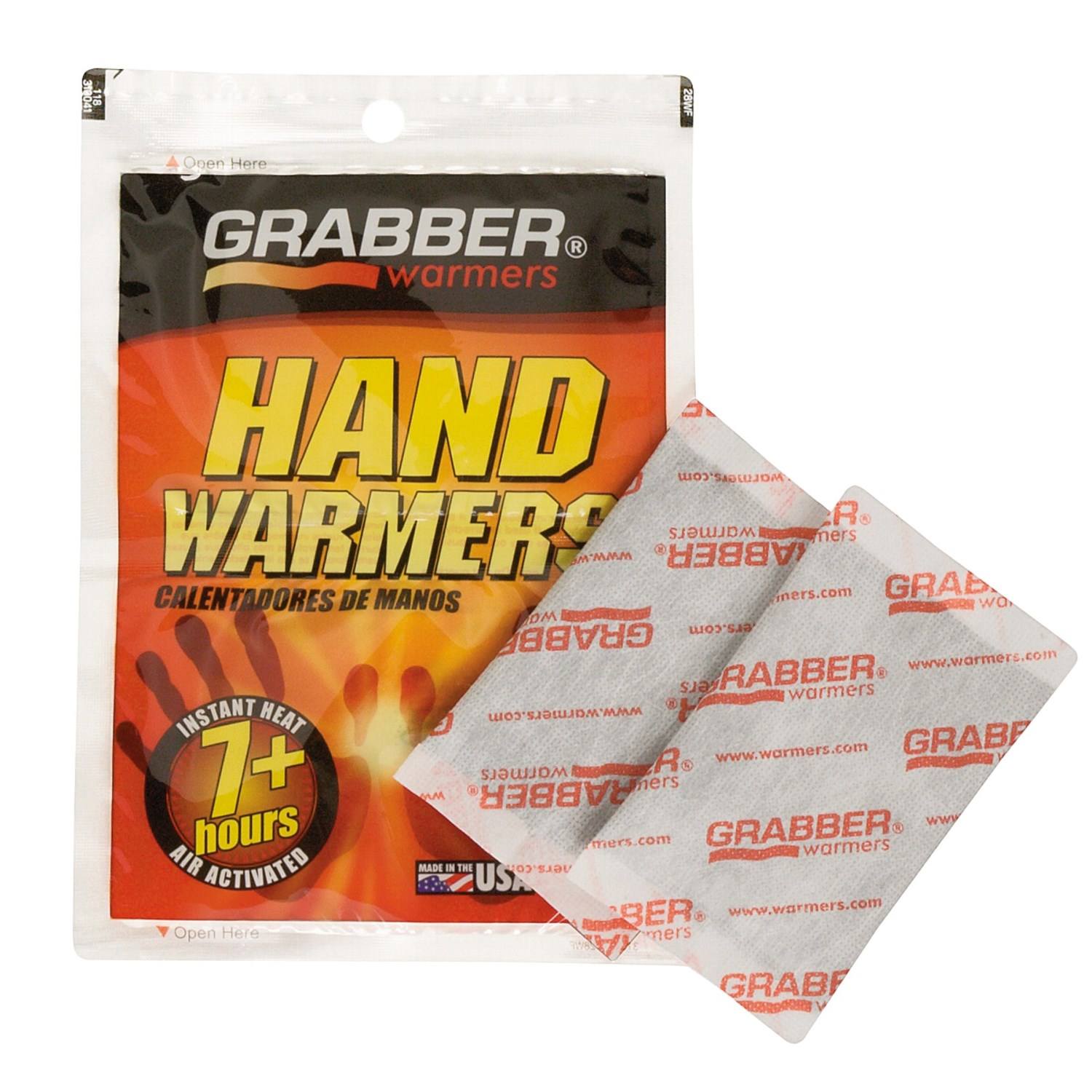
What type of reaction occurs in a hand warmer
a)
exothermic
b)
endothermic
70.
Exothermic reactions...
a)
Absorb energy
b)
Release energy
c)
Release Color
d)
Absorb Color
71.
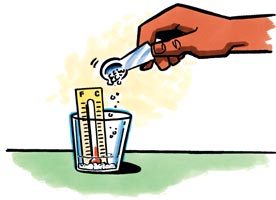
In an endothermic reaction, heat is ...
a)
taken in or absorbed
b)
given out or released 
72.
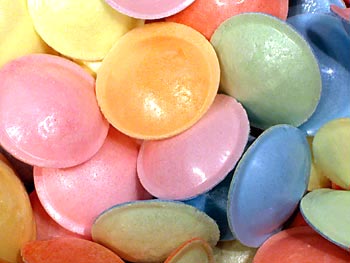
Have you ever eaten sherbet sweets candy? They fizz in your mouth and your tongue feels cold. Why do you think that is?
a)
It is an exothermic reaction
b)
It is an endothermic reaction
c)
It is made of ice
d)
It is dissolving your mouth
73.
If they energy required to break the bonds is greater than the energy given out by making new bonds the reaction is
a)
Exothermic
b)
Endothermic
c)
Neutralisation
74.

O2(g) + 2 H2 (g)  2 H2O (g) + EnergyO_2\left(g\right)\ +\ 2\ H_2\ \left(g\right)\ \rightarrow\ 2\ H_2O\ \left(g\right)\ +\ Energy  

a)

endothermic

b)

exothermic

75.

6 CO2+ 6 H2O + Energy  C6H12O6 + 6 O26\ CO_2+\ 6\ H_2O\ +\ Energy\ \rightarrow\ C_6H_{12}O_6\ +\ 6\ O_2

a)

endothermic reaction

b)

exothermic reaction

76.

_____ reactions usually feel hot!

a)

endothermic

b)

exothermic

77.

____ reactions usually feel cold.

a)

endothermic

b)

exothermic

78.
If they energy required to break the bonds is less than the energy given out by making new bonds the reaction is
a)
Exothermic
b)
Endothermic
c)
Neutralisation
79.

A + B --> AB

a)

decomposition rxn

b)

formation rxn

c)

single replacement

d)

combustion rxn

80.

AB --> A + B

a)

decomposition rxn

b)

formation rxn

c)

single replacement

d)

combustion rxn

81.

AB + C --> A + CB

a)

decomposition rxn

b)

formation rxn

c)

single replacement

d)

combustion rxn

82.

Nitrogen and oxygen produce?

a)

H2O

b)

CO2

c)

SO2

d)

NO2

83.

The water produced in the combustion rxn for photosynthesis is a gas

a)

true

b)

false