
 Worksheets
Evolution Unit Test Review
Total questions: 34
Worksheet time: 23mins
Although individuals in one species are similar enough to reproduce together, each have a unique combination of traits that allow some an easier time finding shelter, acquiring food, attracting mates, etc. These differences between individuals is a requirement of natural selection called:
overproduction
inherited variation
successful reproduction
struggle to survive
It is very common in reptiles to have many, many eggs at a time, as many of those will not survive to adulthood. The fact that more individuals are born than will survive to adulthood is called
successful reproductin
descent with modification
struggle to survive
overproduction of offspring
Which of the following sequences shows the correct hierarchy of classification, going from broadest to most specific?
Species, Genus, Family, Order, Class, Phylum, Kingdom, Domain
Domain, Kingdom, Phylum, Class, Order, Family, Genus, Species
Family, Order, Genus, Species, Domain, Kingdom, Phylum, Class
Domain, Species, Kingdom, Genus, Phylum, Family, Order, Class
A population of bacteria is treated with hand sanitizer. Because of genetic variation in the population, what is a possible outcome?
some may be resistant and survive
they will get better at obtaining a food source
all of the bacteria are already resistant
the population will grow quickly
Traits of snakes such as a forked tongue are called ____________________________ due to their shared common ancestor
homologous structure
analogous structure
vestigial structure

Embryology shows share similar bud development. This shows.....
Development is unique to each species
female parent determines physical characteristics
organisms have a common ancestor
Genes that help an organism be more successful reproductively can be expected to
become more common in the future
cause the extinction of the species
cause it to evolve into a new species
An adapatation is
how an organism evolves during its own lifetime
a gene an organism has
any trait an organism possesses
a trait that helps an organism survive and/or reproduce in its environment
Which of the following is NOT a principle of natural selection?
Organisms compete for limited resources
Evolution will occur as an organism gets older and learns more
In every population adaptations allow some organisms to survive and reproduce better than others.
Which is NOT an example of evolution?
Horses becoming taller and faster over millions of years.
Human brains becoming larger over time.
A caterpillar going through metamorphosis to become a butterfly.
Organisms that live in similar environments, such as the ocean, often have similar adaptations. This is often due to
convergent evolution
coevolution
divergent evolution
Small differences between parents and offspring accumulate over time. This process
prevents parents from being able to care for their offspring
makes it impossible for species to adapt to changes in their environment
results in many types of organisms with different characteristics from their ancestors

Which of these animals does not have/produce an amniotic egg?
Turtle
Leopard
Lamprey
All three of these animals produce the amniotic egg


What is another name for natural selection?
survival of the smartest
survival of the fastest
survival of the biggest
survival of the fittest

What number is the common ancestor of C and D
1
2
3
4
The male prairie hen displays his feathers and dances to attract a female. This is an example of:
Genetic drift
Mutation
Non random mating
Migration

The fossils buried in layers near the surface tend to be younger than fossils in layers of rock well below the surface. This is an example of what type of evidende of evolution?
Fossil record
Molecular record
Artificial selection
Anatomical record


Which of the following can be determined by observing the embryos shown in the diagram


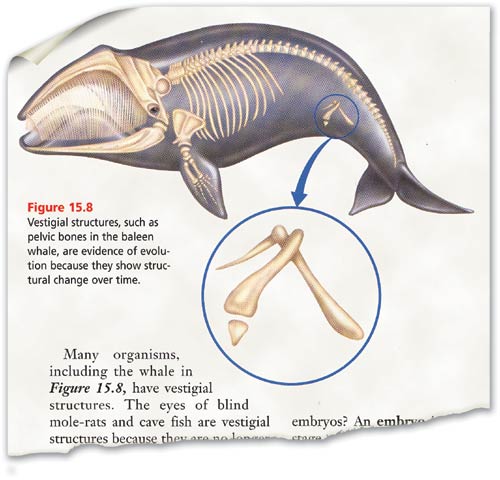
The picture shows a/an ___________
homologous structure
vestigial structure
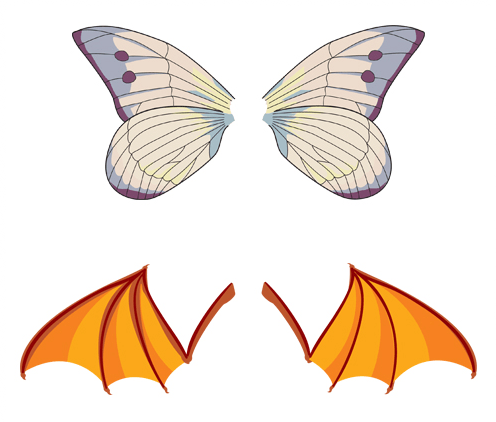
What is this an example of?
Homologous structure
Analogous structure
Vestigial organs
Functional adaption

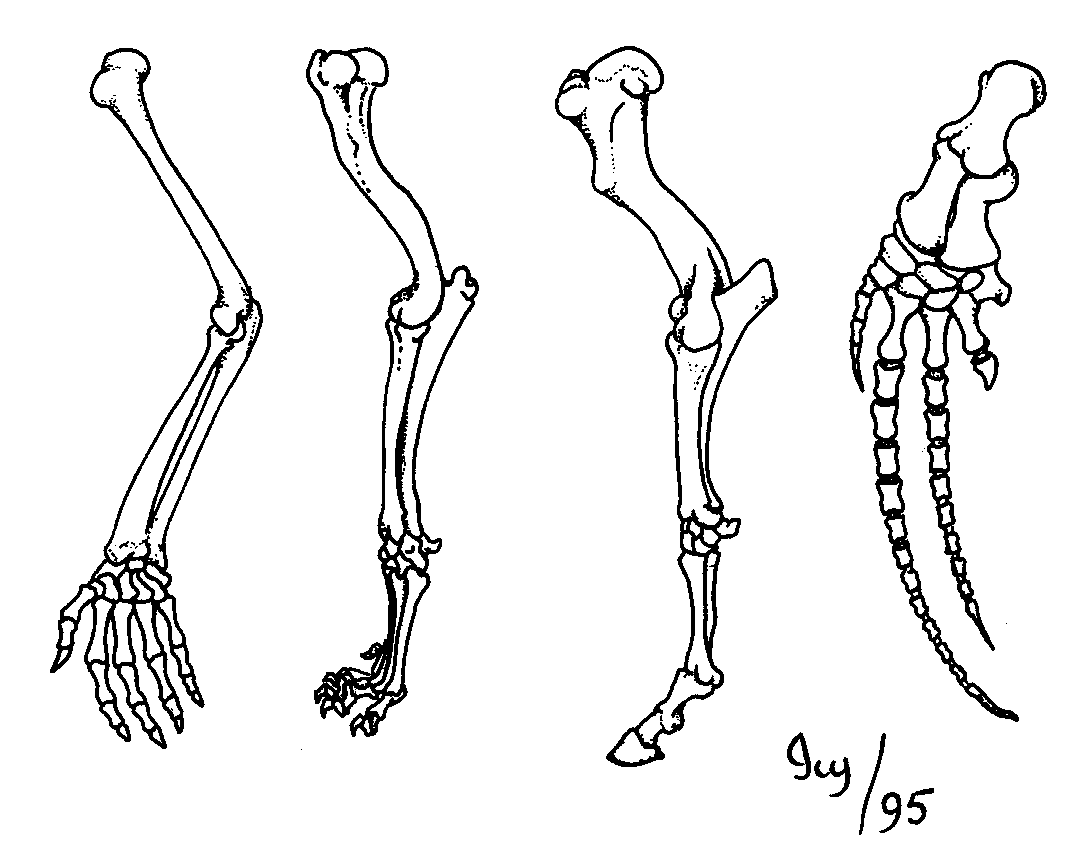
Similarities in bone arrangements, like those in the picture, support the hypothesis that...
these organisms are not well adapted
these organisms share a common ancestor
these organisms all share the same DNA sequences
these organisms are members of the same species
During a hurricane, a population of beetles almost gets completely wiped out. The only beetles that survived were lucky that they were in their nest at the time of the hurricane and had enough food to survive.
Natural selection
Genetic Drift
Gene Flow
Non-Random Mating
Females a certain bird species are attracted to the mating calls of male species more than others
Genetic Drift
Mutation
Non-Random
Natural Selection
When two species share a common ancestor but they develop different traits to live in different environments.
Convergent evolution
Divergent evolution
Coevolution
When two species do not share a common ancestor but develop similar traits to live in a similar environment.
Convergent evolution
Divergent evolution
Coevolution



