
 Worksheets
3rd Quarter Science Grade 5
Total questions: 146
Worksheet time: 2hrs 41mins
What are the living and nonliving things in an environment or area interacting with one another?
predator
producer
ecosystem
abiotic factor
NON-living things found in an ecosystem
biotic
abiotc
habitat
LIVING things in an ecosystem
biotic
abiotic
ecosystem
Salinity of the water, sunlight and air are abiotic components of an ecosystem
True
False

Plants get material for growth mostly from air and water, and obtain energy from sunlight. Producers provide food to consumers because ___.
Why do decomposers eat dead organisms?
because it is the only way they get close to food
because they break down dead organisms to simple nutrients
because they consume the nutrients and transfer it to animals when they are eaten
because dead organisms are easier to catch and no other animals will consume it
Zooplanktons are _________
Cyanobacteria are oxygenic photosynthetic bacteria. They harvest the sun's energy, absorb carbon dioxide, and emit oxygen. What are they?
An estuary is best defined as a place where--
fresh and salt water meet
a river meets the Chesapeake Bay
a group of animals are gathered
the water from the land flows into a river
Which of the following is NOT TRUE of estuaries?
Estuaries provide a habitat for biotic factors
Estuaries create a protective refuge for living things
Estuaries allow juvenile animals to grow into adults safetly
Estuaries create shelter for aquatic and non-aquatic life.
Why are estuaries important to our environment?
Estuaries filter pollutants and prevent erosion.
Estuaries provide nurseries for marine life.
Estuaries act as home for many types of wildlife.
All of the above.
Plants like sampaguita and narra are the primary producers in estuaries.
True
False
Estuaries are among the most productive ecosystems in the world because the water flowing through them brings in nutrients from the surrounding land.
True
False
Estuaries play an important role in fishery as nursery grounds for some species of fish.
True
False
All forms of aquatic organisms can survive in estuaries.
True
False
The two different states of the Intertidal Zone include:
Low tide and the splash zone
Low tide and medium tide
Low tide and high tide
High tide and the splash zone

What is layer A?
Upper intertidal zone
Middle intertidal zone
Lower Intertidal zone
What is layer B?
Upper intertidal zone
Middle intertidal zone
Lower Intertidal zone
What is layer C?
Upper intertidal zone
Middle intertidal zone
Lower Intertidal zone
Which layer is flooded and unflooded twice a day with saltwater from the tides.
Upper intertidal zone
Middle intertidal zone
Lower Intertidal zone
They are always submerged in water and are only exposed for a longer period during extremely low tide
Upper intertidal zone
Middle intertidal zone
Lower Intertidal zone
Water is not enough to sustain many plants in this zone because it is covered by water only during high tide.
Upper intertidal zone
Middle intertidal zone
Lower Intertidal zone
The intertidal zone is the area where land meets the sea, between the highest high tide and the lowest low tide.
True
False
Ecosystem found on marine shorelines alternating between high and low tide
Abyssal Zone
Coral Reef
Intertidal Zone
Open Ocean
Species living in the Intertidal Zone include
Sharks
Whales
Sea Stars
Jellyfish
Seaweed can also be found in the upper intertidal zone.
True
False
Some animals hide under plants or burrow into the sand to avoid too much exposure to sun. This is a challenge related to _____.
moisture
salinity
temperature
wave action
Seaweed have leaves that tough, preventing them from being torn by the waves. This is a challenge related to _____.
salinity
wave action
temperature
predators

Look at the food web, who consume rabbit?
bird and snake
fox and hawk
frog and bird
hawk and snake

Complete the food chain based form the foodweb.
Phytoplankton -> ________-> gull
crab
mussels
prawn
fish
Complete the food chain based form the foodweb.
Phytoplankton -> zooplankton-> prawn->_____
crab
mussels
prawn
gull
Which of the following can become a quaternary consumer? (select all)
lobster
fish
prawn
gull
whelk
Which of the following is a primary consumer?
lobster
fish
crab
limpets
whelk
Which of the following is a tertiary consumer?
limpets
fish
zooplankton
seaweed
Which of the following is a tertiary consumer?
limpets
fish
zooplankton
seaweed
Which receives the least energy?
limpets
crab
zooplankton
seaweed
Which receives the most energy?
limpets
crab
prawn
seaweed
Which way shows the best energy flow in the food chains below?
Sun
Plant- sun- water
Sun- plant- fox
Sun- plant- rabbit- fox
True or False if one ecosystem loses a Primary consumer it can impact the secondary and tertiary consumers?
False
True
If grass is a producer and a grasshopper is a primary consumer what level of consumer is a mouse?
Secondary
Tertiary
Apex
Primary
Not all kinds of aquatic organisms can live and survive in estuaries and intertidal zones. Why?
These ecosystems are full of nutrients because of the constant wave action.
The different areas in these ecosystems provide places for different fish to hide.
There is plenty of food in these ecosystems that can support an entire food chain.
The salinity of the water in these ecosystems is constantly changing as the tides rise and fall.
Which among the following will received most amount of energy?
producer
primary consumer
secondary consumer
tertiary consumer
quaternary consumer
Which among the following will received least amount of energy?
producer
primary consumer
secondary consumer
tertiary consumer
quaternary consumer
Motion is the change in position of an object with respect to a moving reference point.
True
False
Which of the following is not a unit in measuring distance?
kilometer
yard
inches
seconds
What is the standard unit in measuring time?
second
minute
hour
The distance traveled and length of time are used for measuring speed.
true
false
which of the following is NOT a measure of speed?
km/meter
miles/hour
cm/s
km/minute
What is the formula for calculating speed?
Speed = force/distance (force divided by distance)
Speed = mass x acceleration (mass times acceleration)
Speed = distance/time (distance divided by time)
Speed = time x energy (time times energy)
What is the speed of a plane that travels 450 miles in 2 hours?
225 meters per second
225 miles per hour
900 miles per hour
900 meters per second
If an object travels 42 meters in 6 seconds, what is its average speed?
6 m/s
7 m/s
42 m/s
252 m/s
A motorcycle traveled 250 kilometers at a speed of 50 miles per hour. What was its amount of time it took?
12,500 hours
300 hours
5 hours
5 miles per hour
It takes five hours to drive from Fort Worth to Midland, at a speed of 60 miles per hour. What is the distance for this trip?
300 miles
12 miles
60 miles
1200 miles
A cruise ship travels at a speed of 15 mi/h for 3.5 hours. What is the total distance traveled by the comet during this time?
52.5 mi
32.5 mi
15.5 mi
16.5 mi
In a practice race, a driver maintains a speed of 90 miles per hour. How long will he take to cover a 108-mile racetrack?
(a)
A type of magnet that has temporary magnetic effect when electric current flows through it.
This refer to
Electric
Electronic
Electrostatic
Electromagnet
Which statement is true?
I. All electromagnets are permanent magnets.
II. Increasing the number of coils in an electromagnet decreases it strength.
III. Increasing the batteries increases the strength of an electromagnet.
Both I and II
Which can increase the strength of an electromagnet?
increasing the number of coils around the nail
increasing the number of batteries
making the core bigger
all of the above
Which of the electromagnets would have the greatest magnetic field?


Which of the following is NOT part of an electromagnet?
wire
core
battery
needles
Electromagnets are ___________________.
permanent
instant
temporary
stable
Which makes an electromagnet work?
needle
electricity
pin
thumbtacks
How do you increase the strength of an electromagnet?
add more magnets
larger core
increase the number of coils around the core
salt water
True or false: All magnets are electromagnets.
True
Fasle
A doorbell uses electromagnets
True
Fasle
The less battery, the stronger the electromagnet
True
Fasle
The more number of coil of wire wrapped around the core of electromagnet, the stronger the electromagnet becomes
True
Fasle
(a) are materials that allow heat and electricity to pass through them while
(a) are materials that do not readily allow heat and electricity to flow through them.


Identify what component of circuit is A.
switch
load
wire
power source

Identify what component of circuit is B.
switch
load
wire
power source

Identify what component of circuit is C.
switch
load
wire
power source
Identify what component of circuit is D.
switch
load
wire
power source

Identify what component of circuit is D.
switch
load
wire
power source
Identify what component of circuit is C.
switch
load
wire
power source
Identify what component of circuit is B.
switch
load
wire
power source
Identify what component of circuit is A.
switch
load
wire
power source
Which will light up?
open circuit
short circuit
closed circuit

What type of circuit is shown?
series
parallel

What type of circuit is shown?
series
parallel
It has one-way flow of electricity due to the one-way arrangement of the wire.
series
parallel
It has two or more loops through which current can flow.
series
parallel
If one of the loads in this circuit does not work, the other loads in this circuit would still work.
series
parallel
If one of the loads in this circuit does not work, the other loads would not work.
series
parallel
How does increasing the battery affects the circuit?
it makes bulbs brighter
it makes bulb dimmer
No effect
How does increasing the light bulbs affects the circuit?
it makes bulbs brighter
it makes bulb dimmer
No effect
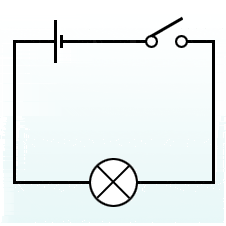
This circuit is .....?
open
parallel
closed
broken

A circuit must be closed for electricity to travel.
true
false
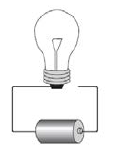
Which of these best allows electricity to flow in the circuit?
rubber band
metal nail
leather shoelace
wooden toothpick
How does increasing the lenght of wire affects the circuit?
it makes bulbs brighter
it makes bulb dimmer
No effect

Which one is the circuit diagram of this picture?


In which circuit the bulbs will light up brighter?
X
Y

Which bulb will light up the dimmest?
A
B
C

If bulb J is broken, what will happen to the other bulbs? Tick the correct answer.
bulb K lights up
bulb L lights up
bulb K and L do not light up

Which bulbs will light up brighter?
A
B

Based on the circuit diagram above, suggest one way to increase the brightness of the bulbs.
Increase the number of the bulbs
Decrease the number of the bulbs
Increase the number of the switch
Decrease the number of dry cells
is the bouncing of light when it strikes a smooth and shiny surface.
reflection
absorption
transmission
The reflection of light enables us to see the things around us.
True
False
Light is absorbed and changed into heat the most in materials with ________ and _________ surface
light color and smooth
dark color and rough
light color and rough
The white light is something that the human eyes cannot detect.
true
false
When light strikes a material, the light can be reflected or absorbed but never transmitted.
true
false
Materials are all the same with their ability to transmit light.
true
false

In the picture, the light is being ______
Reflected
Absorbed
Transmitted
Scattered

In the picture, the light is being ______
Reflected
Absorbed
Transmitted
Scattered

In the picture, the light is being ______
Reflected
Absorbed
Transmitted
Scattered
Why do apples appear to be color red?
When light reaches the apple, all 7 colors of the spectrum are absorbed.
When light reaches the apple, all 7 colors of the spectrum are reflected.
When light reaches the apple, the color red is reflected and the remaining colors are absorbed.
When light reaches the apple, the color red is absorbed and the remaining colors are reflected.
Why is it not advisable to wear dark-colored clothes during hot season?
Because dark-colored clothes absorbed most light which transforms into heat.
Because dark-colored clothes transmit most light.
Because dark-colored clothes reflects most light which transforms into heat.
Neither of the choices is correct.
What happens when light reaches a white object?
It scatters all the light.
It absorbs all the light.
It transforms all the light.
It reflects all the light
Which statement is true?
The lighter the color of the object, the more heat it emits.
The darker the object, the more heat it emits.
Color doesn't affect the temperature of a material.
Light and color has no relationship with one another.
Objects that allow a material to pass through them is ______
Transparent
Tranaslucent
Opaque
Some light is scattered or absorbed and you cannot see them clearly
Transparent
Tranaslucent
Opaque
Some materials may appear to be invisible because most light is transmitted through this kind of material.
Transparent
Tranaslucent
Opaque
It does not allow light to pass through at all.
Transparent
Tranaslucent
Opaque

What kind of material is in the picture?
Transparent
Tranaslucent
Opaque

What kind of material is in the picture?
Transparent
Tranaslucent
Opaque

What kind of material is in the picture?
Transparent
Tranaslucent
Opaque

What kind of material is in the picture? (Lens)
Transparent
Tranaslucent
Opaque

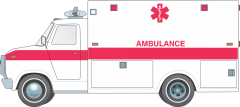
The pitch of a sound wave relates to the wave's _________________.
Amplitude
Frequency
Wavelength
Period
What is the Doppler Effect?
A change in frequency due to the relative motion of a wave source and an observer
When a wave overlaps with another wave
When a wave bounces off of another object
When a wave bends due to traveling through a different medium
An ambulance is driving towards you as you stand on the sidewalk. What happens to the pitch of the siren as it comes towards you?
It increases
It decreases
You are standing on the side of the road when a police car races past you with its siren on. After the police car passes you, what happens to the pitch of the siren?
It increases
It decreases
It turns red
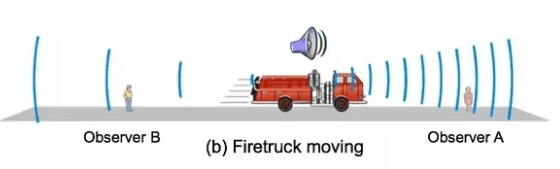
Look at the picture. Who is experiencing a higher pitched sound?
Observer A
Observer B
There's no difference
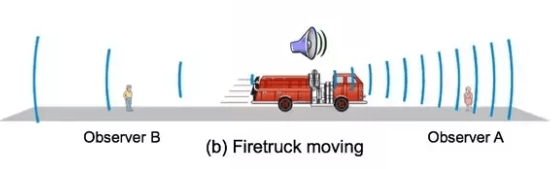
Look at the picture. Who is experiencing a lower pitched sound?
Observer A
Observer B
There is no difference

