
 Worksheets
WORK, POWER, ENERGY
Total questions: 40
Worksheet time: 7hrs 40mins
Which does not illustrate kinetic energy?
It is expressed in Joule.
It depends upon the objects’ mass and speed.
It is the energy an object possesses due to its motion.
It depends upon the objects’ mass and objects’ height.
A roller coaster whose average speed is 32 m/s is at the top of a 72m hill and weighs 966N. At the top of the hill the coaster car has ___________________ energy.
only kinetic energy
only potential energy
mostly kinetic energy
both kinetic and potential energy
What is the potential energy of a 3kg ball that is on the ground?
0 J
3 J
9.8 J
29.4 J
Which statement does not illustrate power?
A farmer plowing the rice field all day.
A Siberian husky pulling a sled all day.
A principal sitting on a chair while observing several classes all day.
A teacher encoding his power point presentation in his laptop all day.
Who has the most power?
Ms Criza who encodes her observation tools using 12000J of work in 20 minutes.
Sir Pau who studies his 5 lessons for the next classes in 15 minutes.
Mrs Punzalan who used 50N force to inoculate mushrooms at a speed of 2m/s.
Mrs Masalunga who watches her learners while taking their quiz in 30 minutes.
A 100 N force is applied to move an object a horizontal distance of 5 meters at constant speed in 10 seconds. How much power is done?
50J
50W
500J
500W
Which statement illustrates work done?
A weightlifter holds a barbell above her head.
A teacher applies a force to a wall and becomes exhausted.
A rolling marble hits a note card and moves it across a table.
A waiter carries a tray full of meals across a dining room at a constant speed.
A weightlifter holds a 100 kg barbell above her head. Is work done?
Yes because there is a force applied to the barbell and the force causes a displacement of the barbell.
Yes because there is an upward force applied to the barbell and the barbell moves vertically.
No because no displacement occurred.
No because there is no force applied.

What is the energy possessed by the cart?
potential energy
kinetic energy
mostly potential
mostly kinetic

If the mass of the cart is 15kg, how much is the potential energy of the cart?
0J
1.2J
6J
58.8J

If the mass of the cart is 8.12kg, what is the kinetic energy of the cart?
0J
1.2J
6J
58.8J

How will you describe the energy at Point A?
mostly potential energy
mostly kinetic energy
losing PE, gaining KE
losing KE, gaining PE

What is the total mechanical energy of the object?
100J
75J
50J
25J
A 735kg empty roller coaster is at its starting point whose distance from the ground is 150m. After a while, it moves at point B whose distance from the ground is 120m. What is the kinetic energy of the coaster at point B?
1,080,450J
864,360J
216,090J
0J
Energy is
how fast you do something.
the ability to do work.
confusing.
how fast you lift something.
If you use 30 J of energy to move an object, you have done ____ J of work.
3
10
30
0
If you lift a box that is twice as heavy as your friend you are doing
the same amount of work.
two times more work than your friend.
half as much work as your friend.
Cannot be determined.
You push a crate with a force of 100 N for 5 meters. How much work did you do?
500 J
100 J
50 J
5 J

How much power is generated by Ashley (50 kg) running up a 6 m flight of stairs in 5 seconds?
60 W
62 W
600 W
1500 W

Work is done only if
a force is applied.
the force applied causes the object's motion.
an object is in motion.

On a work vs time graph, you can calculate the power by
the area.
the y-axis.
the y-intercept.
the slope.
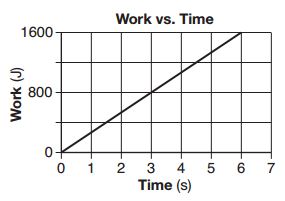
How much power was generated from 0-4 seconds?
1100 W
4 W
267 W
1600 W

If it took 9 seconds for the object to move 6 meters, what's the power?
81 W
27 W
3 W
6 W
What is the kinetic energy of a 10 kg ball moving at 3 m/s?
15 J
30 J
45 J
90 J
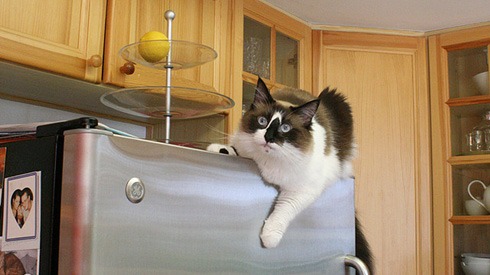
A 5 kg cat falls off a 3 m tall fridge. What is the cat's PE as it starts to fall?
15 J
30 J
150 J
1470 J

A 5 kg cat falls off a 3 m tall fridge. What is the cat's KE just before it lands on the floor?
15 J
30 J
150 J
1470 J
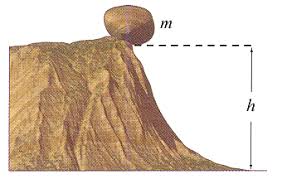
What is the mass of an object with 1200 J of PE when it is 5 meters above the ground?
10 kg
24 kg
100 kg
240 kg

What kind of energy(ies) does the car have at position A? The ground is h=0.
KE
KE + PE
PE
KE - PE
The equation for POWER is
power = mass x time
power = work / time
power = time / work
power = work x time
The equation for work is
work = power x mass
work = power / time
work = force x distance
work = distance x time
The equation for POTENTIAL ENERGY is
PE = mass x gravity x height
PE = gravity x weight
PE = height / work
PE = work / time
The equation for KINETIC ENERGY is
KE = mass x gravity
KE = 1/2 height x speed
KE = mass2
KE = 1/2 mass x speed2
The unit for work (aka Newton-meter)
Watt
Power
Work
Joule
The unit of power (aka Joule per second)
Joule
Minute
Watt
Pound
Kinetic energy is the energy of ___________.
Distance
Motion
Work
Roman
Energy cannot be ________ or ___________.
big/small
left/right
created/destroyed
made/transferred
Energy can be transformed from one form into another, but the total amount of energy never changes.
Work-energy theorem
Law of conservation of energy
Newton's second law of motion
King's theorem of energy

