
 Worksheets
Life Science FSA Review
Total questions: 150
Worksheet time: 37hrs 17mins
Annily and Landen are studying plants in their biology class. They learn that roots perform all of the following functions EXCEPT
Carrying out the light reactions of photosynthesis
Anchoring the plant in the soil
Absorbing water and nutrients from the soil
Storing water and minerals
Ariana and Garrett are working on a school project about plants. They need to explain what three things a plant needs to take in to be able to go through photosynthesis. Can you help them by choosing the correct answer?
sunlight, water, and carbon dioxide
sunlight, water, and oxygen
oxygen, carbon, and hydrogen
water, oxygen, and glucose
During a science class, Annily and Brooklyn were discussing how plants take in water. Annily asked, "Through which part does a plant absorb water?"
stem
roots
leaves
all of the above
Ariana and Paul are planting a garden. They are curious about different parts of the plants. What is the job of the seeds?
to make seeds for the plant
to make food for the plant and take in air
to help the flower reproduce
to support the plant and help deliver food, minerals, and water to other parts of the plant
to anchor the plant in place, soak in water, and store food for the plant
Altan and Amy are working on a school project about plants. They are trying to understand the different parts of a plant and their functions. What is the job of the stem?
to make seeds for the plant
to make food for the plant and take in air
to help the flower reproduce
to support the plant and help deliver food, minerals, and water to other parts of the plant
to anchor the plant in place, soak in water, and store food for the plant

Amy grows a plant from a seed. While the plant is still small, she places it near a window in her room. Soon she notices that the plant is not growing straight up, but bending to one side.
What is the best explanation for why the plant is no longer growing straight?
The plant needs wind to scatter its seeds.
The plant is growing toward sunlight.
The plant is getting heavier as it grows.
The plant does not have strong roots.
Martin and Mia were planting a garden. Martin asked, "Why do plant roots grow downward into the ground?"
Roots grow in the direction of gravity.
Roots help the plant absorb sunlight.
There is more space to grow under the ground.
The leaves push roots downward as they grow.

Carson and Kamran are observing a plant in their classroom that has grown in a tilted pot, as shown in the diagram. Predict two stimuli that most probably could be involved in the plant's growth direction.
Light
Water
Gravity
Touch
Heat
Which choice is the structure that allows a plant to breathe?


During a science experiment, Hana and Martin observed that the roots of a plant were growing toward a water source. Why are the roots growing toward the water?
the roots absorb water so this response helps a plant survive
the water helps the roots anchor into the ground
the roots grow towards water so the stem can grow towards light
the leaves make food when the roots grow towards water
During a science class, Annily and Martin conducted an experiment to observe how plants grow. They noticed that plants tend to grow towards where the ________ is.
Dark
Cold
Light
Heat
During a school gardening project, Monica and Martin observed different parts of the plants. Which part of the plant attracts pollinators to help the plant reproduce?
roots
stem
leaves
flower
Amy and Carson are learning about plants in their science class. They discover that plants are producers, which means that they create their own ________________.
flowers
energy
carbon dioxide
stomata
Plants are able to reproduce. What does reproduce mean?
Make more of the same species.
Make more of a different species.
Grow toward the light source.
Make their own food.
Mia and Landen are exploring a forest and come across different types of plants. Which kind of plant uses spores to reproduce?
moss
pine trees
flowers
grass
Amy and Grace are in the garden learning about flowers. They are curious to know which part of the flower is the female part. Can you help them identify it?
Pistil
Stamen
Ovary
Sepals
In a school science project, Annily and Garrett are studying different parts of a flower. They need to identify which part of the flower produces pollen. Can you help them?
Ovule
Stem
Pistil
Anther
Mia and Kamran were in the garden observing the plants. They noticed the leaflike parts that cover and protect the flower bud. What are these parts called?
Ovary
Sepals
Style
Pollen
Martin and Mia are in a garden observing different parts of a flower. They learn that one part of the flower becomes the fruit.
Which flower structure encloses and protects ovules and seeds as they develop?
Petal
Ovule
Stigma
Ovary
During a biology class, Shawnique and Mia were examining a flower. Shawnique asked Mia to identify the part of the ovary of seed plants that contains the female germ cell and after fertilization becomes the seed. What part is Shawnique referring to?
Ovule
Style
Stamen
.Pistil
During a biology class, Kamran and Mia were discussing the parts of a flower. Kamran asked, "Which part supports the stigma and serves as a passageway for pollen?"
Anther
Style
Stem
Ovule
Catches pollen
Stigma
Pollen
Sepals
Petal
Hailey and Julien are in a biology class learning about plant anatomy. The teacher asks, "Which part of the flower is the male reproductive organ?"
Anther
Pistil
Style
Stamen
During a science class, Altan and Mia were learning about plant reproduction. The teacher asked, "What is the substance produced by the stamen that contains the sperm cell?"
Stem
Stigma
Pollen
Petal
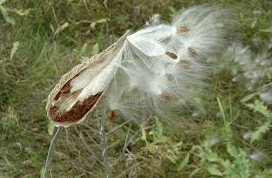
Annily and Hailey are learning about how seeds travel from one place to another. All of the following are examples of seed dispersal except:
wind
volcanic eruptions
physical movement (rolling)
animals droppings
Mia and Hana are studying a garden and notice that flowers produce nectar. What is the function of nectar?
To provide food for the flower
To attract pollinators
To attract animals to disperse the fruits
To produce perfumes for Man

During a science class, Annily and Julien learned that fertilization is the process by which an
egg and pollen combine
embryo grows into a plant
animal carries pollen between plants
Altan and Amy were walking through the park when they noticed seeds being carried away by animals, water, and __________ ?
wind
earthquakes
fire
blizzards
Altan and Hana are studying flowers in their biology class. They are trying to find out whether pollen comes from the male or female parts of the flower. Can you help them?
male
female

During a biology class, Mia and Hailey were examining a flower diagram. Mia asked Hailey, "What is the name of flower part #10?"
sepal
pollen tube
filament
stigma
Audreanna and Amy are observing a flower in their garden. Audreanna wonders if pollination can occur within the same flower.
True
False
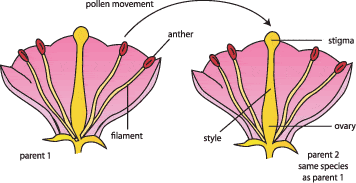
Amy and Kamran are studying plants in their garden. They observe that pollination can occur between flowers of the same plant.
True
False

Julien and Brooklyn are observing a garden. They notice that pollination can occur between flowers of different plants of the same species.
True
False
Julien and Hana planted seeds in their garden. After a few days, they noticed the seeds began to germinate, which means they started to grow.
true
false
Garrett and Mia planted seeds in their garden. The seeds germinate in the soil.
true
false

Monica and Paul were learning about plants in their science class. Their teacher asked, "What does an ovule become when it is pollinated?"
a seed
a sprout
a fruit
it stays an ovule
Peyton and Shawnique are working on a school project about plants. They need to identify what a flowering plant is. Can you help them?
A plant that produces spores
A plant that produces cones
A plant the produces flowers and fruits.
Paul and Hana are exploring a garden. They come across a cone. Paul wonders if the cone is part of:
A flowering plant
A non-flowering plant
Julien and Hailey are exploring a forest and come across some ferns. They wonder how these plants reproduce. The ferns reproduce by:
Spores
Seeds
Grace and Peyton were walking in the garden when Grace asked, "Why do plants need to produce flowers?"
To make plant beautiful
To make plant food
For animals food
For plant reproduction

During a nature walk, Annily and Garrett observed something that carries the pollen (wind, water, humans, bees, bats, birds, other insects, etc.)
pollinators
pollination
germination
fertilization

During a science class, Kamran and Mia learned about the joining of an egg and pollen in the ovary to create a new seed. What is this process called?
fertilization
pollination
germination
pollinator

Annily and Grace are learning about the life cycle of flowering plants in their science class. What is the correct order of a flowering plant's life cycle?
pollination, fertilization, seed dispersal, and germination
germination, fertilization, seed dispersal, and pollination
fertilization, pollination, germination, and seed dispersal
pollination, seed dispersal, germination, and fertilization
Amy and Peyton are exploring a forest. They come across various plants. Which one of the following is an example of a nonflowering plant?
Pinecone
Rose
Pine tree
Strawberry
Mia and Landen are exploring a forest and they come across some nonflowering plants. They wonder where these plants put their seeds. They learn that nonflowering plants put their seeds in _______ and _________
Fruit and leaves
Leaves and stem
Stem and roots
Spores and cones

Kamran and Grace are studying different types of plants in their biology class. They come across a pine tree and need to determine if it is flowering or nonflowering. Is this plant flowering or nonflowering?
flowering
nonflowering

Kensi and Hailey are in the garden observing a plant. Is this plant flowering or nonflowering?
flowering
nonflowering

Hailey and Paul are exploring a garden. They come across a plant and wonder: Is this plant flowering or nonflowering?
flowering
nonflowering
During a school field trip to the zoo, Monica and Mia learned that mammals, fish, birds, reptiles, and amphibians are all ___.
invertebrate
vertebrate
What is the major difference between vertebrates and invertebrates?
Vertebrates have a backbone and invertebrates do not.
Invertebrates live in water and vertebrates do not.
Invertebrates have a backbone and vertebrates do not.
Invertebrates are smaller than vertebrates.
Crabs, lobsters, and shrimp with hard exoskeletons are ___.
vertebrates
invertebrates
Are there more invertebrates or vertebrates on Earth?
vertebrates
invertebrates
What is an invertebrate?
an animal without a backbone
mammals
birds
an animal with a backbone
mammal
Dragonflies, stink bugs, and lady bugs are __________.
crustaceans
arthropods
annelids
echinoderms


Having an exoskeleton can help an animal...
be protected.
be supported.
have structure.
move.
What is an inherited trait?
A characteristic passed down from parent to offspring
Something learned by offspring
A characteristic passed down from offspring to parent
The flower must be ______________ to produce fruit.
Watered
in sunlight
pollinated
Another word for structure is
job
function
part
Another word for function is
part
job
structure
Which is not an inherited trait?
color of fur
height
speaking a language
eye color
Which is an example of a learned trait?
roller-skating
hair color
eye color
plant shape
Which of these is an inherited trait? Select all that apply.
feather color
height
playing piano
eye color
All of the following are inherited traits in a coyote EXCEPT –
growing tan fur
having sharp teeth
seeing well
recognizing traps
Chimpanzees are born with some inherited traits but learn others as they move around in their environment. Which of the following traits could a chimpanzee learn during its lifetime?
Living in large groups with other chimps
Walking quickly on both arms and legs
Using a stick to dig ants out of the ground
Sleeping at night and hunting during the day
Which of these is an example of a learned behavior


Which of these is a learned behavior of a dog?
Begging for food
Drinking water
Panting on a hot day
Chewing on a bone
Learned Behavior
A trait that one is not born with but that is gained due to lifestyle or environment.
Animal behavior that develops from observation or instruction
A behavior that an organism is born with that is passed to the organism from its parents
None of the above
Inherited Behavior
Animal behavior that develops from observation or instruction.
A physical characteristic that an organism is born with that is passed to the organism from its parents.
A behavior that an organism is born with that is passed to the organism from its parents
None of them
Some inherited traits are
eye color
hair color
fur
reading
All of the following can be inherited by the offspring of an apple tree EXCEPT–
shape of leaves
broken branches
type of fruit
flower color
Which of these is a learned trait that a bear could acquire during its lifetime?
Taking food from human campsites
Having an excellent sense of smell
Growling when there is danger
Hibernating during the winter

A student drew a picture of their pet parrot and listed its traits. Which of the parrot’s traits is learned?
It has brightly colored feathers.
It eats seeds and drinks water.
It repeats words after me.
It has wings and can fly.
A body part or behavior that helps a living thing survive
adaption
behavior
learned behavior
instinct
To go into a deep sleep to stay alive during the winter
hibernate
migrate
nap
mimicry
To move from one place to another in search of food, water, or warmer temperatures
hibernate
migrate
move
camouflage
When an animal looks like an animals that is poisonous or that taste bad to avoid being eaten (Think about the Monarch butterfly and the Viceroy Butterfly)
hiberate
migrate
camouflage
mimicry
Which of the following is an example of a behavioral adaptation?
fins
hibernation
sharp teeth
camouflage
Which of the following is an example of a structural adaptation?
dormancy
migration
wings
hibernation

Tigers are excellent predators. To survive, they hunt and eat other animals in their environment. All of the following characteristics of a tiger help it to be an effective predator except–
sharp teeth and claws
a thick coat of fur
powerful jaws and limbs
good eye sight and hearing

A snowshoe hare has many structural adaptations that help it survive in its environment.
Which adaptation of the snowshoe hare provides warmth andcamouflage in its cold and snowy environment?
Long, flexible ears
Large, brown eyes
Thick, white fur
Wide, strong feet
Dragonflies, damselflies, and grasshoppers are examples of insects that go through......
incomplete metamorphosis
adulthood
complete metamorphosis
The second stage of incomplete metamorphosis is?
Egg
Larva
Pupa
Nymph
What is the first stage in the life cycle of most animals?
Egg
Adult
Larva
The egg, the first stage of metamorphosis, hatches into a worm like form called?
Larva
Pupa
Adult
People go through metamorphosis.
True
False
What are the stages of INCOMPLETE metamorphosis?
egg
pupa
larva
adult
nymph
What are the stages of COMPLETE metamorphosis?
egg
pupa
larva
adult
nymph
What does MOLT mean?
to lay an egg
growth stage
resting stage
shed it's outer layer
How does the larva stage of a butterfly compare to an insect, such as a Florida beetle, that has an incomplete metamorphosis life cycle?
The larva stage for a butterfly is much shorter than a beetle's.
The larva stage for a butterfly and a beetle both involve molting.
The larva stage for a butterfly and a beetle occurs after the egg stage.
The Florida beetle has no larva stage.
Mr. Loge observes a mosquito in the PUPA STAGE. What change does this insect go through?
fertilization
complete metamorphosis
pollination
incomplete metamorphosis
Trees in southern Florida do not go through the same kinds of seasonal changes as trees in the northern parts of the country, for which of the following reasons?
In southern Florida, temperatures are warmer.
The trees in southern Florida have thicker trunks.
The trees in southern Florida grow faster.
In southern Florida, there is more rain in the summer.
Every year during winter, Landon notices an increase in birds where he lives in Florida. He has learned that birds typically fly south for the winter. What can Landon conclude about why birds fly to Florida for the winter seasons?
The soil composition is richer in Florida.
There are fewer predators in Florida.
The days are shorter in Florida.
There is warmer weather in Florida.
In colder regions, the fur of some animals changes to white during winter months so that the animal can better hide from predators. Animals in Florida do not experience this type of seasonal change, for which of the following reasons?
There are no predators in Florida.
Animals in Florida are faster runners.
Florida days are longer in winter.
It rarely snows in Florida.
Plants that thrive all year in Florida do not do as well in the fall or winter when they grow farther to the north. What characteristic of Florida allows these plants to live and grow all year long?
Florida’s climate is warm and humid.
Florida is close to the ocean.
Florida has only a few mountains.
Florida has many flying insects.
Which of the following is true for Florida but not the northern states?
The days are shorter in winter than in summer.
There is less need for animals to migrate or hibernate in the winter.
The weather is cooler in winter than in summer.
There is less water available for plants to make their own food in the winter.
True or False- Seasonal changes effect the plants and trees in Florida.
True
False
Select All- Which seasonal changes are observable in trees and plants?
luster
color changes
hibernation
loss of leaves
True of False- An animal that lives in regions that experience extreme cold and snowy conditions, may see darker fur replaced by white fur, as temperatures start to cool.
True
False

Which of these completes the food chain correctly?
a rock
a fox
a plant
an egg

Which of these gets energy from a nonliving thing?
the Sun
the grass
the mouse
the fox

Which of these best completes the food chain shown?
a plant
a fox
a rock
an egg


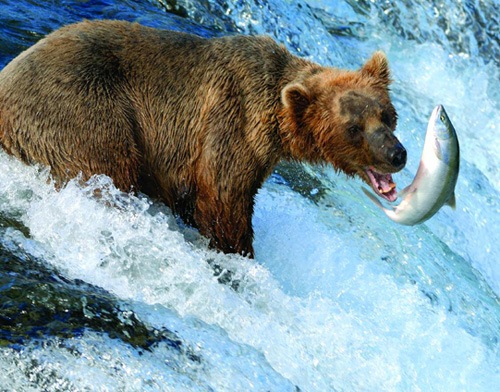
diagram that shows how energy flows from a single kind of producer to a top predator
food web
food chain
food buffet
food line
Identify the original source of energy for most food chains.
producer
consumer
decomposer
sun
an organism that makes its own food
producer
consumer
decomposer
sun
Match the function below with the correct organ.
This organ pumps blood around the body.
brain
heart
lungs
skeleton
Match the function below with the correct organ.
This organ gives shape and helps in movement.
brain
heart
lungs
skeleton
Match the function below with the correct organ.
This organ breathes in oxygen and exhales carbon dioxide.
brain
heart
lungs
skeleton

Look at the chart comparing structures in humans to structures in fish. Which structure correctly completes the chart?
veins
stomata
gills
The prickly pear cactus has these structures that protect it from plant-eating animals.
Gills
Thorns or Spines
Heart
Stem
A marbled tree frog is very difficult to see when it is resting on a tree, because its coloring blends in well with the tree bark.
Teeth
Beak
Flowers
Camouflage
What is the function of the stomach?
mixes food with digestive juices.
absorb excess mineral and water
break down food into tiny particles
This organ in the digestive system absorbs most of the nutrients in your food
Mouth
Stomach
Small Intestine
Large Intestine
The two organs that filter waste from the blood.
Brain
Stomach
Kidneys
Lungs
The control center of the body.
Liver
Stomach
Brain
Eyes
The liver's function is to:
take information from the environment.
churns food and mixes it.
produces bile, stores glucose, and removes substances from the blood.
Removes water from undigested waste before it leaves the body.
Which are included to make up the sensory organs?
eyes
nose
mouth
teeth
Which organ helps with producing movement?
brain
arms
skin
muscles
What is the function of the pancreas?
produces bile for digestion of fats
produces tissues
aids in movement
produces digestive enzymes that controls blood sugar
The largest organ of the body:
brain
skeletal system
sensory system
skin

This is the :
Small intestine
Large Intestine
Stomach
bladder
Why do low-growing plants in the rain forest have brightly colored flowers?
Their bright flowers help them look good on Hawaiian shirts.
Their bright flowers keep carnivores from seeing them.
Their bright flowers attract pollinators, such as birds and insects.
Their bright flowers help them keep their temperature inside at a constant 98.6 degrees.
Why do some plants on the rain forest floor have huge, slippery leaves?
They need huge leaves to scare away the other plants and being slippery lets them run away if another plant grabs them.
They need huge leaves because they don't want the other plants to think they are weaklings.
They are slippery so that poisonous frogs can't climb them.
They need huge leaves because there isn't much light down there, and being slippery lets the extra rain drip right off.
All female reproduction organs for Humans, Mammals, Crabs, Fish, and Plants have this type of organ.
eggs
testes
ovaries
stamen
Match the following plant organs with their function
Collect water Store carbohydrates
Anchor plants to the soil
Roots
Support plant
Transport subtances between leaf and root
Store carbohydrates
Stem
Carries out photosynthesis
Leaf
Reproductive organ that carries seed inside
Fruit
Reproductive organ that carries seeds outside
Cone
In the MALE reproduction organs, all of the examples except for plants include what organ?
ovaries
testes
stamen
eggs

