
 Worksheets
Science 5 LT3 Revision
Total questions: 145
Worksheet time: 48mins
The snowman you built yesterday is now a puddle because of?
Evaporation
Melting
Freezing
cindensation
The temperature that your water is now bubbling and vaporizing?
condensation
melting
boiling point
evaporation
The birds can not drink water in the bird bath because the water is solid
Melting point
freezing point
condensation
melting
The temperature needed for icicle's to form?
freezing
melting
evaporation
freezing point
While walking to school you notice that the grass is wet but it didn't rain the night before is from?
freezing point
boiling point
evaporation
condensation
with the exception of water, when the matter gets hotter it
solidifies
contracts
expands
stays the same
Which type of matter has a definite shape and a definite volume
Solid
Liquid
Gas
Plasma
Which type of matter has no definite shape but a definite volume?
Solid
Liquid
Gas
Plasma
Which type of matter has no definite shape and no definite volume?
Solid
Liquid
Gas
Plasma
Which type of matter has particles with enough energy spread out throughout the entire container?
Solid
Liquid
Gas
Plasma
The state of a sample of water depends upon?
Location
Type of container
The temperature
the material of the container
Water freezes at what temperature?
32 degrees Celsius
4 degrees Celsius
0 degrees Celsius
-10 degrees Celsius

What word goes in box 1?
Evaporation
Condensation
Melting
Freezing

What word goes in box 2?
Evaporation
Condensation
Melting
Freezing
When a solid gets warm it can change from a solid to a...
liquid
gas
solid
What happens to the movement of the particles in a substance when the thermal energy (heat) is increased?
Speed Up
Slow Down
Stay the same
What must be done to change water from solid to liquid?
Increase the temperature.
Decrease the temperature.
Keep the temperature the same.
What happens to the particles (molecules) of a substance when heat energy is added?
the particles speed up
the particles slow down
the particles get larger
the particles disappear
rain
solid
liquid
gas

Solid
Liquid
Gas

Solid
Liquid
Gas

Solid
Liquid
Gas
When a substance changes from a gas to a liquid, this is called...
Condensation
Melting
Evaporation
Freezing
When a substance changes from a liquid to a gas, this is called...
Melting
Condensation
Evaporation
Freezing
When a substance changes from a solid to a liquid, this is called...
Condensation
Freezing
Melting
Evaporation
A large piece of ice is placed on the sidewalk on a warm day. What will happen to the ice?
It will not change at all.
It will melt to form liquid water
It will freeze to form liquid water.
It will melt to form water vapor
Lucky filled a tray with juice and put it in the freezer. The next day Bob opened the freezer. How did the juice MOST likely change?
It became a gas
It evaporated.
It condensed
It became a solid.
How can you make liquid water become a solid?
Heat the water on the stove.
Shake the water container very fast.
Put the water in a very cold place
Add a lot of salt to the water.
When a substance changes from a liquid to a solid, this is called...
Melting
Condensation
Evaporation
Freezing

When a solid turns directly into a gas it is called.....?
Melting
Freezing
Evaporation
Sublimation

When a popsicle melts in the sun, what process is taking place?
Freezing
Melting
Sublimation
Evaporation

When boiling water turns to steam, we say that the water......?
Froze
Condensed
Melted
Evaporated
How do you take away energy from matter?
Heating
Cooling

Water vapor on a cold glass of water is an example of what?
Condensation
Evaporation
Freezing
Heating

The temperature will go lower

a. The glass now has less water in it. What happened to the water?
condensation
gas
evaporation
solid
The towel from your shower this morning is now dry because of?
boiling point
melting
condensation
Evaporation

Students created a scientific investigation and used the data table to record their observations. Based on the table which question are the students trying to answer?
Does an ice cube melt faster in the freezer or a frying pan?
Does an ice cube melt faster in hot temperatures?
Does the location of an ice cube effect the time it takes an ice cube to melt?
Does a hot day effect the time it takes for an ice cube to melt?

Diego made this model of the water cycle using hot water, plastic wrap, and ice. He noticed that tiny drops of water formed on the inside of the plastic wrap. What caused these drops to form?
Evaporation of the water.
Condensation of the water vapor.
Melting of the ice.
Freezing of the water.

Mark's snow cone was melting so he put it into the freezer. Several hours later he took his snow cone out of the freezer and noticed that there was no longer any liquid in the cup. What most likely happened to the liquid of the snow cone.
The heat given off by snow cone caused it to evaporate.
The snow cone was condensed and absorbed by the cup.
The snow cone was changed back into a solid as it cooled.
The snow cone liquid evaporated.
Mr. Solis is boiling water for a cup to tea. What is happening to the water in the teapot?
The liquid is becoming a gas.
The liquid is becoming a solid.
The gas is becoming a liquid.
The solid is becoming a liquid.

What state of matter does the picture below represent?
solid
liquid
gas
plasma
Reorder the following in order from MOST energy to LEAST energy.


What happens when my glass of water is sitting in the sun and changes into a gas?
evaporation
burning
melting
freezing


Particles in a ______________________ move quickly and are far apart.
gas
solid
liquid

Definite shape and definite volume
Solid
Liquid
Gas

Has a definite volume but not a definite shape
Solid
Liquid
Gas


What state is represented in the gif?
Solid
Liquid
Gas

What type of matter can ONLY be separated by chemical means?
Element
Mixture
Compound
Atom
What type of matter cannot be separated by any means?
Element
Mixture
Compound
Check all examples that are heterogeneous mixtures.
Saltwater
Pepperoni pizza
Chopped salad
Air
Check all examples that are homogeneous mixtures.
Milk
Tea
Chicken noodle soup
Air
Which of these are compounds?
Water (H2O)
Table salt (NaCl)
Oxygen (O2)
Glucose (C6H12O6)
Which of these is not an element?
Water (H2O)
Copper (Cu)
Carbon (C)
Iron (Fe)
What is the smallest unit of an element that retains the chemical properties of that element?
Electron
Neutron
Molecule
Atom
Which substance is composed of only one type of atom?
Water (H2O)
Table salt (NaCl)
Gold (Au)
Glucose (C6H12O6)

Which of these samples shown best represents an mixture?
A
B
C
D
Which of these samples shown best represents an element?
A
B
C
D
Which of these samples shown best represents a compound?
A
B
C
D
A chemical change happens when
elements or compounds combine to form a new substance.
A compound is formed by
combining atoms from different elements
Solubility is the ability to
Match the following
mass
amount of material in a substance
matter
substance that has both mass and volume
mixture
2 substances physically combined
volume
amount of space an object takes up
Match the following
Graduated container
Measures liquids
Balance
Measures mass
Water displacement
Can measure irregularly shaped objects
Match the following
Atom
Smallest particle that makes up matter.
Element
Matter containing only one type of atom
Molecules
Atoms join together to form new particle
Compounds
Combined atoms from different elements
Match the following
Solute
Substance dissolved in a solution
Solvent
Substance that dissolves the solute
Solution
Substances evenly spread in mixture
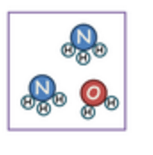

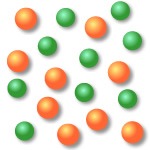
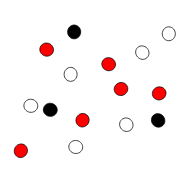


Which particle diagram can be classified as a compound?


A substance is examined under a high power electron microscope. The substance is found to contain only one type of atom. What is this substance?
compound
element
mixture
solution
Which of the following is an element?
Glucose (C6H12O6)
Salt (NaCl)
Water (H2O)
Oxygen (O2)
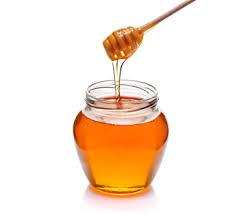
Salt will dissolve in water to form a homogeneous mixture.
True
False

How can you separate a mixture of saltwater into solid salt and water vapor?
saltwater cannot be separated
put a chemical in it
Heat the saltwater to vaporize the water away from the salt
Freeze the saltwater
Which substance is not an example of a pure substance?
Chocolate Milk shake
Olive oil
Sugar
Water
Vegetable Soup is ______________________.
Homogeneous mixture
Heterogeneous mixture
Compound
Element
Compounds are made from the atoms of two or more ________________.
solutions
components
mixtures
elements

Dirt, grass, rocks can all be seen in soil. What type of mixture is soil?
compound
pure substance
heterogeneous
homogeneous
Look at the picture shown.
Which mixture is homogenous?


Mixtures can be homogeneous or heterogeneous. A homogeneous mixture is formed of .....
one phase
two phases
three phases
many phases
Which mixture is heterogenous?


How would you classify a chocolate chip granola bar?
Element
Heterogeneous Mixture
Homogeneous Mixture
Compound
The air that fills this room would be classified as ......
a pure substance
a homogeneous mixture
a compound
an element
Which of the following is not an element?
copper
iron
carbon
salt
What is the classification of the following: gold, carbon, and hydrogen?
Compound
Mixture
Element
Solution
Which of the following is NOT a compound?
Acetic Acid
Seawater
Salt
Sugar
Which particle model represents a combination of two compounds?


Pure Substance or Mixture
Pure Substance
Mixture

Pure Substance or Mixture
Pure Substance
Mixture

Pure Substance or Mixture
Pure Substance
Mixture

Pure Substance or Mixture
Pure Substance
Mixture

Homogeneous or Heterogeneous
Homogeneous
Heterogeneous

Homogeneous or Heterogeneous
Homogeneous
Heterogeneous

Atoms combine in different ways to
make up all of the substances you
encounter every day.
True
False

Saltwater can be separated into
salt and water
True
False

What do elements, compounds, and
mixtures have in common?
They are all made up of atoms.
They all are of same color
They have same size

This picture represent which of the following?
element
mixture
compound
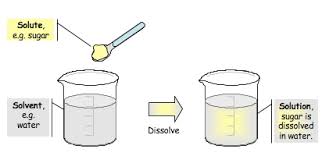
The ability of sugar to dissolve in water is called
malleability
Density
State
solubility
Anything that has mass and takes up space
Matter
weight
volume
mass
a substance that does not allow heat to pass through
insulator
electrical conductivity
reflection
density

What property shows that an eraser is a solid
its shape is definite when placed in a new spot
the color stays the same
the temperature goes up
it size changes when you use it
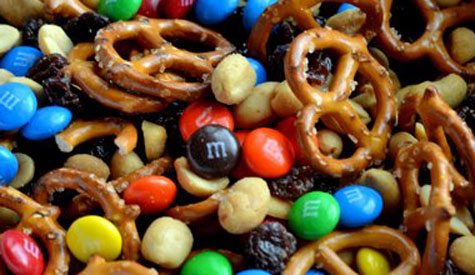
Fruit Loops, pizza, trail mix, and Skittles are examples of ____________________ mixtures.
heterogeneous
homogeneous
pure
Coffee, mouthwash, lemonade and vinegar are examples of __________________ mixtures.
heterogeneous
homogeneous
pure
elements
The temperature at which a substance changes from a liquid to a gas
Melting point
Boiling point
Freezing point
Condensation point
Which one is an insulator?
copper
aluminum
rubber
iron

What is the process that turns a gas into a liquid?
melting
freezing
evaporation
condensation

What is the process that turns a liquid into a gas?
melting
freezing
evaporation
condensation
If a liquid turns into a gas, what is happening to the amount of energy in the liquid?
It is decreasing
It stays the same
It is increasing
If a liquid turns into a solid, what is happening to the energy in the liquid?
It is decreasing
It stays the same
It is increasing

Matter is made up of tiny particles called ...
minerals
cells
molecules
atoms

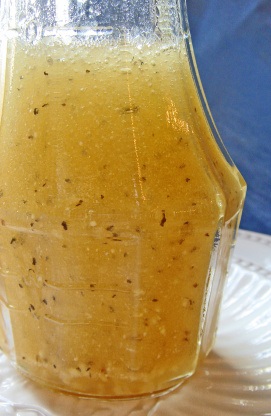
Is the pasta salad a mixture or a solution?
solution
mixture

This is an example of a
Solution
Mixture

This is an example of a
Solution
Mixture

This picture represents which of the following?
element
compound
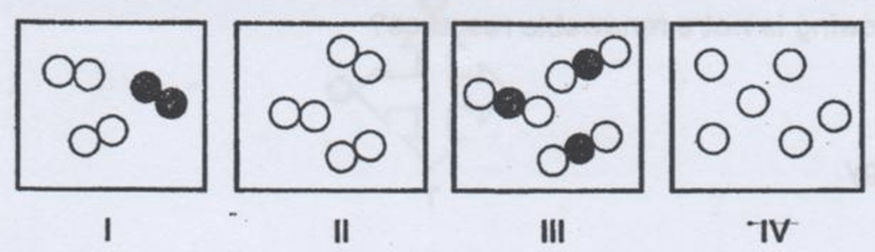
In the diagrams provided, the circles of different colors represent the atoms of different elements. Which diagram represents a mixture?
I
II
III
IV

Water displacement is __________________
How dense something is compared with a reference material. Sink or Float
Anything that has mass and takes up space.
How much fluid is pushed away when an object is placed in it. We can then know the volume of the object.
Measurement of the ability of a solid to dissolve in a liquid.

Volume is __________
How dense something is compared with a reference material. Sink or Float
Anything that has mass and takes up space.
How much space something takes up.
Measurement of the ability of a solid to dissolve in a liquid.

Solubility is __________
How dense something is compared with a reference material. Sink or Float
Anything that has mass and takes up space.
How much space something takes up.
Measurement of the ability of a solid to dissolve in a liquid.

Mass is _________________
The amount of matter in something; measured in grams.
How dense something is compared with a reference material. Sink or Float
How much space something takes up.
Material that allows heat or electrical energy to easily flow through it.

