
 Worksheets
Physics Prelim
Total questions: 94
Worksheet time: 2hrs 43mins
Name the SI unit of length.
metre
centimetre
kilometre
millimetre
Name the SI unit of mass.
gram
milligram
kilogram
tonne
Name the SI unit of time.
minute
hour
second
day
10 kg = ............g
10,000
1000
100
100,000
3min = (a) sec
2 km = (a) m
200 m = (a) km
300 seconds = (a) min
250 g = (a) kg
2500 mg = (a) kg

How much work is done on the lawn mower by the person in the picture if he exerts a constant force of 75.0N at an angle 35º below the horizontal and pushes the mower 25.0m on level ground?
1875 J
2625 J
65600 J
1536 J

A man exerts a force (F) of 100-N on a briefcase as shown in the picture. If he travels a distance (d) of 25-m how much work does the man do on the briefcase?
0 J
100 J
2500 J
4 J
An 85.0-kg person climbs stairs, gaining 4.50 meters in height. Find the work done to accomplish this task.
383 J
18.9 J
3825 J
0 J
A girl applies a horizontal force of 400-N to a box as she slides it across the room. If she moves the box 25-m how much work did she do to the box?
0 J
400 J
10,000 J
16 J
A mother pulls her child in a wagon 75 meters along a flat horizontal sidewalk. If she applies a force of 100-N at an angle of 60 degrees above the horizontal how much work does the mother do on the wagon?
7500 J
6000 J
3750 J
15000 J
A ball rolls along the grass and travels 5 meters. Friction acts to slow the ball down with a force of 30-N acting in the opposite direction of the motion. How much work does friction do on the ball?
-30 J
30 J
150 J
-150 J
A weight lifter moves a 45-kg dumbell from the floor to a height of 2 meters. How much work does the weight lifter do on the dumbell?
90 J
-90 J
900 J
450 J
A boy is pushing a crate with a horizontal force of 25-N. Friction resists with a force of 15-N. If the crate moves 10 meters how much NET work is done on the crate?
250 J
150 J
400 J
100 J
Bob pushes against a wall with a force of 500-N for 20 seconds. Obviously, he cannot move the wall, but he is a bit tired afterwards. How much work did bob do pushing against the wall?
0 J
1000 J
10,000 J
500 J

Calculate the work done by an 85.0-kg man who pushes a crate 4.00 m up along a ramp that makes an angle of 20.0º with the horizontal. He exerts a force of 500 N on the crate parallel to the ramp and moves at a constant speed. Be certain to include the work he does on the crate and on his body to get up the ramp.
2000 J
116 J
3160 J
1880 J
Car “X” leaves point A at 9:00 am at a rate of 60 mph. Car “Y” leaves point A at 11 am at a rate of 90 mph. If they both leave from the same starting point, how long until both cars meet?
4 hours
5 hours
6 hours
7 hours
Car “X” left Miami to New York. 6 hours later car “Y” left travelling at 70 mph to catch up with car X. After 4 hours both cars were in the same spot.
What was the average speed for car X?
20 mph
28 mph
30 mph
35 mph
Two cars leave the town at the same time going opposite direction.
One of them travels at 45 mph and the other at 55 mph.
In how many hours will they be 150 miles apart?
1.5 hours
2 hours
2.5 hours
3 hours
Two cars leave the town at the same time going opposite direction.
One of them travels at 45 mph and the other at 55 mph.
In how many hours will they be 150 miles apart?
6 hours
7 hours
8 hours
9 hours
Machine A takes 3 hours to print labels. Machine B takes 5 hours doing the same job. How long will it take both machines if they work together?
1 72
1 94 hours
1 81 hours
1 87 hours
Working together both machines can print labels in hours.If machine A works twice as fast than machine B.How long does it take to do the job for machine A?
6 hours
7 hours
8 hours
9 hours
A yellow and a blue car leave from the same place and travel opposite directions. The yellow car is traveling 50 mph while the blue car is traveling 70 mph. In how many hours will they be 1080 miles apart?
9 hours
10 hours
11 hours
12 hours


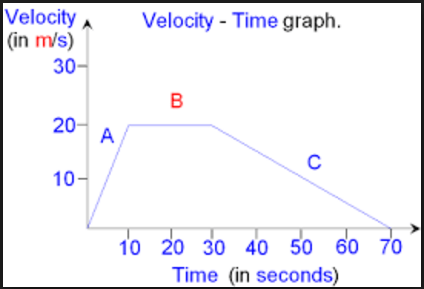
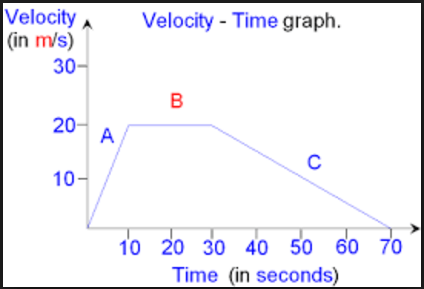


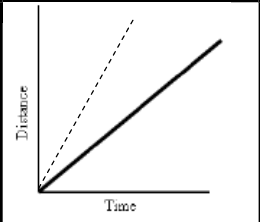
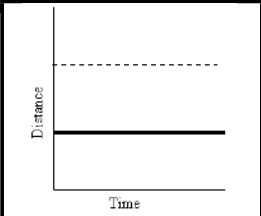

What is needed to calculate work?
time and distance
speed and distance
force and direction
acceleration and velocity

Is this an example of work?
Yes
No
What is the unit of measurement for work?
meters
newtons
m/s
Joules

Is this an example of work?
Yes
No!
You have to push with 15 N of force to move it 10 meters. How much work do you do?
15 Joules
150 Joules
1.5 Joules
.67 Joules
500 J of work is done by a person who uses a force of 50N to move a box, how far does it go?
10 m
0.1 m
25,000 m
10 J
Newtons are the unit for _____________.
Work
Distance
Acceleration
Force
A push or a pull
Work
Force
Acceleration
Speed
For work to be done on an object, the direction and force have to be going the same direction.
True
False
Picking up a box is an example of____________
Work
Not Work
Pushing a box across the floor is an example of
Work
Not Work
You exert 200 J of work by pulling on an object with 20 N of force. What distance is the object moved?
.01 m
10 m
10 J
4,000 m
The unit for energy and work is
meters
joules
newtons
watts
Energy is
stored work
is destroyed when used
can not be changed into another form of energy
measured in newtons
_____________ is the rate of doing work.
Conservation of energy
Joules
Energy
Power
Power is measured in ___________.
meters
joules
newtons
watts
You do 40 Joules of work in 8 seconds. How much power did you exert?
0.2 watts
320 watts
5 watts
The law of Conservation of Energy says________
energy is constantly created
energy can not be created or destroyed instead it changes from one form to another
energy can not change forms
How should you add two vectors? Select all that apply
Add them head to tail
Add them tail to tail
don't why bother
Use the parallelogram method
Add them head to head
When adding vectors graphically, the magnitude of the resultant vector is represented
the length of the vector drawn
the arrow head of the vector drawn
both of the above
none of the above

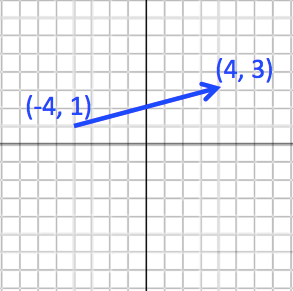
Write in component form.
<0, 4>
<8, 2>
<2, 8>
<0, 2>
Which statement describes a vector?
It has magnitude but no direction
It has direction but no magnitude
It has both direction and magnitude
is it me, or are these all the same?
What is the sum of a vector addition problem called?
components
scalar
resultant
magnitude
A car travels 90 meters due north. Then the car turns around and travels 40 meters due south. What is the magnitude and direction of the car's resultant displacement?
40 meters, South
50 meters, South
50 meters, North
40 meters, North


for 8 s until it finally lifts off the ground.
Determine the velocity at take-off.

Which of the following terms describes a Vector and it's proper units?
position in seconds
distance in meters
speed in hours
velocity in m/s

A car goes from rest to 30 m/s. If it takes the car 40 seconds to reach that speed then what is the car's rate of acceleration?
1.33 m/s2
0.75 m/s2
10 m/s2
0 m/s2

A car is traveling south for 250 meters over the course of 100 seconds. What was the car's average velocity?
0.4 m/s south
0.4 m/s
2.5 m/s
2.5 m/s south

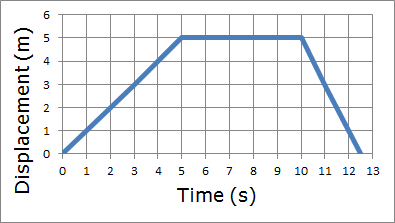
What is the average velocity of the object between 0 and 10 seconds?
6.0 m/s
1.5 m/s
-4 m/s
0 m/s

What is the average velocity of the object between 10 and 15 seconds?
6 m/s
1.5 m/s
-4 m/s
0 m/s

What is the average velocity of the object between 15 and 40 seconds?
6.0 m/s
1.5 m/s
-4 m/s
0 m/s

Horse A is running East at a speed of 6 m/s. Horse B is running at a speed of 8 m/s East as it passes Horse A. What is Horse B's velocity relative to Horse A?
14 m/s
-2 m/s
2 m/s
48 m/s

