
 Worksheets
AP Human Geography review!
Total questions: 90
Worksheet time: 2hrs 30mins
What does GIS stand for?
Great indigo shoes
Geographic Position Satelite
Geographic Information systems
Geographic intelligence systems
The theory that the further away two things are the less they will interact
Time-Space compression
Distance Decay
Central place theory
Malthusian Theory
Possibilism is the theory that humans will produce high results in poor situations
True
False
Regional maps show...
One region like Colorado
a map of everything
a couple of regions in more detail than most
tiny details of towns

"Roller Coasters in the United States" is an example of a:
reference map
thematic map

The scale of this map of the U.S. is:
local
national
regional
global
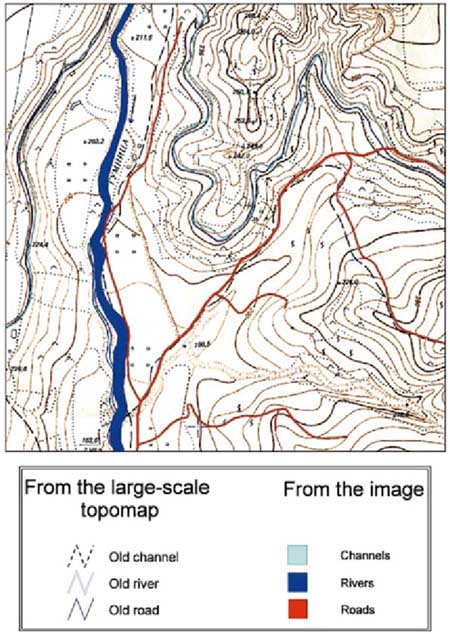
This map is an example of a . . .
Geologic Map
3D Map
Projection Map
Topographic Map
Which of the following best defines movement?
explains where something is
describes both the physical and human features of a building, area, city, etc.
describes the relationships between humans and the environment in which they live
how people, products, information and ideas get from one place to another

Transitional boundaries are...
(a)
What is the technique that collect information from the earth from a distance?
Geographic Information Systems
Global Positioning Systems
Remote Sensing
Ethnography
Demography
What theory would Thanos agree with?
Central place theory
Malthusian theory
Neo-Malthusian theory
Boserup theory
On a cartogram map, the counties depicted as smaller, have
Lower populations
lower levels of wealth and higher populations
higher levels of wealth and higher populations
lower technical proficiency
Physiological density is the number of
Farm animals per area suitable for agriculture
people per area suitable for agriculture
farmers per area of farmland
people per area of flat land
Land suited for agriculture is called
arable land
arid land
agricultural density
population density
The average number of births women bear in their lifetime
total birth rate
crude birth rate
total fertility rate
crude fertility rate
The total number of live births per year per 1,000 people in a society is the
crude birth rate
total fertility rate
new birth rate
life data rate

What kind of population does this represent?
A community with a large working population
A community with a large dependency population
A college town
An evenly balanced population
lots of children
As “Baby Boomers” reach retirement age in the United States (and many other developed countries), which of the following demographic rates increase?
Fertility
Dependency ratio
Mortality rate
Natural increase rate
Independency ratio
Which of the following statements is FALSE concerning the world's population?
Artificial birth control use is higher in MDC's.
Population growth rates differ from place to place
A large population of uneducated women usually results in high fertility rates
High fertility rates tend to be in LDC's
Population is evenly distributed across the earth's surface
A national policy encouraging citizens to reduce the total fertility rate is known as
pro-natal
neo-natal
post-natal
anti-natal
quasi-natal

The population pyramid in this image indicates a
country growing very slowly
a country with a long life expectancy
a rapidly growing country
a country in the degenerative disease stage of the ETM
a country with great health care options
When languages are depicted as leaves on trees, the trunk of the tree represents
dialects
language groups
language families
creolized languages
Why is English the most widely spoken language in Canada and the U.S.?
The Norman Conquest
Viking Explorations of the New World
British Colonialism
The Internet
French Creole is a ____________ that combined two simplified languages to form a lingua franca.
pidgin language
official language
logograms
isolated language


The Kurdish people are examples of which of the following?
A people with a sovereign state.
A nation.
A stateless nation.
A nation-state.
What is an example of a state?
Hawaii
Cherokee Nation
Greenland
Canada
What is the largest multinational state?
USA
Indonesia
Russia
China
Hong Kong is a ....
Nation-State
Autonomous Region
Semi-Autonomous Region
Multistate Nation
What is the definition of nation?
People who think of themselves as one based on a shared sense of culture and history and who desire political autonomy.
a state with a single nation
a group of people (a nation) with a common culture occupying a particular territory, but they do not have their own independent state
a state with two or more nations
What is the definition of nation-state?
people who think of themselves as one based on a shared sense of culture and history and who desire political autonomy
a state with a single nation
a group of people (a nation) with a common culture occupying a particular territory, but they do not have their own independent state
a state with two or more nations
All of the following are forms of commercial agriculture EXCEPT
dairy farming
pastoral nomadism
cattle ranching
specialized fruit production
grain farming
A farmer plants corn in a field one year, cotton in the same field the following year, and then corn again. This farmer is practicing ---
subsistence agriculture
commercial farming
crop rotation
slash-and-burn agriculture
shifting cultivation
Which of the following crops is grown on the sides of terraced hills to allow flowing water to run over the plants?
Wheat
Rice
Taro
Soybeans
Millet
Intensive subsistence agriculture would be found in
South Asia and Latin America
Southeast Asia and sub-Saharan Africa
Latin America and Southeast Asia
East Asia and South Asia
East Asia and Southwest Asia
Rubber, tea, coffee, cocoa, and palm oil is raised in
Mediterranean agricultural areas
areas of shifting cultivation
high latitude zones
market gardens
intensive plantation agriculture
The world’s population began to grow about 8,000 years ago as a result of?
The mechanization of agriculture
Industrialization
The cultivation of crops
Migration
Medical advances
Technology essential for intensive subsistence agriculture is
the Green Revolution
advancements in pesticide research
biotechnology
precision agriculture techniques
irrigation
The goal of commercial agriculture is
Minimal food security
Profit maximization
Genetic diversity of seeds
Establishment of seed banks throughout the world
Sustainable farming practices
What is the purpose of crop rotation?
Maintaining the fertility of fields
Reducing transportation costs
Responding to shifting consumer preference
Maintain price supports
Maintain fresh products for market
Which statement explains why pastoral nomads move from place to place with their cattle?
It allows the owners of the livestock to stay in one place while the cattle graze over a large area.
It has proven to be an effective method of subsistence agriculture in the semi-arid region in which they live.
Green Revolution technologies have made this practice possible since the mid-20th century.
Recent improvements in refrigeration and transportation have greatly expanded how far milk can be delivered.
They have been contracted to raise these animals for a multinational corporation.
Which of the following crops is grown on the sides of terraced hills to allow flowing water to run over the plants?
Taro
Corn
Tobacco
Grain
Rice
All of the following are plantation crops EXCEPT
rubber
wheat
tea
sugarcane
cotton
Which form of commercial agriculture is found primarily in developing countries?
plantation agriculture
mixed farming
mixed crop & livestock
livestock farming
dairy farming
Which of the following is not an example of Mediterranean agriculture?
Raisins in Greece
Grapes in Southwest Australia
Oranges in Florida
Lemons in California
Olives in Italy
Shifting cultivation is most commonly found in which climate region?
Humid low-latitude
Undifferentiated Highlands
Warm high-latitude
Cold mid-latitude
Semi-arid regions
A primate city such as Mexico City is
always located in the center of its country for maximum accessibility
more than twice the size of any other city in its country and dominant economically and culturally
most likely to share its rank size with at least one other city in the country
always a national capital serving as the seat of government and industrial center of the country
much larger than the cities in any neighboring country and serves as the region’s financial capital
According to Christaller’s central place model, which of the following would most likely have the smallest range?
A university
An international airport
A professional football stadium
A symphony orchestra hall
A grocery store
Central place theory describes the
spatial patterns of urban and outlying areas based on the flow of goods and services
tendency of different ethnic groups to congregate in a single location
tendency of civilizations to form around certain natural features
outward radiation of cultural patterns from a central place
tendency of wealth to concentrate in urban core areas

What is the Human Development Index?
The health of an individual.
A set of statistics or numbers that rank countries by their development.
The country a person lives in,
The number of preventable diseases in a country.
How would you describe a More Developed Country?
Low-income countries characterized by little industry
A country that has a developed economy with advanced technological infrastructure relative to other less industrialized nations
A country that has started to industrialize
How would you describe a newly industrialized country?
A country characterized by large industrial and service sectors with high levels of gross national product
A country that has begun transitioning from primarily agricultural to primarily manufacturing and industrial activity
A country that is characterized by agriculture and they barter instead of use money
How would you describe a Less Developed Country?
A country that has begun transitioning from primarily agricultural to primarily manufacturing
Also known as a developing country, a country that is at a relatively early stage in the process of economic development.
A country characterized by high income per person

