wayground logo

Free Printable Worksheets

Font size

S
M
L
XL
Worksheets

US History Unit 7

Total questions: 146

Worksheet time: 2hrs 59mins

Name
Class
Date
1.
Teddy became president after who was shot?
a)
Lincoln
b)
Garfield
c)
Taft
d)
Mckinley
2.
What did Roosevelt consider his greatest achievement?
a)
Panama Canal
b)
Conservation
c)
Pure Food and Drug Act
d)
being called a Trustbuster
3.
Who won the presidential election of 1912?
a)
Taft
b)
Roosevelt
c)
Wilson
4.
What was the nickname of the Spanish American War?  
a)
The Great War
b)
The Forgotten War
c)
The Splendid Little War
d)
Cuban Revolution
5.
What was General Valeriano Weyler's nickname?
a)
The General
b)
Blood and Guts
c)
Hero of Tula
d)
The Butcher
6.
Name of the ship that exploded in Havana's harbor?
a)
Arizona
b)
Maine
c)
Titanic
d)
Lusitania
7.
Who was wrongly blamed for blowing up the US battleship?
a)
Spain
b)
Cubans
c)
Mexico
d)
Russians
8.
What did the Teller amendment guarantee?
a)
Cuba would be a US territory
b)
Cuba would be free and independent
c)
Philippines would become a US territory
d)
US would act as a policeforce in Latin America
9.
those who exposed the corruption, crime, waste and brutality of American life were called...
a)
journalists
b)
investigative reporters
c)
chattel
d)
muckrakers
10.
Upton Sinclair wrote what book which exposed meat packing conditions?
a)
Up From Slavery
b)
All Quiet on the Western Front
c)
The Jungle
d)
How to be a Vegetarian
11.
Photojournalist who took photos of the tenements?
a)
Ansel Adams
b)
Jacob Riis
c)
Jacob Roosevelt
d)
Thomas Nast
12.
This amendment allowed for the direct election of US Senators
a)
15
b)
16
c)
17
d)
18
13.
Which of these resulted from the prohibition of alcohol during the 1920s?
a)
A decline in immigration rates
b)
A growing fear of communism
c)
The expansion of the consumer economy
d)
The rise of organized crime
14.
Upon entering World War I, the United States enlarged its military by-
a)
creating the Veterans Administration
b)
passing the Selective Service Act
c)
enacting the GI Bill
d)
establishing the Marine Corps
15.
What is one ongoing result of the New Deal? 
a)
The federal government funds a space-exploration program. 
b)
State governments deny residency to persons working in other states. 
c)
State governments use property taxes to fund social security programs. 
d)
People can rely on the federal government during times of economic distress. 
16.
How did President Harry S. Truman's decision to drop the atomic bomb affect international relations? 
a)
It initiated the arms race with the Soviet Union.
b)
It prompted other nations to begin investigations of war crimes. 
c)
it enabled the United Nations to administer territory in Japan. 
d)
It led to the establishment of the first global peacekeeping force. 
17.
A student learning about U.S. history is instructed to write a paper about W.E.B. Du Bois and race relations in the United States. Which of the following facts would be most relevant to the student's assignment? 
a)
The Selma-to-Montgomery protest marches helped secure voting rights for minority citizens. 
b)
The NAACP was organized to help secure full legal equality for minority citizens.  
c)
The Civil Rights Act of 1968 outlawed many forms of discrimination in the housing market. 
d)
The March on Washington helped rally nationwide support for the Civil Rights movement. 
18.

Which president wanted to control businesses and conserve the environment?

a)

William McKinley

b)

Abraham Lincoln

c)

Theodore Roosevelt

d)

Franklin D. Roosevelt

19.

During the early 1900s, the term "muckrakers" was used to describe-

a)

pacifists who demonstrated against war

b)

Politicians who criticized Progressive Era presidents

c)

Writers who exposed the evil in American society

d)

Newspaper columnists who reported in celebrities

20.
Ida Tarbell, Upton Sinclair, and Frank Norris all shared a belief that-
a)
The public was unlikely to respond to calls for reform
b)
The government should follow a laissez-faire policy
c)
Reform was needed to control abuses of business
d)
Monopolies were necessary for business to survive
21.
The Progressive Movement supported the idea that the federal government should-
a)
Reduce the number of farms
b)
Build an overseas empire
c)
Regulate big business
d)
Reduce immigration
22.
Civil service reform in the late nineteenth and early twentieth centuries was a reaction to which of the following issues?
a)
the dwindling influence of political machines
b)
the emergence of single-issue third parties
c)
the corrupt and inefficient distribution of government jobs by political machines
d)
the ignorance of voters who elected well-meaning but incompetent public officials
23.
Jane Addams, Lillian Wald, and Jacob Riis are best known as
a)
leaders of industry
b)
social reformers
c)
congressional leaders
d)
inventors
24.
During the Progressive Era, Jane Addams responded to urban conditions by working to establish-
a)
free public schools located in inner-city neighborhoods
b)
settlement houses that provided assistance to the poor
c)
newspapers that helped to inform Americans about slum conditions
d)
laws that restricted certain immigrant groups
25.
Which amendment gave women the right to vote?
a)
16th Amendment
b)
17th Amendment
c)
18th Amendment
d)
19th Amendment
26.
What act did The Jungle help establish?
a)
Pendleton Act
b)
Pure Food and Drug Act
c)
Federal Reserve Act
d)
Dawes Act
27.
What was the main different between W.E.B. DuBois and Booker T. Washington?
a)
DuBois wanted the African American Community to get an education in order to fight inequality, while Washington believed inequality would end naturally
b)
Washington wanted the African American community to get an education in order to fight inequality, while DuBois believed inequality would end naturally
c)
Washington wanted free education for all people, while DuBois believed in private education
28.
In the early 1900s, which group most often supported the views of the Populist Movement
a)
Factory owners
b)
Nativists
c)
Labor Unions
d)
Farmers
29.
In the early 1900s, the muckrakers provided a service to the American public by-
a)
encouraging states to resist federal government authority
b)
lobbying for less government regulation of business
c)
revealing abuses in government and industry
d)
calling for a strong military buildup
30.
During which period in United States history were the amendments concerning the income tax, direct election of senators, Prohibition, and women's suffrage enacted?
a)
Reconstruction
b)
New Deal
c)
Progressive Era
d)
Gilded Age
31.
Who became president after William McKinley was assassinated?
a)
Andrew Johnson
b)
Franklin Roosevelt
c)
Ulysses Grant
d)
Theodore Roosevelt
32.
His involvement in which war, as commander of the Rough Riders, made Teddy Roosevelt famous?
a)
Civil War
b)
Spanish American War
c)
World  War I
d)
Vietnam War
33.
I created the modern banking system by the establishment of the federal reserve system.
a)
Roosevelt
b)
Wilson 
c)
Taft
34.
Many Progressives opposed social Darwinism because it promoted the idea that
a)
people in lower classes were not capable of economic success
b)
immigration weakened national unity
c)
the government should take responsibility for the well-being of people
d)
poverty could be eradicated through increased economic regulation
35.
Which of the following combinations were the three Progressive Presidents?
a)
Taft, Hayes, T Roosevelt
b)
Wilson, Garfield, Taft
c)
T Roosevelt, Johnson, Morgan
d)
T Roosevelt, Wilson, Taft
36.
A student learning about U.S. history is instructed to write a paper about W. E. B. Du Bois and race relations in the United States. Which of the following facts would be most relevant to the student’s assignment?
a)
The Selma-to-Montgomery protest marches helped secure voting rights for minority citizens
b)
The NAACP was organized to help secure full legal equality for minority citizens
c)
The Civil Rights Act of 1968 outlawed many forms of discrimination in the housing market
d)
The March on Washington helped rally nationwide support for the Civil Rights movement
37.
Key Reforms of the Progressive Era
·  Initiative
·  Referendum
·  Recall
·  Direct Primary
·  17th Amendment

 
How did the reforms listed above impact America?
a)
A system of separate schools for new immigrants
b)
They gave citizens a greater voice in the democratic process of government
c)
More sources of revenue and taxes in state governments.
d)
They successfully brought economic relief to the urban working class
38.
What amendment provided suffrage for women (1920)?
a)
16th
b)
17th
c)
18th
d)
19th
39.

This time period focused on social and political reforms in the United States in the early 1900s:

a)

Civil War Era

b)

Industrialization Era

c)

Progressive Era

d)

Reconstruction Era

40.

Why did the Progressive Era grow in the United States?

a)

because of the negative impact of industrialization

b)

because of the negative impact of the civil war

c)

because industrial tycoons were appalled by the conditions of factories

d)

because the American people were disillusioned by WWI

41.

Why did we want to get rid of political machines?

a)

it was too easy to be corrupt and it was considered to be undemocratic

b)

people didn't participate in the elections

c)

there wasn't anyone willing to become a part of the machines

d)

most people thought they were too much like a labor union

42.

Those who wanted to make economic reform may have been concerned about which issue?

a)

the influence of monopolies and trusts

b)

eliminating political machines/bosses

c)

conservation of natural resources

d)

ending racial discrimination

43.

What was the name of the political machine in NYC in the 1800s?

a)

Rockefeller Hall

b)

Carnegie Hall

c)

Ordway Hall

d)

Tammany Hall

44.

Someone who uses their position as an elected official to engage in fraudulent activities could be accused of:

a)

being corrupt

b)

being ambitious

c)

being controlling

d)

being monopolistic

45.

What was Jacob Riis reveal to the public through his book, How The Other Half Lives?

a)

living conditions of the tenement buildings in New York

b)

working conditions of a textile mill

c)

food production of a meatpacking plant

d)

medical care of soldiers in WWI

46.

What does the power of referendum give voters the right to do?

a)

select a candidate to run in the general election

b)

to propose a law by getting signatures on a petition

c)

remove elected officials from public office

d)

to approve or reject a law (especially one that imposes taxes)

47.
How did the publication of Upton Sinclair's The Jungle contribute to a change in the relationship between government and business?
a)
Federal troops were mobilized to break strikes by labor unions.
b)
Government regulations requiring the inspection of food products were implemented.
c)
Congress created a regulatory agency to audit railroads.
d)
Laws were enacted that banned private companies from discriminating when hiring.
48.

________________was a widely held belief in the 19th century United States that its settlers were destined to expand across North America.

a)

Imperialism

b)

Annexation

c)

Monroe Doctrine

d)

Manifest Destiny

49.

What is the "White Man's Burden"?

a)

A belief in "cultural superiority"

b)

A philosophy related to Manifest Destiny

c)

Taft's foreign policy approach

d)

A belief in white privilege

50.

An economic and political domination of a strong nation over other weaker nations.

a)

Colony

b)

Imperialism

c)

Annex

d)

Empire

51.

Which of the following was NOT a motivating factor of imperialism?

a)

Establish naval bases around the world

b)

Expand to new world markets

c)

Slavery

d)

Spread American influence & democracy

52.

Which president said “speak softly and carry a big stick; you will go far.” The U.S. Navy is the “big stick” he is referring to.

a)

Woodrow Wilson

b)

William H. Taft

c)

Teddy Roosevelt

53.

Which of the following was a major causes for American interest in the Spanish American War?

a)

Sugar Plantations were creating a lot of income for the Spanish

b)

The USS Maine exploded mysteriously in the Harbor of the Spanish controlled Cuba

c)

The USS Vermont exploded mysteriously in the Harbor of the Spanish controlled Cuba

d)

Many Spanish soldiers were coming to Florida talking of invasion

54.

President Roosevelt hopes to build a canal to cut down military and business shipping costs/time...

a)

Panama Canal

b)

Cuban Canal

c)

Guam Canal

d)

Puerto Rico Canal

55.

Why did the United States "need" territories like the Philippines and Hawaii?

a)

they acted as refueling stations for ships

b)

they had once belonged to the United States

c)

to rid the Americas of European powers

d)

so that those countries did not imperialize the US

56.

Why was the US initially interested in Hawaii?

a)

sugar plantations were very valuable

b)

an abundance of oil was discovered

c)

to develop a military base

d)

to learn the culture of the natives

57.

What event led to the start of the Spanish-American War?

a)

sinking of the USS Maine

b)

sinking of the USS Lusitania

c)

attack on southern Florida by Cuba

d)

the coronation of Liliuokalani

58.

Which of the following was NOT a motivating factor of imperialism?

a)

Establish naval bases around the world

b)

Expand to new world markets

c)

Slavery

d)

Spread American influence & democracy

59.

What were the two main locations of fighting during the Spanish-American War?

a)

Alaska and Hawaii

b)

Puerto Rico and Guam

c)

Cuba and the Philippines

d)

Spain and the United States

60.

Which policy gave US the right to be the "policemen of the Western Hemisphere"

a)

Roosevelt Corollary

b)

Good Neighbor Policy

c)

Open Door Policy

d)

Marshall Plan

61.

Why is the Spanish American War of 1898 often considered a major turning point in US history?

a)

It revealed the US as an imperial power in the world.

b)

It marked the first American victory over a European country.

c)

It demonstrated the need for better communications in wartime.

d)

It showed American support for European economic interests in East Asia.

62.

Most US overseas possessions in 1900 were located in the ___________ Ocean

a)

Pacific

b)

Atlantic

63.
Which of the following was not a main cause of WWI?
a)
Militarism
b)
Imperialism 
c)
Alliances
d)
Progressivism
64.
What was one of the three reasons United States joined the war?
a)
Germany bombed America
b)
Britain declared war on the U.S. 
c)
Germany used unrestricted submarine warfare
d)
France invaded Germany
65.
What country did Germany try and persuade to join them against the United States
a)
England
b)
Russia
c)
Japan
d)
Mexico
66.
Which of the following is NOT one of the new technologies in World War I?
a)
poison gas
b)
airplanes
c)
submarines
d)
rifles
67.
What was the name of President Wilson's plan for peace?
a)
Fourteen Points
b)
New Deal
c)
Treaty of Tomatillo
d)
Treaty of Versailles
68.
A stalemate developed along the Western Front early in the war because
a)
the U.S. immediately joined the war
b)
Trench warfare made it difficult for either side to win an advantage
c)
the soldiers lacked cardio and pt belts
d)
the French army was able to push Germany out
69.
What type of fighting was used in WWI?
a)
Guerrilla Warfare
b)
Total Warfare
c)
Subwarfare
d)
Trench Warfare
70.
What was the stretch of land between the trenches?
a)
No mans land
b)
La La land
c)
Attack Trenches
d)
Switzerland
71.
In what ways did women help with the war effort at home?
a)
Worked in factories and conservation
b)
Joined the Army
c)
Drive tanks and Airplanes 
d)
Boots on Ground Combat
72.
The United States entered WWI in what year?
a)
1914
b)
1915
c)
1916
d)
1917
73.
World War I began in ____ and ended in _____.
a)
1914, 1917
b)
1917, 1918
c)
1914, 1918
74.
Woodrow Wilson's goal for US involvement in World War I was
a)
to create one big alliance of nations
b)
to make the world safe for democracy & end all wars
c)
to make the US the most powerful nation on earth
d)
to prove the US could influence all the nations of the world
75.
The purpose of the Committee on Public Information was to
a)
raise money for the war effort
b)
create volunteer groups to support the war
c)
provide Americans with information on the war in favor of the US
d)
make newspapers that are anti-German
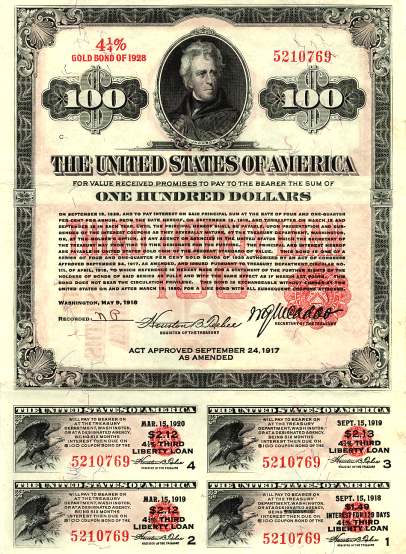
76.
The main method of raising money for World War I was
a)
increased taxes
b)
special taxes on alcohol, tobacco, & entertainment
c)
sale of war bonds
d)
voluntary donations
77.
The law that created harsh penalties for spies during World War I was the
a)
Sedition Act
b)
Espionage Act
c)
War Revenue Act
d)
National Defense Act
78.
The law that restricted speech, especially against the government, during World War I was the
a)
Sedition Act
b)
Espionage Act
c)
War Revenue Act
d)
National Defense Act
79.
The Espionage and Sedition Acts attacked this freedom.
a)
Freedom of Speech
b)
Freedom of Religion
c)
Freedom of the Press
d)
Freedom of Assembly
80.
The event where African Americans left the South and headed North.
a)
The Great Migration
b)
The Port Rush Movement
c)
The March on Washington
d)
The Factory Rush
81.
African Americans went to northern cities looking for these
a)
Jobs
b)
Homes
c)
Army Stations
d)
Homeless Shelters
82.
Why did women work in factories during wartime?
a)
The government forced women to work
b)
To stop a labor (work) shortage since men were drafted
c)
To stop immigrants from "stealing" jobs
d)
New workplace laws requiring them to be hired
83.
Why did the government issue war bonds?
a)
To pay for the war effort
b)
To keep banks from closing
c)
to keep the stock market high
d)
To decrease unemployment
84.
Increases the size of the U.S. army
a)
Pendleton Act
b)
Wilson Act
c)
20th Amendment
d)
Selective Service Ac
85.
Who was the President of the United States during WWI?
a)
Woodrow Wilson
b)
Grover Cleveland
c)
Teddy Roosevelt
d)
Franklin D. Roosevelt
86.
The Scopes Monkey Trial of 1925 had to do with teaching of Fundamentalism and ______.
a)
school
b)
evolution
c)
abstinence
d)
religion
87.
Millions of Black Americans migrated North during the early 1900s and into the 1920s. This is known as: 
a)
The Big Move
b)
The Great Migration 
c)
The Great Agitation 
d)
The Great Separation 
88.
Henry Ford’s main contribution to the US industry was the idea of the assembly line and __________.
a)
automobile
b)
mass production
c)
sports car
d)
transportation
89.
Trial of a Tennessee public school biology teacher for teaching the theory of evolution.
a)
Scope's Trial
b)
Red Scare
c)
Fundamentalism
d)
Sacco and Vanzetti Trial
90.
What was Prohibition?
a)
A complete ban on the sale of food
b)
A complete ban on the sale of clothes
c)
A complete ban on the sale of alcohol
d)
A complete ban on the sale of cars
91.
The Harlem Renaissance was focused on the writing and music related to
a)
African Americans
b)
Communists
c)
Anarchists
d)
Immigrants
92.
Both Warren Harding and Calvin Coolidge 
a)
believed in a laissez faire approach to the economy and government 
b)
believed government intervention was important to a successful economy.
c)
were anarchists 
d)
had administrations riddled with scandal. 
93.
The cartoon shows a growing reluctance towards _________________in the 1920s 
a)
education
b)
immigration 
c)
buying on credit 
d)
eating stew 
94.
_______________ were young women who rebelled against traditional ways of thinking and acting.
a)
Expatriates
b)
Jazzers
c)
Flappers
d)
Scats
95.
Many believe this author captured the spirit of the "Roaring Twenties" with his novel Titled The Great Gatsby.
a)
Paul Lawrence Dunbar
b)
F. Scott Fitzgerald
c)
Ernest Hemingway
d)
Louis Armstrong
96.
This man is one of the most famous criminals in U.S. History. He was rumored to have made $60 million a year during Prohibition. What was the name of the most famous bootlegger during Prohibition?
a)
Baby Face Nelson
b)
Al Capone
c)
George Harris
d)
James Jones
97.
What was the name given to secret bars where people acquired alcohol illegally?
a)
Speakeasies
b)
Top Secret Bars
c)
Secret Saloons
d)
Quiet Places
98.
These hate group gained traction in the 1920’s, even though they had been around since right after the Civil War. They are notorious for hating people who are of different races, or from different countries. What is the name of this hate group?
a)
NAACP
b)
War Hawks
c)
Klu Klux Klan
d)
Nazis
99.

The Roaring Twenties were characterized by --

a)

internment camps, the rationing of goods, and the first use of the atomic bomb

b)

bank failures, the New Deal and bread lines

c)

installment plans, Prohibition, and flappers

d)

brinkmanship, McCarthyism, and a policy of containment

100.

During the 1920's, what was one result of innovations in U.S. transportation technology?

a)

Commercial airplanes replaced ocean liners as the primary means of travel to Europe.

b)

Mass-produced automobiles made travel more affordable for many people.

c)

Cable cars provided a comfortable means of quick travel to any city within a state.

d)

Container ships delivered agricultural goods to ports along the Pacific coast.

101.

The establishment of speakeasies in the 1920's was an unintended consequence of which federal government action?

a)

The taxation of imported luxury goods

b)

The deportation of suspected communist sympathizers

c)

The prohibition of the sale of alcoholic beverages

d)

The implementation of immigration restrictions

102.

Which of these resulted from prohibition of alcohol during the 1920s?

a)

A decline in immigration rates

b)

A growing fear of communism

c)

The expansion of consumer economy

d)

The rise of organized crime

103.

Which of these cause- and- effect relationships is accurate?

a)

The ideas of social Darwinism led to the passage of Prohibition laws

b)

The signing of the Treaty of Versailles contributed to the implementation of the New Deal

c)

The ideas of the Harlem Renaissance influenced the growth of the Civil Rights movement

d)

The rise of fascism in Italy influenced the onset of the Red Scare.

104.

Which of the following was a major contribution of the Harlem Renaissance to U.S. culture?

a)

It led to the increased popularity of Vaudeville stage performers.

b)

It brought the most significant beat poets together.

c)

It established jazz as a prominent musical form.

d)

It focused attention on the antiwar literary genre

105.

Which pull factor contributed to the Great Migration?

a)

The availability of land grants for homesteaders

b)

Economic opportunities in industrialized cities

c)

Better soil conditions in previously uncultivated areas

d)

The lower cost of living in urban areas

106.

What was a major influence on the popularity of the flapper during the 1920's?

a)

A decline in the number of women working in urban factories

b)

A shift away from the traditional roles of women

c)

An increase in the use of credit and installment plans

d)

A decrease in crime associated with prohibition

107.

Which country practiced isolationism (staying away from the rest of the world) at the start of WWII?

a)

Germany

b)

Japan

c)

U.S.S.R

d)

United States

108.

What was the goal of the Neutrality Acts of 1936-37?

a)

For the United States to enter WWII immediately

b)

For the United States to stay out of European conflicts

c)

To encourage the Axis powers to take over Europe

d)

Laws that made it legal to discriminate against Jews

109.

This program allowed the United States to support Great Britain's War effort against Germany without entering WWII

a)

Neutrality Acts

b)

The Lend-Lease Program

c)

League of Nations

d)

The New Deal

110.

Why was the Battle of Britain so significant?

a)

This battle had the highest casualties of German soldiers

b)

US troops stormed the beaches of Normandy

c)

Great Britain struck with the largest submarine fleet

d)

Hitler launched the greatest air assault the world had ever seen

111.

The major American Pacific naval base destroyed in a Japanese surprise attack on December 7, 1941 was

a)

Midway Island

b)

Wake Island

c)

Iwo Jima

d)

Pearl Harbor

112.

The American atomic bombs were dropped on the Japanese cities of

a)

Hiroshima and Tokyo

b)

Nagasaki and Hiroshima

c)

Osaka and Nagasaki

d)

Okinowa and Hiroshima

113.

US minority group who were forced into internment camps during WWII

a)

Japanese-Americans

b)

Italian-Americans

c)

Russian-Americans

d)

Jewish Americans

114.

Which country signed a nonaggression pact with Germany that led to the invasion and division of Poland?

a)

United States

b)

Austria

c)

Great Britain

d)

U.S.S.R

115.

What was the Manhattan Project?

a)

The plan to crash Japanese suicide planes into Allied ships

b)

The plan to develop the atomic bomb

c)

The historic meeting of the “Big Three”

d)

The training of the Navajo code talkers

116.
The American campaign to defeat the Japanese shown in the map above was known as
a)
island blitzkrieg
b)
shock and awe in the islands
c)
island hopping
d)
island trenching
117.
The goal of the Double V Campaign was Victory for the Allies in Europe and Victory over which social issue?
a)
discrimination and inequality in the United States
b)
government censorship and propaganda
c)
the gender wage gap in the United States
d)
the suspension of civil liberties during wartime
118.
Why did President Truman ultimately decide to use atomic weapons in Japan?
a)
To prevent the potential loss of American lives from an invasion of Japan.
b)
The need to defeat Japan before defeating Germany
c)
plan to bring democratic government to Japan 
d)
The failure of the island hopping campaign against Japan
119.
What role did "Rosie the Riveter" play during World War II?
a)
To persuade women to be as strong as men
b)
To make women looked after their families during WWII.
c)
To encourage women to enter the workforce
d)
To persuade women to fight for equal pay
120.
Why did Americans buy war bonds during World War II?
a)
To avoid paying taxes.
b)
To donate part of their wages to the military
c)
To finance public works projects.
d)
To lend the government money to pay for the war.
121.
What was the purpose of the "cash and carry" policy adopted by the US government in 1939?
a)
to preserve US neutrality
b)
to gain access to new trade markets
c)
to spread democracy around the world
d)
to punish aggressor nations
122.
What was the effect of the United States' use of atomic weapons in the war in the Pacific?
a)
The use of atomic weapons resulted in a massive "kamikaze"-style counter-offensive from the Japanese military.
b)
It gave the U.S. military a base from which it could launch an invasion of mainland Japan.
c)
It brought about the unconditional surrender of Germany and stopped the Soviet Union from occupying Berlin.
d)
It brought about the unconditional surrender of Japan and ended the Second World War.
123.
Executive Order 9066, issued by President Roosevelt, authorized which of the following actions?
a)
deployment of US military forces to the Pacific theater
b)
conscription of adult male citizens into the armed forces
c)
creation of the Manhattan Project, first US nuclear weapon
d)
forced internment of US citizens of Japanes, Italian, and German ancestry.
124.
Why was the D-Day invasion in June 1944 important to the outcome of World War II?    
a)
It stopped Soviet advances in Eastern Europe.
b)
It forced Italy to surrender
c)
It opened a new Allied front in Europe.
d)
It avoided the use of atomic weapons.
125.
How did methods of warfare in WWII differ from those in WWI?
a)
Soldiers spent most of their time in trenches to avoid machine-gun fire.
b)
Because of a shortage of manpower, women fought overseas in combat roles.
c)
German submarines frequently attacked British and US shipping.
d)
Airplane, tank, and troop movements were coordinated for rapid advances.
126.
Which of these is described below? *signed at the end of WWI *required Germany to pay Allies for damages caused by the war*required Germany to reduce the of its miliary
a)
the New Deal
b)
the United Nations
c)
the Treaty of Versailles
d)
the North Atlantic Treaty Organization
127.

Who was the US president who decided to drop the atomic bombs on two Japanese cities?

a)

Franklin D. Roosevelt

b)

Harry S. Truman

c)

Dwight D. Eisenhower

d)

Woodrow Wilson

128.

Who was the Prime Minister of Great Britain during World War II?

a)

Adolf Hitler

b)

Benito Mussolini

c)

Josef Stalin

d)

Winston Churchill

129.

Who was the only president to be elected four times (he will die before the war ends)?

a)

Theodore Roosevelt

b)

Franklin D. Roosevelt

c)

Harry S. Truman

d)

Dwight D. Eisenhower

130.

The 369th all black American Infantry in WWI - 1st to engage the Germans - Heroic efforts were recognized by the French but not America.

a)

Harlem Renaissance

b)

Black Tigers

c)

Harlem Hell Fighters

d)

Tusgegee Airmen

131.
Month and Day that Stock Market Crashed
a)
October 28, 1929
b)
October 29, 1928
c)
October 29, 1929
d)
October 29, 1939
132.
The Great Depression began in
a)
1925
b)
1929
c)
1932
d)
1940
133.
Who was president at the time of the Stock Market Crash of 1929?
a)
Abraham Lincoln
b)
Franklin D. Roosevelt
c)
Theodore Roosevelt
d)
Herbert Hoover
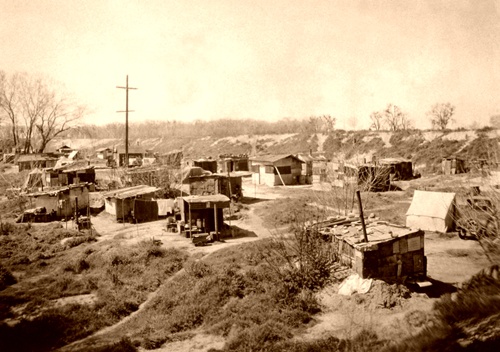
134.
What were the villages full of shacks located in cities filled with unemployed Americans called?
a)
Hoovervilles
b)
Okies
c)
Bonus Army Bases
d)
Rooseveltowns
135.
What tool - passed during the Hoover Administration -  designed to protect American manufacturers actually ended up creating a worldwide depression?
a)
Reconstruction Finance Committee
b)
Hawley-Smoot Tariff
c)
New Deal
d)
Second New Deal
136.

After President Hoover failed to help the public, who ran for election on the slogan a New Deal for Americans?

a)

Franklin D Roosevelt

b)

Harry S Truman

c)

Calvin Coolidge

d)

Herbert Hoover

137.

The New Deal is BEST described as

a)

fixing and ending the Great Depression giving millions a steady job and a regular paycheck moving forward into the 1940s

b)

being the same thing President Hoover did just setting up a system of empty promises given to the people

c)

temporary help and relief to some Americans, but could not sustain or end the Great Depression

138.
The purpose of the New Deal program was to...
a)
improve working conditions in factories
b)
stop the sale of alcohol in states
c)
end discrimination against African Americans
d)
help the nation recover from the Depression
139.
Social Security• Federal Work Programs• Farm Assistance• Increased rights for labor• Environmental Improvement Programs

What is the best title for the list?
a)
League of Nations
b)
New Deal
c)
Reconstruction
d)
Segregation
140.
Large numbers of banks and businesses failed• Large numbers of people were homeless and hungry• Farmers’ incomes fell to low levels
What was the cause of these?
a)
Reconstruction
b)
Great Depression
c)
Great Migration
d)
Segregation
141.
The New York Times
October 1929
The topic of this newspaper article is the...

a)
Stock Market Crash
b)
Stock Market Boom
c)
Great Migration north and west
d)
Roaring Twenties
142.
Which was a guiding principle of New Deal economic policies?
a)
“Rugged individualism” will end social inequality
b)
Government must assume greater responsibility for helping the unfortunate
c)
Antitrust legislation could destroy the free enterprise system
d)
State governments should have more power over the economy than the national government
143.
One difference between the administrations of President Roosevelt and President Hoover was that Roosevelt was-
a)
more willing to use government intervention to solve economic problems
b)
unwilling to allow government agencies to establish jobs
c)
able to ignore economic issues for most of his first term in office
d)
opposed to any type of government regulation of financial institutions
144.
Which "R" does NOT belong?
a)
Relief
b)
Recovery
c)
Reform
d)
Redemption
145.
What was a major result of FDR’s New Deal programs?
a)
The national deficit declined for most U.S. citizens
b)
The suffrage rights for women changed
c)
The power of the federal government was expanded
d)
The federal government lowered taxes for most Americans
146.
The New Deal stressed Relief, Recover, and _______.
a)
Reform
b)
Revolution
c)
Reinvention
d)
Reinforcement