
 Worksheets
CS 21: Unsuccessful Isolationism
Total questions: 111
Worksheet time: 1hrs 28mins
1. Which of the following was a major reason for the issuance of the Monroe Doctrine?
discourage United States trade with Latin America
defend the Panama Canal from Great Britain
prevent further European colonization in the Americas
provide economic aid to Latin American nations
The issuance of the Monroe Doctrine in 1823 was prompted by?
The Russian annexation of Alaska.
President Monroe's hope of increasing his popularity with the American public.
the fear that Europeans might intervene in Latin America to restore Spanish colonial rule.
Continuing British policies of naval impressment.
The Monroe Doctrine was an effort to stop European nations from interfering in which of the following?
each other's business.
the American continents.
the Asian continent
the United States' affairs.
Which U.S. President is associated with "Big Stick Diplomacy"?
Grover Cleveland
William McKinley
Teddy Roosevelt
Woodrow Wilson
Which of the following was a consequence of the building of the Panama Canal?
More tourists travelled to Europe.
The U.S. military intervened b/t Colombia and Panama.
The travel time between Atlantic and Pacific Oceans was reduced dramatically.
T. Roosevelt won the Nobel peace prize.
What is the American foreign policy that minimizes the use or threat of military force and instead uses its economic power in foreign countries?
missionary diplomacy
big stick diplomacy
dollar diplomacy
U.S. policy of using the nation’s economic power to exert influence over other countries.
Dollar Diplomacy
Moral Diplomacy
Big Stick Policy
Roosevelt Corollary
What law did the US establish to establish trade in China?
Open Door Policy
Platt Amendment
Treaty of Paris
Treaty of Versailles
A strong country taking over a weaker for power, money, resources, or belief in cultural superiority
Acquisition
Imperialism
Annex
Diplomacy
To add (an area or region) to a country, state, etc. To take control of a territory or place
Acquisition
Open Door Policy
Annex
Moral Diplomacy
A written agreement between countries in which they agree to do a particular thing or to help each other
Imperialism
Yellow Journalism
Annex
Treaty
When governments make decisions by working together
Big Stick Diplomacy
Dollar Diploamcy
Diplomacy
Moral Diplomacy
Which of the following stimulated US imperialism?
Need for a new source of cheap labor
Desire to expand slavery
Desire to curb big business
A belief in the cultural superiority of the Anglo-Saxon Culture
How did many Americans justify imperialism?
We were spreading democracy
We were spreading Christianity
We were providing loans
We were providing educational opportunities
This American organization was opposed to the U.S. becoming an empire.
Anti-nationalist league
Anti-immigration league
Anti-imperialist league
Anti-internationalist league
__________warned against the establishment of any additional European colonies in Latin America.
Roosevelt Corollary
Monroe Doctrine
Woodrow Wilson
William H. Taft
Which president said “speak softly and carry a big stick; you will go far.” The U.S. Navy is the “big stick” he is referring to.
Woodrow Wilson
William H. Taft
Teddy Roosevelt

This foreign policy was aimed at protecting US business in Latin America.
Moral Diplomacy
Big Stick Policy
Roosevelt Corollary
Dollar Diplomacy
Open Door Policy

This foreign policy by Theodore Roosevelt was used to secure the Panama Canal. The US will negotiate, but we also have a "Great White Fleet".
Moral Diplomacy
Big Stick Policy
Roosevelt Corollary
Dollar Diplomacy
Open Door Policy
Which of the following foreign policies was used to acquire the land necessary to build a canal in Panama?
Big Stick Policy
Dollar Diplomacy
Moral Diplomacy
Treaty of Paris
Why did Theodore Roosevelt help support a revolt against Columbia?
Columbia refused to comply with trade agreements
He wanted to establish a naval base in Columbia
He wanted to establish a colony in Columbia
He wanted to build the Panama Canal
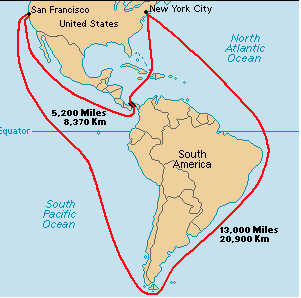
What does this map support?
US fought the Spanish navy in Atlantic and Pacific
Spanish-American War led to new US territories
America became a colonial power in South America by surrounding it
Panama Canal is critical to US trade

It was an addition to the Monroe Doctrine, stating the United States had the right to protect its economic interests in South and Central America by using military force.
Open Door Policy
Dollar Diplomacy
Roosevelt Corollary
Moral Diplomacy
President Taft's policy of linking American business interests abroad
Moral Diplomcay
Open Door Policy
Dollar Diplomacy
Big Stick Diplomacy

This foreign policy was supported by Woodrow Wilson. The US would only support nations with the same moral beliefs in democracy as the US.
Moral Diplomacy
Big Stick Policy
Roosevelt Corollary
Dollar Diplomacy
Open Door Policy
This foreign policy made the US a "police force" of the Western Hemisphere.
Moral Diplomacy
Big Stick Policy
Roosevelt Corollary
Dollar Diplomacy
Open Door Policy

The desire of the US to join the Atlantic and Pacific Oceans led to ___.
the election of Theodore Roosevelt.
the Spanish American war.
the building of the Panama Canal.

This diplomatic policy helped bring US economic interests into China.
Dollar Diplomacy
Open Door Policy
Moral Diplomacy
Big Stick Diplomacy
President Taft's policy of linking American business interests to diplomatic interests abroad.
Dollar Diplomacy
Roosevelt Corollary
Monroe Doctrine
Good Neighbor Policy
What was the name of Teddy Roosevelt's foreign policy that claimed that we would use our military to protect our country, trading partners, and neighbors?
Moral Diplomacy
Big Stick Diplomacy
Dollar Diplomacy
Isolationism
What is an example of Isolationism?
The annexation of Hawaii
America remaining neutral through most of WW1
The United States helping Cuba in the Spanish-American Wa
America providing arms to England through the Lend-Lease Act
The ______ was a foreign policy addition to the Monroe Doctrine that claimed that the US would use its military to protect its trading partners and neighbors in the West.
Open Door Policy
Dollar Diplomacy
Roosevelt Corollary
Isolationism
A major goal of the Monroe Doctrine (1823) was to
encourage immigration from Latin American nations
strengthen the national commitment to Manifest Destiny
prevent further European colonization in the Western Hemisphere
improve trade opportunities with Asian nations

What did George Washington warn against in his farewell address?
to be prepared for battle against England.
to make additional colonies in Cuba and Puerto Rico.
to stay out of foreign affairs.
to only let future presidents have one term in office.

The Monroe Doctrine said that....
Europe should help America police the world.
America should expand into Europe.
America should police the Caribbean.
Europe should stay out of North and South American affairs.

The Roosevelt Corollary was an addition to ....
The Declaration of Independence.
The Roosevelt Plan.
The Monroe Doctrine.
The US Constitution.

Imperialism is all of these except....
getting involved in foreign affairs.
telling other countries what you think.
having business agreements with other nations.
improving the rules within our states.

Which of these is not true?
Isolationism is likely to start friendships and wars with other countries.
Expansionism is expanding into new territories, but not necessarily getting involved with other countries.
Isolationism is when you isolate your country from foreign affairs.
Imperialism is getting involved in foreign affairs.
How was the United States able to gain control of the ten-mile wide section though Panama upon which the canal was built?
by declaring war against Colombia
by helping the Panamanians become independent from Colombia
by paying by fighting Panama for control of the land
by helping Panamanians become independent AND by paying $10 million plus $250,000 per year to lease the land
What did George Washington believe about U.S. foreign policy?
The United States should avoid permanent alliances with other nations.
The United States should form trade agreements with major European countries.
The United States should form permanent alliances to help maintain world peace.
The United States should never communicate with other nations under any circumstances.
The Monroe Doctrine stated that the United States would
ask for permission from Spain to trade with South American colonies.
defend British colonies from Spanish attacks.
no longer tolerate European intervention in the Western Hemisphere.
seek to colonize large parts of Venezuela and Brazil.
President Taft's Dollar Diplomacy encouraged
aiding foreign businesses over American businesses.
building military bases in Latin America and Asia.
protecting citizens abroad by cutting their taxes and extending them loans.
protecting U.S. trade and investment in Latin America and As
President Wilson's Moral Diplomacy focused on
preventing the spread of foreign businesses in the United States.
spreading American democratic ideals of liberty and freedom to other nations.
using all necessary force to put down revolts in South America.
using economic aid to fund goodwill projects in Asia and Western Europe.
Self-determination refers to the right of people in other nations to
ask for financial aid from other countries and use it as they see fit.
choose their own government free from outside influence.
form their own militaries and use them to invade other nations.
trade and form alliances freely with other nations.
What was the purpose of John Hay's Open Door Policy?
to allow any nation to freely trade in China
to allow people from any nation to travel freely in China
to allow U.S. citizens to vote in Chinese elections
to allow U.S. citizens to cheaply immigrate to China
Idea that a country should focus on its own problems and avoid international commitments
isolationism
Axis Powers
fascism
Mein Kampf
Manchuria
In 1928 the Soviet dictator Joseph Stalin began a massive effort to _______________ .
overthrow communism.
industrialize his country.
educate the peasants.
increase trade.
One of the new political parties to rise during the political and economic chaos in Germany after World War I was the National Socialist German Workers' Party, also known as the ____________ .
Socialist Party
Nazi Party
Fascist Party
Bolshevik Party
The United States felt stronger about being ______________ after WWI, especially since nations struggled to pay back debts from that war.
antagonists
militarists
isolationists
facist
FDR believed in ___________________ which was the idea that trade between nations creates prosperity and helps prevent war.
interventionism
neutrality
isolationism
internationalism


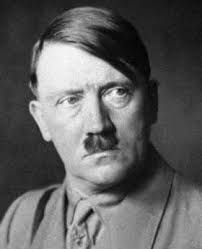
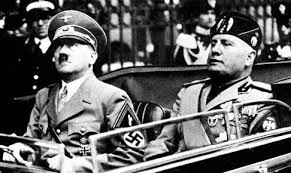
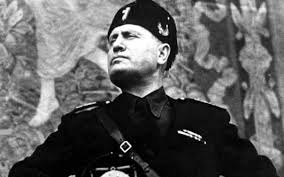

What are characteristics of a totalitarian leader?
Uses military to control society
Uses fear as a primary motivator
Controls flow of information
Remakes society around a specific ideology
Benito Mussolini promised which of the following to his people?
To defeat Nazi Germany and Hitler saving Europe
More military tanks and planes to look stronger
To regain the glory days of the Roman Empire
To control Switzerland and it's amazing skiing mountains
Which of the following were reasons for Germany's dislike for the Treaty of Versailles?
Austria and Hungary was split up
Germany was forced to take complete blame
Germany was forced to pay enormous war debts
Germany's strong military was cut down to 100,000 men
Allied Europeans and the League of Nations used appeasement with Nazi Germany early on, appeasement is to
creating confrontation with someone in order to get them to back down right away
giving Nazi Germany what they want to avoid confrontation not wanting another war
taunting the citizens of Nazi Germany in order to force Hitler to make a bad choice
Ignoring the issue of Hitler's conquests hoping that he will end up hurting himself
Choose ALL of the following leaders who practiced Fascism
Benito Mussolini
Joseph Stalin
Francisco Franco
Adolf Hitler
Soviet Leader Joseph Stalin used what type of government to assume complete control of his people?
Fascism
Democracy
Communism
Socialism
What would Germany do as a result of the worldwide economic depression following World War ?
Grant its colonies independence because they were too expensive.
Increased their reparation payments to France and Britain
Turned to fascist leaders who rallied the country around nationalism.
Implemented an Absolute Monarchy.
How did the Nazi leadership of Germany respond to the problems of the Great Depression?
Germany incorporated a New Deal program
The Nazi government took command of the economy
The people formed a multi-coalition government
Adolf Hitler promoted a classless society
What is Propaganda?
information created to show one point of view and influence people
War information from the battlefield
information created to show the facts about an issue
Why was the United States called the "arsenal of democracy" in 1940?
The leaders in the democratic nations of Europe were educated in the United States.
Most of the battles to defend worldwide democracy took place on American soil.
The United States supervised elections in European nations before the war.
The United States provided much of the weaponry needed to fight the Axis powers.
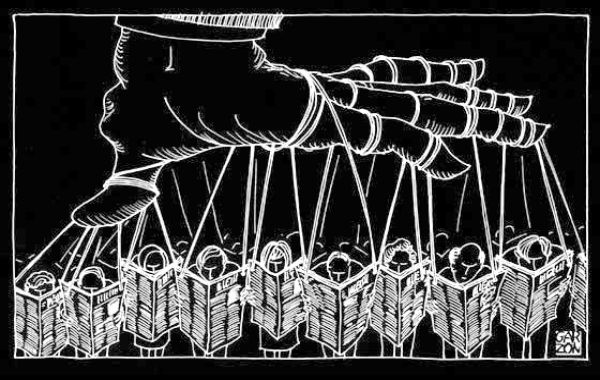
Both Hitler and Mussolini rose to power in their country because of _______________?
Election Laws
Economic problems
World War II
The death of a king
Stalin ruled over which country?
Great Britain
Italy
Germany
Soviet Union


laws passed to limit U.S. involvement in future wars.
No sale of war weapons to nations involved within conflict.
Cash-and-Carry
Lend-Lease Act
Selective Training and Service Act
Neutrality Acts
a statement of British and American goals for the postwar world following the defeat of the Nazis
Good Neighbor Policy
Four Freedoms
Arsenal of Democracy
Atlantic Charter
What was the primary focus of United States foreign policy prior to the outbreak of World War II?
defend the price of freedom of the seas
contain the spread of communism
retreat from international affairs and become isolationists
fulfill collective security agreements with Western European nations
What international agreement attempted to outlaw war?
Dawes Act
Harpers Act
Kellogg-Briand Pact
Geneva Code
Which of the following were dictators who rose to power in the 1920s and 1930s?
Adolf Hitler
Hideki Tojo
Benito Mussolini
Winston Churchill
What term means giving into an aggressor in order to achieve peace and was responsible for the rise of dictators in the 1920s & 1930s?
containment
appeasement
assimilation
detente
What was different about the Neutrality Act of 1939 form the Neutrality Acts of 1935 or 1937?
1939 added Germany to the list of nations the US would not war with
1939 allowed a "cash-and-carry" policy towards arms sales
1939 only applied to Britain
1939 only allowed money to flow to warring nations
What was FDR's response to Japanese aggression in the Pacific?
declared war on Japan
calls for international quarantine of Japan
joins the League of Nations against Japan
holds a conference in San Francisco
“National Defense at Any Expense, but Keep Our Boys at Home.”
This 1941 slogan of the America First Committee promoted
globalism
protective tariffs
isolationism
reduced military spending
Before entry into World War I and before entry into World War II, the United States adopted foreign policies that
stopped the spread of European aggression
supported peace efforts of international organizations
favored democratic nations but were officially neutral
encouraged war by signing collective security treaties
The Washington Naval Conference (1921), the Kellogg-Briand Pact (1928), and the Neutrality Acts of the 1930s were all attempts by the United States to
increase military spending
show support for the United Nations
assume a position of world leadership
avoid policies likely to lead to war
Adoption of the “cash and carry” policy in 1939 and passage of the Lend-Lease Act in 1941 showed a growing commitment of the United States to
provide aid to the Allied nations
force the Japanese out of Korea
increase trade with Italy
end German violations of American territory
The Lend-Lease Act was passed by Congress in 1941 primarily to
assist Great Britain in World War II
stabilize the international banking system
maintain the traditional policy of strict neutrality toward Germany
encourage trade with Japan
The Neutrality Acts of 1935 and 1937 were enacted by Congress to
help the United States recover from the Great Depression
stop Nazi Germany from conquering Europe
aid the Americans who fought in the Spanish Civil War
prevent the United States from being drawn into another world war
The Lend-Lease Act of 1941 significantly changed United States policy toward nations involved in World War II because it
supplied war materials to Allied nations without a declaration of war
imposed a trade boycott on Germany and Japan
authorized the seizure of British assets in the United States
approved the appeasement policies of the French and British governments
Which trend in United States foreign policy is shown by the passage of the Neutrality Act of 1939, the destroyers for bases deal of 1940, and the Lend-Lease Act of 1941?
withdrawal from overseas colonies
expansion of trade with the Axis powers
increase in support for the Allied powers
reduction in war preparedness
The entrance of the United States into World War II was preceded by
President Franklin D. Roosevelt’s successful effort to end the Holocaust in Europe
unauthorized presidential use of United States troops in Japan
American aid to help Great Britain defend itself against German aggression
legislation encouraging the immigration of war refugees
President Franklin D. Roosevelt said the United States needed to become the “great arsenal of democracy” mainly because he was trying to
increase the number of Supreme Court justices
assist the Allied nations
limit the influence of the defense industry
gain public support for a third term
Which action is an example of international appeasement?
Congress authorizing the Manhattan Project
Japan attacking Pearl Harbor
Germany signing a nonaggression pact with the Soviet Union
Great Britain and France agreeing to Hitler’s demand for part of Czechoslovakia
In 1899, the United States proclaimed the Open Door policy in an attempt to
ensure trading opportunities in China
keep the Philippines from attacking China
increase trade between Russia and the United States
prevent European countries from colonizing Africa
Which foreign policy toward Europe did President George Washington recommend in his Farewell Address?
military alliances
internationalism
imperialism
neutrality
Which factor encouraged an American policy of neutrality during the 1930s?
disillusionment with World War I and its results
decline in the military readiness of other nations
repeal of Prohibition
economic prosperity of the period

