wayground logo

Free Printable Worksheets

NEW

Font size

S
M
L
XL
Worksheets

Soil

Total questions: 71

Worksheet time: 58mins

Name
Class
Date
1.
Soil is made of
a)
weathered rocks and minerals
b)
dead plants and animals
c)
air and water
d)
all of the above
2.
Why is soil an important natural resource?
a)
soil is used to make buildings
b)
soil can grow crops
c)
soil comes from bedrock
d)
soil is full of mircobes
3.

Which of the following is NOT a property of soil?

a)

Color

b)

Texture

c)

Where it's located

d)

Ability to retain water

4.
Which type of soil can hold the greatest amount of water?
a)
sand
b)
silt
c)
clay
d)
loam
5.

Ellen grabs a topsoil sample in her hand. She rolls it into a ball. The soil feels gritty and the ball falls apart. What property of soil is Ellen testing?

a)

color

b)

texture

c)

ability to support plant growth

d)

water retention

6.

Which soil would retain the most water?

a)

loam

b)

sand

c)

silt

d)

clay

7.

Which soil would retain the least amount of water?

a)

gravel

b)

silt

c)

sand

d)

clay

8.

What are plants?

a)

living things like radishes, trees, roses, and grass

b)

rocks in soil

c)

animals

9.

Plants get the light it needs from:

a)

Rain

b)

Sun

c)

Soil

d)

Clean air and carbon dioxide

10.

Plants get the minerals they need to flourish from:

a)

Sun

b)

Rain

c)

Clean air and carbon dioxide

d)

Soil

11.

Plants need the following except one

a)

water

b)

air

c)

light

d)

pizza

12.

where do plants get light from ?

a)

sun

b)

sea

c)

star

d)

school

13.

Where do plants get minerals from

a)

soil

b)

rain

c)

sun

d)

animals

14.

What are plants?

a)

living things like herbs, trees, roses, and grass

b)

animal

c)

rocks in soil

d)

water

15.

Plants get Nutrients from Soil, these nutrients give them energy.

a)

True

b)

False

16.

Plants intake Oxygen.

a)

True

b)

False

17.

Plants help humans by releasing oxygen.

a)

True

b)

False

18.

Plants need sunlight for warmth and energy.

a)

True

b)

False

19.

Which soil retains the most water?

a)

soil 1

b)

soil 2

c)

soil 3

d)

soil 4

20.

Which soil sample retains the most water?

a)

A

b)

B

c)

C

d)

D

21.
Humus is bad for soil.
a)
True
b)
False
22.
Which layer of soil is on bottom?
a)
Topsoil
b)
Sand
c)
Bedrock
23.

What is HUMUS made from?

a)

Chick-Peas

b)

The remains of decayed plants and animals

c)

Inorganic materials

d)

Rocks and Minerals

24.
All soils begin with what process?
a)
Nutrients
b)
Subsoil
c)
Weathering
d)
Fertile
25.
Fertile soil is rich in _________.
a)
Conservation
b)
Bedrock
c)
Water
d)
Nutrients
26.
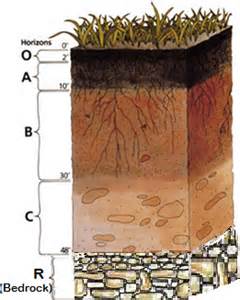
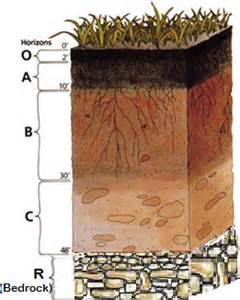
Which layer of soil are these roots growing in?
a)
subsoil
b)
topsoil
27.

Which horizon is made up of partially weathered rocks?

a)

Horizon A

b)

Horizon B

c)

Horizon C

d)

Horizon D or R (Bedrock Layer)

28.
In which horizon is most of the HUMUS?
a)
Horizon A
b)
Horizon B
c)
Horizon C
d)
Horizon D or R
29.
SOIL LAYERS ARE CALLED.......
a)
MATERIALS
b)
ORGANIC
c)
HUMUS
d)
HORIZONS
30.
MIXTURE OF ROCK, MINERAL PARTICLES, AND ORGANIC MATTER...... 
a)
HORIZONS
b)
HUMUS
c)
SOIL
d)
CLAY
31.
WHAT LAYER IS TOPSOIL FOUND IN........
a)
A
b)
B
c)
C
d)
D
32.
Which of the following describes how well soil can grow plants?
a)
soil texture
b)
soil fertility
c)
soil structure
d)
soil arrangement
33.
Does the vertical cross-section of soil in the picture show a soil profile or a soil horizon?
a)
Soil Profile
b)
Soil Horizon
34.
The picture shows desert soil. This forms in dry regions, so which of the following characteristics seems to fit best? The soil is...
a)
Deep and contains much organic matter
b)
Deep and contains little organic matter
c)
Shallow and contains much organic matter
d)
Shallow and contains little organic matter
35.
The picture shows temperate soil. This forms moderate rainfall and temperature regions, so which of the following characteristics seems to fit best? The soil contains...
a)
Much organic material and grows crops well
b)
Much organic material and does not grow crops well
c)
Little organic material and grows crops well
d)
Little organic material and does not grow crops well
36.
Soil formation begins with the weathering of_______.
a)
Humas
b)
Subsoil
c)
Litter
d)
Rock
37.
Topsoil which contains the HUMUS is the soil layer best for growing plants.
a)
True
b)
False
38.
There is an unlimited supply of fertile soil.
a)
True
b)
False
39.
Which of the following is NOT an organic material
a)
Worms
b)
Decayed animals
c)
Rocks
d)
Decayed plants
40.
Layers of soil are also known as:
a)
Soil Profiles
b)
Soil Horizons
c)
Soil sheets
d)
Soil cores
41.
What is the common name for Horizon A?
a)
bedrock
b)
topsoil
c)
parent material
d)
subsoil
42.
What is humus?
a)
organic material rich in nutrients
b)
subsoil
c)
parent material
d)
trees
43.
Why is soil an important natural resource?
a)
soil is used to make buildings
b)
soil can grow crops
c)
soil comes from bedrock
d)
soil is full of mircobes
44.
Subsoil is made mostly of
a)
parent material
b)
humus
c)
clay and silt
d)
bedrock
45.
What is the main purpose of microbes in the soil?
a)
to release the nutrients in rocks
b)
to cause disease
c)
to feed animals
46.
Which describes the soil layers in order from the surface?
a)
top soil, bedrock, horizon C, subsoil
b)
top soil, subsoil, horizon C, bedrock
c)
top soil, horizon C, subsoil, bedrock
47.
Why are good conservation practices important for lumber companies to follow?
a)
It adds groundwater
b)
it increases soil erosion
c)
it decreases soil erosion
d)
the soil is shaded
48.
Which of these slows down soil erosion on construction sites?
a)
clear cutting
b)
strip mining
c)
contour plowing
d)
sandbags and nylon fencing
49.
Two methods of soil conservation in farming are
a)
reclamation and subsurface mining
b)
landscaping and nylon fencing
c)
selective harvesting and replanting
d)
contour plowing and windbreaks
50.
What type of erosion is slowed down by contour plowing and terracing?
a)
wind
b)
water
c)
air
51.
Which of the following soil types would contain the most nutrients?
a)
Soil with many large rock particles
b)
Soil with bedrock close to the surface
c)
soil that drains well through it
d)
soil with decomposed organic material
52.
What is a solution to stop wind erosion on a farmer's field?
a)
Plow up all of the plants
b)
Build a pond
c)
plant trees and shrubs on the edge
53.
What process breaks down bedrock to begin soil formation?
a)
leaching
b)
weathering
c)
decomposition
d)
humus
54.
What process breaks down bedrock to begin soil formation?
a)
leaching
b)
weathering
c)
decomposition
d)
humus
55.

Which of the following is NOT a property of soil that can be observed?

a)

Composition

b)

Texture

c)

Particle Size

d)

O2 given off

e)

Soil Profile

56.

What are soil layers called?

a)

Rock

b)

Horizons

c)

Layers

d)

Profile

57.

How many layers does a mature soil profile contain?

a)

2

b)

3

c)

4

d)

5

58.

What are the 3 main soil horizons for a mature profile?

a)

topsoil, subsoil, parent material

b)

humus, topsoil, subsoil

c)

subsoil, parent material, bedrock

d)

humus, topsoil, bedrock

59.

What is the composition of topsoil?

a)

sand, silt, clay

b)

humus, silt, rocks

c)

sand, rocks, minerals

d)

humus, clay, minerals

60.

In which horizon do most animals such as bugs live?

a)

Humus

b)

Topsoil

c)

Subsoil

d)

Parent Material

e)

Bedrock

61.

What is decayed organic material in soil?

a)

topsoil

b)

humus

c)

subsoil

d)

bedrock

62.

What is the origin of clay, silt, and sand?

a)

humus

b)

bedrock

c)

subsoil

d)

topsoil

63.

What does the size of the soil particles determine?

a)

pH

b)

mineral composition

c)

texture

d)

horizon posiition

64.

What are loam, clay loam, silt loam, and clay?

a)

Soil particle sizes

b)

Soil Textures

c)

Soil pH

d)

Soil composition

65.

What are soil particles larger than 2 mm called?

a)

silt

b)

fine

c)

coarse

d)

gravel

e)

clay

66.

What is permeability?

a)

how freely water passes through soil

b)

how much acid is in soil

c)

the size of the soil particles

d)

the composition of soil

67.

What is the best pH for plants to grow?

a)

4-6

b)

7 only

c)

5-7

d)

6-8

68.

What is a fertilizer that changes the pH and makes nutrients more accessible by plants?

a)

silt

b)

loam

c)

nitrogen

d)

lime

69.

What's the composition of soil?

a)

air, water, minerals

b)

minerals, decayed organic materials, rock particles

c)

air, water, decayed organic materials, rock particles, minerals

d)

decayed organic materials, rocks particles, and minerals

70.

Which layer is the parent material?

a)

Horizon O

b)

Horizon A

c)

Horizon B

d)

Horizon C

e)

Horizon R

71.

Which layer is the subsoil?

a)

Horizon O

b)

Horizon A

c)

Horizon B

d)

Horizon C

e)

Horizon R