
 Worksheets
Solar System P4
Total questions: 70
Worksheet time: 3hrs 1mins

Which of the following lists Earth's compositional layers starting with Earth's center and ending with the outermost layer.
mantle, crust, core
crust, mantle, core
crust, core, mantle
core, mantle, crust.

What is the main cause of earthquakes?
large ocean waves called tsunamis
movement of tectonic plates
erosion of topsoil by rivers
animals burrowing underground

In the Earth's mantle, heat is transferred in large convection currents. Within these currents;
cooler and hotter rock rise but do not sink
hotter rock rises and hotter rock sinks
hotter rock rises and cooler rock sinks
hotter and cooler rock sink but do not rise

Which of the following statements is true?
The Earth's lithosphere is made up of tectonic plates.
The Earth's mantle is made up of continents.
The Earth's mantle is made up of tectonic plates.
The Earth's lithosphere is entirely made up of liquid magma.
Which choice correctly completes the sentence?
___ reaches the Earth's surface through ___, then turns into ____.
Magma; earthquakes; lava
Lava; volcanoes; magma
Lava, earthquakes,; magma
Magma; volcanoes; lava
Most tectonic plates move at rates of
meters per second
centimeters per second
meters per year
centimeters per year
The pathway of Earth to go around the Sun
The earth takes … to make 1 complete revolution.
around 365 hours
around 365 weeks
around 365 days
around 365 months
When one side of Earth is having daytime, the other side is having nighttime.
rotation
revolution
The Earth orbits around the Sun.
rotation
revolution
The seasons change as the Earth orbits around the Sun.
rotation
revolution
Sunrise and sunset occur because of __________.
rotation
revolution
Places near the Equator (the center of the Earth) do not have much change in season because those places are always close to the Sun.
rotation
revolution
The Sun is a
Planet
Moon
Star
Asteroid
Which is the largest planet in our Solar System?
Saturn
Neptune
Earth
Jupiter
Which of these planets is the farthest from the sun?
Mercury
Earth
Neptune
Jupiter
Which planet is sometimes called the "red planet"?
Jupiter
Mercury
Mars
Uranus
Which planet is the hottest in the Solar System?
Earth
Mercury
Venus
Mars
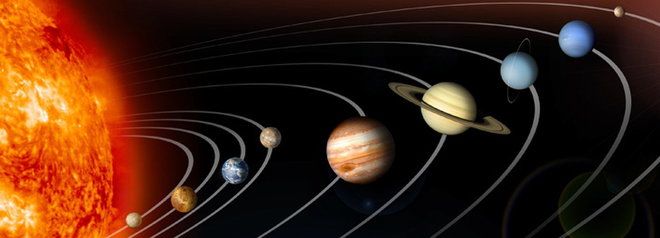

Which answer correctly orders the planets from the sun?
Mercury, Earth, Mars, Jupiter, Venus, Saturn, Uranus, Neptune
Jupiter, Saturn, Uranus, Neptune, Earth, Venus, Mars, Mercury
Mercury, Venus, Earth, Mars, Jupiter, Saturn, Uranus, Neptune
Mercury, Venus, Earth, Mars, Saturn, Jupiter, Uranus, Neptune
What is a the space rock that collides into Earth's surface?
meteor
asteroid
meteorite
How does a meteor compare to a meteorite?
A meteor is moving through Earth's atmosphere and the meteorite actually lands on Earth
Meteors are made up of Carbon and meteorites are made of ice
A meteorite is moving through the Earth's atmosphere and the meteor actually lands on Earth
They are the same thing

The further the distance of the planet to the Sun, the more time they need to go around the Sun.
true
false
We live in a galaxy that called ....
The Milky Way
The Milkita
Andromeda
Black Eye
Which statement about gravity is true?
gravity causes objects to pull towards one another
gravity causes objects to push away from each other
gravity only takes place between planets
the moon doesn't have any gravity
The Moon is not as bright as the Sun because ___________.
it is a star
it gives out only a little light
it reflects light from the Sun
the Moon is larger than the Sun
All of the inner planets are made of _________ material.
liquid
icey
rocky
gassy

What are the outer planets?
Select ALL that apply.
Mars
Jupiter
Saturn
Uranus
Neptune

What planet has thousands of beautiful, tiny rings made of chunks of ice and rock?
Neptune
Earth
Saturn
Mars

What planet rotates on a tilted axis and looks like it is laying on its side?
Earth
Mars
Pluto
Uranus

What is the floating rocky belt between Mars and Jupiter?
Kuiper belt
Asteroid belt
Rocks belt
What gases that makes up the Sun?
Oxygen and hydrogen
Hydrogen and water vapour
Hydrogen and Helium

Which layer is the largest layer of the Earth?
crust
mantle
outer core
inner core
This layer of the earth is the thinnest part
crust
outer core
mantle
inner core
Which event causes an earthquake?
erosion within the center of a crustal plate
movement along a crustal plate boundary
glaciers moving through a valley
waves moving along a coast
What is the main cause of earthquakes?
large ocean waves called tsunamis
movement of tectonic plates
erosion of topsoil by rivers
animals burrowing underground
Which of the following lists Earth's compositional layers starting with Earth's center and ending with the outermost layer.
mantle, crust, core
crust, mantle, core
crust, core, mantle
core, mantle, crust.

How do volcanic mountains form?
Lava, ash and other materials from volcanic eruptions gradually build up over time.
Volcanic mountains form below the surface then rise above the surface during earthquakes.
Running water deposits sediments that builds up to form the mountains over time.
Tectonic forces squeeze rocks together as two continental plates collide.


Earthquakes happen every day. Most are too small for humans to notice.
True
False
It is the study of earthquakes.
Meteorology
Geology
Seismology
Materials ejected during the eruption
ash
Lava
water
rocks
Why Indonesia has a lot of active volcanoes?
the country lies near plate boundaries
Indonesia is very big
densly populated area
What causes a volcano to erupt?
Pressure and gasses build up.
heat builds up.
Magma hits the surface and becomes lava.
The Earth's crust moves.
A path along the Pacific Ocean with approximately 450 volcanoes (it is shaped like a horseshoe).
Tectonic Plates
Earth's crust
Atlantic Ocean
Ring of Fire
When does magma become lava?
When magma is in the magma chamber, it becomes lava.
When magma reaches Earth's surface.
Magma does not eventually turn into lava.
Magma
The long tube in the ground that connects the magma chamber to Earth's surface is called the _____________.
Crater
Pipe
Vent
Magma Chamber

How many planets does the solar system have?
1
9
5
8

What are the four inner planets?
Pluto,Earth,Mercury and mars
Mercury venus earth and mars
Ganymede, Jupiter, Earth, Saturn
Mercury, Earth, Mars, Uranus
The object in the solar system which gives of a lot of heat and light is ....
Moon
Earth
Sun
Asteroid
The planet where we live is ....
Earth
Mars
Venus
Jupiter
An object that orbits another bigger object in space is called ....
Star
Comet
Satellite
Asteroid

