NEW
Font size
 Worksheets
cell structure and functions
Total questions: 70
Worksheet time: 35mins
Robert Hooke discovered cell by observing_______under the magnifying device.
Drop of blood
Onion Peel
Slice of cork
Sample of pond water
Which of the following is/are example of unicellular organism(s):
(I) Amoeba (II) Paramecium (III) White Blood Cell (IV) Hen
Only I
Both I and II
I, II and III
All of them

Identify the Cell shown in the figure
Red Blood Cell
Muscle cell
Nerve cell
Amoeba
In a multicellular living organism, X is made up of Y and Y are made up of cells. What are X and Y?
X-Organ, Y-tissues
X-Organ , Y- Organ System
X- tissue, Y- Organs
X-tissue, Y- Organ Systems
The living substance of the cells is known as
Cytoplasm
Nucleoplasm
Protoplasm
Chloroplast
Plant cells do not have Cell membrane
True
False
Choose the correct statement:
A single-celled organism peforms all the life processes such as respiration, digestion, excretion, reproduction
All cells in a living organism have same shape and size.
The size of cells determines the size of body of a living organism.
Number of cells has no relation with the size of body of the living organism.
The unit of inheritance responsible for the transfer of hereditary characters from parents to offspring is
Nucleus
Chromosomes
Genes
Necleolus
Prokaryotic Cells do not have
Cell membrane
Nuclear membrane
Cytoplasm
Nuclear material
Which of the following differences between plant cells and animal cells is incorrect?
Cell wall is present in plant cells but absent in animal cells
Plastids are present in plant cells but absent in animal cells
Vacuoles are smaller in plant cells but larger in animal cells
All the differences are correct
The other name of cell membrane is
plasma membrane
cell wall
nuclear membrane
none of these
Cell wall is found in
plant cells only
animal cells only
both
none of them
Nucleus is separated from cytoplasm by
nucleoplasm
cell membrane
nuclear membrane
plasma membrane
The power house of a cell is
Golgi bodies
Chloroplast
Mitochondria
Nucleus
If your father has brown eyes, you may also have brown eyes. If your mother has curly hair, you might also end up having curly hair. This transfer of characteristics is due to the transfer of ______.
Mitochondria
Lysosomes
Chloroplast
Chromosomes
Which of the following combinations are present in plant cell but not in animal cell
Cell Wall & Plastid
Cell wall and Cell membrane
Plastid and Nucleus
Cell Membrane and Cytoplasm
The liquid substance present between nucleus and plasma membrane is called
Cytoplasm
Nucleoplasm
Protoplasm
None of these
Choose the correct statement
Genes are located on the chromosomes
The cell is located in the nucleus
Chromosomes are found in the cytoplasm
Cell membrane surrounds the nucleus
Which of the following statements is true for eukaryotic cells?
They do not have a nuclear membrane.
They have a well organised nucleus.
Bacteria is a eukaryotic cell
none
Cheek cells do not have
Cell membrane
Nucleus
Golgi bodies
Plastids

What is this structure?
Mitochondria
Nucleus
Chloroplast
Vacuole
What is the function of this structure?
Breaks down glucose to make usable energy (ATP)
Does photosynthesis to make glucose
Controls what goes in and out of the cell
Stores DNA and directs the cell's processes

What is this structure?
Mitochondria
Nucleus
Chloroplast
Vacuole

What is the function of this structure?
Breaks down glucose to make usable energy (ATP)
Does photosynthesis to make glucose
Controls what goes in and out of the cell
Stores water, chemicals, and wastes

What is this structure?
Cell membrane
Cytoplasm
Cell wall
Chloroplast

What is the function of this structure?
Protects the cell and helps give it shape
Stores water, chemicals, and wastes
Controls what goes in and out of the cell
Stores DNA and directs the cell's processes

What is this structure?
Cell membrane
Cytoplasm
Mitochondria
Vacuole

What is the function of this structure?
Protects the cell and helps give it shape
Stores water, chemicals, and wastes
Controls what goes in and out of the cell
Gel-like substance that supports the organelles

What is this structure?
Chloroplast
Cytoplasm
Mitochondria
Vacuole

What is the function of this structure?
Breaks down glucose to make usable energy (ATP)
Stores water, chemicals, and wastes
Conducts photosynthesis to make glucose
Gel-like substance that supports the organelles

What is this structure?
Cell wall
Cell membrane
Nucleus
Vacuole

What is the function of this structure?
Protects the cell and helps give it shape
Stores water, chemicals, and wastes
Controls what goes in and out of the cell
Stores DNA and directs the cell's processes

What is this structure?
Chloroplast
Nucleus
Mitochondria
Vacuole

What is the function of this structure?
Breaks down glucose to make usable energy (ATP)
Stores water, chemicals, and wastes
Conducts photosynthesis to make glucose
Gel-like substance that supports the organelles
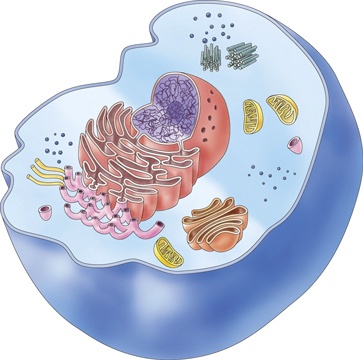
Every cell in your body contains organelles (structures that have specific functions). Just like organs in the body, each organelle contributes in its own way to helping the cell function. Every organism is made up of cells.
I don't get it.
GOT IT!
Name the outermost layer of a plant cell that protects and supports it. Rigid outer wall, provides structure to the plant cell.
Cell Membrane
Cell Wall
Golgi Apparatus
Cytoplasm
What surrounds the cytoplasm of all cells and controls what goes in and out of the cell?
Cell Membrane
Cell Wall
Cellophane
Cellulose
What fluid fills the space inside of the cell and holds organelles in place?
Blood
Plasma
Chlorine
Cytoplasm
Which organelle converts energy found in food into a form that cells can use?
Mitochondria
Ribosomes
Nucleus
Nucleolus
Which organelle assembles proteins?
Lipids
Ribosomes
Carbohydrates
Nucleic Acids
Which plant organelle transforms light into glucose to use as food?
Mitochondria
Vacuoles
Chloroplasts
Nucleus
What organelle is used as storage? Hint: plants have a large one that filled with water.
Vacuole
Cell
Cell Wall
Ribosome
What are the small structures inside of cells that carry out specific functions called?
Animalcules
Organelles
Tissues
Organs
Where does photosynthesis occur?
Chloroplast
Glucose
Nucleus
Mitochondria
The “brain of the cell, controls the cell, contains DNA (cellular instructions)
Cell Wall
Ribosomes
Nucleus
Vacuole
Which part of the cell processes substances (proteins, etc) and then transports them from one part of the cell to another?
Golgi bodies
Endoplasmic reticulum (ER)
Ribosomes
Lysosomes
Which organelle labels substances (proteins, etc) with messages (hormones) so that they can be used in the cell or outside of the cell?
ER
golgi bodies
ribosomes
lysosomes
Which organelle breaks downs material and waste products?
ER
golgi bodies
ribosomes
lysosomes
Which organelle stores food, water, and waste?
vacuole
lysosome
ribosomes
ER
True or False: Plant and animal cells have all the same organelles.
True
False