
Font size
 Worksheets
AP Biology Chapter 15
Total questions: 52
Worksheet time: 30mins
The tryptophan operon is a repressible operon that is
turned off whenever tryptophan is added to the growth medium
turned on only when glucose is present in the growth medium.
Transcription of the structural genes in an inducible operon
occurs continuously in the cell.
starts when the pathwayʹs substrate is present.
Altering patterns of gene expression in prokaryotes would most likely serve the organismʹs survival in which of the following ways?
allowing the organism to adjust to changes in environmental conditions
organizing gene expression so that genes are expressed in a given order
allowing environmental changes to alter the prokaryoteʹs genome
If you were to observe the activity of methylated DNA, you would expect it to
be unwinding in preparation for protein synthesis.
have turned off or slowed down the process of transcription.
This can inhibit transcription by blocking the binding of positively acting transcription factors to the DNA:
enhancer
promoter
repressor

Where does RNA polymerase bind to DNA?
at an activator site
on the coding gene sequence
at a promoter region
downstream of the coding sequence
Where the RNA primer is placed

Which of the following occur during RNA processing?
exons can be removed
spliceosomes remove introns
a poly-A tail and GTP cap are added
DNA helicase unzips DNA
activator sequences initiate transcription

Which of the following is true of regulatory genes?
a promoter site for RNA polymerase to bind
a gene that produces repressor proteins to block RNA polymerase
a coding region responsible for the production of multiple proteins downstream of an activator site
a gene that codes for activator proteins to enhance transcription
an allosteric inhibitor for transcription factors

Bacterial cells that contain pGal will fluoresce blue under ultraviolet light. Which of the following is the most likely outcome of replacing the lacA gene in the E. coli lac operon with the gene encoding pGal?
When lacY and lac Z are breaking down and transporting lactose, the bacteria will fluoresce blue under ultraviolet light
lacZ will only produce the enzyme for breaking down galactose in the presence of ultraviolet light
the repressor enzyme will only be able to bind to the operator under the presence of lactose
When the regulatory gene is stimulated by lactose, it will cause the gene to fluoresce blue
All structural genes downstream from the placement of lacA will be inhibited due to this substitution mutation.
What does transformation involve in bacteria?
the infection of cells by a phage DNA molecule
assimilation of external DNA into a cell
Why is the transcription of structural genes of the trp operon turned off in the presence of tryptophan?
Tryptophan is the repressor that binds to the operator, preventing transcription.
The structural genes are used to make tryptophan, which would not be needed if tryptophan is available.
Tryptophan has no effect on the transcription of the structural genes.
Tryptophan RNA polymerase from finding the promoter of the trp operon, preventing structural gene transcription.
Which of the following statements regarding the trp operon is true?
The operator region produces the mRNA that codes for the repressor.
The regulatory gene is not transcribed in the presence of the repressor.
Repressor proteins are inactivated by the presence of the repressor. .
The trp operon is always activated unless deactivated by a repressor
For a repressible operon to be transcribed, which of the following must be true?
A corepressor must be present.
RNA polymerase and the active repressor must be present.
RNA polymerase must bind to the promoter, and the repressor must be inactive and not blocking the promoter region.
RNA polymerase cannot be present, and the repressor must be inactive.


What is 1 (the YELLOW molecule) in the diagram?
RNA polymerase
Inducer
Repressor
Operator
In the top picture the operon is
on
off
In the trp operon, __ acts as a __ and helps the repressor bind to the operator.
tryptophan, corepressor
tryptophan, inducer
lactose, corepressor
lactose, inducer
The repressor is the protein product of a(n)
operator
regulatory gene
lac gene
corepressor

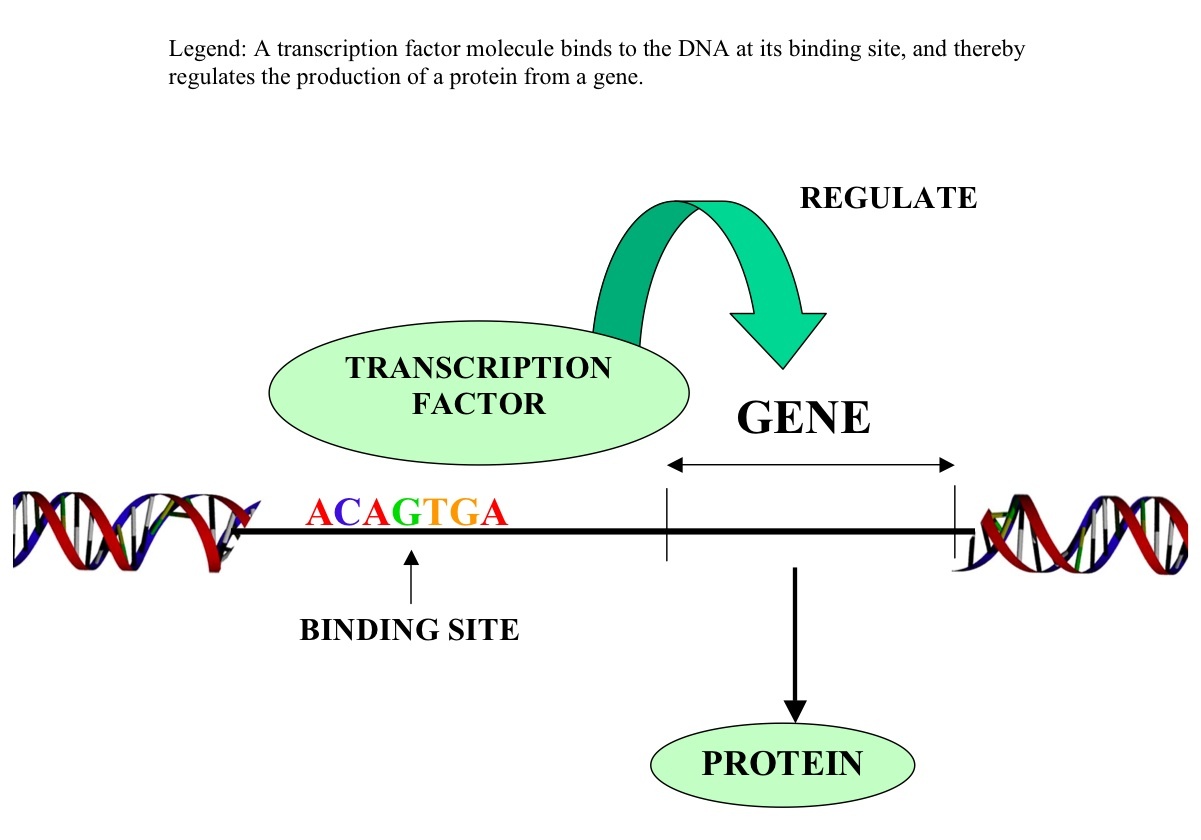
All the genes in both a prokaryotic cell and a eukaryotic cell are expressed at the same time.
True
False
A distal control region that activators bind to. The region is then bent by the DNA-bending protein to join mediator proteins and form the transcription initiation complex.
enhancers
promoters
repressors
transcription factors
In eukaryotes, a cluster of proteins (RNA polymerase II, mediator proteins, etc.) that assemble on the promoter is called the
transcription initiation complex
control element
activator
protein blobby thing
In eukaryotes , protein required for the initiation of transcription by RNA polymerase.
promoter
transcription activator
transcription factors
In a catabolic pathway, an operon causes transcription of the genes controlling a group of enzymes.
inducible operon
repressible operon
intron
exon
Molecule that brings about activity of an operon by joining with a repressor and preventing it from binding with the operator.
promoter
operator
inducer
intron
Molecule that binds to a repressor, allowing the repressor to bind to an operator in a repressible operon.
inducer
corepressor
intron
exon
Operon that is normally active because the repressor is normally inactive.
Intron
Exon
repressible operon
expressible operon
In an operon, a gene that codes for a protein that regulates the expression of other genes.
structural gene
regulator gene
intron
exon
Gene that codes for an enzyme in a metabolic pathway.
regulator gene
structural gene
operon
intron
In an operon, protein molecule that binds to an operator, preventing transcription of structural genes.
operator
inducer
promoter
repressor
In an operon, the sequence of DNA that serves as a binding site for a repressor, and thereby regulates the expression of structural genes.
promoter
inducer
operator
repressor
In an operon, a sequence of DNA where RNA polymerase binds prior to transcription.
operator
promoter
initiator
repressor
Group of structural and regulating genes that function as a single unit.
operon
promoter
activator
inducer
Prokaryotes regulate gene expression primarily
in order to maintain homeostasis
in response to changing environmental conditions
during development as cells specialize
Prokaryotes do not regulate gene expression. All genes are always on.
Which of the following are types of post-transcriptional control of genes in eukaryotes?
alternative RNA splicing or processing
gene silencing through RNA interference
destruction of ubiquitin tagged proteins
all of the above
Inheritance NOT involving the nucleotide sequence of the DNA but involving chromatin modifications such as methylation is called
epigenetic inheritance
antigenetic inheritance
___ are DNA sequences which are often located far from the genes they regulate in eukaryotes where transcription activators can bind.
histones
promotors
enhancers
Which of the following is/are similarities between prokaryotic and eukaryotic gene expression?
both use proteins to interact with the DNA to control gene expression
both have histones complexed with their DNA
both separate the processes of transcription and translation spatially
all of the above
Eukaryotes need to regulate their genes
during cell specialization that occurs during development
in order to maintain homeostasis
both a and b
neither a or b

