

wayground logo

Free Printable Worksheets

Font size

S
M
L
XL
Worksheets

REVIEW OF DOOM AND DOOMYS

Total questions: 42

Worksheet time: 25mins

Name
Class
Date
1.
What is the name given to the belief that the United States had the right and duty to expand across the North American continent?
a)
Manifest destiny 
b)
 Monroe Doctrine 
c)
 Great Awakening 
d)
Louisiana Purchase
2.
Who did the United States buy the Louisiana Purchase from?
a)
Spain
b)
France
c)
Great Britain
d)
Mexico
3.
What did the Louisiana Purchase of 1803, the annexation of Texas in 1845, and the U.S.-Mexican War of 1846 have in common?
a)
They all brought about a war with Spain.
b)
They all increased the territory of the United States.
c)
They all resulted in territory being taken from the United States.
d)
They all involved land forcibly taken from Mexico. 
4.
What territorial acquisition doubled the size of the United States?
a)
Florida Cession
b)
Mexican Cession
c)
Louisiana Purchase
d)
Oregon Treaty
5.
Texans fought for independence against what country?
a)
United States
b)
Mexico
c)
France
d)
Great Britain
6.

Who did the Americans believed gave them the right to settle the entire continent taking land from Mexico and Native Americans?

a)

God

b)

James K. Polk

c)

Andrew Jackson

d)

Chief Joseph

7.

The war ended with 2 sides signing a treaty which took away half of Mexico's land. What was the name of the treaty?

a)

Treaty of Guadalupe Hidalgo

b)

Treaty of Paris

c)

Treaty of Nantes

d)

Olive Branch Petition

8.
The war with Mexico BEGAN with
a)
California's rebellion
b)
a border dispute in Texas
c)
the Battle of Buena Vista
d)
a US invasion of Mexico City
9.
Which part of the country was the Mexican Cession in?
a)
Northeastern U.S.
b)
Southeastern U.S.
c)
Northwestern U.S.
d)
Southwestern U.S.
10.
Why was the Gadsden Purchase added to the U.S. in 1853?
a)
it was needed for the building of a railroad
b)
it was a gift from Mexico
c)
it was part of the treaty with Mexico
d)
gold was discovered in that area
11.
Where did Mormons migrate to ?
a)
Colorado
b)
California
c)
Utah
d)
Wyoming
12.
The Temperance Movement sought to eliminate -
a)
Juvenile Prisons
b)
Consumption of alcohol
c)
Child labor
13.
In the 1840s, Seneca Falls, New York, became the scene of an important convention for -
a)
women's rights
b)
labor union organization
c)
temperance reform
d)
prison reforms
14.
Which was an important effect of the "Second Great Awakening"?
a)
Andrew Jackson was elected President
b)
President Jackson refused to renew the National Bank
c)
Protestant Evangelicals sought to end slavery and achieve other reforms
d)
Congress supported the First Amendment separating Church and state
15.

What term was used to describe a person who wanted to see slavery come to an end?

a)

a liberator

b)

a federalist

c)

a loyalist

d)

an abolitionist

16.

Why did William Lloyd Garrison publish The Liberator?

a)

He published this newspaper to help women gain more rights.

b)

He wrote this newspaper as an autobiography to share the horrors of slavery.

c)

He published this newspaper to share that slavery was wrong and should be abolished.

d)

He published this newspaper to show his support for slavery and slave labor in the South.

17.

What do Frederick Douglass, Sojourner Truth, and Harriet Tubman have in common?

a)

They all started schools for African-American children.

b)

They all published newspapers supporting voting rights for women.

c)

They were all factory owners during the Industrial Revolution.

d)

They were all slaves who escaped and worked to end slavery.

18.

Many historians believe the __________ was the beginning of the modern American women's movement.

a)

Declaration of Sentiments

b)

Stanton Movement

c)

Seneca Falls Convention

d)

Convention of Women

19.

Inspired by the Second Great Awakening, the ______________ sought to reshape American society.

a)

Reform Era

b)

temperance movement

c)

transcendentalist movement

d)

Change movement

20.

Who was Horace Mann?

a)

leader of abolitionism

b)

leader of the temperance movement

c)

leader of the evil empire

d)

Leader of the education reform movement

21.

What was the temperance movement?

a)

A Reform movement that wanted to ban the sale and consumption (drinking) of alcohol

b)

Reform movement that fought for women's equal rights

c)

Reform movement that improved care for the disabled

d)

Reform movement that improved care of prisoners

22.

Who was Frederick Douglas?

a)

A slave who advocated for slavery

b)

A leader of the abolition movement

c)

A leader of the prison reform movement

d)

A leader of the education reform movement

23.

What did Dorothea Dix do?

a)

She helped the mentally ill.

b)

She was an abolitionist.

c)

She saved slaves.

d)

She helped the poor.

24.

Elizabeth Cady Stanton was_____

a)

the leader of the abolition movement .

b)

the leader of the women's rights movement.

c)

the leader of the prison reform movement.

d)

the leader of the educational movement.
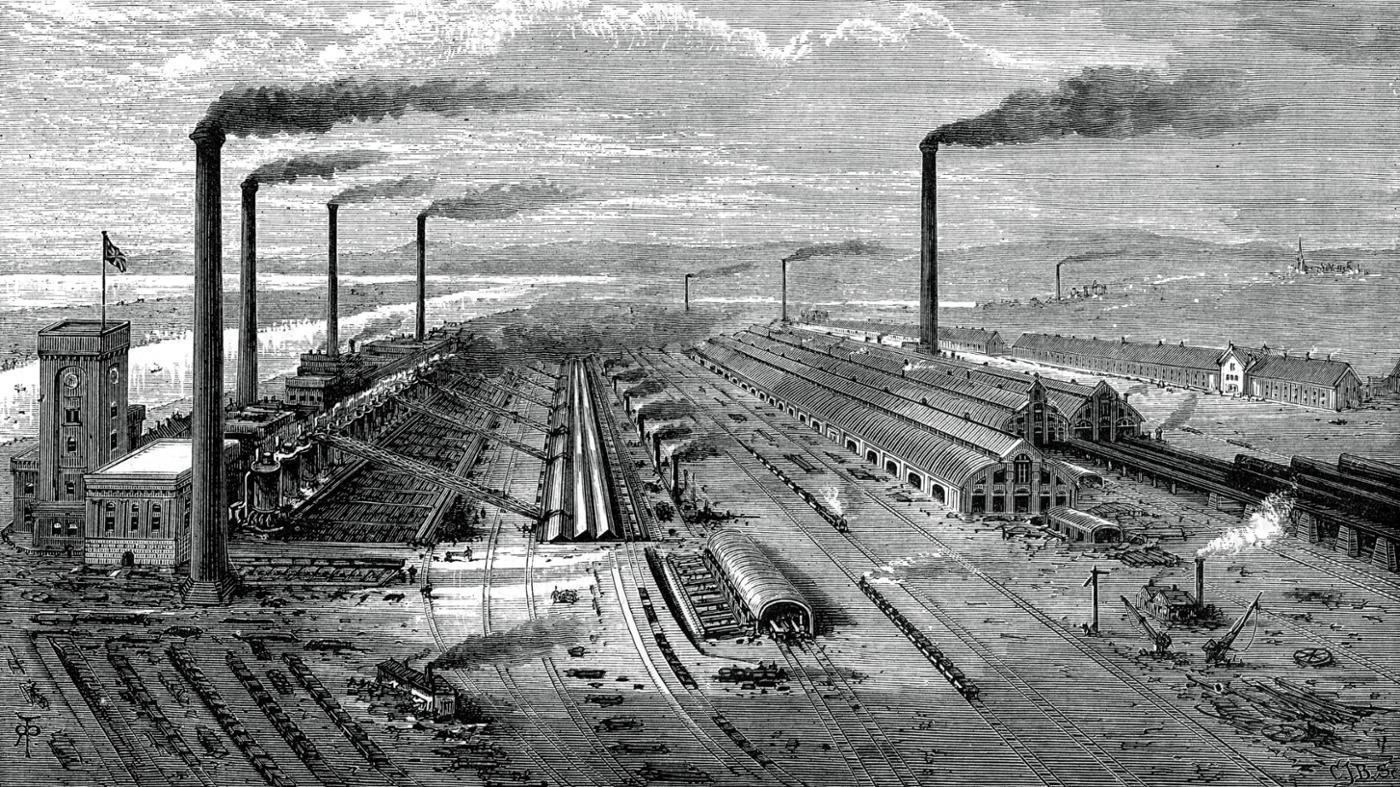
25.
What is the area of the United States where the Industrial Revolution began
a)
South
b)
Midwest
c)
New England
d)
South
26.
Who Invented the cotton gin and interchangeable parts
a)
Eli Whitney
b)
Robert Fulton
c)
Slater
d)
Lowell
27.
The invention of the cotton gin increased the efficiency of cotton production and actually increased the demand for this
a)
Water Power
b)
Coal
c)
FIre
d)
Slaves
28.
This invention by Eli Whitney made it possible to produce items in large numbers by standardizing parts to allow for easier replacement
a)
Interchangeable Parts
b)
Cotton Gin
c)
Steamboat
d)
Factory System
29.
This artificial waterway was built to connect New York City with the Great Lakes Region.
a)
Slave States
b)
Mississippi River
c)
Toll Road
d)
Erie Canal
30.
His steamboat, the Clermont, allowed passengers to travel upstream ushering in a new age of river travel.
a)
Eli Whitney
b)
Robert Fulton
c)
F. Lowell
d)
Slater
31.
This statement was issued as a warning to European countries to keep out of the Americas
a)
Uncle Sam Statement
b)
Robert's Repeal
c)
Washington Warning
d)
Monroe Doctrine
32.
What product was first made using machines in factories?
a)
Steel
b)
textiles
c)
locomotives
d)
flying shuttles
33.
What is the movement from rural to urban areas called?
a)
Moving
b)
colonization
c)
inflation
d)
urbanization
34.

The development of the factory system in the early 1800s caused —

a)

a decrease in free trade between nations

b)

an increase in government regulation of businesses

c)

an increase in production levels

d)

a decrease in immigration

35.

Which pair of actions best completes this graphic?

a)

1—Enslaved native populations 2—Organized utopian societies

b)

1—Established Catholic missions 2—Focused primarily on fur trading

c)

1—Promoted political freedom 2—Participated in the triangular trade

d)

1—Became commercial shipbuilders 2—Created an early system of public school

36.
Who was the first American to be shot and killed by British soldiers in the Boston Massacre?
a)
Crispus Attucks
b)
Bernardo de Galvez
c)
Marquis de Lafayette
d)
Haym Salomon
37.
What event put Britain in debt, so they decided to tax the colonies to pay off this debt?
a)
French & Indian War
b)
American Revolution
c)
War of 1812
d)
French Revolution 
38.
Which action by the colonists could be categorized as an act of Civil Disobedience?
a)
Colonists throwing British Tea into Boston Harbor
b)
Placing restrictions on trade with Spain and France
c)
Paying the stamp tax to British tax collectors
d)
firing guns at British soldiers at Lexington and Concord, Mass.
39.
This group supported the Constitution as it was written and wrote papers defending it
a)
Federalists
b)
Anti-Federalists 
40.
What is the name of the agreement that created a bicameral legislature with the lower house being based on population and with the upper with each state having the same number of representatives? 
a)
Great Compromise
b)
Three-Fifths Compromise
c)
Virginia Compromise
d)
New Jersey Compromise 
41.

-unreasonable searches and seizures are illegal

-search warrants may not be issued without probable cause

-the place to be searched and the people or items to be seized must be described in a warrant


Which amendment provides for the protections described in this list?

a)

amendment 1

b)

amendment 4

c)

amendment 5

d)

amendment 10

42.
The principle that the authority of the government is created and sustained by the consent of its people
a)
Limited Government
b)
Popular Sovereignty
c)
Republicanism
d)
Separation of Powers
