wayground logo

Free Printable Worksheets

NEW

Font size

S
M
L
XL
Worksheets

Minerals and Rocks

Total questions: 52

Worksheet time: 28mins

Name
Class
Date
1.

a naturally occurring, non-living solid that has a specific chemical make-up and a repeating structure.

a)

rock

b)

mineral

c)

stone

d)

mountain

2.

Scientists use mineral ________________ to identify and classify minerals.

a)

pieces

b)

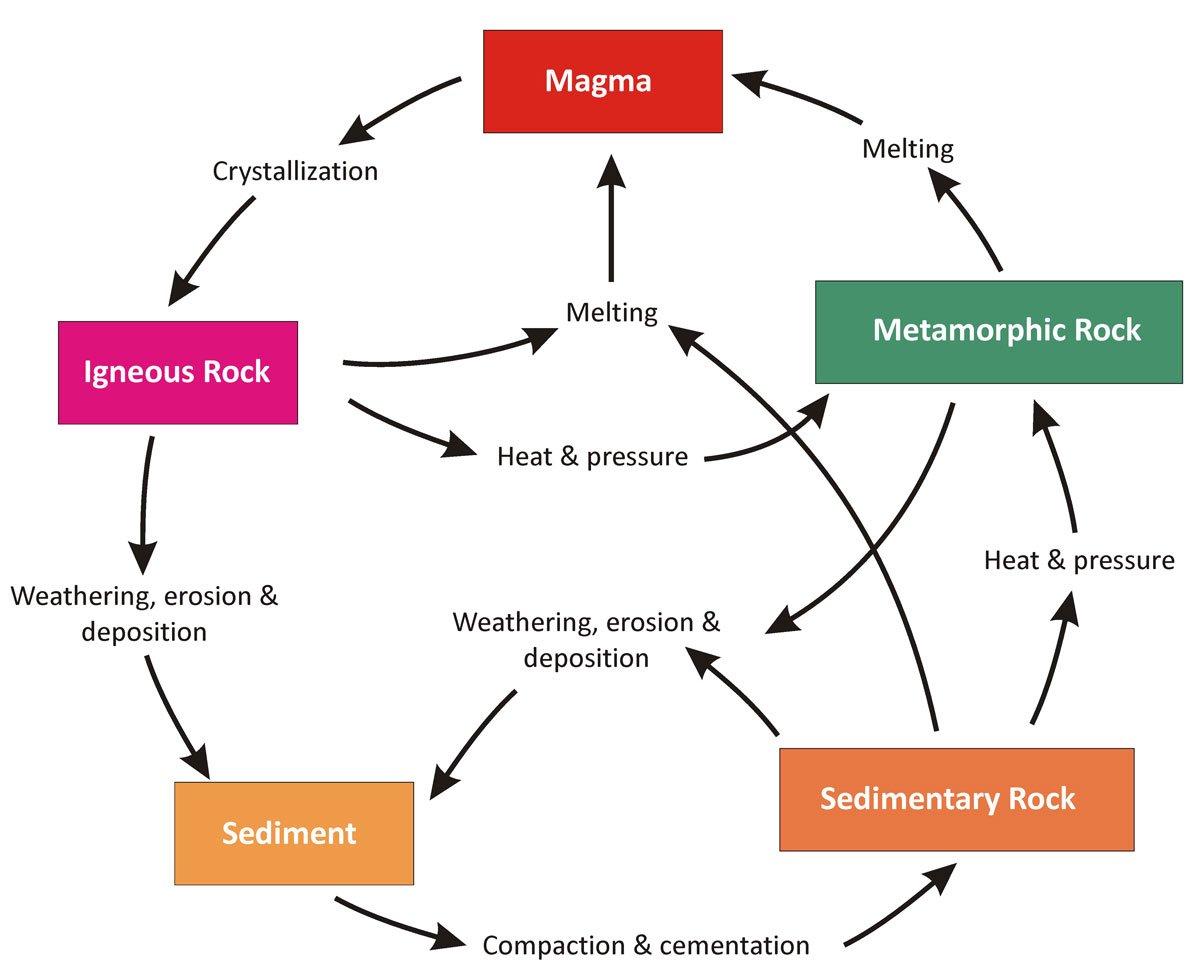
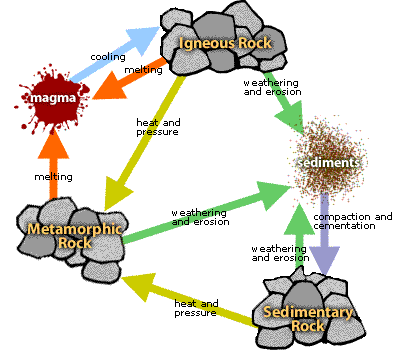
names

c)

properties

d)

structures

3.

Which one is not a property used to identify minerals?

a)

streak

b)

luster

c)

hardness

d)

size

4.

-The color of the powder left behind when you rub the mineral against a tile.

a)

streak

b)

color

c)

harness

d)

luster

5.
  • the way a mineral's surface reflects light.
a)

streak

b)

luster

c)

color

d)

hardness

6.

Gold, silver and copper are examples of minerals that have ______________________ luster.

a)

metallic

b)

nonmetallic

7.
  • a mineral's ability to resist being scratched
a)

streak

b)

luster

c)

color

d)

hardness

8.

-the name of the scale used to determine a mineral's hardness.

a)

Miller's scale of hardness

b)

The Scale of Hardness

c)

Mohs scale of hardness

d)

Mineral Hardness Scale

9.

Which of the following minerals is one of the hardest minerals?

a)

pearl

b)

diamond

c)

talc

d)

quartz

10.

Which of the following is NOT property of any kind of mineral?

a)

bends light

b)

is magnetic

c)

is fluorescent

d)

can disappear

e)

has electric potential

11.

The manner in which a mineral breaks along curved or irregular surfaces

a)

streak

b)

cleavage

c)

fracture

12.

Mass divided by volume

a)

streak

b)

density

c)

hardness

13.
What is the LEAST useful way to identify a mineral?
a)
luster
b)
streak
c)
color
d)
density
14.
Formed by heat and pressure
a)
Sedimentary
b)
Metamorphic
c)
Extrusive Igneous
d)
Intrusive Igneous
15.
Formed by cooling & solidification of lava
a)
Sedimentary
b)
Metamorphic
c)
Extrusive Igneous
d)
Intrusive Igneous
16.
Formed by cooling & solidification of magma
a)
Sedimentary
b)
Metamorphic
c)
Extrusive Igneous
d)
Intrusive Igneous
17.
Formed by compacting & cementing of sediments
a)
Sedimentary
b)
Metamorphic
c)
Extrusive Igneous
d)
Intrusive Igneous
18.
Formed by weathering & erosion
a)
magma
b)
sediments
c)
sedimentary rock
d)
intrusive igneous
19.
Formed by melting
a)
magma
b)
sediments
c)
sedimentary rock
d)
intrusive igneous
20.
Has large crystals because of slow cooling
a)
sedimentary rock
b)
metamorphic rock
c)
intrusive igneous rock
d)
extrusive igneous rock
21.
Has small or no crystals because of rapid cooling
a)
sedimentary
b)
metamorphic
c)
extrusive igneous
d)
intrusive igneous
22.
Has wavy bands.
a)
sedimentary rock
b)
metamorphic rock
c)
extrusive igneous rock
d)
intrusive igneous rock
23.
Contains fossils. 
a)
sedimentary rocks
b)
metamorphic rocks
c)
extrusive igneous rocks
d)
intrusive igneous rocks
24.
What are the 3 major types of rocks?
a)
Igneous, Metamorphic, Sedimentary
b)
Metamorphic, Igneous, Cementation
c)
Brown, Red, Gray
d)
Streak, Hardness, Breakage
25.
This rock formed when bits of other rocks became pressed into a solid. What type of rock is it?
a)
Sedimentary Rock
b)
Metamorphic Rock
c)
Igneous Rock
26.
This rock was formed when molten rock cooled into a solid. What type of rock is it?
a)
Igneous Rock
b)
Metamorphic Rock
c)
Sedimentary Rock
27.
When you watch a volcano erupt molten rock, you are seeing _____
a)
Lava
b)
Magma
c)
Mineral Crystals
d)
Igneous Rocks
28.
When sediments are pressed together tightly, this is called ____________.
a)
Compaction
b)
Cementation
c)
Weathering
d)
Erosion
29.
The process when rocks break into smaller pieces due to exposure to natural elements is called
a)
erosion
b)
weathering
c)
sediments
30.
True or False: Once a rock is sedimentary, it cannot become an igneous rock.
a)
True
b)
False
31.

Geologists have classified rocks into three major groups of rocks which are:

a)

inorganic, organic and chemical rocks

b)

igneous, sedimentary and metamorphic rocks

c)

metamorphic, chemical and non chemical rocks

d)

sedimentary, inorganic and igneous rocks

32.

The process by which metamorphic rock changes to igneous rock begins with

a)

melting

b)

erosion

c)

deposition

d)

crystallization

33.
The process by which metamorphic rocks are formed...
a)
heat and pressure
b)
erosion and deposition
c)
melting and cooling
34.
What is process in which water, wind, and heat break down rock?
a)
weathering
b)
exfoliation
c)
cementation
d)
composition
35.
Sedimentary rocks may contain fossils.
a)
True
b)
False
36.

Name of the impression of a plant or animal, in the soil, that existed in the past

a)

diamond

b)

hardness

c)

fossil

37.
A rock formed from fragments of other rocks is a(n)
a)
Metamorphic Rock
b)
Sedimentary Rock
c)
Extrusive Rock
d)
Igneous Rock
38.
A metamorphic rock in which the grains line up in parallel bands is a
a)
Clastic Rock
b)
Nonclastic Rock
c)
Nonfoliated Rock
d)
Foliated Rock
39.
The three groups of rocks are classified by
a)
How they form
b)
Color
c)
Grain size
d)
Chemical Composition
40.
The igneous rock texture that is characterized by two distinctly different crystal sizes is called
a)
Coarse grained
b)
Fine grained
c)
Glassy
d)
Porphyritic
41.
A metamorphic rock changes into an igneous rock by what two processes?
a)
Melting and cooling
b)
Extreme heat and pressure
c)
Compaction and cementation
d)
Weathering and erosion
42.

Name this rock. It cools extremely fast.

a)

Pumice

b)

Granite

c)

Rhyolite

d)

Obsidian

43.

This rock was formed from limestone.

a)

Rock Salt

b)

Marble

c)

Quartzite

d)

Rock Gypsum

44.

This rock forms deep inside the Earth from felsic magma that cools slowly.

a)

Rhyolite

b)

Granite

c)

Diorite

d)

Pumice

45.

This is a low grade metamorphic rock, whose parent rock is shale.

a)

Marble

b)

Anthracite coal

c)

Slate

d)

Basalt

46.

This rock forms from sand-sized sediments in an aquatic environment.

a)

Siltstone

b)

Shale

c)

Breccia

d)

Sandstone

47.

This sedimentary rock is formed when rounded sediments are glued together.

a)

Breccia

b)

Conglomerate

c)

Sandstone

d)

Siltstone

48.

What is the name of this extrusive igneous rock?

a)

rhyolite

b)

basalt

c)

andesite

d)

pumice

49.

This clastic sedimentary rock formed from angular fragments due to a short erosional period.

a)

Breccia

b)

Conglomerate

c)

Sandstone

d)

Shale

50.
This rock was molten lava that cooled quickly as it came out of a volcano. What type of rock is this?
a)
Sedimentary
b)
Igneous
c)
Metamorphic
51.
This rock is made from tiny pieces of other rocks that settled to the bottom of a valley millions of years ago. What type of rock is this?
a)
Sedimentary
b)
Igneous
c)
Metamorphic
52.
Each rock type can follow only one pathway of the rock cycle.
a)
True
b)
False