wayground logo

Free Printable Worksheets

NEW

Font size

S
M
L
XL
Worksheets

Biodiversity Quiz Review 21-22

Total questions: 31

Worksheet time: 27mins
Name
Class
Date
1.
Which of the following organisms are LEAST closely related?
a)
organisms that share a domain
b)
organisms that share a family 
c)
organisms that share a genus 
d)
organisms that share a species 
2.
The scientific name for an organism is made from the:
a)
class and family name
b)
genus and species name
c)
domain and kingdom name
d)
kingdom and phylum name
3.
The 8 levels of classification, most broad to most specific.
a)
Domain, Genus, Family, Order, Class, Phylum, Kingdom, Species
b)
Domain, Species, Kingdom, Genus, Phylum, Family, Class, Order
c)
Domain, Kingdom, Phylum, Class, Order, Family, Genus, Species
d)
Order, Kingdom, Species, Domain, Phylum, Family, Class, Genus
4.
The science of describing, classifying, and naming living things is called:
a)
Geology
b)
Biology
c)
Taxonomy
d)
Chemistry
5.

Organisms in this smallest taxonomic group share many characteristics.

a)

domain

b)

kingdom

c)

species

d)

class

6.

What type of organism makes its own food?

a)

Autotroph

b)

Heterotroph

7.
What is another name to describe a heterotroph?
a)
Consumer
b)
Producer
8.
Which terms best describe autotrophs?
a)
Plants; producers
b)
Animals; producers
c)
Plants; consumers
d)
Animals; consumers
9.
A dichotomous key for trees is provided. Hikers found a tree that has large brown cones and single sharp needles. What species of tree have the hikers found?
a)
Juniper
b)
Pine
c)
Spruce
d)
Fir
10.
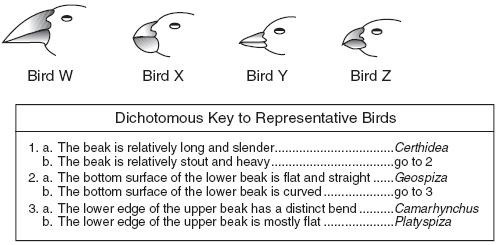
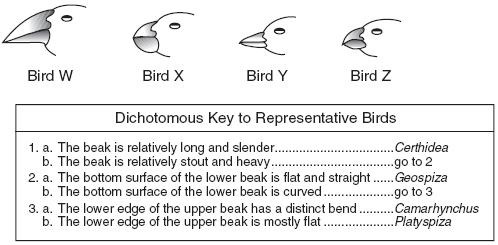
What is the name of bird W?
a)
Certhidea
b)
Geospiza
c)
Camarhynchus
d)
Platyspiza
11.
What is the name of bird Z?
a)
Certhidea
b)
Geospiza
c)
Camarhynchus
d)
Platyspiza
12.
Using this dichotomous key, identify the name of the circled Fish, J.
a)
peacock flounder
b)
band-tail puffer
c)
trumpet fish
d)
spotted goat fish
13.

Identify leaf F

a)

Cydonia

b)

Magnolia

c)

Aesculus

d)

Fraxinus

e)

Ilex

14.

What feature does this dichotomous key use to identify organisms?

a)

Number of legs

b)

Body colour and pattern

c)

Presence of wings

d)

Surface features

15.

Which of the following organisms is M. erminea?

a)

A

b)

B

c)

C

d)

D

e)

E

16.
A relationship between two organisms in which both organisms benefit.
a)
commensalism
b)
mutualism
c)
parasitism
17.
A relationship between two organisms where one benefits and the other is neither harmed nor helped.
a)
commensalism
b)
competition
c)
niche
18.
Barnacles create home sites by attaching themselves to whales.  This neither harms nor benefits the whales.  What type of symbiotic  relationship is this?
a)
mutualism
b)
commensalism
c)
parasitism
19.
A relationship between two organisms where one species benefits while the other is harmed.
a)
commensalism
b)
mutualism
c)
parasitism
20.
Mistletoe takes water and nutrients from the spruce tree.  The spruce tree eventually dies.  What type of symbiotic relationship is this?
a)
commensalism
b)
parasitism
c)
mutualism
21.

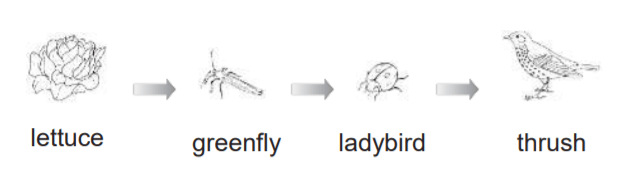
Arrows in a food web represent...

a)

eating

b)

sunlight

c)

energy

d)

matter

22.

Who is the producer?

a)

lettuce

b)

greenfly

c)

ladybird

d)

thrush

23.
Biodiversity is 
a)
the variety of species within an ecosystem
b)
a large number of the same species in an ecosystem
c)
an abundant amount of the same primary consumers 
d)
the ability to have an abundant source from the same species
24.
An organism that eats the producer- (animals that eats plants)
a)
Secondary Consumer
b)
Primary Consumer
c)
Tertiary Consumer
d)
Consumer
25.
An organism that eats the primary consumer.
a)
Primary Consumer
b)
Secondary Consumer
c)
Tertiary Consumer
d)
Producer
26.
An organism that eats the secondary consumer.
a)
Primary Consumer
b)
Secondary Consumer
c)
Tertiary Consumer
d)
Consumer
27.

A type of biological community defined by its predominant plants, animals, and environmental conditions

a)

Bio

b)

Biodiversity

c)

Biology

d)

Biome

28.

A system comprising all the biotic and abiotic factors in an area and all the interactions among them

a)

Ecology

b)

Ecosystem

c)

Economy

d)

Economic

29.

A rock

a)

Biotic (living)

b)

Abiotic (non-living)

30.

Zebra

a)

Biotic (living)

b)

Abiotic (non-living)

31.

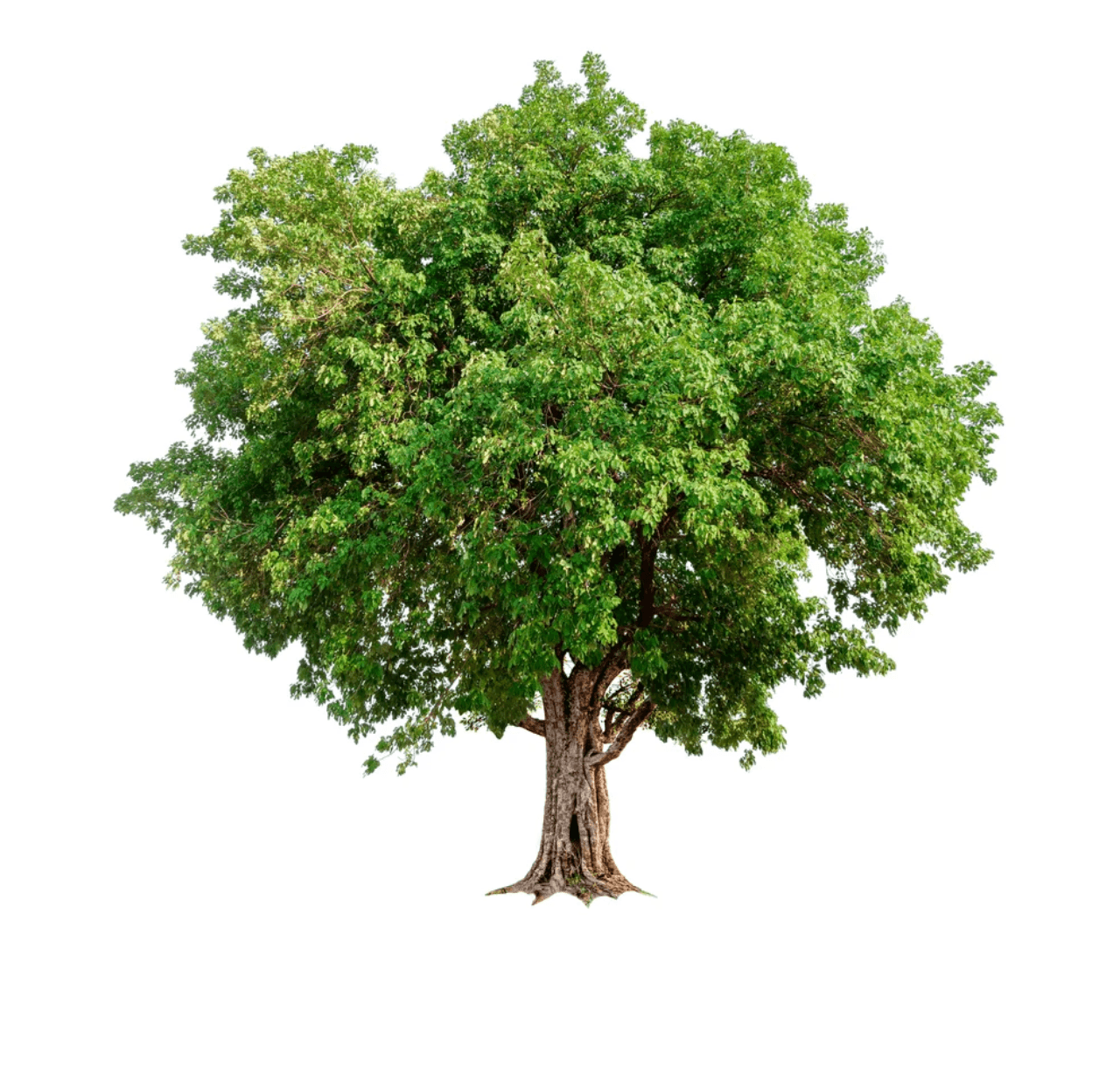
Tree

a)

Biotic (living)

b)

Abiotic (non-living)