
 Worksheets
SY IPC MP3 - MNM K Assessment
Total questions: 35
Worksheet time: 23mins
What best describes the purpose of science? Choose all that are correct.
Describes the real world.
Describe only science experiments.
Uses testable ideas.
Is done independently.
How do you create a 'fair' science experiment? List at least 2 things important to consider for making a science experiment fair.
Which below best describes what a 'hypothesis' is?
A random guess.
The main question.
An educated guess.
The main answer.

Click all below that are true about describing a solid.
Has a fixed volume.
Is compressible and can be squashed.
Contains matter.
Does not change shape to fit the container.
Which of the following are TRUE statements? Click all that are TRUE.
Molecules are bigger than atoms.
Solutes (like salt) dissolves in solvents (like water).
Solvents (like water) dissolve in solutes (like salt).
Everything is made of matter.

What is NOT true about liquids?
Liquids change shape to fit their container.
Liquids flow with gravity.
Liquids can change volume.
Liquids are not easily compressed or squashed.

Which is a homogenous mixture? LEFT or RIGHT?
(A) LEFT
(B) RIGHT

Which of the following IS true about gas?
Gases move quickly.
Gases fill up the entire container they are in.
Gases are high in energy compared to solids and liquids.
Gases are compressible.
Which of the following CONDUCTS heat the best?
Metal
Wood
Plastic
Air
Which of the following are considered good insulators of heat?
Your clothes (made of cotton)
Water

Metal

Which of these is a TRUE statement about the particle theory of matter? (Pick only 1)
Liquids are higher energy than solids.
Particles move faster when heated.
Particles in solids do not move at all.
Gases have no mass or weight.
Which of the following is NOT a physical change?


What kind of change occurs if matter changes in amount, size, or shape?
substance change
chemical change
physical change
elemental change


Freezing
Solid to gas
Liquid to solid
Gas to solid

Boiling
liquid to gas
gas to solid
gas to liquid
The slower the particles in a substance move,
the colder it is.
the warmer it is.
the more energy it has.

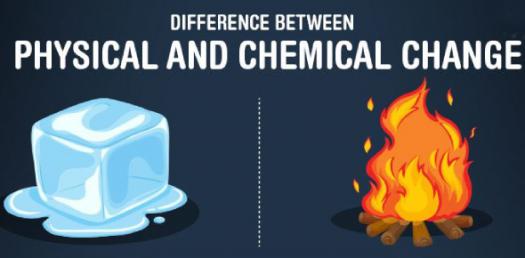
What is a sign of a physical change?
Bubbles forming
Color changing
Stretching
Producing heat

What is a sign of a chemical change?
Stretching
Tearing
Compressing
Bubbles
Which of these observations would likely be an indication of a chemical change?
A change in odor when two substances are mixed
A change in temperature when a hot substance is left standing in air
A change in volume as a substance is heated
The disappearance of a liquid as it boils
Which of the following is true of a heterogeneous mixture?
It is not possible to separate the various parts of the mixture.
Taking one sample will enable you to determine what it is made of.
Different samples may not be exactly alike.
The density is the same throughout the entire mixture.
One of the following is correctly termed a substance, and the others are mixtures. The substance is:
milk
copper
granite
chicken noodle soup
All of the following phases of matter may flow EXCEPT:
plasma.
solid.
liquid.
gas.

