
 Worksheets
2.3 Thermal processes
Total questions: 77
Worksheet time: 43mins
1. They collide more vigorously with neighbouring particles
2. Particles at the heated end gain kinetic energy and vibrate vigorously.
3. Particles at cooler end vibrate vigorously.
When air is heated, what happens to its mass?
increases
decreases
remains the same
When air is heated, its volume ____________.
increases
decreases
remains the same
When air is heated, its density ___________.
increases
decreases
remains the same

The diagram shows a refrigerator. The cooling unit is placed at the top. The cooling unit cools the air near it. What happens to the density of the air as it cools, and how does it move?
The density of air increases. It moves down.
The density of air increases. It moves up.
The density of air decreases. It moves down.
The density of air increases. It moves up.

The diagram shows some rice being boiled in a pan. What is the main methods by which thermal energy is transferred (i) through the metal pan and
(ii) through the water?
(i) conduction (ii) conduction
(i) convection (ii) convection
(i) conduction (ii) convection
(i) convection (ii) conduction
Convection can take place in ____________.
solids only.
liquids only.
liguids and gases only.
solids, liquids and gases.
Which of the following is an application of convection?
The movement of heat through a metal pan to the food.
The use of ice box to keep drinks cool.
The sea breeze that blows from sea to land.
The use of wool blanket to keep the body warm.

Which is the best position to place the heating element in an electric heater?
A
B
C
D
In the process of convection, energy is transferred _________.
because of temperature differences in a solid
because of density differences in a liquid
by the diffusion of molecules throughout a fluid
by the vibration of molecules

Which of the following correctly shows the direction of convection currents in water?
A
B
C
D

Some dye in a beaker of water is gently heated. Why are the streaks of dye seen in the water?
The hot dye is a better conductor than the cool water.
The hot dye is a better convector than the cool water.
The hot water is less dense than the cool water.
The hot water is denser than the cool water.
Convection currents occur in...
fluids
solids
When air is heated it becomes...
More dense
Less dense
Heavier
Moist
When air moves into the upper atmosphere it becomes...
Cool and heavy
Cool and light
Warm and heavy
Warm and light
Within a convection current, where is the material the most dense?
On its decent down
In the middle
On its movement upward
Water particles ____________ as they gain kinetic energy and push farther apart.
compress
expand
circulate
get smaller
By which process is thermal energy transferred through a vacuum?
conduction only
convection only
conduction and convection only
radiation only
Which type of surface is the best absorber of infra-red rays?
black and rough
black and smooth
white and rough
white and smooth
Which type of surface is the best radiator of infra-red rays?
black and rough
black and smooth
white and rough
white and smooth

The diagram shows a simple form of solar water heater. Which tubing would give the hottest water from the outlet?
black, plastic
copper, painted black
copper, painted white
white plastic

A slice of bread is placed under a red-hot electric grill to make toast. What is/are the main process/processes by which the energy reach the bread?
By conduction only.
By conduction and convection
By convection and radiation
By radiation only
We feel the intense heat from the Sun when we stand in the open during noon time. How is heat transferred from the Sun to the Earth?
By radiation only.
By conduction and radiation only.
By convection and radiation only.
By conduction, convection and radiation.
A teapot is needed to keep tea hot for a long period of time. Which of the following best explains why teapots are usually made of a shiny metal?
Shiny surfaces are good absorbers of infra-red radiation.
Shiny surfaces are good emitters of infra-red radiation.
Shiny surfaces are poor absorbers of infra-red radiation.
Shiny surfaces are poor emitters of infra-red radiation.

Four different closed vessels contain equal amounts of ice.
Which vessel would take the shortest time for all the ice to melt?
A
B
C
D
A piece of aluminium foil is used to wrap around food to be cooked in an oven. The foil has a shiny side and a dull side. Which side should be on the outside and why?
The dull side should be on the outside because it absorbs heat by radiation faster.
The shiny side should be on the outside because it is a better conductor of heat.
The dull side should be on the outside because it encourages convection current to be set up.
The shiny side should be on the outside because it is a better absorber of heat by radiation.

The diagram shows a vacuum flask.
The main reason for the vacuum is to reduce heat transfer by
conduction and convection.
conduction only.
radiation only.
convection only.

The following cans are filled with hot water. Which one of the following cans will lose heat most quickly?
A
B
C
D

Two cars, one painted dull black and the other a shiny white, were left in the sun. Which car will be heated up faster? When the two cars had reached the same temperature they were driven into the shade. Now, which car will cool down faster?
A
B
C
D
Which of the following will increase the rate of heat transfer?
1 Increase the temperature difference.
2 Paint the surface black.
3 Increase the surface area.
1 and 2 only
1 and 3 only
2 and 3 only
1, 2 and 3

Boiling Water
Conduction
Convection
Radiation

Curling Iron
Conduction
Convection
Radiation

Weather Patterns
Conduction
Convection
Radiation

Sun Bathing
Conduction
Convection
Radiation

Mantle
Conduction
Convection
Radiation

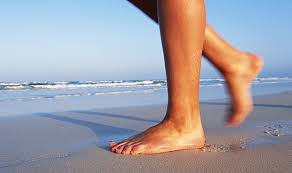
Feet on Hot Sand
Conduction
Convection
Radiation

Lava Lamp
Conduction
Convection
Radiation

Hot Air in a Toaster
Conduction
Convection
Radiation

Microwaving Food
Conduction
Convection
Radiation

Heat Lamps
Conduction
Convection
Radiation

Cold Pack on Person
Heat is transferred from the cold pack to the person.
Heat is transferred from the person to the cold pack
The cold pack is getting warmer. The person is getting colder.
The cold pack is getting colder. The person is getting warmer.

Hand Warmer in a Hand
Heat is being transferred from the hand warmer to the hand.
Heat is being transferred from the hand to the hand warmer.
The hand is getting warmer. The hand warmer is getting cooler.
The hand warmer is getting warmer. The hand is getting cooler.



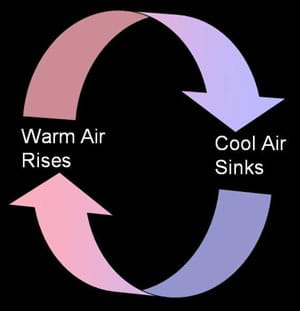
Near the ceiling of a room the air is warmer. The warm air rises because of
conduction
convection
radiation

A huge rock at the state park gets so hot during the day because of
conduction
convection
radiation

A chair is placed several feet from a fireplace. The fireplace has a glass screen. The side of the chair facing the fireplace gets warm because of
conduction
convection
radiation

The handle of a metal spoon warms up when it is placed in a hot bowl of soup because of
Convection
Conduction
Radiation
insulation.

An iron is placed on your clothes to smooth out the wrinkles. The iron transfers heat to your clothes through
conduction
convection
radiation

A pot is placed directly on a stove. The pot gets hot due to
conduction
convection
radiation

Near the ceiling of a room the air is warmer. The warm air rises because of
conduction
convection
radiation

