
 Worksheets
National 5 Chemistry Revision
Total questions: 177
Worksheet time: 2hrs 4mins
What type of elements form Covalent Bonds?
Metals only
Non-metals only
Metals and non-metals
Covalent bonds are formed when
positive and negative ions are attracted to each other
positive metal ions are attracted to delocalised electrons
positive nuclei are attracted to a shared pair of electrons
none of the above
A small group of atoms bonded covalently is called...
a metallic lattice
an ionic lattice
covalent network
covalent molecule
Diamond is an example of a
covalent molecule
covalent network
metallic lattice
ionic lattice
What type of elements form ionic bonds?
metals
non-metals
non-metals and metals
Ionic bonds are the attraction between
positive nuclei and shared electrons
positive metal ions and delocalised electrons
positive and negative ions
Metals form (blank) ions.
positive
Negative
Non-metal form (blank) ions.
positive
negative
Ionic substances have which type of structure?
covalent molecular
covalent network
ionic lattice
metallic lattice
Which structure will have low melting and boiling points?
metallic lattice
ionic lattice
covalent molecular
covalent network
Do covalent compounds conduct electricity?
Yes
No
Why can't covalent substances conduct electricity?
They have delocalised electrons
The ions are trapped in the bond
The electrons are trapped in the bond
They can conduct electricity
Why do covalent molecular substances have low melting and boiling points?
The covalent bonds need to be broken
The weak inter-molecular forces need to be broken
Why do ionic substances conduct when they are molten or in solution?
The ions are trapped in the ionic lattice
They have delocalised electrons
The ions are free to move
Are Ionic substances soluble in water?
Yes
No

Which line in the table shows the properties of a covalent network compound?
A
B
C
D

Which line in the table shows the properties of an ionic compound?
A
B
C
D

Which term can be used to describe the shape of chloromethane?
Linear
Tetrahedral
Trigonal pyrimidal
V-shaped

Which term can be used to describe the shape of phosphorous hydride?
Trigonal pyrimidal
Tetrahedral
Linear
V-Shaped
Which of the following diagrams can be used to show the structure of sodium chloride?


Which of the following diagrams can be used to show the structure of silicon dioxide (sand)?


A
B
C
D

A
B
C
D

A
B
C
D

A
B
C
D

A
B
C
D

A
B
C
D

A
B
C
D

A
B
C
D

A
B
C
D

A
B
C
D

A
B
C
D

A
B
C
D

A
B
C
D

A
B
C
D

A
B
C
D

A
B
C
D

A
B
C
D

A
B
C
D

A
B
C
D

A
B
C
D
What is the test for oxygen?
turns limewater cloudy
relights a glowing splint
bleaches damp litmus paper white
makes a squeaky pop
What is the test for carbon dioxide?
turns limewater cloudy
relights a glowing splint
bleaches damp litmus paper white
makes a squeaky pop
What is the test for hydrogen?
turns limewater cloudy
relights a glowing splint
bleaches damp litmus paper white
makes a squeaky pop
What colour do sodium ions go in a flame test?
Red
Yellow
Brick-red
Lilac

evaporating dish
watch glass
mortar and pestle
funnel

wire gauze
Bunsen burner
thermometer
utility clamp


What is the name of this piece of equipment?
Beaker
Conical flask
Measuring cylinder
Evaporating Basin
Which piece of equipment should you use to measure out liquids?


What allows us to know when the end point in a titration has been reached?
Bubbles
Feels warm
indicator changing color
Turns to a solid
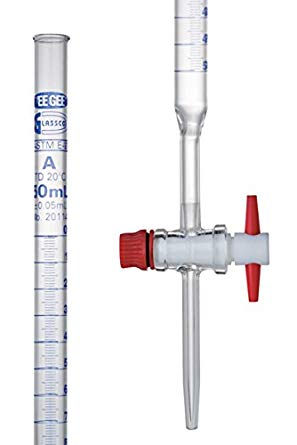
What is this piece of apparatus called
Pipette
Burette
Janette
Cuvette
Why do we perform a titration?
To determine the concentration of an unknown solution
To see if a reaction will occur between an acid and base
To find the mass of an unknown acid
To find the molar mass of an unknown solution
To calculate the viscosity of the solution
Which of these does not belong to the same homologous series?
pentane
cyclopropane
propane
hexane
Which of these is a use for alkanes?
to make plastics
fuels
solvent
to make alcohols
What is the general formula of an alkane?
CnH2n+1
CnH2n-1
CnH2n
CnH2n+2
What is the general formula of an alkene?
CnH2n+1
CnH2n-1
CnH2n
CnH2n+2
What is the general formula of cycloalkane?
CnH2n+1
CnH2n-1
CnH2n
CnH2n+2
What does this describe 'substances with the same molecular formula but different structural formula'
homologous series
hydrocarbon
isomer
none of these
What does this describe 'a family of compounds with the same general formula and similar chemical properties' ?
homologous series
hydrocarbon
isomer
none of these
What does this describe 'a substance that contains only hydrogen and carbon' ?
homologous series
hydrocarbon
isomer
none of these
What do you call an alkene with 2 carbons?
ethane
ethene
propane
propene
What would an alkane with 8 carbons be called?
octene
heptene
heptane
octane
Which alkane has 8 hydrogens?
octane
propane
pentane
hexane
If an alkene has 20 carbons, how many hydrogens would it have?
20
40
41
42
If an alkene had 20 hydrogens, how many carbons would it have?
8
10
40
42
If an alkane had 20 carbons, how many hydrogens would it have?
10
8
40
42
When bromine is added to an alkene it makes ....
a dihaloalkane
an alcohol
an alkane
a cycloalkane
What type of reaction occurs when hydrogen is added to an alkene?
hydration
halogenation
hydrogenation
none of these
Which of these reactions would make an alcohol?
hydration
hydrogenation
halogenation
none of these

What is the name of this alkane?
2,3-dimethylpropane
3,4-dimethylpropane
2,3-dimethylpentane
3,4-dimethylpentane.
The shortened structural formula for an organic compound is CH3CH(CH3)CH(OH)C(CH3)3
Which of the following is another way of representing this structure?


Which of the following compounds belongs to the same homologous series as the compound with the molecular formula C3H8?


The systematic name for the structure shown is
1,2-dimethylpent-1-ene
2,3-dimethylpent-1-ene
3,4-dimethylpent-4-ene
3,4-dimethylpent-1-ene

Two isomers of butene are shown.
Which of the following structures represents a third isomer of butene?


Which of the following could be the molecular formula for an alkane?
C7H16
C7H14
C7H12
C7H10

A student added bromine solution to compound X and compound Y. These are shown in the picture. Which substance(s) would decolourise bromine solution?
Compound X only
Compound Y only
Compound X and Y
Neither compound X nor Y
What are the three essential elements that plants require?
nitrogen phosphate potassium
nitrogen sulphur potassium
nitrogen potassium phosphorous
nitrogen potassium polonium
what is the catalyst used in the Haber process?
iron
platinum
silver
gold
What is produced in the Ostwald process?
ammonia
nitrogen
nitrate
nitric acid
Which of the following would be a suitable fertiliser?
nitrogen dioxide
potassium nitrate
copper phosphate
nitrogen oxide
What type of bonding is in ammonia?
metallic
covalent molecular
covalent network
ionic
During which process does an atom gain one or more electrons?
transmutation
reduction
oxidation
neutralization
When a lithium atom forms an Li+ ion, the lithium atom
gains a proton
gains an electron
loses a proton
loses an electron
a rock containing a metal combined with other elements
Mg → Mg2+ + 2e–
The closer the elements in the Electrochemical Series, the greater the voltage produced.
True
False
Electrons will flow from the element higher in the Electrochemical Series to the one lower in the Electrochemical Series.
True
False
A temperature increase causes the particles to ......
to slow down
move faster
collide higher
in the right order
Why does a higher concentration increase the rate of reaction?
it increases the amount of reactants
it lowers the activation energy
it increases the energy of particle collisions
it increases the frequency of particle collisions

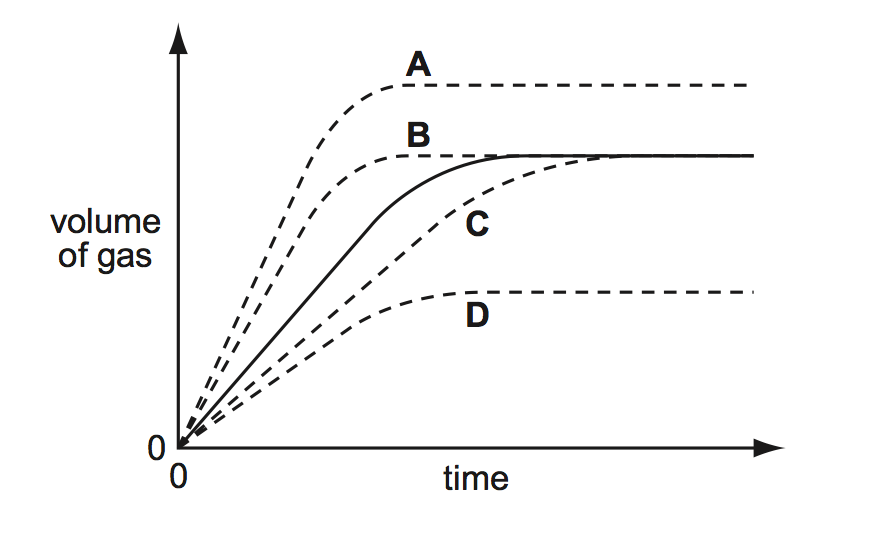
What can be said about the green line?
it is a faster rate of reaction
It produces same volume of product as red line
Half the volume of reactants has been used
Which would not speed up a chemical reaction?
Using a large beaker
Increasing the concentration
Decreasing particle size
adding a catalyst
Which would have the slowest rate of reaction
Magnesium ribbon 1M HCl at 20 degrees
Magnesium powder 1M HCl at 20degrees
Magnesium ribbon 0.5M HCl at 10degrees
Magnesium powder 0.5M HCl at 10degrees
Increasing the temperature gives particles more __________.
Time
Energy
Space
Frequency
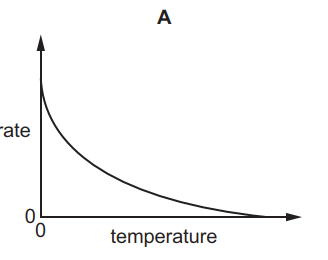
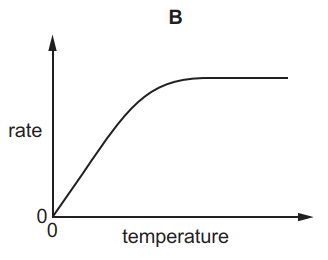
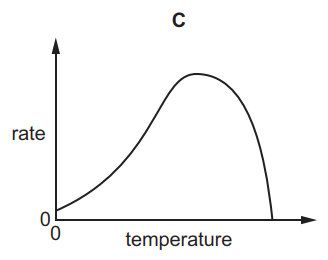
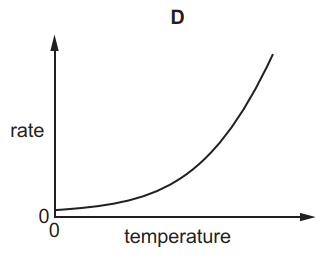
Which graph shows the effect of increasing temperature on the rate of reaction of calcium carbonate with dilute hydrochloric acid?
When surface area is decreased the rate of reaction...
Decreases, because there are LESS possible sites for correct collisions
Increases, because there are LESS possible sites for correct collisions
Decreases, because there are MORE possible sites for correct collisions
Increases, because there are MORE possible sites for correct collisions

A
B
C
D

A
B
C
D

A
B
C
D

A
B
C
D
Solutions that have more OH– ions than H+ ions are
acids
bases
enzymes
neutral
Solutions that have more H+ ions than OH- ions are
acids
bases
enzymes
neutral
What other laboratory substance can you use to test if colourless substance is an acid or an alkali?
Catalyst
Salt
Universal Indicator
Water
What happens to the pH of an acid during neutralisation?
It stays the same
It moves toward pH 1
It moves towards pH 7
It moves towards pH 14

Most elements on the periodic table are classified as ____________.
Gases
Metalloids
Metals
Nonmetals

Which group on the periodic table is the most reactive?
Group 1
Group 2
Group 13
Group 18

What is the chemical symbol for Sodium?
S
So
Na
Ca
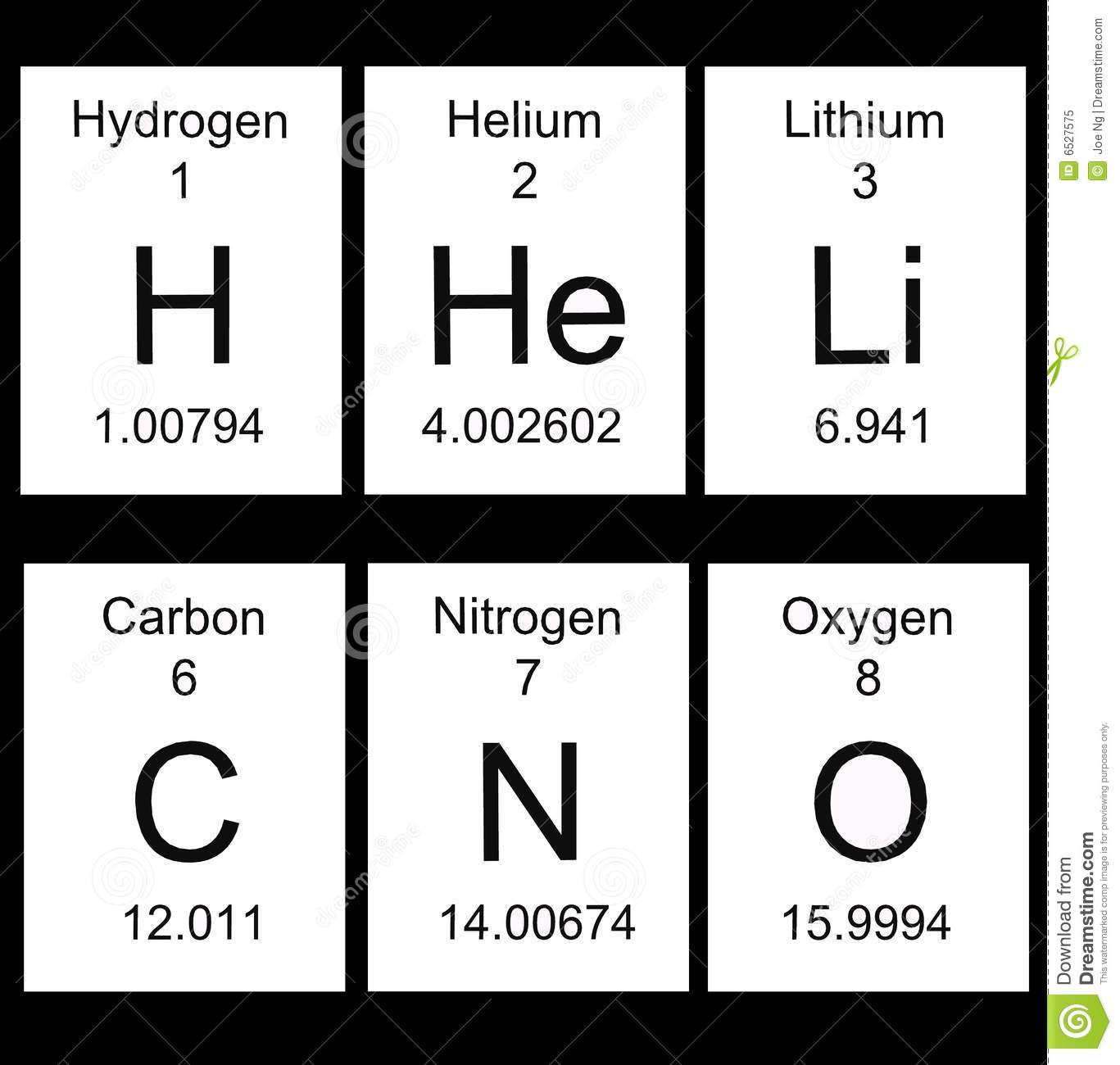
Isotopes of an element have a different number of...
Protons
Neutrons
Electrons
Mass


What element will have the most similar chemical properties to the element Sulfur (S)?
Carbon (C)
Phosphorous (P)
Oxygen (O)
Neon (Ne

What element will have the most similar chemical properties to the element Lithium (Li)?
Sodium (Na)
Magnesium (Mg)
Beryllium (Be)
Calcium (Ca)

Which subatomic particle has a negative charge?
nobles gases
protons
electrons
neutrons
Which subatomic particles are found in the nucleus?
protons and electrons
only neutrons
protons and neutrons
electrons and neutrons
The mass number of an atom is equal to what?
protons + neutrons
protons + electrons
protons
neutrons
The atomic number of an atom is equal to what?
Number of protons
Number of neutrons
Protons + neutrons
Mass number - protons
What is the definition of an element?
A substance made up of only one type of atom
A substance made up of atoms
A compound made up of atoms
A mixture of atoms
Metals are found in the Periodic Table...
on the left-hand side of the staircase
on the right-hand side of the staircase
throughout - they are not organised
at the top
Elements in the same group of the Periodic Table have what?
Similar chemical properties
Different chemical properties
The same atomic number
The same mass
Argon and Neon have similar chemical properties. Why?
They are in the same period
They have the same number of outer electrons
They sound similar
They have the same number of electrons
Atoms are overall neutral as...
neutrons = protons
neutrons = electrons
protons = electrons
electrons = nucleus
Which line is true for protons?
mass number = 0, charge = +1
mass number = 1, charge = 0
mass number = 0, charge = -1
mass number = 1, charge = +1
What is an isotope?
particles with the same atomic number but different mass number
particles with different atomic numbers and different mass numbers
particles with the same atomic number and same mass numbers
particles with different atomic numbers and the same mass number

How many protons are present in this atom?
92
235
143
RAM (in chemistry) stands for what?
Random Access Memory
Relative Atomic Mass
Relative Average Mass
Random Atomic Mass
The RAM of an atom depends on what?
The mass and abundancy of each isotope
Only the mass of each isotope
Only the abundancy of each isotope
The number of protons
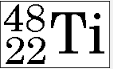
A lithium nucleus contains 3 protons and 4 neutrons.
What is its nuclide notation?


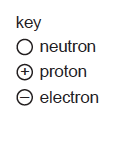
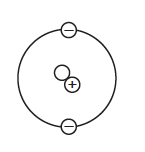
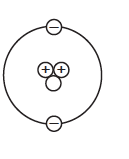
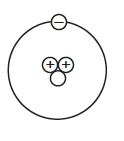
Which diagram could represent the structure of a neutral atom?
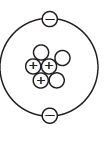

What varies between isotopes of an element?
protons, electrons, and atomic mass
protons, electrons, and atomic number
neutrons and electrons
neutrons and atomic mass
Isotopes of an element have a different number of...
Protons
Neutrons
Electrons
Mass
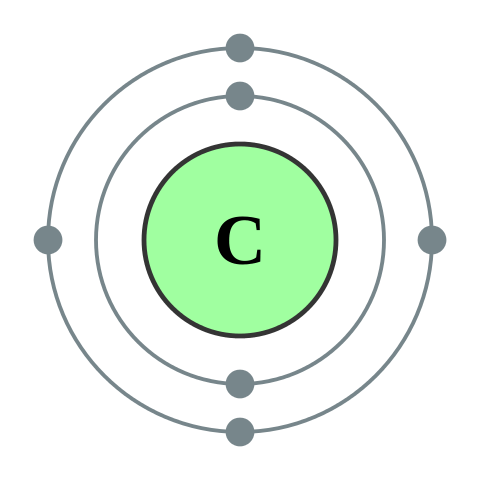
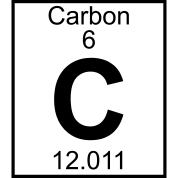
How many outer electrons does carbon have?
4
5
6
7
The alkali metals are which group in the Periodic Table?
Group 1
Group 2
Group 7
Group 8/0
The reactivity of the alkali metals...
decreases as you go down the group
doesn't change as you go down the group
increases as you go down the group
The reactivity of the halogens...
decreases as you go down the group
doesn't change as you go down the group
increases as you go down the group

