wayground logo

Free Printable Worksheets

Font size

S
M
L
XL
Worksheets

Life Science State Test Quizizz Review

Total questions: 40

Worksheet time: 27mins

Name
Class
Date
1.
What does DNA do?
a)
a.  It carries genetic codes from parents to offspring.
b)
a.  It carries oxygen from the lungs to the body.
c)
a.  It tells you who you are.
d)
a.  It defines the organism.
2.

How many chromosomes do human cells have?

a)

46

b)

23

c)

2

d)

44

3.
A process where one cell forms two identical daughter cells is called...
a)
cell cycle
b)
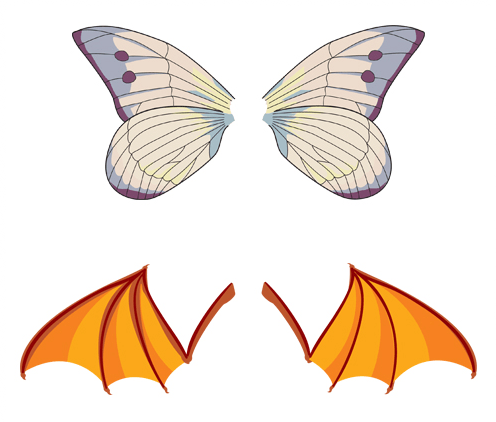
cell division (mitosis)
c)
interphase
d)
cytokinesis
4.
The following describes __________ during mitosis. The chromatin condenses and spindle fibers form at each side of the cell. The nuclear membrane breaks apart.
a)
prophase
b)
metaphase
c)
anaphase
d)
telophase
5.
The following describes ________  during mitosis. The chromosomes line up along the center of the cell and the spindle fibers attach to each chromosome at the centromere.
a)
prophase
b)
metaphase
c)
anaphase
d)
telophase
6.
How many daughter cells are produced in mitosis?
a)
1
b)
2
c)
4
d)
6
7.
Humans have 46 chromosomes, which means we have _______ of chromosomes.
a)
46 pairs 
b)
23 pairs
c)
20 pairs
d)
56 pairs
8.
Which process and type of resulting cells are represented?
a)
mitosis, gametes
b)
mitosis, body cells
c)
meiosis, gametes
d)
meiosis, body cells
9.
A male shark has 40 chromosomes in each of its sex cells. How many would be present in its body cells?
a)
20
b)
40
c)
80
d)
160
10.
What causes genetic variation in meiosis?
a)
chromosomes lining up
b)
crossing over of chromosomes
c)
separation of chromosomes
d)
chromosomes pulling apart
11.
What is one of the advantages, why is it better to reproduce sexually versus asexually?
a)
survival of the fittest
b)
overproduction
c)
genetic variation
d)
cloning
12.

Identify a purpose of meiosis. Select all that apply.

a)

Produce gametes for reproduction.

b)

Repair damaged or dead cells.

c)

Reduce the chromosome number.

d)

Growth of organisms from birth to adulthood.

13.

What are homologous chromosomes?

a)

Pairs of chromosomes with different genes on each.

b)

Pairs of chromosomes with the same genes on each.

c)

Pairs of chromosomes with no genes.

d)

Pairs of chromosomes with the wrong genes on each.

14.
trait shows only if both parents pass it on
a)
recessive
b)
dominant
c)
codominan
15.
when you have two different genes
a)
heterozygous
b)
dominant
c)
homozygous
16.

T - tall and t = short

In the Punnett square, what belongs in the missing square?

a)

tt

b)

Tt

c)

TT

17.
Bob is a tall, slender young man with red hair and blue eyes. Which couple would most likely be Bob’s parents?
a)
a slender, red-haired father and a tall, blue-eyed mother
b)
a tall green-eyed father with long brown hair and a short, brown-haired mother
c)
a short, green-eyed, black-haired father and a tall, brown haired, brown-eyed mother
d)
a short, plump brown-haired father with freckles and a short, blue-eyed red-haired mother
18.
Aa is
a)
homozygous (purebred)
b)
heterozygous (hybrid)
19.
What allele combination should go in the missing box?
a)
AA
b)
Aa
c)
aa
d)
none of these
20.
How are similarities passed from parent to offspring?
a)
through teaching
b)
through learning
c)
through blood
d)
through genes
21.
Which statement about DNA is true?
a)
Different people can have the same copy of DNA in their cells.
b)
DNA is made up of genes that carry hereditary information.
c)
DNA controls the genotype but not the phenotype of an organism.
d)
DNA controls the genotype only in the second and third generations.
Question
22.
Why are your chromosomes arranged in pairs?
a)
Scientists have no idea
b)
Because you get one from your mom and one from your dad
c)
Because pairs can divide easier
d)
Because DNA is awesome
23.
Are all mutations bad?
a)
Yes
b)
No
24.
Evolution typically happens...
a)
in a few weeks
b)
over millions of years
c)
never
d)
in 100 years
25.
Which of the following is NOT considered evidence of evolution?
a)
similar DNA
b)
similar development
c)
similar behavior
d)
vestigial structures
26.
What can happen to a species over time if some of the organisms have an advantage?
a)
The population will decrease
b)
The population will become extinct
c)
The population will slowly increase
27.
In recent years "SuperBugs" (bacteria that aren't effected by antibiotics) are becoming more and more common. How could natural selection explain this?
a)
Superbugs survive antibiotics and reproduce
b)
Antibiotics cause bacteria to become superbugs
c)
We have always had the same amount of superbugs; modern media just discusses them more.
d)
There is no reliable data on the origin of super bugs.
28.
Which of these is an example of natural selection?
a)
The largest animal in a population will have more opportunities for reproduction.
b)
Several species of organisms work together so that they all succeed.
c)
One species takes all the resources in an environment leaving none for others.
d)
Organism that are best suited to an environment tend to survive and reproduce more often.
29.
Which of the following explains adaptation.
a)
An individual organism changes to meet its needs in the environment. These changes pass down to their offspring.
b)
The species as a whole changes their characteristics.
c)
Beneficial traits allow organism to survive and pass on those traits
d)
New characteristics arise in a species as needed.  If these traits are helpful, they are passed down.
30.

Labradoodles and cockapoos are different varieties of domestic dogs that can be purchased from dog breeders.

a)

directional selection

b)

stabilizing selection

c)

disruptive selection

d)

artificial selection

e)

sexual selection

31.
What is the correct explanation for what is happening in this graph?
a)
There are a lot of average-sized beaks
b)
There are no beaks
c)
There are a lot of small beaks only
d)
There are a lot of small and large beaks, but not average-sized ones
32.
The term for the formation of new and distinct species over the course of evolution is...
a)
speciation
b)
biological species concept
c)
reproductive barrier
d)
natural selection
33.

Which of the following can cause mass extinctions? Choose 3

a)

Volcanoes and earthquakes

b)

climate change

c)

sea levels rising

d)

asteroids

34.

Which of these describes a likely reason why a species would become extinct after a major environmental change?

a)

The environmental change means fewer predators are around.

b)

There are more homes for the species in the changed environment.

c)

The change in the environment opens new resources with less competition.

d)

There are not enough members of the species born with a trait necessary to survive in the new environment.

35.

Which of these could cause a mass extinction?

a)

a year-long drought

b)

a week long blizzard

c)

eutrophication of a pond (so many nutrients enter the pond that the plant growth takes over)

d)

a major change in global climate

36.

House sparrows were introduced to the cold climates of North America in 1852. Since that time, the bodies of sparrows in the north became larger than those of southern sparrows. What is the most likely cause of the change in northern sparrow body size?

a)

If cold weather increases the rate of mutations in the genome, sparrows can mutate into longer organisms.

b)

If larger sparrows cannot breed with smaller sparrows, they become isolated and form a new species.

c)

If smaller sparrows cannot survive as well in cold weather, only sparrows with genes for large bodies will survive.

d)

If sparrows shiver in the cold and gain muscle mass from the shivering, their body size will increase.

37.

The picture shows a/an ___________

a)

homologous structure

b)

vestigial structure

38.
The opossum and kangaroo both incubate their young in a pouch. This provides evidence that they---
a)
are descended from a common ancestor
b)
Have very similar skeletal structures
c)
belong to the same species
d)
must range great distances to eat
39.

What is this an example of?

a)

Homologous structure

b)

Analogous structure

c)

Vestigial organs

d)

Functional adaption

40.
How do fossils provide evidence that evolution has happened on Earth?
a)
Fossils show how the sizes of certain animals has changed drastically over millions of years
b)
Fossils show that some species have gone extinct
c)
Fossils show how life forms present today are different than those from the past
d)
Different sedimentary rock layers provide evidence for how the environment has changed over time