
 Worksheets
Gas exchange and smoking 9700
Total questions: 60
Worksheet time: 44mins
When you breathe, your lungs take in ___ and remove ___.
air/oxygen
oxygen/carbon dioxide
carbon dioxide/waste
waste/air
The air sacs that are covered with capillaries where gas exchange takes place
bronchi
lungs
oxygen
alveoli
What is the site of gas exchange?
alveoli
bronchus
nose
trachea
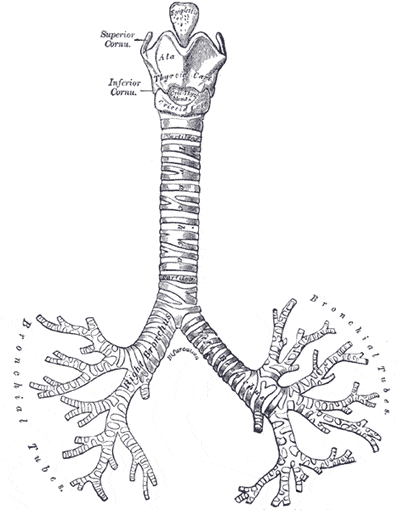
The division of the trachea forms
bronchi
alveoli
lungs
nose
What is the name of two main branches from the trachea (one to each lung)?
bronchi
alveoli
capillaries
bronchioles
Given the following structures:
1. alveoli
2. bronchi
3. bronchioles
Which of the following is the correct order in which air would flow after inhalation?
1,2,3
2,1,3
2,3,1
3,2,1
What adaptations does the alveoli have for efficient gas exchange?
thick walls
thin walls
small surface area
what is found around alveoli?
capillaries
pleura
lymphatic nodes
saliva
What is sign for brain to send impulse for breathing?
high CO2 level
low CO2 level
high O2 level
high blood concentration
Diaphragm is
part of lungs
muscle that helps in breathing
throat muscle
structure in bones
Which of the following is not happening during inhalation?
the diaphragm contracts
the rib cage rises up
expands the volume of the chest cavity
diaphragm is relaxing
During gas exchange what enters from alveoli to the capillaries?
CO2
CO
O2
nitrogen

The air sacs that are covered with capillaries where gas exchange takes place.
Bronchi
Trachea
Oxygen
Alveoli

What is the main function of the respiratory system?
to provide oxygen and remove carbon dioxide from the body
to bring oxygen to the body
to break down food and absorb nutrients
to remove oxygen from the body and deliver carbon dioxide
I. High surface area
II. Thin walls
III. Dry surfaces
1. larynx
2. nasal cavity
3. pharynx
4. trachea
Which of the following is the correct order that air would flow during inhalation.
What are the effects of emphysema on the alveoli?
The alveoli increase in surface area
The alveoli are not affected
The alveoli are progressively destroyed
The alveoli become narrow

Spot 8 is labeling the...
trachea
nasal cavity
bronchi
larynx

State which of these is the waste gas that is expelled from the body during exhalation.
Sulfur Dioxide
Oxygen
Carbon Monoxide
Carbon Dioxide

Recall two important features of the alveolar wall for gas exchange to occur. Select All correct options.
It is thick
It is thin
It is moist
It is dry

Recall what structure in fish is adapted for gas exchange.
Gills
Fins
Scales
Lungs

The diagram below which shows the inner lining of a certain part of the human body. This inner lining can be found in
the trachea.
the air sacs.
the capillaries.
the small intestine.
Which of the following shows the correct sequence of air passage into the lungs?
trachea → larynx → air sacs → bronchi
larynx → trachea → bronchi → air sacs
air sacs → larynx → trachea → bronchi
larynx → bronchi → trachea → air sacs
The lining of the nasal cavity is covered with a thin film of mucus. What is the importance of the mucus?
It warms up the inhaled air.
It helps remove dust from the incoming air.
It lubricates the passage of air into the respiratory trac.
It helps dissolve oxygen in the inhaled air for gas exchange.
Which of the following structures is supported by cartilage?
aorta
oesophagus
bronchus
vena cava

The diagram shows the structure of the human gas exchange system. Name organ P.
alveolus
trachea
bronchus
diaphragm


A colorless, odorless and poisonous gas found in tobacco smoke is what?
carbon monoxide
tar
nicotine
stimulant
Short-term effects of smoking.
Mouth Cancer
emphysema
increased heart rate, hand tremors, bad breath
Lung Cancer
Nicotine can lead to heart attacks because:
It contributes to plaque build up in the arteries
It damages the lining of the arteries
It narrows the blood vessels causing high blood pressure
All of the above


The exchange of oxygen and carbon dioxide in the alveoli is through a process called
active transport
conduction
convection
diffusion
COPD includes
emphysema
chronic bronchitis
acute bronchitis
lung cancer
Many chemicals in cigarettes are considered carcinogenic because they cause what?
Emphysema
Cancer
Heart disease
Liver Failure
What is tar?
A plant used to make cigarettes
A toxic metal found in rechargeable batteries
A chemical released by the body in exciting situations
A sticky substance formed by cigarette smoke
Smoking interferes with the lungs' ability to provide what to the rest of the body?
Oxygen
Ammonia
Water
Carbon dioxide
What is the relationship between nicotine and adrenaline?
Nicotine removes adrenaline
Nicotine is a substitute for adrenaline
Nicotine triggers the release of adrenaline
Nicotine reduces the effect of adrenaline
Cigarettes have many harmful chemicals that include: butane (lighter fluid), arsenic (rat poison), and formaldehyde (preserves organs).
True
False
Why is mucus produced in the lungs?
To help you cough
To trap microbes to reduce the chance of infection
To help the air move in and out
What is emphysema?
When there is too much mucus in the lungs
When the alveolar walls have broken down, reducing surface area
A type of lung cancer
Damage to the cilia
Suggest the effect of long term smoking on the amount of oxygen transported in someone's blood?
Decreased
Increased

What condition is represented by the image on the right?
Lung cancer
Bronchitis
Emphysema
Smoking increases your risk of heart diseases because it causes
obesity
diabetes
blood vessel damage
increases HDL
"yellow, fatty deposits in an artery"
stent
arterioma
plaque
ischemia
If a blood clot prevents blood from reaching the brain, we call this a _______
stroke
heart attack
tumor
hernia
If a blood clot prevents blood from reaching the heart, we call this a ________
stroke
pulse
heart attack
hypertension
Heart Attack, Stroke & Atherosclerosis are examples of?
Respiratory Diseases
Cardiovascular Diseases (CVD)
Cholesterol
Hypertension
The chemical that causes addiction is __________________.
arsenic
carbon monoxide
tar
nicotine
Why do cigarette packages include tobacco warnings?
to inform people of the negative effects of smoking
to promote smoking
Lung cancer is due to.................
chemicals in smoking damage DNA of healthy cells
chemicals in smoking block the blood vessels
chemicals in smoking goes into alveoli
chemicals in DNA likes smoking

