
 Worksheets
Unit 8 Test Review
Total questions: 33
Worksheet time: 22mins

What type of energy transformation occurs, when a hawk eats a mouse and then uses the energy from the mouse to fly?
mechanical energy to chemical energy
thermal energy to mechanical energy
chemical energy to mechanical energy
mechanical energy to thermal energy

The roller coaster cart has the most kinetic energy at position-
W
X
Y
Z
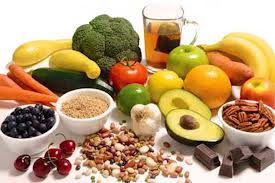
What kind of energy is represented in the picture?
Thermal
Chemical
Sound
Kinetic

What energy transformation occurs when a crock pot is plugged into an outlet and then the control knob is turned "on"?
thermal to electrical
mechanical to thermal
electrical to thermal
electrical to sound

What type of energy is stored in batteries or food?
Potential energy
Thermal energy
Chemical energy
Mechanical energy
Which object shows an energy transformation from electrical to mechanical?


What is Conduction?
When heat is passed from particle to particle through an object.
When particles get heated, expand, and become less dense.
When heat transfers by waves through empty space.
What is Convection?
When heat is passed from particle to particle through an object.
When particles get heated, expand, and become less dense.
When heat transfers by waves through empty space.

How do molecules react when heat energy is added to them?
They feel warmer but stay in place
They feel warmer and move slower.
They feel warmer and move faster
Molecules do not react with heat energy only solar energy
What is Radiation?
When heat is passed from particle to particle through an object.
When particles get heated, expand, and become less dense.
When heat transfers by waves through empty space.
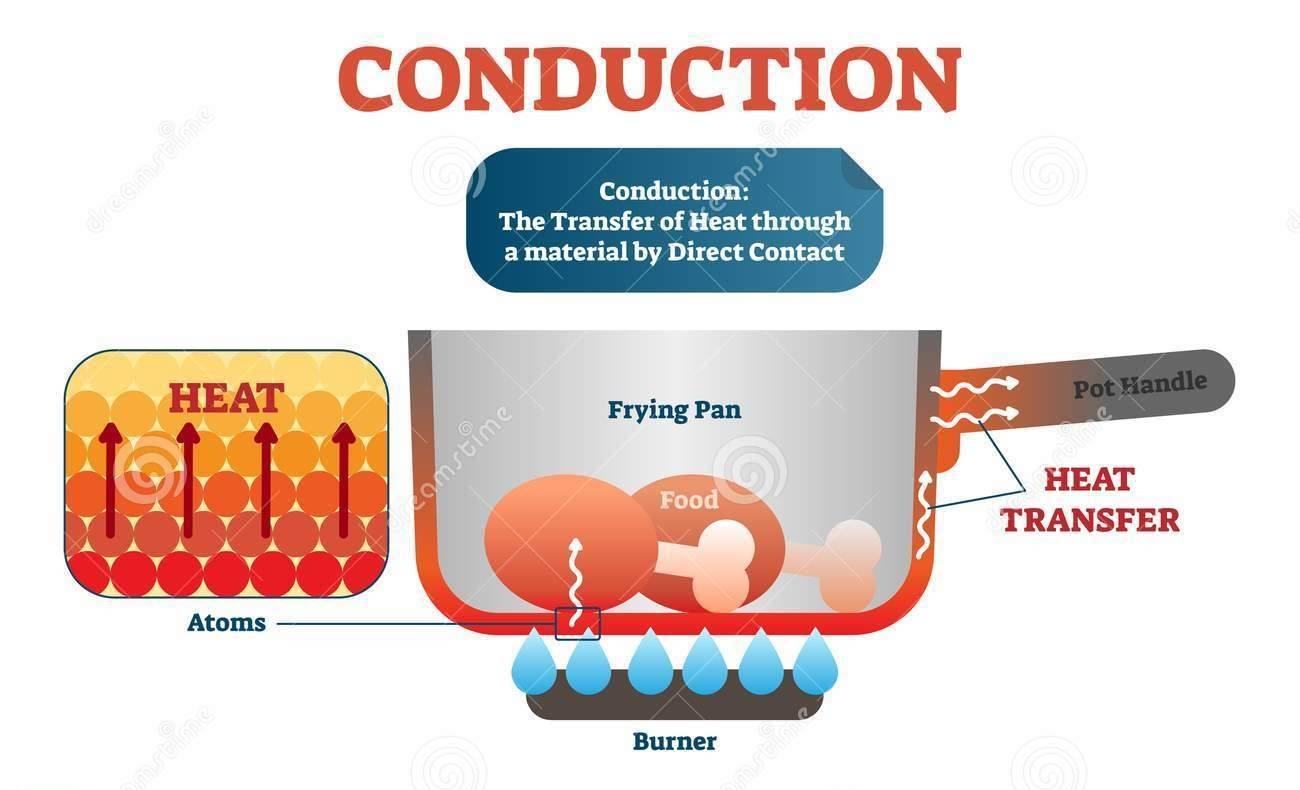
Which of the following is an example of heat transfer by Conduction?
Burning your fingers on a hot iron.
Heat from a heater warming up your whole house
Standing by a campfire and feeling the heat.
All of the above.
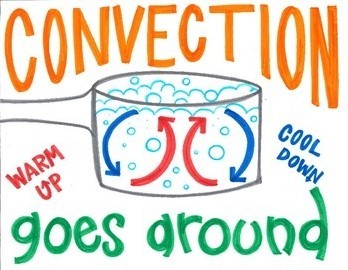
Which of the following is an example of heat transfer by Convection?
Burning your fingers on a hot iron.
Heat from a heater warming up your whole house
Standing by a campfire and feeling the heat.
All of the above.
How does heat move?
From cooler objects to warmer objects.
From warmer objects to cooler objects
From metal objects to nonmetal objects
Very quickly in all directions


Which of the following is the correct chain of energy that takes place when a flashlight is turned on?
chemical => electrical => light
mechanical => electrical => light
nuclear => chemical => light
thermal => chemical => mechanical
When cold milk is added to hot tea, the liquids slowly blend together as the cooler liquid disperses through the warmer liquid. Eventually, the heat will be dispersed evenly through the entire liquid.Which of the following best explains the reason the heat spreads through the liquid?
Cold liquids rise, and hot liquids sink, creating a mixture of liquids.
Heat always moves from areas of higher temperature to areas of lower temperature.
The densities of liquids are similar, so they attract each other.
The molecules of the two liquids create chemical bonds that help spread energy.
Students are investigating temperature changes on substances in their gaseous state. Which of the following is most likely to happen to the gas when the students decrease the temperature?
molecular motion of the atoms will decrease, causing it to lose molecular mass
molecular motion of the atoms will decrease, causing it to change to a liquid state
molecular motion of the atoms will increase, causing it to change to a solid state
molecular motion of the atoms will increase, causing it to change from the gas state
Tamika is learning about conduction and convection in science class. Which of the following best describes a situation that would result in convection?
turning on the air conditioner in a hot room
turning on an electrical current
leaving a glass of ice in the sun
putting a metal spoon in a mug of hot water

The same molecular substance in three different states at the same pressure is shown in the diagram above. Based on molecular motion, the temperature of the substance at state Y is __________.
higher than the temperature as state X
lower than the temperature at state Z, (Incorrect answer)lower than the temperature at state Z
higher than the temperature at state Z
the same as the temperature at state X
The same molecular substance in three different states at the same pressure is shown in the diagram above. Which of the following has MOST likely happened when the substance changes from state Z to state Y?
the melting point increased, (Incorrect answer)the melting point increased
the temperature increased
the temperature decreased
boiling point increased
A television is a device that converts electrical energy into light and sound energy. Not all the energy that enters a television is converted into light and sound, however. What happens to the energy that enters a television but is not converted into light or sound?
It is lost as heat (thermal energy)
returns to electrical socket
stored in wires in television
destroyed in conversion process
A group of sheep are grazeing in a field. As they eat, the sheep break down the molecules in the grass, which releases energy. Which form of energy is stored in the grass?
chemical energy
radiant energy
thermal energy
mechanical energy
One object is 600 degrees C and object 2is 15 degrees C. What is the flow of thermal energy
No heat flow occurs
heat flows from object 1 to object 2
heat flows from object 2 to object 1
They both have the same heat

The girl shown below is using an electrical appliance that has a motor.
Which energy transformation is she using?
electrical energy into heat energy and energy of motion
electrical energy into sound energy and chemical energy
sound energy into electrical energy and energy of motion
energy of motion into electrical energy and sound energy

When you drop a basketball it does not bounce back all the way. This is because some of the mechanical energy is 'lost' when it transforms into which of the following ?
Sound
Chemical
Radiant
Hamster
Select all of the following that are true.
Energy can be transferred and transformed.
There are three types of energy.
Energy just disappears sometimes.
Electrical energy can be transformed into mechanical energy.

