wayground logo

Free Printable Worksheets

NEW

Font size

S
M
L
XL
Worksheets

The Journey Within

Total questions: 57

Worksheet time: 36mins
Name
Class
Date
1.

What is the main organ of the circulatory system?

a)

small intestine

b)

bone

c)

lungs

d)

heart

2.

How does the heart work?

a)

It pumps blood first to the lungs, back to the heart and then around the rest of the body.

b)

It pumps blood first to the rest of the body, back to the lungs and then to the heart.

c)

It pumps blood around the rest of the body, back to the heart and then to the lungs,

3.

The circulatory system works with the ___________ system to provide our body with oxygen.

a)

respiratory

b)

digestive

c)

muscular

d)

skeletal

4.
Which is responsible for providing oxygen to cells?
a)
respiratory system
b)
circulatory system
c)
muscular system
d)
nervous system
5.

As the blood reaches the lungs, what is removed from the blood?

a)

oxygen

b)

carbon dioxide

c)

red blood cells

d)

white blood cells

6.
The main function of the circulatory system is 
a)
To give the body structure and support
b)
Excrete waste
c)
transport blood, nutrients, and gases throughout the body
d)
to transport messages from the body to the brain
7.

Small blood vessels that diffuse oxygen, carbon dioxide, and nutrients.

a)

heart

b)

arteries

c)

veins

d)

capillaries

8.
The heart has ___ chambers.
a)
1
b)
2
c)
3
d)
4
9.
Carbon dioxide is considered a _________________
a)
food
b)
waste
c)
energy
d)
fun party favor
10.
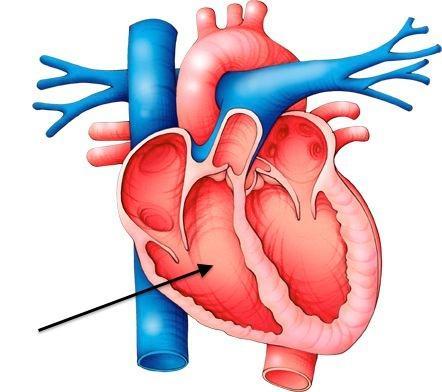
Identify
a)
Left atrium
b)
Right atrium
c)
Left ventricle
d)
Right ventricle
11.

This chamber of the heart RECEIVES oxygen rich blood back from the lungs

a)

Right Atrium

b)

Left Atrium

c)

Right Ventricle

d)

Left Ventricle

12.

What is the function (job) of the platelets?

a)

To form clots (i.e. scabs) when you have cuts and grazes.

b)

To transport oxygen to the muscles

c)

To carry dissolved sugars.

d)

To produce antibodies

13.

Which blood vessel has valves to prevent the back-flow of blood?

a)

Veins

b)

Arteries

c)

Capillaries

14.
Separates the chambers of the heart.
a)
mitral valve
b)
septum
c)
aortic valve
15.
When you breathe, your lungs take in ___ and remove ___. 
a)
air/oxygen
b)
oxygen/carbon dioxide 
c)
carbon dioxide/waste 
d)
waste/air 
16.
What is the main organ in the respiratory system?
a)
Kidney
b)
Heart
c)
Lungs
d)
Diaphragm
17.
Why does your body need to breathe out carbon dioxide?
a)
Without it, the lungs would not function.
b)
It can be harmful if it builds up in the bloodstream.
c)
You need it for your body to survive.
d)
It is delivered to the heart.
18.
When you exercise, your heart beats faster to...
a)
spread oxygen throughout your body more quickly.
b)
make you feel excited.
c)
let you know you're working hard.
19.
Oxygen from the air enters the blood stream at what location?
a)
Cardiac Notch
b)
Pulmonary Vein
c)
Alveoli
d)
Paranasal Sinuses
20.
Which of the following does NOT make up part of the lungs?
a)
Alveoli
b)
Bronchioles
c)
Trachea
d)
Bronchi
21.
As you breathe this contracts and flattens to give your lungs room to fill up with air.
a)
larynx
b)
lung balloon
c)
diaphragm
d)
heart
22.

Alveoli have very thick walls to maximise the distance that gases have to move.

a)

True

b)

False

23.
The air sacs that are covered with capillaries where gas exchange takes place
a)
bronchi
b)
lungs
c)
oxygen
d)
alveoli
24.

Cellular Respiration is

a)

when cells inhale oxygen and exhale CO2

b)

when cells use oxygen and nutrients to make all the energy your body needs (CO2 and wastes are created).

c)

when cells use CO2 and nutrients to make all the energy your body needs (Oxygen and wastes are created).

d)

breathing

25.

When the gasses are exchanged between the alveoli in the lungs and the capillaries, oxygen enters the blood stream. What happens with this oxygen?

a)

Oxygen in the blood is delivered to the lungs to be exhaled.

b)

Oxygen in the blood is delivered to the nose to be exhaled.

c)

Oxygen in the blood is delivered to the tissues and cells of the body to help make energy.

d)

Oxygen in the blood is a waste that needs to be removed from the boyd.

26.

Tiny hairlike structures that line your nose and most other airways of the respiratory system.

a)

larynx

b)

alveoli

c)

cilia

d)

diaphragm

27.

This condition occurs when the airway is narrowed due to inflammation of the bronchi. Which condition is this?

a)

alveoli

b)

asthma

c)

lung cancer

d)

emphysema

28.
In which digestive organs does both mechanical AND chemical digestions occur?
a)
mouth & stomach
b)
mouth & esophagus
c)
small intestines & large intestines
d)
rectum & anus
29.
The digestive system works with which system to distribute nutrients to the cells of your body?
a)
skeletal
b)
circulatory
c)
respiratory
d)
digestive
30.
Which part of the mouth provides mechanical digestion?
a)
teeth
b)
saliva
c)
smooth muscles
d)
gastric juices (HCl acid)
31.
Which part of the mouth provides chemical digestion?
a)
teeth
b)
saliva
c)
smooth muscles
d)
gastric juices (HCl acid)
32.
Nutrients from digested food are absorbed in which digestive organ?
a)
Small Intestine
b)
Stomach
c)
Large Intestine
d)
Gallbladder
33.
As waste moves through the digestive system, the ______ absorbs water before storing waste in the rectum.
a)
Small intestine
b)
Stomach
c)
Esophagus
d)
Large intestine
34.

What is the correct order of the following processes:

a)

Absorption, digestion, elimination, ingestion

b)

Digestion, absorption, ingestion, elimination

c)

Ingestion, digestion, absorption, ellimination

d)

Elimination, absorption, digestion, ingestion

35.

Name three accessory organs of the digestive system:

a)

liver, appendix, gallbladder

b)

gallbladder, liver, stomach

c)

gallbladder, liver, pancreas

d)

liver, pancreas, appendix

36.

An accessory organ

a)

Plays a role in digestion but food does not pass through it

b)

An organ that makes the digestive system look good

c)

Plays a role in digestion but food does pass through it

d)

Has no function in digestion

37.

The function of the gallbladder

a)

Absorbs vitamin K

b)

Produce bile

c)

Digest protein

d)

Stores bile

38.

Villi and microvilli

a)

decrease surface area for absorption

b)

decrease the rate of reaction in digestion

c)

increase the surface area for absorption

d)

help with digestion

39.

the function of the epiglottis is to..

a)

close the esophagus and force food down the windpipe

b)

close the windpipe and force the bolus down the esophagus

c)

no function, vestigial organ

40.

The function of the first part of the small intestine (duodenum) is to

a)

Produce enzymes for digestion

b)

Finish absorbing nutrients

c)

Finish digestion

d)

Re-absorb water

41.

wave-like contractions in the esophagus are called...

a)

pancreas

b)

peristalsis

c)

esophagus

d)

waves

42.
Bile is made by which digestive organ?
a)
Gallbladder
b)
Stomach
c)
Rectum
d)
Liver
43.
The opening at the end of the digestive system where solid waste comes out is the...
a)
rectum
b)
anus
c)
mouth
d)
large intestine
44.
What organ is C pointing to?
a)
Ureters
b)
Bladder
c)
Kidney
d)
Urethra
45.
What organ is D pointing to?
a)
Ureters
b)
Bladder
c)
Urethra
d)
Kidney
46.
A short tube where urine is released from the body is the _______.
a)
Ureter
b)
Kidney
c)
Bladder
d)
Urethra
47.
The ____ is a sac-like muscular organ that stores urine until it is ready to be released from the body
a)
Stomach
b)
Bladder
c)
Urethra
d)
Gallbladder
48.
The excretory system rids the body of ______ waste.
a)
solid
b)
liquid
49.
Urea is best described as
a)
a tube you pee out of
b)
waste
c)
an organ
50.
Long tubes that connect the kidneys to the bladder.
a)
Urethra
b)
Bladder
c)
Ureters
d)
Small intestine
51.
What is the main function of the excretory system?
a)
to collect and remove wastes from the body
b)
to strengthen skeletal muscles
c)
to protect the nervous system
d)
to bring oxygen to body cells
52.
What function do the kidneys perform?
a)
eliminate carbon dioxide
b)
supply oxygen to body cells
c)
remove urea and excess water
d)
play a role in gas exchange
53.
What term do scientists use to describe the chemical process in which oxygen and glucose react to release energy inside body cells?
a)
respiration
b)
exhaling
c)
breathing
d)
inhaling
54.
How many kidneys do you have?
a)
1
b)
3
c)
5
d)
2
55.

Which sample belongs to a healthy person?

a)

Sample A

b)

Sample B

c)

Both A and B

d)

None of the above

56.

What does the color of sample A mean?

a)

The person drinks enough water

b)

The person does not sleep well

c)

The person has circulatory problems

d)

The person does not drink enough water

57.
Which sequence represents the correct pathway for the removal of urine from the human body?
a)
kidney → ureter → urinary bladder → urethra
b)
kidney → urethra → urinary bladder → ureter
c)
ureter → kidney → urinary bladder → urethra
d)
urethra → kidney → urinary bladder → ureter