
 Worksheets
BIOGEOGRAPHY QUIZ
Total questions: 60
Worksheet time: 46mins

Identify the cycle pictured
The Nitrogen Cycle
The Water Cycle
The Carbon Cycle
The Phosphorous Cycle
How does carbon dioxide leave the atmosphere and become part of the food chain?
through transpiration
through photosynthesis
through factory emission
sunlight
What role do decomposers play in the carbon cycle?
absorb carbon dioxide
release carbon dioxide into atmosphere
return carbon into the soil
combustion
How does nitrogen become part of the food chain?
through transpiration by plants
through uptake of nitrogen compounds in the soil by plants
through factory emission and combustion of fossil fuels
sunlight changes nitrogen into usable forms

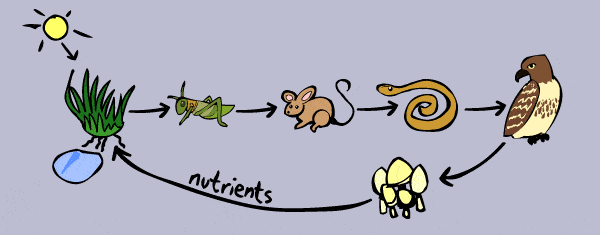
identify the cycle pictured
the water cycle
the carbon cycle
the nitrogen cycle
the phosphorous cycle
Nitrogen in the atmosphere is not available. Free nitrogen has to be changed into a usable form in a process called ____
nitrogen fixation
transpiration
photosynthesis
cellular respiration


Antara yang berikut, yang manakah ialah herbivor?
omnivore
eats meat only
eats plants only
eats both meat and plants
Decomposer
a living thing that eats other living things
make their own food
break down dead material or wastes


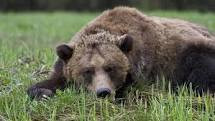
What do we call massive pieces of slow moving ice?
Ice Shelf
Ice Floe
Glaciers
None of the Above
Which of the following is found in the earths Geosphere
Soil
Rocks
Minerals
All of the Above
Which of the following is an adaptation of coniferous trees in the taiga?
They have a shallow root system, due to
the acidic soil.
They have leaves that retain water, due
to their shape and waxy coating.
They have a unique overall shape in
order to accumulate snow, which acts as a heavy insulating layer
All of the above
Adaptations demonstrated by plants in tropical rain forests include
trees with above-ground roots called
buttresses, which increase stability.
orchids and vines that use tall tree
trunks for support.
herbs with large flat leaves located in
the under-story.
All of the above
As you travel from the North Pole toward the equator, you would expect to see
tropical rain forests, then deserts, then taiga.
temperate deciduous forests, then taiga, then tropical rain
forests.
tundra, then grasslands, then tropical rain forests.
taiga, then desert, then tundra.
Which of the following would you expect to see in the emergent layer of a tropical rain forest?
grasses, insects, and small succulents
eagles, bats, and snakes
lichens, mosses, and dwarf woody plants
epiphytes, small burrowing mammals, and burrowing toads
Tropical rain forests are threatened by
deforestation and the trade of rain forest plants and animals.
a decrease in the average temperature at the equator
a decrease in rainfall at the equator.
a thinning of the soil.
The deforestation of the rain forests may cause climate changes which, in turn, may affect
acid precipitation
smog
flooding
habitat destruction
Deserts are
covered with sand and contain no plant life.
found only in North America.
known to have extreme changes in temperature.
not threatened by environmental changes.
Taiga is
a cold, treeless, desert-like biome found near the North and South Poles.
found mostly in Africa.
a forest biome dominated by coniferous trees, such as pine, fir, and spruce.
a dry, rocky biome found in the central part of South America.
A(n) __________________ biome receives 200cm to 450cm of rain per year.
tropical seasonal forest
tropical rain forest
temperate deciduous forest
temperate grassland
The biome that has trees that lose their leaves during fall is called ________________.
temperate deciduous forest
temperate rain forest
tropical seasonal forest
coniferous forest
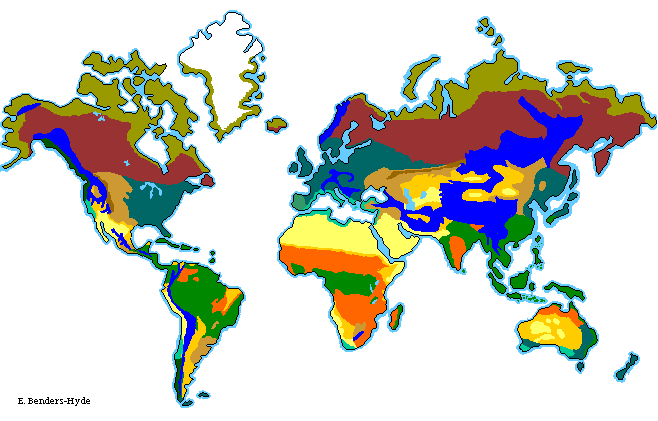
A large ecosystem with similar climate is called a ______
Ecosystem
Habitat
Biome
Niche

These changes will most likely lead to a:

What process is illustrated by the diagram in boxes 4-8 after the forest fire?
Which of the following is not a factor of soil formation?
time
soil texture
Organic matter
All of these


Which particle is the largest?
Gravel
Sand
Silt
Clay
Which type of soil is best for planting?
Loam
Clay
Sand
Gravel
In which of the following soil layers is humus mostly found?
A horizon
B horizon
C horizon
D horizon
Leaves release acids into the soil as they decay. How could decaying leaves affect rock in the soil beneath them?
They could expose the rock to wind and water.
They could decrease the amount of weathering that occurs within the soil.
They could increase the amount of chemical weathering of rock and soil formation.
They could decrease the amount of chemical weathering and slow down the rate of soil formation.
It can take a long time for soil to form. Which are the primary factors that affect soil formation?
rainfall, temperature, wind, time, and plants
time, climate, topography, plants, and animals
parent rock, sunshine, plants, animals, and bacteria
climate, parent rock, topography, living things, and time

Medium soil particle, smooth and powdery, making water and air difficult to pass through when packed down.
sand
silt
loam
clay

a mixture of sand, silt, and clay. It is the best type of soil for growing plants. Holds moisture and nutrients while allowing water to pass through.
sand
silt
loam
clay

The layer of soil that differs in color and texture from the layers above or below it.
soil profile
soil horizons
This process takes place in Horizon B where there is a deposition of minerals and materials
Illuviation
Eluviation
Weathering
Dislocation
Chelating agents attack clays in order to release iron and aluminium in order to help organic matter to be decomposed in the form of humus with the aid of bacteria and fungi. This is thanks to the process of:
Humification
Eluviation
Gleying
Podzolization

