wayground logo

Free Printable Worksheets

Font size

S
M
L
XL
Worksheets

grade 8 2nd term revision

Total questions: 145

Worksheet time: 2hrs 45mins

Name
Class
Date
1.

Sound travels fastest in...

a)

solids

b)

liquids

c)

gases

d)

air

2.

Sound waves travel the slowest through _____________.

a)

gases

b)

solids

c)

liquids

3.
Sound does not travel in space because
a)
Space is too far away.
b)
There is no matter in space.
c)
Space is the final frontier
d)
Space has planets.
4.
Sound is caused by....
a)
molecules
b)
vibrations
c)
people
d)
space
5.
How does sound travel?
a)
Sounds travels in waves
b)
sound travels slow
c)
sound travels fast
d)
sound doesn't travel
6.
Sound moves in a _________.
a)
Transverse wave
b)
Longitudinal wave
7.
Area of a longitudinal wave where particles are CLOSE together.
a)
Compression
b)
Rarefaction
8.
Area of a longitudinal wave where particles are APART. 
a)
Compression
b)
Rarefaction
9.
Which device measures sound waves?
a)
Oscilloscope
b)
Stethoscope 
c)
Radio
d)
I don't know
10.
___________ measures  how close or  far particles are.
a)
Amplitude
b)
Frequency 
11.
________ describes how LOUD a sound is. 
a)
Amplitude
b)
Frequency 
12.
____________ is determined by sound wave's frequency. 
a)
Compression
b)
Pitch 
13.
_______ is the number of waves that pass a certain point at an specific time. 
a)
Frequency 
b)
Pitch
c)
Amplitude
d)
I don't know
14.
_______ is how high or low we listen/perceive  a sound. 
a)
Pitch
b)
Frequency
c)
Amplitude
d)
I don't know
15.
If you had to make some headphones to isolate sound, which material would you use?
a)
Soft, because they absorb sound. 
b)
Hard, because they reflect sound. 
16.
Sound travels FASTEST through which of these materials?
a)
Air
b)
Empty space
c)
Metal
d)
Water
17.
Sound is a form of? 
a)
energy
b)
pitch
c)
volume
18.
Measure of how high or low a sound is
a)
amplitude
b)
compression
c)
speed of sound
d)
pitch
19.
A longer string makes a _______ pitch than a short string.
a)
louder
b)
softer
c)
higher
d)
lower
20.
The highest pitch is made by the _______ instrument.
a)
biggest
b)
wooden
c)
smallest
d)
shiniest
21.
An object that does not vibrate cannot produce
a)
sound
b)
light
c)
heat
d)
electricity
22.
What is Pitch?
a)
How loud or soft a sound is
b)
muscle that holds vocal cords
c)
movement back and forth
d)
how high or low a sound is
23.
How does sound travel?
a)
Sounds travels in waves
b)
sound travels slow
c)
sound travels fast
d)
sound doesn't travel
24.
What is volume?
a)
How high or low a sounds is
b)
reflected sound that comes back and is repeated
c)
how loud or soft sound is
d)
movement back and forth
25.
The rate in which sound waves occur is?
a)
vibration
b)
echo
c)
frequency
26.
Why can't we hear sound in space?
a)
can't take our helmet off to hear
b)
Space has no mass / no gas/ solids/ liquids
c)
because it's dark
d)
Don't know, I've never been to space
27.
What happens to our hearing if we listen to loud noises all the time?
a)
We appreciate music better
b)
we get a ringing in our ears
c)
we start to experience hearing loss
28.
How can we protect our ears from hearing loss?
a)
wear ear plugs
b)
put our fingers in our ears
c)
Try not to listen to loud things
d)
All of the above
29.

Which straw has the highest frequency?

a)

A

b)

B

c)

C

d)

D

30.

Which wave has a higher frequency per second?

a)

blue wave

b)

red wave

31.

If a sound wave has a high pitch, it has a ___.

a)

high frequency

b)

low frequency

32.

Hertz is the unit for ...

a)

loudness

b)

amplitude

c)

speed of a wave

d)

frequency

33.

A low frequency has a ........... pitch.

a)

low

b)

high

34.
What is frequency?
a)
the number of vibrations per second
b)
how high or low a sound is
c)
the loudness or softness of a sound
d)
the back and forth movement of matter
35.

The high pitch sound is

a)
b)
c)
36.
How High or Low a sound is
a)
Volume
b)
Amplitude
c)
Pitch
d)
Vibrate
37.

The loudest sound is

a)
b)
38.

What do you call the distance between two crests of a wave?

a)

Hit Points

b)

hertz

c)

Wavelength

d)

Wave Duration

39.

Which of the following sound wave produces the highest pitch of sound?

a)
b)
c)
d)
40.

Diagram shows 3 types of sound waves generated from speaker. Which of the following statements is true?

a)

P has a higher pitch than Q

b)

Q has a higher pitch than R

c)

R has the highest pitch

d)

P, Q and R have the same pitch

41.

Which waveform has the lowest frequency?

a)

(a)

b)

(b)

c)

(c)

d)

(d)

e)

(e)

42.

What is changed in the second picture?

a)

Someone is talking louder in picture 2

b)

Someone is talking softer in picture 2

c)

Someone is talking lower pitch in picture 2

d)

Someone is talking higher pitch in picture 2

43.

Which of the following determines the pitch of a sound wave?

a)

Frequency

b)

Amplitude

c)

Reflection

d)

Absorption

44.

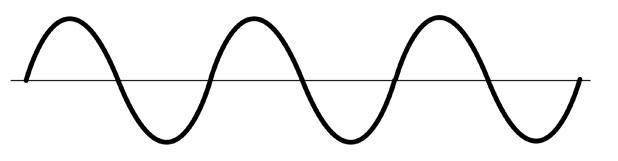
How many waves are there in this sound wave?

a)

1

b)

3

c)

4

d)

6

45.

How many waves are there in this sound wave?

a)

1

b)

3

c)

4

d)

6

46.

Which of the following waves has a higher pitch?

a)

1047 Hz

b)

64 Hz

47.

A sound with a _________ frequency will have a _________ pitch.

a)

lower, higher

b)

higher, loud

c)

higher. lower

d)

lower, lower

48.

Volume (Loudness) tells you if a sound is:

a)

wavy or straight

b)

deep or wide

c)

low or high

d)

loud or soft

49.

The loudest sound is

a)
b)
50.

What is the distance between the peaks of a wave called?

a)

wavelength

b)

amplitude

51.

A sound with a tall amplitude will be...

a)

quiet

b)

loud

52.

A sound with a high pitch will be...

a)

short wavelength

b)

high amplitude

53.

How does this waveform change?

a)

low pitch - high pitch - low pitch

b)

high pitch - low pitch - high pitch

c)

low pitch - high volume - high pitch

54.

Loudness of sound depends on

a)

Frequency

b)

Amplitude

c)

Wave length

d)

Velocity

55.

Volume measures how low or high a sound is while pitch measures how loud or soft a sound is.

a)

True

b)

False

56.

When a sound wave has a lot of energy it has a

a)

high pitch

b)

loud volume

57.

Refraction occurs due to _____________

a)

the change in the wave's speed when it enters a new medium

b)

the wave bouncing off a boundary

c)

the change in the wave's frequency when it enters a new medium

d)

the wave bending around a barrier

58.

The refractive index of a medium is the ratio of the speed of light in a vacuum to the speed of light in that medium 

a)

True

b)

False

59.

The law of reflection states that

a)

the angle of reflection is equal to the angle of incidence

b)

the angle of reflection is greater than the angle of incidence

c)

the image is laterally inverted

d)

the image must be upright and the same size as the object

60.

A ray of light hits a plane mirror. Using the diagram determine the angle of reflection.

a)

40

b)

50

c)

90

d)

Don't know

61.

Which of these provides the best explanation for why the pencil appears broken?

a)

The pencil absorbs the light rays that hit it.

b)

Water reflects light rays away from the pencil.

c)

Light rays are bent by the water in the glass.

d)

The surface of the water reflects the light rays.

62.

Which of the following is the best example of an object transmitting light?

a)

A black sweater in the sun.

b)

A clean window in the sun.

c)

A curved mirror in the sun.

d)

A long shadow in the sun.

63.

Which of the following is demonstrated when light bounces off of mirrors or shiny surfaces?

a)

Scattering

b)

Refraction

c)

Absorption

d)

Reflection

64.
How does light travel
a)
It curves around corners
b)
Really slow
c)
In a straight line
d)
In circles
65.

Bouncing of a light ray when it strikes a reflecting surface is called.........

a)

Refraction

b)

Dispersion

c)

Reflection

d)

Diffraction

66.

which of the following is not a property of the image formed by a [lane mirror?

a)

virtual and erect

b)

Object size = image size

c)

object distance = image distance

d)

Real and inverted

67.

When light hits a barrier that is solid/opaque what is usually created?

a)

a hot object

b)

a shadow

c)

nothing

68.
Which will make the darkest shadow? Light shining on a...
a)
sheet of thin tissue paper
b)
glass window  
c)
wooden chopping board  
d)
none of the above
69.

If you can see light through an object it is called...

a)

opaque

b)

plastic

c)

transparent

70.

which of the following the non-luminous obejct

a)

sun

b)

moon

c)

stars

d)

firefly

71.

which of the following is an example of an opaque object

a)

clean water

b)

plastic wrap

c)

cardboard sheet

d)

spectacle glass

72.

12.Translucent is?

a)

When light bounces off an object

b)

Material that only allows a little light to pass through

c)

Our main source of light

73.

Opaque is?

a)

Material that allows light to pass through

b)

Light made by nature

c)

Material that allows no light to pass through

74.

When an object moves closer to a light source, its shadow...

a)

Gets smaller

b)

Gets bigger

c)

Changes shape

d)

Stays the same size

75.

An opaque object means that ...

a)

light passes through

b)

no light passes through

c)

some light passes through

d)

you can see through it

76.

bending of light that happens when light travels through different mediums (substances)

a)

reflection

b)

refraction

c)

diffusion

77.

When light bounces off an object- If the surface is smooth and shiny, like glass, water or polished metal, the light will reflect at the same angle as it hit the surface.

a)

reflection

b)

refraction

c)

diffusion

78.

Objects that allow ALL light to pass through

a)

transparent

b)

translucent

c)

opaque

79.

Objects that allow SOME light to pass through

a)

transparent

b)

translucent

c)

opaque

80.

Objects that allow NO light to pass through

a)

transparent

b)

translucent

c)

opaque

81.

Why is the component of colour in a rainbow can be seen when light passes through a glass prism?

a)

phenomena of scattering of light

b)

phenomena of dispersion of light

c)

phenomena of reflection of light

d)

phenomena of diffraction of light

82.

How many components of white light?

a)

5

b)

6

c)

7

d)

8

83.

Why is the spectrum of light seperated into its components of colour when white light is directed to a prism?

a)

The different colours in the white light bend away from the normal line at different angles when entering prism

b)

The different colours in the white light bend towards the normal line at different angles when entering prism

c)

The different colours in the white light bend away from the normal at same speed to each other when entering prism

d)

The different colours in the white light bend towards the normal at same speed to each other when entering prism

84.

This is the example of dispersion of light

a)

sky looks bright orange in the evening

b)

shadow

c)

Pool seems shallower

d)

rainbow

85.

These are all colours of spectrum except

a)

indigo

b)

blue

c)

purple

d)

green

86.

Why is red light is at the top whileviolet at the bottom of the spectrum?

a)

Violet light has the medium speed so it is refracted the least.

b)

Violet light has the highest speed so it is refracted the least

c)

Red light has the slowest speed so it is refracted the least

d)

Red light has the highest speed so it is refracted the least.

87.

What do you call the phenomena which results to the formation of rainbows?

a)

scattering

b)

diffraction

c)

reflection

d)

dispersion

88.

When white light falls on an orange translucent box,........

a)

the box absorbs all light colors and apperas black

b)

the box absorbs all light colors and allow the orange color only to pass through

c)

the box reflects the orange color.

d)

the box absorbs the orange color and allows all the light color to pass through.

89.
The green glass bottle...........when white light falls on it.
a)
reflects all light colors
b)
absorbs all light colors and allows the green color only to pass through
c)
absorbs all light colors
d)
reflects the green color only
90.
The transparent and translucent objects have the same color of.......
a)
the absorbed light color.
b)
the transmitted light color.
c)
the reflected light color.
d)
the spectrum light color.
91.
When white light stricks a blue dress, the dress appears........
a)
yellow
b)
green
c)
blue
d)
orange
92.
The white clothes appear white when light falls on them.because……
a)
they absorb all light colors
b)
they reflect all light colors
c)
they absorb all light colors except white color
d)
they allow light color to transmit through
93.
We wear white clothes in summer season to……
a)
reflect all light colors
b)
absorb all light colors
c)
refract all light colors
d)
absorb all light colors except the red color
94.
The blackborad ………..when white light falls on it.
a)
reflect all light colors
b)
absorb all light colors
c)
refract all light colors
d)
absorb all light colors except red
95.
Banana fruit seems yellow in color , because………..
a)
reflect all light colors
b)
absorb yellow color and reflect all other light colors
c)
absorb all light colors and allow the yellow color to pass through
d)
absorb all light colors and reflects the yellow color only
96.
The colored opaque objects………..when the white light strikes them
a)
absorb all light colors and reflects their own color only
b)
reflect all light colors and absorbs their own color only
c)
absorb all light color
d)
reflect all light color
97.
An orange appears ………..when you look at it through a blue transparent glass sheet.
a)
red
b)
yellow
c)
green
d)
black
98.
The following colored lights are primary lights except……..
a)
yellow
b)
green
c)
red
d)
blue
99.
Which of the following considered as a secondary color?
a)
Cyan
b)
Green
c)
Blue
d)
Red
100.
Mixing green and blue lights gives ……..light
a)
yellow
b)
cyan
c)
magenta
d)
red
101.
Mixing all the primary colored lights gives the ……
a)
black light
b)
green light
c)
red light
d)
white light
102.
Which of the colored lights are mixed to produce White colour?
a)
Yellow and red
b)
Cyan and red
c)
Magenta and blue
d)
Yellow and green
103.
Which of the primary colored lights are mixed to produce yellow colour?
a)
Red and green
b)
Red and blue
c)
Blue and green
d)
Blue and cyan
104.
When the white light strikes a red rose, the rose reflects the white color
a)
Right
b)
Wrong
105.
An object seems white as it reflects all light colors
a)
Right
b)
Wrong
106.
There are only one type of coloured lights
a)
Right
b)
Wrong
107.
Yellow , magenta and cyan are primary colored lights
a)
Right
b)
Wrong
108.

A piece of cheese that melts as heat is transferred from the meat to the cheese is an example of what?

a)

Radiation

b)

Conduction

c)

Convection

109.

Taking a hot air balloon ride is an example of what?

a)

Radiation

b)

Conduction

c)

Convection

110.

Taking a trip to the beach and falling asleep under the sun, resulting in a sunburn is an example of what?

a)

Radiation

b)

Conduction

c)

Convection

111.

True or False

Heat transfer is the transfer of heat from cooler objects to warmer objects.

a)

True

b)

False

112.

Conduction is how heat passes through objects by...

a)

Fluids

b)

Direct Contact

c)

Empty Space

113.

Convection is how heat transfers through...

a)

Fluids

b)

Direct Contact

c)

Empty Space

114.

Radiation is how heat transfers through...

a)

Fluids

b)

Direct Contact

c)

Empty Space

115.

What is the circular motion of hot air rising and cold air sinking?

a)

Radiation

b)

Convection Currents

c)

Electromagnetic Waves

d)

Conduction

116.

True or False

The hotter the temperature the faster the molecules move around.

a)

True

b)

False

117.

What is the measure of how hot or cold something is?

a)

Thermometer

b)

Temperature

c)

Thermal Energy

118.

Boiling Water

a)

Conduction

b)

Convection

c)

Radiation

119.

Curling Iron

a)

Conduction

b)

Convection

c)

Radiation

120.

Weather Patterns

a)

Conduction

b)

Convection

c)

Radiation

121.

Sun Bathing

a)

Conduction

b)

Convection

c)

Radiation

122.

Mantle

a)

Conduction

b)

Convection

c)

Radiation

123.

Feet on Hot Sand

a)

Conduction

b)

Convection

c)

Radiation

124.

Lava Lamp

a)

Conduction

b)

Convection

c)

Radiation

125.

Hot Air in a Toaster

a)

Conduction

b)

Convection

c)

Radiation

126.

Microwaving Food

a)

Conduction

b)

Convection

c)

Radiation

127.

Heat Lamps

a)

Conduction

b)

Convection

c)

Radiation

128.
Warm air is __________ dense than cold air and rises creating convection currents.
a)
more
b)
less
129.
The temperature of a substance increases as___.
a)
the substance expands
b)
the average kinetic energy of its particles increases
c)
the substance's volume increases
d)
the substance's mass increases
130.
If the particles of two substances have the same average kinetic energy, then___.
a)
the specific heats of the substances are identical 
b)
the particles will not react chemically
c)
the substances have equal thermal energies
d)
the substances have equal temperatures
131.
What does the average kinetic energy of an object's particles tell you?
a)
how hot the object is
b)
how cold the object is
c)
the temperature of the object 
d)
how fast the particles are moving
132.
In which state do particles move fastest and with little effect on each other?
a)
ice
b)
gas
c)
liquid
d)
solid
133.
Temperature____ as average kinetic energy decreases.
a)
increases
b)
decreases
c)
stays the same
d)
all of the above
134.
Heat is thermal energy that flows between objects that differ in___.
a)
temperature
b)
radiation
c)
thermal energy
d)
specific heat
135.
The total kinetic energy of a substance's particles
a)
thermal energy
b)
heat
c)
convection
d)
conduction
136.
The energy transferred between object's at different temperatures
a)
heat
b)
thermal energy
c)
radiation
d)
convection
137.
What happens to particles of a substance as its temperature increases?
a)
the average kinetic energy increases
b)
the average kinetic energy decreases
c)
the average kinetic energy stays the same
d)
nothing happens
138.
The liquid in a thermometer ______________ as the temperature increases.
a)
expands
b)
disappears
c)
freezes
d)
explodes
139.
_________________________ is a measure of the average kinetic energy of the particles in a material.
a)
thermal
b)
friction
c)
temperature
d)
expansion
140.
The movement of thermal energy from an object at a higher temperature to an object at a lower temperature is called ____________.
a)
thermal
b)
expansion
c)
temperature
d)
heat
141.
Thermal energy stops moving when the objects have the same temperature.
a)
True
b)
False
142.
An increase in the volume of a substance when the temperature increases is called ___________________________________.
a)
kinetic energy
b)
thermal expansion
c)
temperature
d)
heat
143.
Thermal energy keeps moving away from warmer objects to cooler objects until both are the same temperature.
a)
True
b)
False
144.
Why does a diver wear a wet suit?
a)
To keep in thermal energy.
b)
To keep from getting cuts.
c)
To keep from sinking.
d)
To keep out cold.
145.
You're holding hands with your best friend.  Your friend's hands are REALLY warm and yours are really cold.  After a few minutes, this has changed.  How might you explain what happened?
a)
The cold energy from your hand transferred to your friend's hand through conduction.
b)
The heat energy from your friend's hand transferred to your hand through conduction. 
c)
The cold energy from your hand transferred to your friend's hand through convection.
d)
The heat energy from your friend's hand transferred to your hand through convection.