wayground logo

Free Printable Worksheets

Font size

S
M
L
XL
Worksheets

Topic 3 Test Review

Total questions: 148

Worksheet time: 2hrs 28mins

Name
Class
Date
1.
What is the unit of measurement for force?
a)
Kilogram
b)
Newton
c)
Meter
d)
Joule
2.
Which of the following is an example of balanced forces?
a)
A car accelerating
b)
. A football player tackling another player
c)
A person lifting weights
d)
. A runner jogging at a constant speed
3.
Which of the following is an example of unbalanced forces? a.
a)
Pushing a lawnmower across the yard
b)
A car traveling at a constant speed
c)
A person sitting on a chair
d)
A book sitting on a shelf
4.
What is air resistance?
a)
The tendency of air to resist gravity
b)
The ability of air to resist changes in motion
c)
The friction between air molecules and an object
d)
The net forces acting on air
5.
Which of the following would reduce the amount of friction on a surface?
a)
Water
b)
Oil
c)
Ice
d)
All of the Above
6.
Which of the following is not a characteristic of balanced forces?
a)
Equal forces
b)
Net force equals 0 Newtons
c)
Causes a change in an object’s motion
d)
Can be a push or a pull
7.
Which of the following is not a characteristic of unbalanced forces?
a)
Forces that act on objects
b)
Net force equals 0 Newtons
c)
. Causes a change in an object’s motion
d)
Can be a push or a pull
8.
The units used for force are known as
a)
Newtons
b)
Weight
c)
Friction
d)
Net Force
9.
A force that resists motion when two surfaces are touching one another is known as
a)
Newtons
b)
Weight
c)
Friction
d)
Net Force
10.
_______ forces are unequal forces that cause a change in an object’s motion.
a)
Gravity
b)
Unbalanced
c)
Balanced
d)
Air Resistance
11.
A measure of the force of gravity exerted on an object is known as
a)
Newtons
b)
Weight
c)
Friction
d)
Net Force
12.
_______ is the overall force exerted on an object measures in Newtons (N).
a)
Newtons
b)
Weight
c)
Friction
d)
Net Force
13.
The frictional force that air exerts against a moving object is known as
a)
Gravity
b)
Unbalanced
c)
Balanced
d)
Air Resistance
14.
________ forces are equal forces that do not cause a change in an object’s motion.
a)
Gravity
b)
Unbalanced
c)
Balanced
d)
Air Resistance
15.
A force that pulls all objects that have mass toward one another is known as
a)
Gravity
b)
Unbalanced
c)
Balanced
d)
Air Resistance
16.
A force is a push or a pull on an object.
a)
True
b)
False
17.
A change in motion will not occur if the net force is greater than 0 Newtons.
a)
True
b)
False
18.
An object with no motion is an example of unbalanced forces.
a)
True
b)
False
19.
Force is measured in units called Joules.
a)
True
b)
False
20.
Gravity, friction, and air resistance are three common forces on Earth.
a)
True
b)
False
21.
Moving at a constant speed is an example of balanced forces.
a)
True
b)
False
22.
An object will move in the opposite direction of the greater force applied.
a)
True
b)
False
23.
Quickly braking to stop at a red light is an example of unbalanced forces.
a)
True
b)
False
24.
The force of gravity exists between all objects that have mass.
a)
True
b)
False
25.
A bowling ball knocking over pins is an example of balanced forces.
a)
True
b)
False
26.
The motion of an object is described as 75 mph to the southwest. What form of motion is being described?
a)
Speed
b)
Velocity
c)
Acceleration
d)
Note of the Above
27.
What two factors do you need in order to calculate speed?
a)
Mass and Acceleration
b)
Force and Distance
c)
Distance and Time
d)
Mass and Time
28.
Which of the following is not an example of acceleration?
a)
A car speeding up to get on the highway
b)
A sprinter slowing down at the end of a race
c)
A student walking at a constant speed to get to class
d)
A airplane making a sharp turn in an air show
29.
When scientists calculate the trajectory a satellite takes on its way to study a planet, what do you think they use?
a)
. Speed, velocity, and acceleration
b)
Velocity and acceleration
c)
Speed and velocity
d)
Speed only
30.
Which of the following is an example of acceleration?
a)
A car turning a corner to get to the store
b)
A bird slowing down to land on a tree branch
c)
A person starting to run for shelter as it begins to rain
d)
All of the above
31.
Which of the following is an example of velocity?
a)
Walking 25 cm/hour
b)
Flying 5 km/s West
c)
Running 7 m/s
d)
Hopping 10 ft/min
32.
Which of the following is an example of speed?
a)
10 m/s2
b)
15 m/s
c)
. 20 m/s North
d)
25 m
33.
Which of the following can be used to describe the motion of an object?
a)
Speed only
b)
Speed and acceleration
c)
Velocity and acceleration
d)
Speed, velocity, and acceleration
34.
In which of the following situations is the object’s velocity changing?
a)
A car turns a corner at a constant speed
b)
A hot air balloon rises at a constant speed
c)
. A car sits at a stop sign for 3 seconds
d)
None of the above
35.
The distance an object travels per unit of time is known as
a)
Speed
b)
Velocity
c)
Acceleration
d)
Motion
36.
. Speed in a given direction is known as
a)
Speed
b)
Velocity
c)
Acceleration
d)
Motion
37.
The rate of change of velocity which includes speeding up, slowing down, or changing direction is known as
a)
Speed
b)
Velocity
c)
Acceleration
d)
Motion
38.
Speed, velocity, and acceleration all help to describe the ___ of an object.
a)
Speed
b)
Velocity
c)
Acceleration
d)
Motion
39.
A common way to express the acceleration of an object is
a)
Direction
b)
Meters per second
c)
Meters per Second 2 (Squared)
d)
Meters per Second East
40.
Velocity differs from speed because velocity also describes the ____ in which an object is moving.
a)
Direction
b)
Meters per second
c)
Meters per Second 2 (Squared)
d)
Meters per Second East
41.
A common way to express the velocity of an object is
a)
Direction
b)
Meters per second
c)
Meters per Second 2 (Squared)
d)
Meters per Second East
42.
A common way to express the speed of an object is
a)
Direction
b)
Meters per second
c)
Meters per Second 2 (Squared)
d)
Meters per Second East
43.
Velocity changes when the direction of motion changes.
a)
True
b)
False
44.
When an object’s speed changes, its velocity also changes.
a)
True
b)
False
45.
Acceleration is an object’s rate of change of speed.
a)
True
b)
False
46.
If a car travels in a straight line, its velocity cannot change.
a)
True
b)
False
47.
Acceleration can only occur when an object’s speed increases.
a)
True
b)
False
48.
When an object turns a corner, it is experiencing acceleration and a change in velocity.
a)
True
b)
False
49.
If the velocity of an object is constant, then its acceleration is increasing.
a)
True
b)
False
50.
When an object’s speed changes it is experiencing acceleration.
a)
True
b)
False
51.
Due to gravity, an object experiences constant acceleration as it freely falls to the ground.
a)
True
b)
False
52.
All accelerating objects are moving at a high speed.
a)
True
b)
False
53.
A motorcycle slowing down at a red light.
a)
Speed
b)
Velocity
c)
Acceleration
54.
A ball rolling 50 meters on 5 seconds.
a)
Speed
b)
Velocity
c)
Acceleration
55.
Turning a corner in a large truck.
a)
Speed
b)
Velocity
c)
Acceleration
56.
A person walking East at 100 meters per minute.
a)
Speed
b)
Velocity
c)
Acceleration
57.
A tornado traveling south at 45 miles per hour
a)
Speed
b)
Velocity
c)
Acceleration
58.
An ambulance traveling 80 miles per hour.
a)
Speed
b)
Velocity
c)
Acceleration
59.
A snake slithering 15 meters per second toward its prey.
a)
Speed
b)
Velocity
c)
Acceleration
60.
A subway speeds up to leave the station.
a)
Speed
b)
Velocity
c)
Acceleration
61.
A golf ball soaring 100 miles per hour through the air.
a)
Speed
b)
Velocity
c)
Acceleration
62.

Is the image balanced or unbalanced

a)

Balanced

b)

Unbalanced

63.

Is the image balanced or unbalanced

a)

Balanced

b)

Unbalanced

64.

Is the image balanced or unbalanced

a)

Balanced

b)

Unbalanced

65.

Is the image balanced or unbalanced

a)

Balanced

b)

Unbalanced

66.

Is the image balanced or unbalanced

a)

Balanced

b)

Unbalanced

67.

Is the image balanced or unbalanced

a)

Balanced

b)

Unbalanced

68.

Is the image balanced or unbalanced

a)

Balanced

b)

Unbalanced

69.

Is the image balanced or unbalanced

a)

Balanced

b)

Unbalanced

70.

Is the image balanced or unbalanced

a)

Balanced

b)

Unbalanced

71.

An object at rest or moving at a constant speed and in a constant direction is being acted on by _______________________force/s.

a)

Gravitational

b)

Balanced

c)

Unbalanced

72.

An ____________________ force always causes a change in position, speed or direction of an object.

a)

Frictional

b)

Balanced

c)

Unbalanced

73.

The total amount of all the forces on an object is called the __________________________.

a)

Total Force

b)

Net Force

c)

Force Total

74.

To find the net force of two objects moving in opposite directions you would ______________________their forces.

a)

Multiply

b)

Add

c)

Subtract

75.

To find the net force of two objects moving at the same direction you would ____________their forces.

a)

Add

b)

Subtract

c)

Multiply

76.

When the Net Force is 0 N this is also known as a _________.

a)

Balanced Force

b)

Unbalanced Force

c)

Rebalanced Force

77.

What is the unit for force? 

a)
N (Newtons)
b)
lbs (pounds)
c)
m/s (meters per second)
78.

What is the Net Force?

a)

20 N

b)

20 N Left (<--)

c)

70 N Left (<--)

79.

What is the Net Force?

a)

0 N

b)

20 N Right (-->)

c)

180 N Right (-->)

80.

What is the Net Force?

a)

120 N \uparrow   (Up) 

b)

120 N \downarrow  (Down)

c)

30 N \downarrow  (Down)

81.

What is the Net Force?

a)

54 N Right (-->)

b)

54 N Left (<--)

c)

14 N Left (<--)

82.

What is the Net Force?

a)

44 N Up ^

b)

44 N Down v

c)

0 N

83.

What is the Net Force?

a)

60 N Left <

b)

60 N Right >

c)

10 N Left <

84.

What is the Net Force?

a)

75 N Right >

b)

75 N Left <

c)

45 N Left <

85.

What is the Net Force?

a)

40 N Down v

b)

50 N Down v

c)

30 N Down v

86.

Will this object move?

a)

Yes - To the right. >

b)

Yes - Upwards. ^

c)

No - It will not change position, speed or direction.

87.

What is the Net Force?

a)

110 N Right (-->)

b)

110 N Left ( <-- )

c)

10 N ( <-- Left )

88.

Forces have two components. What are they? (Pick 2)

a)

Direction

b)

Speed

c)

Magnitude (Strength)

d)

Velocity

89.
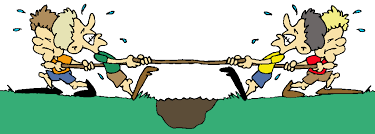
If these teams are pulling with the same amount of force what will happen?
a)

The team on the left (<) will win.

b)
They will not move at all.
c)

The team on the right (>) will win.

90.

Isaac Newton discovered

a)

All Objects In the Universe

b)

Laws of Motion

c)

Space

d)

Stars

91.

Newton's 1st Law States: An object in motion will remain in motion and an object at (a)   will remain at rest unless there is an outside/net force acting on the object.

92.

If a ball is in motion, it should remain in motion until an outside force acts on it. What is an example of a force that would stop a soccer ball?

a)

Friction of the grass

b)

Air Resistance

c)

Another soccer player stopping the ball with his foot

d)

Gravity

93.

A resistance to change in motion is called

a)

Force

b)

Friction

c)

Inertia

d)

Motion

94.

Objects with more mass have more inertia. This means it's _____ to change their motion

a)

more difficult

b)

easier

95.

What can be used to predict the velocity of objects of any mass and velocity before they collide?

a)

Law of Conservation

b)

Law of Momentum

c)

Law of Conservation of Momentum

d)

Law of Motion

96.
If there are two forces going in the same direction how would you find the net force?
a)
Subtract
b)
Add
c)
Neither
d)
Multiply
97.
8 N to the left , and 4 N to the right. Find the net force. Is this balanced?
a)
12 N Right  No
b)
4 N Left  No
c)
12 N Right  Yes
d)
4 N Left  Yes
98.
With unbalanced forces, the object will move in the direction of the _______ force.
a)
larger 
b)
smaller 
c)
equal 
99.
Force pair that has a net force of zero.
a)
Balanced force
b)
Unbalanced force
100.
Which one is balanced?
a)
top
b)
bottom
c)
both
d)
neither
101.
What is the net force?
a)
5000 N right
b)
4000 N right
c)
40 N left
d)
4000 N left
102.
What is the magnitude (size) and direction of the net force?
a)
15 N to the left
b)
15 N to the right
c)
1 N to the left
d)
1 N to the right
103.
According to Newton's second law, if you increase the force applied to an object :
a)
it accelerates more
b)
it doesn't move
c)
you get more inertia
d)
it decelerates
104.
A 20 kg bike accelerates at 10 m/s2.  What was the force?
a)
25 Newtons
b)
20 Newtons
c)
200 Newtons
d)
10 Newtons
105.
Matt measured a small rubber ball and made 3 other balls of the same diameter from lead, foam, and wood. Which has the greatest inertia?
a)
rubber ball
b)
lead ball
c)
foam ball
d)
wood ball
106.
According to Newton’s first law of motion, a moving object that is not acted on by an unbalanced force will
a)
remain in motion.
b)
eventually come to a stop.
c)
change its momentum.
d)
accelerate.
107.
This person bought coffee and put it on the seat next to them. If they stopped quickly and the coffee spilled which law would that represent?
a)
Newton's 1st Law
b)
Newton's 2nd Law
c)
Newton's 3rd Law
108.
A magician pulls a tablecloth out from under dishes and glasses on a table without disturbing them.
a)
Newton's 1st Law
b)
Newton's 2nd Law
c)
Newton's 3rd Law
109.
A 20 kg bike accelerates at 10 m/s2.  what was the force
a)
25
b)
200 N
c)
20 N
d)
10 N
110.
In the picture, the blocks are flying out of the truck based on which of Newton's laws?
a)
Newton's 1st Law
b)
Newton's 2nd Law
c)
Newton's 3rd Law
d)
Newton's 6th Law
111.

What is Newton's First Law

a)

F=ma

b)

Every action has an equal and opposite reaction

c)

Friction

d)

An object at rest stays at rest, an object in motion stays in motion.

112.

Your car has a mass of 2500 kg and a force of 5000 N. How fast will it accelerate?

a)

20 m/s2

b)

2 m/s2

c)

0.5 m/s2

d)

120 N

113.

An evil ewok threw a rock with a force of 24.6N and an acceleration of 6m/s2 at an innocent stormtrooper. What was the rocks mass?

a)

4Kg

b)

41kg

c)

4.1kg

d)

46kg

114.

A 20 kg bike accelerates at 10 m/s2. What was the force?

a)

25 Newtons

b)

20 Newtons

c)

200 Newtons

d)

10 Newtons

115.

What Unit do we Measure Force in?

a)

Newtons

b)

Joules

c)

Kilogram

d)

Work

116.

What is force?

a)

A push exerted on an object

b)

A push or pull exerted on an object

c)

A pull exerted on an object

d)

Nothing

117.

You push on a tree with 20 N of force. If the tree doesn't move, the tree is pushing back on you with _____of force.

a)

20N

b)

10N

c)

40N

d)

70N

118.

What is Newton's 2nd Law?

a)

F=ma

b)

Every action has an equal and opposite reaction

c)

An object at rest stays at rest, an object in motion stays in motion.

d)

Friction

119.

If the man pushes with an equal amount of force, which object will accelerate more?

a)

Car because it has more mass

b)

Lawnmower because it has less mass

c)

Car because it has less mass

d)

Lawnmower because it has more mass

120.
The tendency of an object to resist changes in its motion is...
a)
inertia
b)
force
c)
acceleration
d)
velocity
121.
The larger the mass you have the _____ force you need to change its motion.
a)
more
b)
less
122.
Two students are in a baseball game. The first student hits a ball very hard and it has a greater acceleration than the second student who bunts the ball lightly.
a)
Newton's 1st Law
b)
Newton's 2nd Law
c)
Newton's 3rd Law
123.

The rate something is traveling in a certain time

(example: miles per hour)

a)

velocity

b)

inertia

c)

speed

124.

The rate something is traveling in a certain direction.

a)

speed

b)

inertia

c)

velocity

125.

The crash test dummy in the picture is not wearing a seat belt. When the car crashes into the truck the dummy will fly through the windshield. Which one of Newton's Laws would explain why this happens?

a)

Newton's 1st Law of Motion

b)

Newton's 2nd Law of Motion

c)

Newton's 3rd Law of Motion

126.

Some objects have more inertia than others. This is because the ______________ of an object affects the inertia of that object.

a)

Momentum

b)

Gravity

c)

Mass

d)

Weight

127.
The scientist who is most famous for developing the Laws of Motion is _____.
a)
Albert Einstein
b)
Stephen Hawking
c)
Sir Isaac Newton
d)
Galileo Galilei
128.

What law is best described

A person not paying attention while skateboarding hits a rock. The skateboard stops...they don't.

a)

The Law of Inertia (1st law)

b)

The Law of Acceleration (2nd law)

c)

The Law of Conservation of Momentum

d)

Action Reaction Law (3rd law)

129.
Two skaters begin at rest. Skater 1 has a smaller mass than Skater 2. After they push off each other,...
a)
Skater 1 experiences a greater change in momentum
b)
Skater 2 experiences a greater change in momentum
c)
Skater 1 has a greater velocity than Skater 2
d)
Skater 1 experiences a greater force
130.

According to Newton's Laws, for every action there is an ....

a)

equal and opposite reaction.

b)

equal and parallel reaction.

c)

unequal and opposite reaction.

d)

unequal and unrelated reaction.

131.
If net force acting on object is 0, then the force is considered to be..
a)
Balanced
b)
Unbalanced
c)
Equal in Direction
d)
Distance/Time
132.
What is Newton's First Law known as? The Law of
a)
Friction
b)
Mass
c)
Inertia
d)
Gravity
133.
The definition of momentum is
a)
Mass in Motion
b)
The size of an object
c)
The velocity of an object
d)
A comparison between two objects
134.
Which type of force(s) will cause a change in an object's motion?
a)
gravity
b)
zero net force
c)
balanced forces
d)
unbalanced forces
135.
What is Newton's First Law
a)
F=ma
b)
Every action has an equal and opposite reaction
c)
An object at rest stays at rest, an object in motion stays in motion. 
d)
Friction 
136.
A person is pushed forward into their seat belt when a car stops.  Which law is this?
a)
1st
b)
 2nd
c)
2 and 3
d)
3rd 
137.
When a cannon fires a cannonball we observe Newton's third law. Which force is the reaction force?
a)
The cannon moving forward
b)
The cannonball moving forward
c)
The cannon moving backward
d)
The cannonball moving backward
138.

Pretend that you are in a car and not wearing a seatbelt. What might happen to you if the driver slammed on the brakes?

a)

You would move sideways

b)

You would move towards the front windshield

c)

You would stay in your seat

139.
If net force acting on object is 0, then the force is considered to be..
a)
Balanced
b)
Unbalanced
c)
Equal in Direction
d)
Distance/Time
140.

What is Newton's 3rd Law?

a)

For every action there is an equal and opposite reaction.

b)

Acceleration depends on two variables, the mass of the object and the amount of force.

141.

What explains a quantity that has BOTH speed and direction?

a)

Inertia

b)

Force

c)

Speed

d)

Velocity

142.

Looking at the image. Decide if this is balanced or unbalanced.

a)

Unbalanced

b)

Balanced

143.

Friction at rest is...

a)

sliding

b)

rolling

c)

fluid

d)

static

144.

If the man pushes with an equal amount of force, which object will accelerate more?

a)

Car because it has more mass

b)

Lawnmower because it has less mass

c)

Car because it has less mass

d)

Lawnmower because it has more mass

145.
Two students are in a baseball game. The first student hits a ball very hard and it has a greater acceleration than the second student who bunts the ball lightly.
a)
Newton's 1st Law
b)
Newton's 2nd Law
c)
Newton's 3rd Law
146.
Which shopping cart will have more acceleration?  
a)
The empty shopping cart
b)
The shopping cart that's full
c)
They will be the same
147.
Will it take more force to push an empty shopping cart or a shopping cart that is full?
a)
The empty shopping cart
b)
The full shopping cart
c)
They will take the same amount of force
148.

How many laws of Motion does Newton have?

a)

20

b)

3

c)

4

d)

2