
 Worksheets
IGS Final Review 2
Total questions: 145
Worksheet time: 4hrs 21mins
When a student runs and kicks a ball, they have applied an ___________ force to move the ball.
Balanced
Magnetic
Spring
Unbalanced
When the teacher rearranges the desks in the classroom, she must apply ____________ to push and pull the desks around.
acceleration
force
weight
magnets
Which law of motion says that you must push or pull objects harder if they have more mass?
1st
2nd
3rd
4th
Walking down the hall and speeding up when you turn and go down the stairs is an example of ____________.
acceleration
weight
gravity
friction
Letting go of a balloon full of air is demonstrating Newton's ______ _______ ________ _________ because the air comes out of the back and the balloon moves forward.
1st law of motion
2nd law of motion
3rd law of motion
13th law of motion
What law is best described by inertia?
1st
2nd
3rd
law of conservation of mass

A person not paying attention while skateboarding hits a rock. The skateboard stops...they don't.
The Law of Inertia (1st law)
The Law of Acceleration (2nd law)
The Law of Conservation of Momentum
Action Reaction Law (3rd law)
What Unit do we Measure Force in?
Newtons
Joules
Force
Kilograms
What is Newton's First Law
F=ma
Every action has an equal and opposite reaction
An object at rest stays at rest, an object in motion stays in motion.
Friction
A 20 kg bike accelerates at 10 m/s2. what was the force
F = m x a
25 Newtons
20 Newtons
200 Newtons
10 Newtons
Newton's third law states that any action will have a(n) _______ and ______ reaction
Equal and similar
Equal and opposite
Equal and different
Greater and opposite
8 N to the left , and 4 N to the right. Find the net force. Is this balanced
12 N Right No
4 N Left No
12 N Right Yes
4 N Left Yes

What law of motion does this picture represent?
Newton's 3rd law
Newton's 4th law
Newton's 1st law
Newton's 2nd law
What is Newton's 2nd law of motion?
Inertia
Force= Mass multiplied by acceleration
For every action there is a equal and opposite re-action.
Law of gravity
A unbalanced force means that an object is
zero net force
changing its motion
sitting still
object at rest
A ______ is a push or pull on an object.
force
speed
acceleration
velocity
Newton's 2nd Law says the acceleration of an object depends on its _______ and ______. (Choose two answers)
force or applied force
weight
gravity
mass
Net force is a combination of all ________ acting on an object.
forces
speeds
accelerations
velocities
if an object stays still or continues moving at the same speed and in the same direction, it is a _______ force.
weak
strong
balanced
unbalanced
The reason a boat bounces off the dock when it hits it.
The boat and the dock repel each other.
When the boat exerts a force on the dock, the dock exerts a force on the boat.

When a truck stops suddenly, the packages on its truckbed continue to move forward. Which law is this?
Law 1
Law 2
Law 3
A rocket pushes burning gases DOWN which causes the rocket to launch UP. Which law is this?
Law 1
Law 2
Law 3
A sports car speeds up much faster than a dump truck when a traffic light turns from red to green. Which law is this?
Law 1
Law 2
Law 3
Energy is
how fast you do something.
the ability to do work.
confusing.
how fast you lift something.
Jane carries a 5 kg box and Lorie carries a 10 kg box up a set of stairs, who did more work?
Jane because his box was lighter.
Lorie because her box weighed more.
Can't tell.
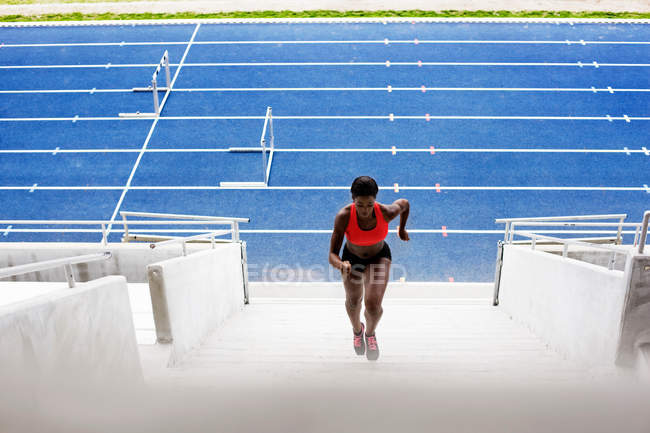
How much power is generated by Ashley (50 kg) running up a 6 m flight of stairs in 5 seconds?
60 W
62 W
600 W
1500 W
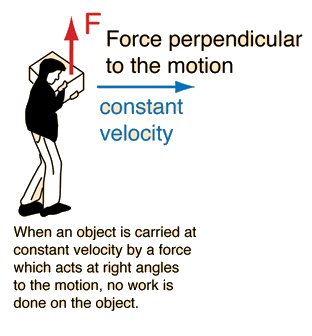
If you carry a 5 kg box across the room at a constant velocity
you do no work.
you do some work.
you do negative work.
Cannot be determined.
What is the kinetic energy of a 10 kg ball moving at 3 m/s?
15 J
30 J
45 J
90 J
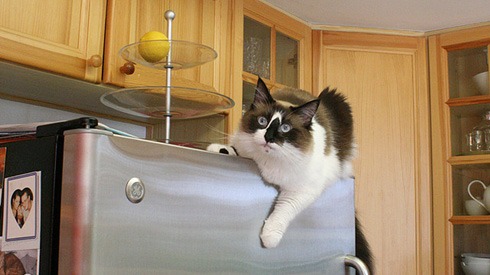
A 5 kg cat falls off a 3 m tall fridge. What is the cat's PE as it starts to fall?
15 J
30 J
150 J
1470 J

A 5 kg cat falls off a 3 m tall fridge. What is the cat's KE just before it lands on the floor?
15 J
30 J
150 J
1470 J

What kind of energy(ies) does the car have at position A? The ground is h=0.
KE
KE + PE
PE
KE - PE

What is the most abundant gas in Earth's atmosphere?
oxygen
nitrogen
carbon dioxide
methane
Which statement best describes how temperature, humidity, and pressure vary within an air mass?
Temperature and humidity vary, but pressure does not
Temperature at the border of an air mass is always higher than in the middle.
Temperature, humidity, and pressure are basically the same all through an air mass
Humidity makes the pressure in an air mass increase
Which word pair best describes the result of tropical continental air in the summer?
hot and cloudy
cool and sunny
hot and sunny
cool and cloudy
A warm front is heading toward Chicago.
Which type of weather would one expect when it arrives?
cold and rainy
warm and sunny
cold and dry
warm and rainy

Based on the diagram above what season is the northern hemisphere experiencing in B?
Summer, because we are tilted away
Autumn, because we are tilted towards
Spring, because we are tilted towards
Winter, because we are tilted away
What causes the seasons to occur on Earth?
The tilt of the Earth is 0˚
The tilt of the Earth is 23.5˚
The distance of the Earth from the Sun
The distance of the city to the Equator
What is the definition of a front?
boundary between two air masses of the same temperature, pressure and humidity
boundary between two air masses that mix together and become blended
boundary between two air masses of different temperature, pressure, and humidity
boundary between two similar air masses that almost meet, but turn opposite directions just before they meet
The shape of the Earth has a major impact on climate. The Equator has a much higher average temperature than the poles due to this relationship. What causes this unequal heating?
Ocean Currents
Differences in precipitation
Direct vs Indirect sunlight
The location of the continents

What type of air mass is number 3 in the diagram above?
continental tropical
maritime tropical
continental polar
maritime polar
How are air masses classified?
temperature and pressure
by pressure and humidity
by temperature and density
by temperature and humidity
What type of front would most likely be responsible for several days of rain and clouds?
cold
warm
occulded
stationary
What is the term used for when water is falling from the sky (rain, snow, or hail)?
evaporation
condensation
transpiration
precipitation
Place on Earth where temperatures are the warmest year round
Prime Meridian
Equator
North Pole
Tropical
________________ describes what is happening outside (temperature, wind speed and precipitation) at a specific time and place.
Weather
Climate
Temperature
Precipitation
The ratio of the amount of water vapor in the air to the amount of water vapor needed to reach saturation at a given temperature.
wind speed
air pressure
wind direction
relative humidity
What does high humidity indicate about an area?
a cool temperature
a high-pressure system
an approaching cold front
a high amount of water vapor in the air


This front can cause tornadoes when a warm air mass collides with a cold air mass and is quickly forced upward.
occluded front
stationary front
warm front
cold front

What is the most abundant gas in Earth’s atmosphere?
Oxygen
Nitrogen
Carbon dioxide
Methane
Which statement best describes how temperature, humidity, and pressure vary within an air mass?
Temperature, humidity, and pressure are basically the same all through an air mass.
Temperature and humidity vary, but pressure does not.
Temperature at the border of an air mass is always higher than in the middle.
Humidity makes the pressure in an air mass increase.
A warm front is heading toward Chicago.
Which type of weather would one expect when it arrives?
cold and rainy
warm and rainy
cold and dry
warm and sunny

What is the natural Greenhouse Effect?
heat is trapped in the oceans
heat escapes into space
greenhouse gases trap heat in the atmosphere
greenhouse gases release heat into glaciers

Which type of cloud is white and puffy?
cumulus
cirrus
stratus
cumulonimbus
Cirrus is Latin for
ice crystal
water droplet
curl-like
heaps

Clouds form during the process of...
evaporation
condensation
precipitation
runoff
The sudden movement of tectonic plates that release energy in the form of waves are referred to as
tidal waves
electromagnetic waves
earthquakes
ocean currents
What surface feature might form at a convergent boundary?
valley
mountain range
pond
esker
Theory explaining that the earth's crust is broken into plates and the surface is continually changing.
Surface Tectonics
Mantle Theory
Plate Tectonics
Earthquakes
Where are earthquakes most likely to occur?
in the mantle
in big cities
in the ocean
at plate boundaries
Where are volcanoes most likely to occur?
subduction zones
transform boundaries
convergent boundaries
Maine
Which of the following most likely causes Earth's inner core to be a solid?
metals in the core are very heavy
pressure at the core is very high
the temperature at the core is very low
the layers alternate form
This chronological time chart is broken into different time chunks, the largest being the Eon, then Era, Period, and Epoch.
Timeline
Calendar
Geological time scale
Time chart
Approximately how old is the Earth?
4.6 billion years old
4.6 million years old
5 billion years old
5 million years old
In some areas of the world, like California and Japan, earthquakes are a common occurrence. How can this best be explained?
The strong ocean currents are undermining both areas causing earthquakes.
Both areas are located near the edge of the Pacific Ocean, the unstable sand causes earthquakes.
Both areas are subjected to strong ocean wind and waves that causes earthquakes.
Both areas are on the boundary of active plates, the motion of the plates causes earthquakes.
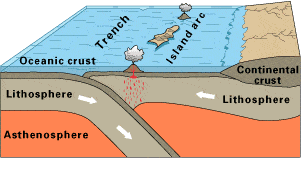
Observe this diagram of a plate boundary. One statement BEST describes what is happening. It is that
the oceanic crust is melting.
the denser ceanic crust is subducting under the less dense oceanic crust
volcanic islands are forming.
the tectonic plates are moving away from each other.
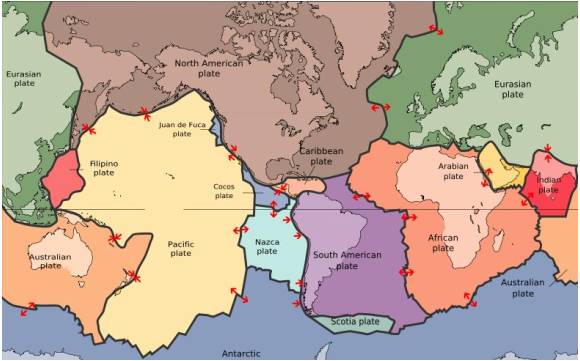
The map in the picture shows tectonic plate boundaries. This map would be useful in predicting the location of future
droughts
hurricanes
earthquakes
tornadoes
What force caused accretion to occur?
Gravity
Solar Wind
Liquid rock below the earth's crust.
Lava
Cinder
Magma
Ash
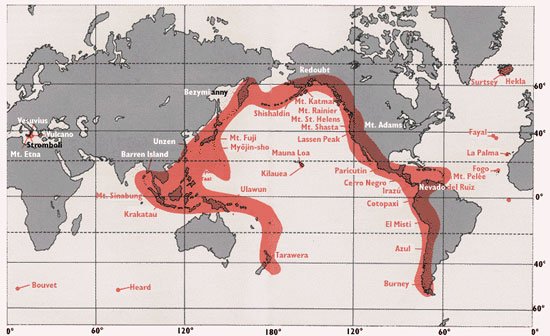
This is the name for the chain of volcanos around the edge of the Pacific Plate.
Circle of Fire
Ring of Lava
Ring of Fire
Pacific Ring


Which volcano would have a single circular vent and a cylindrical cone of hardened lava and ash built around it.
Cinder Cone Volcano
Shield Volcano
Composite Volcano


Mercury is the smallest planet in the Solar System.
True
False
Which planet is the hottest planet because of its atmosphere?

These planets are the?
Inner(Rocky) planets
Outer(Gas Giants) planets

What planets are these?
Inner(Rocky) Planets
Outer(Gas Giants) Planets

The biggest planet is...
JUPITER
EARTH
MARS
VENUS

This planet is also called "The Red Planet"
JUPITER
EARTH
MARS
VENUS

This planet has rings.
SATURN
MERCURY
MARS
VENUS


Which description is considered most accurate regarding what actually happened during the Big Bang?
Two galaxies collided causing an immense explosion as stars crashed into one another
All of what would become the universe was concentrated in a single small point, or singularity, which rapidly expanded into what is now stars, planets, galaxies, matter, and energy.
All matter emerged from a massive black hole at the center of the universe.
Parts of the sun were ripped off by massive internal explosions and were thrown into space where they cooled to become other things, like plants, comets, and other galaxies.
A Group of stars, and or star systems, star clusters, dust and gas held together by gravity is known as:
Universe
Galaxy
Solar System
Planet


As our sun continues through its life cycle, it will _________ and turn into a _______________.
gradually get smaller and smaller until it dies out/ black hole
Gradually get larger until its outer layers drift off/ white dwarf
become denser and denser/ protostar
become hotter and hotter blue/ hypergiant.

All stars begin their life in a
Main Sequence
Nebula
Protostar
Black Dwarf


Average size stars will turn into a _____ star next.
protostar
red giant
supergiant
black hole

Which two things typically result from a Supernova?
Black Hole and Nova
Black Hole and Neutron Star
Neutron Star and Supernova II
All of the above

The passage of the Moon into Earth's shadow causes a
lunar eclipse
New Moon
solar eclipse
Full Moon
The Moon has more surface craters than Earth does because the Moon has
a smaller diameter than Earth
no significant atmosphere
a surface more sensitive to impacts
a stronger gravitational force

